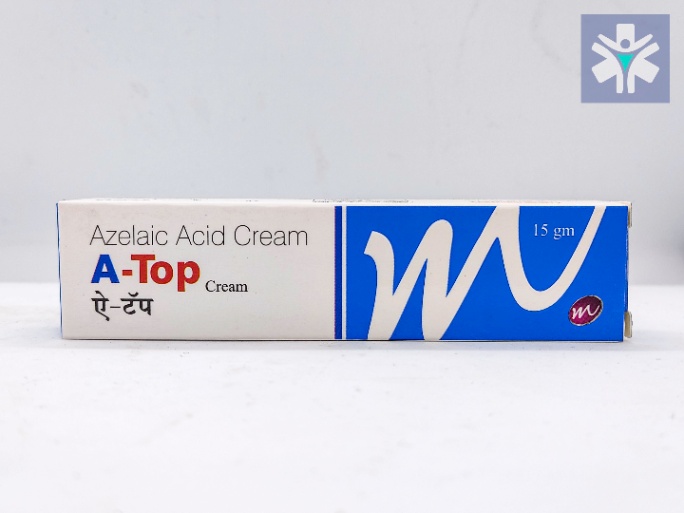
A-TOP
Price: Rs.275.00
10% off
In stock
Loose stock: 0
Description
A-TOP CREAM 15GM
Details
Composition
AZELAIC ACID 10 % W/W
# AZELAIC ACID 10% W/W
## SHORT DESCRIPTION
**Azelaic Acid 10% W/W** is a topical skincare preparation containing **10% azelaic acid**, a naturally occurring dicarboxylic acid with antimicrobial, anti-inflammatory, and skin-cell regulating properties.
It is commonly used to help improve **mild acne, clogged pores, redness, uneven skin tone, and post-acne marks**. Azelaic acid can also help reduce excess pigmentation by affecting melanin production.
---
## KEY BENEFITS
* Helps reduce **mild acne and blemishes**.
* Helps unclog pores and reduce the formation of new spots.
* May help calm **skin redness and inflammation**.
* Helps improve the appearance of **post-acne marks and hyperpigmentation**.
* Promotes a more **even-looking skin tone**.
* Can help improve rough or uneven skin texture.
* Generally suitable for many skin types when introduced gradually.
---
## USES / INDICATIONS
Azelaic Acid 10% may be used topically to help manage:
1. **Mild acne and occasional breakouts**
2. **Post-inflammatory hyperpigmentation** (dark marks left after acne)
3. Uneven skin tone
4. Mild skin redness associated with inflammatory skin conditions
5. Clogged pores and rough skin texture
> The exact approved indication depends on the formulation and local regulatory status. Higher-strength azelaic acid products may have specific medical indications.
---
## HOW IT WORKS
Azelaic acid works through several mechanisms:
### Antimicrobial Action
It helps reduce the growth of certain microorganisms associated with acne.
### Anti-Inflammatory Action
Azelaic acid can help reduce inflammatory processes in the skin, helping improve redness and inflamed blemishes.
### Keratinization Regulation
It helps normalize the shedding of skin cells, which can reduce **blocked pores and comedone formation**.
### Pigmentation Control
Azelaic acid inhibits **tyrosinase**, an enzyme involved in melanin production. This can gradually reduce excess pigmentation and help improve the appearance of dark spots.
---
## DOSAGE & ADMINISTRATION
### Typical Application
Apply a **thin layer** of Azelaic Acid 10% to clean, dry skin as directed by your healthcare professional or the product label.
For cosmetic or non-prescription formulations, application is commonly started **once daily**, particularly for sensitive skin, and may be increased according to tolerance.
### How to Apply
1. Cleanse the affected area gently.
2. Allow the skin to dry completely.
3. Apply a small amount evenly over the affected area.
4. Wash hands after application.
5. Avoid contact with the eyes, lips, and inside of the nose.
### Important
* Do not apply more product than recommended.
* Avoid applying to severely irritated, broken, or sunburned skin.
* If significant irritation develops, reduce frequency or discontinue use and seek professional advice.
* Consistent use is more important than applying excessive amounts.
---
## SIDE EFFECTS
### Common Side Effects
Some people may experience temporary:
* Burning or stinging
* Itching
* Tingling
* Redness
* Dryness
* Peeling
* Skin irritation
These effects are often more noticeable when treatment is first started.
### Less Common Effects
* Contact dermatitis
* Increased sensitivity
* Changes in skin color at the application site
### Serious Reaction
Stop using the product and seek medical attention if you develop:
* Severe swelling
* Severe rash
* Facial swelling
* Difficulty breathing
* Other signs of a serious allergic reaction
---
## PRECAUTIONS & WARNINGS
### For External Use Only
Azelaic acid preparations are intended for **topical use**. Do not swallow.
### Avoid Eyes and Mucous Membranes
Avoid contact with:
* Eyes
* Lips
* Inside of the nose
* Other mucous membranes
If contact occurs, rinse thoroughly with water.
### Sensitive Skin
If you have sensitive skin, eczema, or a damaged skin barrier, introduce azelaic acid gradually.
### Irritated Skin
Do not apply to severely irritated, broken, or sunburned skin unless advised by a healthcare professional.
### Sun Protection
Although azelaic acid is not generally considered strongly photosensitizing, daily **broad-spectrum sunscreen** is recommended, particularly when treating pigmentation.
### Pregnancy and Breastfeeding
Topical azelaic acid has generally been considered a relatively low-risk option during pregnancy and breastfeeding because systemic absorption is limited. However, pregnant or breastfeeding individuals should discuss regular use with a healthcare professional.
Avoid applying the product directly to the nipple area before breastfeeding.
### Children
Use in children should follow the product labeling or healthcare professional's advice.
---
## DRUG INTERACTIONS
Azelaic acid has **minimal systemic absorption**, so clinically significant interactions with oral medicines are unlikely.
However, irritation may increase when azelaic acid is used together with multiple potentially irritating topical products, such as:
* Strong exfoliating acids
* High-strength retinoids
* Benzoyl peroxide
* Other acne treatments
* Alcohol-based products
* Harsh scrubs
If several active skincare ingredients are being used, introduce them gradually to minimize irritation.
---
## STORAGE INFORMATION
* Store according to the manufacturer's instructions.
* Keep at room temperature unless the product label states otherwise.
* Protect from excessive heat and direct sunlight.
* Keep the container tightly closed.
* Keep out of reach of children.
* Do not use after the expiry date.
* Do not use if the product has significantly changed in color, texture, or odor.
---
## PRESCRIPTION STATUS
**Usually available without a prescription when marketed as a 10% skincare preparation**, although prescription requirements vary depending on the country, product formulation, and strength.
Higher-strength azelaic acid products may have different regulatory classifications.
---
## GENUINE MEDICINE ASSURANCE
When purchasing **Azelaic Acid 10% W/W**, choose a reputable pharmacy, authorized retailer, or trusted skincare supplier.
Before use, check:
* Product name and concentration
* Manufacturer
* Batch/lot number
* Manufacturing and expiry dates
* Packaging integrity
* Ingredient information
* Regulatory or product registration details where applicable
Avoid products with damaged packaging, missing labeling, altered expiry dates, or questionable authenticity.
---
# FAQ – AZELAIC ACID 10% W/W
### 1. What is Azelaic Acid 10% used for?
Azelaic Acid 10% is commonly used to help improve **mild acne, blemishes, clogged pores, redness, uneven skin tone, and post-acne dark marks**.
### 2. Does Azelaic Acid 10% help acne?
Yes. Azelaic acid has antimicrobial, anti-inflammatory, and pore-regulating properties that can help manage acne and prevent new blemishes.
### 3. Does Azelaic Acid help dark spots?
Yes. Azelaic acid can help reduce the appearance of **post-inflammatory hyperpigmentation and other forms of uneven pigmentation** by reducing melanin production.
### 4. How long does Azelaic Acid take to work?
Some people notice improvements in skin texture and inflammation within several weeks. Pigmentation and acne improvement may require **several weeks to a few months** of consistent use.
### 5. Can Azelaic Acid 10% be used every day?
It can often be used daily if tolerated. Sensitive skin may benefit from starting once daily or every other day and gradually increasing frequency.
### 6. Can Azelaic Acid cause irritation?
Yes. Temporary **stinging, burning, redness, dryness, or peeling** can occur, especially when treatment is first started.
### 7. Can I use Azelaic Acid with Vitamin C?
Azelaic acid can generally be incorporated into a skincare routine containing vitamin C. However, using several active ingredients together may increase irritation, so introduce products gradually.
### 8. Can I use Azelaic Acid with Niacinamide?
Yes. Azelaic acid and niacinamide are commonly used together and may complement each other for acne, redness, and uneven skin tone.
### 9. Can I use Azelaic Acid with Retinol?
They may be used in the same overall skincare routine, but combining them can increase dryness and irritation. Consider using them at different times or on alternating days when starting.
### 10. Can I use Azelaic Acid with Benzoyl Peroxide?
They can sometimes be combined for acne management, but the combination may increase skin irritation. Introduce one active ingredient at a time and monitor your skin.
### 11. Is Azelaic Acid suitable for sensitive skin?
It can be suitable for many people with sensitive skin, but irritation is possible. Start with a small amount and lower frequency if necessary.
### 12. Does Azelaic Acid lighten the skin?
Azelaic acid does not generally bleach normal skin. It can help **reduce excess pigmentation**, making dark spots less noticeable and helping the skin appear more even.
### 13. Can Azelaic Acid help acne scars?
It may help improve **dark marks left after acne**, known as post-inflammatory hyperpigmentation. It does not significantly remove deep, indented or raised physical acne scars.
### 14. Can Azelaic Acid be used during pregnancy?
Topical azelaic acid is generally considered to have low systemic absorption, but pregnant individuals should discuss regular skincare treatment with their healthcare professional.
### 15. Can Azelaic Acid be used while breastfeeding?
It is generally considered compatible with breastfeeding when used topically as directed. Avoid applying it directly to the nipple or areas that may come into contact with the baby's mouth.
### 16. Should I use sunscreen with Azelaic Acid?
Yes. **Daily broad-spectrum sunscreen** is especially important when treating pigmentation because UV exposure can worsen dark spots.
### 17. Can Azelaic Acid be used with other acne medicines?
Yes, it may be combined with other acne treatments, but combining multiple active ingredients can increase irritation. Follow a healthcare professional's or product label's recommendations.
### 18. How should I apply Azelaic Acid 10%?
Apply a **thin layer to clean, dry skin** as directed. Avoid the eyes, lips, and mucous membranes.
### 19. Can Azelaic Acid make acne worse initially?
Some people may experience temporary irritation when starting treatment, but significant or persistent worsening should be discussed with a healthcare professional.
### 20. Is Azelaic Acid 10% available without a prescription?
Many 10% azelaic acid skincare preparations are available without a prescription, but **regulations vary by country and formulation**.
---
## MEDICAL DISCLAIMER
This information about **Azelaic Acid 10% W/W** is provided for general educational and informational purposes only and does not replace professional medical advice, diagnosis, or treatment.
Topical azelaic acid is generally well tolerated, but irritation, burning, dryness, redness, and allergic reactions can occur. Discontinue use and seek medical advice if you experience severe or persistent irritation or signs of an allergic reaction.
Use the product according to the manufacturer's instructions or your healthcare professional's recommendations. For persistent, severe, or worsening acne, pigmentation, redness, or other skin conditions, consult a qualified dermatologist or healthcare professional.