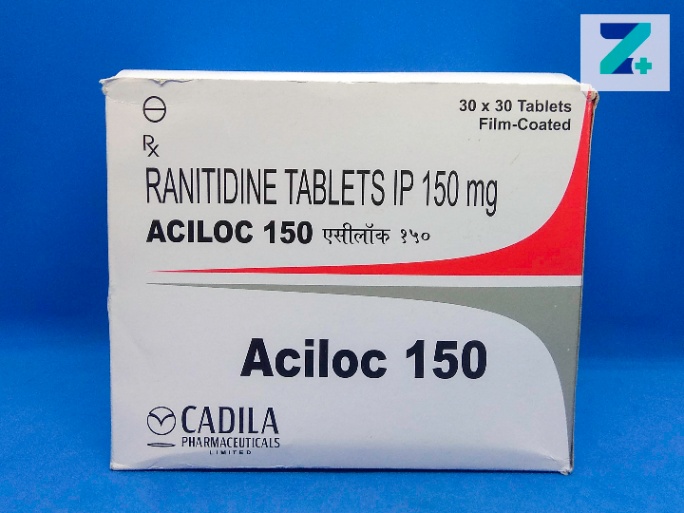
ACILOC 150MG
Price: Rs.47.20
10% off
In stock
Loose stock: 28
Description
ACILOC 150MG TAB 30
Details
Composition
RANITIDINE 150 MG
# RANITIDINE 150 MG
## SHORT DESCRIPTION
**Ranitidine 150 mg** is an **H2-receptor antagonist (H2 blocker)** that reduces the amount of acid produced by the stomach. It has historically been used for **heartburn, acid reflux/GERD, peptic ulcers, and other acid-related conditions**.
> **Important:** Ranitidine has had significant regulatory restrictions because of concerns about **N-nitrosodimethylamine (NDMA)** contamination and formation during storage. The regulatory status differs by country and product. Use only a **currently authorized formulation** supplied through a legitimate pharmacy and follow its current product information.
---
## KEY BENEFITS
* Reduces **stomach acid production**
* Helps relieve **heartburn**
* Helps control symptoms of **acid reflux/GERD**
* Historically used to support healing of **gastric and duodenal ulcers**
* May relieve acid-related upper-abdominal discomfort
* Can be used for certain conditions associated with excessive stomach acid
> Ranitidine provides acid reduction; it does not treat every cause of abdominal pain or indigestion.
---
## USES / INDICATIONS
Ranitidine has historically been used for:
### 1. Gastroesophageal Reflux Disease (GERD)
May help relieve:
* Heartburn
* Acid regurgitation
* Acid-related discomfort
### 2. Peptic Ulcers
Historically used in the treatment of:
* Gastric ulcers
* Duodenal ulcers
### 3. Heartburn and Acid Indigestion
May reduce symptoms caused by excess gastric acid.
### 4. Hypersecretory Conditions
Historically used for conditions involving excessive acid secretion, including **Zollinger-Ellison syndrome**.
> Approved indications depend on the specific currently marketed formulation and local regulatory requirements.
---
## HOW IT WORKS
Ranitidine is an **H2-receptor antagonist**.
Histamine normally binds to H2 receptors on stomach parietal cells and stimulates gastric acid secretion.
Ranitidine blocks these receptors, thereby reducing acid production.
**Ranitidine → blocks H2 receptors → decreases gastric acid secretion → reduces acid-related symptoms.**
Reduced acid exposure can also support healing of acid-related ulcers.
---
## DOSAGE & ADMINISTRATION
> **Follow the dosage on the current approved product label or the instructions provided by your doctor/pharmacist.**
Historically, **150 mg twice daily** was a commonly used adult regimen for several acid-related conditions. However, dosing varies according to the condition, formulation, kidney function, and applicable product labeling.
### General Administration
* Take exactly as directed.
* Tablets may generally be taken with or without food.
* Swallow with water.
* Do not exceed the recommended dose.
* Do not use an old or recalled ranitidine product.
### Kidney Disease
Ranitidine is substantially eliminated through the kidneys. Patients with impaired kidney function may require **dose adjustment**.
### Missed Dose
Take the missed dose when remembered unless it is nearly time for the next dose.
**Do not double the next dose.**
---
## SIDE EFFECTS
### Common Side Effects
Possible side effects include:
* Headache
* Dizziness
* Nausea
* Vomiting
* Constipation
* Diarrhea
* Abdominal discomfort
### Less Common Effects
Some patients may experience:
* Fatigue
* Skin rash
* Confusion, particularly in older adults or people with kidney impairment
### Serious Side Effects
Seek immediate medical attention for:
* Difficulty breathing
* Swelling of the face, lips, tongue, or throat
* Severe allergic reaction
* Severe confusion
* Yellowing of the skin or eyes
* Dark urine
* Severe or unusual skin reactions
---
## PRECAUTIONS & WARNINGS
### NDMA Safety Concern
Ranitidine products have historically been associated with concerns regarding **NDMA**, a probable human carcinogen.
Some older ranitidine products were withdrawn or suspended because NDMA levels could increase under certain storage conditions.
**Do not use old, recalled, or unapproved ranitidine products.**
### Kidney Disease
Tell your doctor if you have kidney disease because ranitidine may accumulate when kidney function is reduced.
### Liver Disease
Inform your healthcare professional if you have significant liver disease.
### Persistent Heartburn
Do not repeatedly self-treat persistent heartburn without medical evaluation. Long-lasting symptoms may require investigation for GERD or other gastrointestinal conditions.
### Seek Medical Attention for Warning Symptoms
Consult a healthcare professional promptly if you have:
* Difficulty or pain swallowing
* Vomiting blood
* Black or tarry stools
* Unexplained weight loss
* Persistent vomiting
* Severe or persistent abdominal pain
* Severe chest pain
### Pregnancy
Consult your doctor before using ranitidine during pregnancy.
### Breastfeeding
Consult a healthcare professional before using ranitidine while breastfeeding.
---
## DRUG INTERACTIONS
Ranitidine may interact with certain medicines or affect the absorption of medicines that require stomach acid.
### Antacids
Antacids may sometimes be used alongside acid-reducing medicines, but appropriate timing may be recommended depending on the specific products.
### Warfarin
Ranitidine may affect **warfarin** therapy in some patients. Appropriate monitoring may be required.
### Procainamide
Ranitidine may increase blood concentrations of **procainamide** in some patients.
### Medicines Requiring Stomach Acid for Absorption
Because ranitidine reduces gastric acidity, it may affect the absorption of certain medicines.
### Other Medicines
Tell your doctor or pharmacist about all:
* Prescription medicines
* OTC medicines
* Vitamins
* Herbal products
* Dietary supplements
before starting treatment.
---
## STORAGE INFORMATION
Storage requirements depend on the **specific formulation and manufacturer**.
* Follow the storage instructions printed on the current product packaging.
* Keep the medicine in its original container.
* Protect from excessive heat and moisture.
* Keep away from direct sunlight.
* Keep out of reach of children.
* Do not use after the expiry date.
* Do not use products with damaged or suspicious packaging.
* Do not use recalled or previously withdrawn ranitidine products.
**For any currently authorized formulation, follow its specific storage and post-opening instructions rather than relying on storage information for older ranitidine products.**
---
## PRESCRIPTION STATUS
**Ranitidine 150 mg prescription status varies by country and formulation.**
Historically, ranitidine was available both as a prescription and over-the-counter medicine in some markets. Because of the NDMA-related regulatory history, availability and legal status should be verified for the **specific product and country**.
---
## GENUINE MEDICINE ASSURANCE
When purchasing Ranitidine 150 mg:
* Buy only from a **licensed pharmacy or authorized medicine supplier**.
* Verify the manufacturer and product registration details.
* Check the strength and formulation.
* Check the batch/lot number and expiry date.
* Ensure the seal and packaging are intact.
* Confirm that the product is **currently authorized for sale in your country**.
* Do not purchase old, recalled, or suspicious ranitidine products.
* Do not assume an older product is equivalent to a currently authorized formulation.
* If authenticity is uncertain, consult a pharmacist or the relevant medicines regulatory authority.
---
# FAQ – Ranitidine 150 mg
### 1. What is Ranitidine 150 mg used for?
Ranitidine is an H2 blocker that reduces stomach acid. It has historically been used for **heartburn, GERD, peptic ulcers, and other acid-related conditions**.
### 2. Is Ranitidine an antacid?
No. Ranitidine is an **H2-receptor blocker**. It reduces the production of stomach acid rather than directly neutralizing acid already present in the stomach.
### 3. How does Ranitidine 150 mg work?
It blocks H2 receptors in the stomach, reducing gastric acid production.
### 4. Is Ranitidine still available?
Availability varies by country and formulation. Some older products were withdrawn or suspended because of NDMA concerns, while certain reformulated products have received regulatory authorization in some markets.
### 5. Why was Ranitidine withdrawn?
Concerns arose after **NDMA**, a probable human carcinogen, was detected in ranitidine products. Regulators were concerned that NDMA levels could increase over time and under certain storage conditions.
### 6. Is Ranitidine banned everywhere?
No. The regulatory situation is **country- and product-specific**. Some markets have suspended ranitidine products, while authorized reformulated products may be available in other markets.
### 7. Is Ranitidine 150 mg safe?
Safety depends on the **specific formulation and its current regulatory authorization**. Do not use old or recalled ranitidine products.
### 8. Does Ranitidine treat acidity?
Ranitidine reduces stomach acid and was commonly used to relieve acid-related symptoms such as heartburn.
### 9. Does Ranitidine help with GERD?
Historically, yes. It reduces gastric acid and can relieve symptoms associated with GERD.
### 10. Can Ranitidine treat stomach ulcers?
Ranitidine was historically used to reduce acid and support healing of gastric and duodenal ulcers. Current ulcer treatment should follow local clinical guidelines and professional advice.
### 11. What was the usual dose of Ranitidine 150 mg?
Historically, **150 mg twice daily** was commonly used for several acid-related conditions. The appropriate dose of any currently authorized product should be determined from its current product labeling and medical advice.
### 12. Can Ranitidine be taken with food?
Historically, ranitidine could generally be taken with or without food. Follow the instructions for the specific formulation being used.
### 13. Does Ranitidine cause headache?
Yes. Headache is a possible side effect.
### 14. Can Ranitidine cause dizziness?
Yes, dizziness can occur in some people.
### 15. Can Ranitidine cause constipation?
Constipation is a possible side effect, although not everyone experiences it.
### 16. Can Ranitidine be used during pregnancy?
Do not self-medicate during pregnancy. Consult your healthcare professional before use.
### 17. Can Ranitidine be used while breastfeeding?
Consult your doctor or pharmacist before using ranitidine while breastfeeding.
### 18. Can I take Ranitidine with other medicines?
Potential interactions are possible. Tell your healthcare professional about all medicines and supplements you use.
### 19. Can I use old Ranitidine 150 mg tablets?
**Do not use old or recalled ranitidine products without professional advice.** Verify that the specific product is currently authorized and appropriate for use.
### 20. Is Ranitidine the same as Omeprazole?
No. Ranitidine is an **H2 blocker**, whereas omeprazole is a **proton pump inhibitor (PPI)**. Both reduce stomach acid but work through different mechanisms.
### 21. Is Ranitidine the same as Famotidine?
No. Both are H2 blockers, but they are different active ingredients. Famotidine is commonly used as an alternative acid-reducing medicine in many markets.
### 22. Can Ranitidine be used for heartburn?
Historically, yes. It was widely used for heartburn and acid reflux. Current treatment should use a locally approved medicine or an appropriately authorized ranitidine formulation.
### 23. Does Ranitidine cure acid reflux permanently?
No. It reduces acid production and may relieve symptoms, but it does not necessarily eliminate the underlying cause of GERD.
### 24. Is Ranitidine 150 mg available without a prescription?
This varies according to country and product. Check with a **licensed pharmacy** for the current legal status.
### 25. What should I do if heartburn continues despite treatment?
Persistent or worsening heartburn should be medically evaluated, especially if accompanied by **difficulty swallowing, vomiting blood, black stools, unexplained weight loss, persistent vomiting, or severe chest pain**.
---
## MEDICAL DISCLAIMER
This information about **Ranitidine 150 mg** is provided for educational and informational purposes only. It is **not a substitute for professional medical advice, diagnosis, or treatment**.
Ranitidine has a significant regulatory history involving **NDMA impurity concerns**. Therefore, the safety and availability of a particular Ranitidine 150 mg product depend on its manufacturer, formulation, storage requirements, and current regulatory authorization.
**Do not use old, recalled, or unapproved ranitidine products.** Always verify the specific product with a licensed pharmacist or healthcare professional and follow the current approved product label.
If you have persistent heartburn, severe abdominal symptoms, difficulty swallowing, vomiting blood, black stools, unexplained weight loss, or severe chest pain, seek appropriate medical evaluation rather than relying on self-treatment.