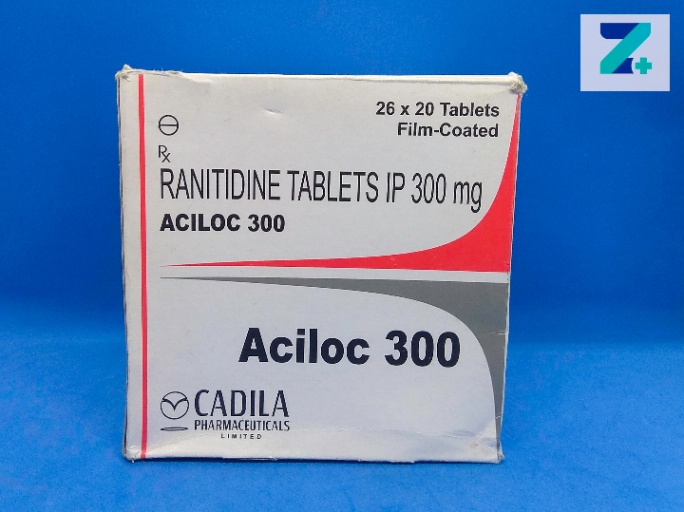
ACILOC 300MG
Price: Rs.59.20
10% off
In stock
Loose stock: 2
Description
ACILOC 300MG TAB 20
Details
Composition
RANITIDINE 300 MG
# Ranitidine 300 mg
## Short Description
**Ranitidine 300 mg** is an **H2-receptor antagonist (H2 blocker)** medicine that reduces the production of stomach acid. It is used for the treatment of acid-related digestive conditions such as **acid reflux, heartburn, stomach ulcers, and excessive gastric acid secretion**.
Ranitidine works by blocking histamine receptors in the stomach lining, thereby decreasing acid production and providing relief from acid-related symptoms.
**Note:** Regulatory status and availability of ranitidine may vary by country due to safety-related reviews. Use only products approved and recommended by local health authorities.
---
# Key Benefits Section
- Reduces excessive stomach acid production.
- Provides relief from heartburn and acid reflux symptoms.
- Helps in the healing of stomach and intestinal ulcers.
- Reduces acid-related irritation of the digestive tract.
- Helps manage conditions caused by excess gastric acid.
- Provides longer-lasting acid control compared with simple antacids.
- Supports symptom relief in acid-related digestive disorders.
---
# Uses / Indications
Ranitidine 300 mg may be used for:
## Acid Reflux / GERD
Helps manage:
- Heartburn.
- Acid regurgitation.
- Acid-related chest discomfort.
## Peptic Ulcers
Used in the treatment and healing of:
- Gastric ulcers.
- Duodenal ulcers.
## Excess Stomach Acid Conditions
May be prescribed for:
- Hyperacidity.
- Excess gastric acid secretion.
- Zollinger–Ellison syndrome and other rare acid hypersecretion disorders.
## Prevention of Acid-Related Damage
May be used in selected patients to reduce the risk of acid-related irritation.
---
# How It Works
Ranitidine belongs to the class of medicines called **H2 receptor antagonists**.
It works by:
- Blocking histamine (H2) receptors in stomach acid-producing cells.
- Reducing stimulation of acid secretion.
- Lowering the amount of acid produced in the stomach.
This helps relieve acid-related symptoms and allows ulcers or irritated stomach lining to heal.
---
# Dosage & Administration
Take **Ranitidine 300 mg** only as prescribed by your doctor.
## General Instructions
- Usually taken once daily or as directed.
- May be taken with or without food.
- Swallow the tablet with water.
- Take at the same time each day for best results.
## Important Instructions
- Follow the complete treatment duration advised by your healthcare provider.
- Do not exceed the recommended dose.
- Persistent stomach symptoms should be evaluated medically.
## Missed Dose
- Take the missed dose when remembered.
- If it is close to the next scheduled dose, skip it.
- Do not take two doses together.
---
# Side Effects
## Common Side Effects
- Headache.
- Dizziness.
- Nausea.
- Vomiting.
- Constipation.
- Diarrhea.
- Stomach discomfort.
## Rare but Serious Side Effects
Seek medical attention if you experience:
- Severe allergic reactions.
- Difficulty breathing.
- Unusual tiredness.
- Confusion or mood changes.
- Yellowing of skin or eyes.
- Unusual bleeding or bruising.
---
# Precautions & Warnings
Before taking Ranitidine, inform your doctor if you have:
- Kidney disease.
- Liver disease.
- History of stomach cancer symptoms.
- Blood disorders.
- Allergy to ranitidine or similar medicines.
## Important Warnings
- Long-term acid suppression should be medically supervised.
- Persistent heartburn, weight loss, vomiting, or difficulty swallowing requires medical evaluation.
- Dose adjustment may be required in kidney impairment.
- Inform your doctor if you are pregnant or breastfeeding.
- Do not self-medicate for prolonged periods.
---
# Drug Interactions
Ranitidine may interact with:
## Medicines Requiring Stomach Acid for Absorption
Reduced stomach acid may affect absorption of some medicines.
## Antacids
May affect absorption of certain medicines if taken together.
## Blood Thinners
Example:
- Warfarin.
Monitoring may be required.
## Certain Heart Medicines
Some medicines may require dose adjustment.
## Other Prescription Medicines
Always inform your doctor about:
- Prescription medicines.
- Over-the-counter medicines.
- Vitamins.
- Herbal supplements.
---
# Storage Information
- Store below **25°C**.
- Keep in a cool and dry place.
- Protect from moisture and direct sunlight.
- Keep tablets in the original packaging.
- Keep away from children.
- Do not use after the expiry date.
---
# Prescription Status
**Prescription Only Medicine (Rx) / Regulatory Status Varies**
Ranitidine availability and prescribing status may differ between countries due to regulatory reviews. Use only approved products recommended by healthcare professionals.
---
# Genuine Medicine Assurance
We provide **100% genuine, quality-assured medicines** sourced from licensed pharmaceutical manufacturers and authorized distributors. All medicines are stored and handled according to recommended pharmaceutical standards to maintain their safety, quality, and effectiveness.
---
# FAQ Section (Frequently Asked Questions)
## 1. What is Ranitidine 300 mg used for?
Ranitidine 300 mg is used to reduce stomach acid and treat acid reflux, heartburn, and acid-related ulcers.
---
## 2. Is Ranitidine an antacid?
No. Ranitidine is an H2 blocker that reduces acid production, while antacids directly neutralize existing stomach acid.
---
## 3. How does Ranitidine reduce acidity?
It blocks histamine H2 receptors in the stomach, reducing acid secretion.
---
## 4. How long does Ranitidine take to work?
It may begin reducing acid production within a short time, but symptom improvement varies depending on the condition.
---
## 5. Can Ranitidine be taken daily?
It should only be taken daily if recommended by a healthcare professional.
---
## 6. Can Ranitidine treat stomach ulcers?
Yes, it may help reduce acid and support healing of certain stomach and intestinal ulcers.
---
## 7. Can Ranitidine be taken with food?
Yes, it can generally be taken with or without food as directed.
---
## 8. Is Ranitidine safe during pregnancy?
Consult your doctor before using Ranitidine during pregnancy or breastfeeding.
---
## 9. Can Ranitidine cause constipation or diarrhea?
Yes. Digestive side effects such as constipation or diarrhea may occur in some people.
---
## 10. What should I do if heartburn continues despite taking Ranitidine?
Consult your doctor, especially if symptoms persist, worsen, or are associated with warning signs.
---
## 11. Is Ranitidine still available?
Availability depends on the country and current regulatory approvals. Consult a healthcare professional for suitable alternatives if needed.
---
## 12. Can I stop Ranitidine suddenly?
Stopping usually does not cause withdrawal, but consult your doctor if you are using it for a diagnosed condition.
---
# Medical Disclaimer
The information provided on this page is for **educational and informational purposes only** and does not replace professional medical advice, diagnosis, or treatment. **Ranitidine 300 mg** should only be used according to healthcare professional guidance and local regulatory recommendations. Always consult your doctor before starting, stopping, or changing any medication.
```