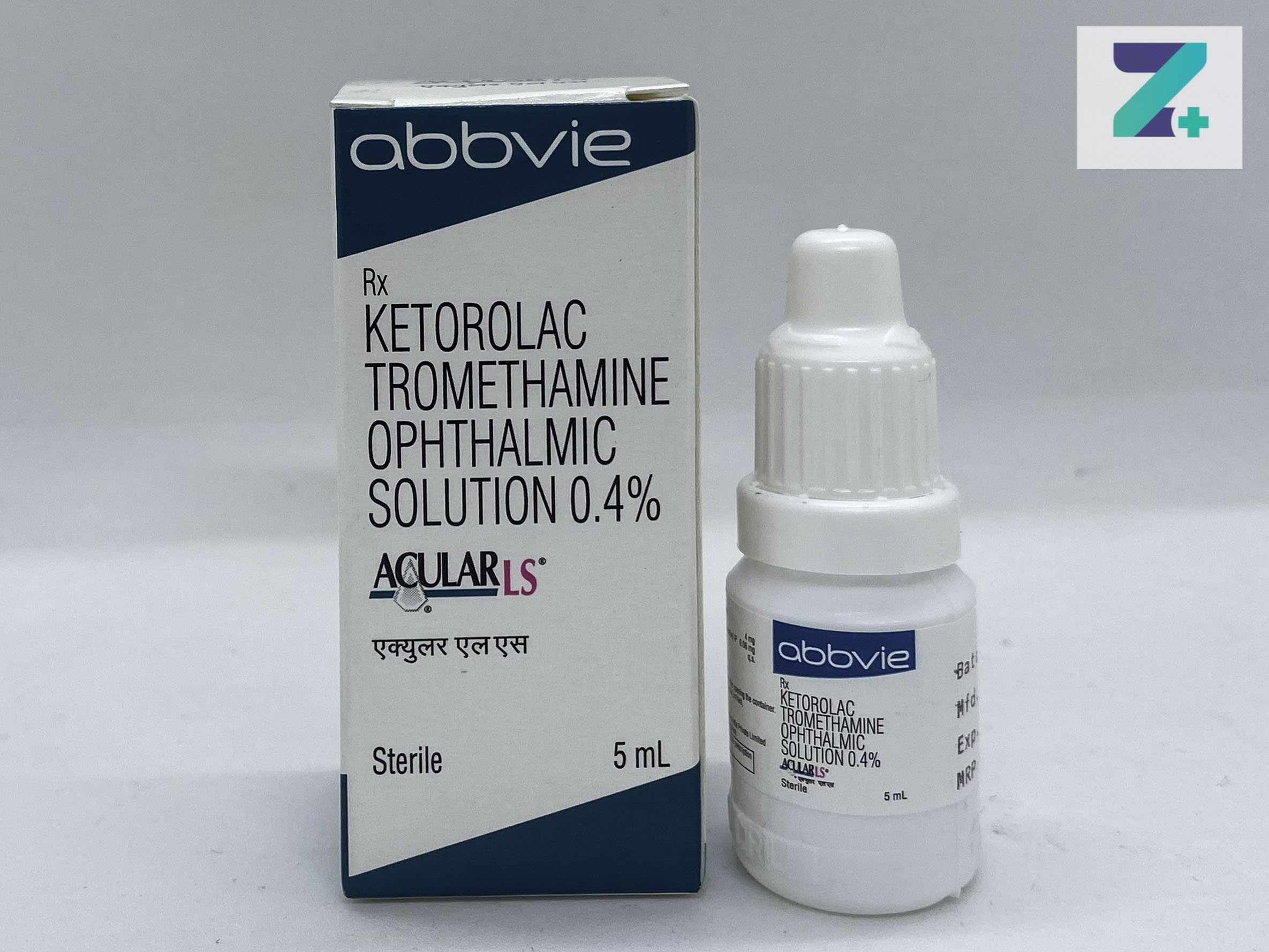
ACULAR LS
Price: Rs.226.08
10% off
In stock
Loose stock: 0
Description
ACULAR LS EYE DROPS 5ML
Details
Composition
KETOROLAC TROMETHAMINE 0.4 % W/V
# Ketorolac Tromethamine 0.4% w/v
## SHORT DESCRIPTION
Ketorolac Tromethamine 0.4% w/v is a **non-steroidal anti-inflammatory drug (NSAID) ophthalmic solution** used to relieve eye pain and inflammation. It works by reducing the production of prostaglandins, substances involved in pain and inflammation. It is commonly prescribed for short-term relief of ocular inflammation and discomfort, including after certain eye procedures.
## KEY BENEFITS
* Helps relieve **eye pain and discomfort**
* Helps reduce **eye inflammation**
* May reduce redness and irritation associated with inflammatory eye conditions
* Useful for managing ocular inflammation following certain eye procedures
* Provides localized anti-inflammatory action when applied to the eye
## USES / INDICATIONS
Ketorolac Tromethamine 0.4% w/v eye drops may be prescribed for:
* Relief of ocular pain
* Reduction of eye inflammation
* Inflammation following certain eye surgeries or procedures
* Prevention or reduction of symptoms associated with postoperative ocular inflammation
* Other inflammatory eye conditions when specifically prescribed by an ophthalmologist
## HOW IT WORKS
Ketorolac is an NSAID that inhibits **cyclooxygenase (COX) enzymes**, reducing the production of prostaglandins. Prostaglandins contribute to pain, inflammation, and swelling.
When administered as an ophthalmic solution, ketorolac acts locally in the eye to help reduce inflammatory processes and associated discomfort.
## DOSAGE & ADMINISTRATION
* Use Ketorolac Tromethamine 0.4% w/v exactly as prescribed by your ophthalmologist.
* Wash your hands before using the eye drops.
* Tilt your head back, gently pull down the lower eyelid, and instill the prescribed number of drops into the affected eye.
* Avoid touching the dropper tip to the eye, eyelids, fingers, or other surfaces.
* Close your eye gently after administration.
* If using multiple ophthalmic medicines, separate them by approximately **5 minutes** unless your doctor provides different instructions.
* If you wear contact lenses, follow your ophthalmologist's instructions regarding lens removal and reinsertion.
* Do not use the medicine more frequently or for longer than prescribed.
**Note:** The exact dosage and duration depend on the indication and the specific product. Follow the prescription and package instructions.
## SIDE EFFECTS
Possible side effects include:
* Temporary burning or stinging after application
* Eye irritation
* Eye discomfort
* Increased tearing
* Redness
* Blurred vision
* Headache
Less common but potentially serious effects include:
* Corneal irritation or damage
* Delayed corneal healing
* Corneal ulceration
* Severe eye pain
* Changes in vision
* Increased sensitivity to light
* Allergic reactions
Contact an ophthalmologist promptly if eye pain worsens, vision changes occur, or severe irritation develops.
## PRECAUTIONS & WARNINGS
* For **ophthalmic use only**.
* Do not touch the dropper tip to the eye or any surface.
* Use cautiously if you have a history of **corneal disease, eye surgery, dry eye, or other ocular surface disorders**.
* NSAID eye drops may rarely cause corneal complications, particularly with prolonged or inappropriate use.
* Inform your ophthalmologist if you have previously experienced an allergic reaction to aspirin, ketorolac, or other NSAIDs.
* Tell your doctor if you have asthma that is aggravated by aspirin or NSAIDs.
* Use with caution in patients with bleeding disorders or those taking medicines that increase bleeding risk.
* Tell your doctor if you are pregnant or breastfeeding.
* Do not use longer than prescribed because prolonged use may increase the risk of ocular complications.
## DRUG INTERACTIONS
Tell your doctor about all medicines you use, including other eye drops and oral medicines.
Potential interactions or additive effects may occur with:
* **Other ophthalmic NSAIDs:** May increase the risk of ocular irritation or corneal complications.
* **Corticosteroid eye drops:** Concurrent use may increase the risk of delayed corneal healing or other ocular complications and should be monitored by an ophthalmologist.
* **Anticoagulants and antiplatelet medicines:** May potentially increase bleeding risk.
* **Systemic NSAIDs:** May increase overall NSAID exposure and adverse effects.
* **Other topical ophthalmic medicines:** Proper spacing between eye drops can help prevent dilution or washout.
Always follow your ophthalmologist's instructions when using more than one eye medication.
## STORAGE INFORMATION
* Store according to the manufacturer's instructions, generally at controlled room temperature.
* Keep away from excessive heat, moisture, and direct sunlight.
* Keep the bottle tightly closed when not in use.
* Do not touch the dropper tip to any surface.
* Keep out of reach and sight of children.
* Do not use after the expiry date.
* Follow the product-specific instructions regarding how long the bottle can be used after opening.
## PRESCRIPTION STATUS
**Prescription Medicine**
Ketorolac Tromethamine 0.4% w/v ophthalmic solution should be used under the supervision of a qualified healthcare professional, particularly when used around eye surgery or for prolonged treatment. Prescription requirements may vary according to local regulations.
## GENUINE MEDICINE ASSURANCE
Purchase Ketorolac Tromethamine 0.4% w/v only from a **licensed and reputable pharmacy**. Before use, verify:
* Product name and strength
* Active ingredient
* Manufacturer details
* Batch or lot number
* Expiry date
* Packaging and seal
Do not use the eye drops if the bottle or seal is damaged, the solution appears contaminated, or the product has changed significantly in appearance.
## FAQ — Frequently Asked Questions
### What is Ketorolac Tromethamine 0.4% eye drops used for?
Ketorolac Tromethamine 0.4% w/v eye drops are used to help relieve **eye pain and inflammation**, particularly when associated with certain eye procedures or inflammatory eye conditions.
### Is Ketorolac Tromethamine an antibiotic?
No. Ketorolac is an **NSAID**, not an antibiotic. It helps control pain and inflammation but does not treat bacterial, viral, or fungal eye infections.
### Can Ketorolac eye drops relieve eye pain?
Yes. Ketorolac reduces prostaglandin production and can help relieve ocular pain and inflammation when prescribed appropriately.
### Can Ketorolac eye drops reduce eye redness?
They may help reduce redness when the redness is associated with inflammation. However, they should not be used simply as a cosmetic treatment for red eyes.
### How should Ketorolac 0.4% eye drops be used?
Use the prescribed number of drops in the affected eye. Wash your hands first and avoid touching the dropper tip to the eye or other surfaces.
### Can I wear contact lenses while using Ketorolac eye drops?
Follow your ophthalmologist's advice. Contact lenses may need to be removed before application and should only be reinserted according to the product instructions or your doctor's recommendation.
### Can Ketorolac eye drops cause burning?
Yes. Mild, temporary burning or stinging can occur after application. Persistent or severe irritation should be evaluated by an eye-care professional.
### Can Ketorolac eye drops damage the cornea?
Rarely, topical ophthalmic NSAIDs can cause serious corneal complications, particularly with prolonged use or in patients with certain ocular surface conditions. Use the medicine only as prescribed.
### Can Ketorolac eye drops be used with other eye drops?
They may be used with other ophthalmic medicines when prescribed. If using multiple eye drops, leave an appropriate interval between applications, generally around **5 minutes**, unless instructed otherwise.
### Can Ketorolac eye drops be used after eye surgery?
Yes. Ophthalmologists may prescribe ketorolac eye drops for pain and inflammation associated with certain eye surgeries. The exact regimen depends on the procedure and individual patient.
### Can I use Ketorolac eye drops for a long time?
Do not use them longer than prescribed. Prolonged use of topical NSAIDs may increase the risk of ocular surface and corneal complications.
### What should I do if I miss a dose?
Use the missed dose when you remember unless it is almost time for the next scheduled dose. Do not use extra drops to compensate for a missed dose.
### What happens if I accidentally put too many drops in my eye?
A small excess may cause temporary irritation or blurred vision. Gently close the eye and follow your product instructions. If significant pain, persistent blurred vision, or other concerning symptoms develop, contact an eye-care professional.
## MEDICAL DISCLAIMER
This information is provided for **general educational purposes only** and is not a substitute for professional medical advice, diagnosis, or treatment. Ketorolac Tromethamine 0.4% w/v is an ophthalmic medicine and should be used according to the prescription and instructions provided by a qualified healthcare professional. The appropriate dose and duration depend on the patient's condition and the specific product. Always read the package insert and consult your doctor or pharmacist before starting, stopping, or changing treatment.