ADMENTA 10MG
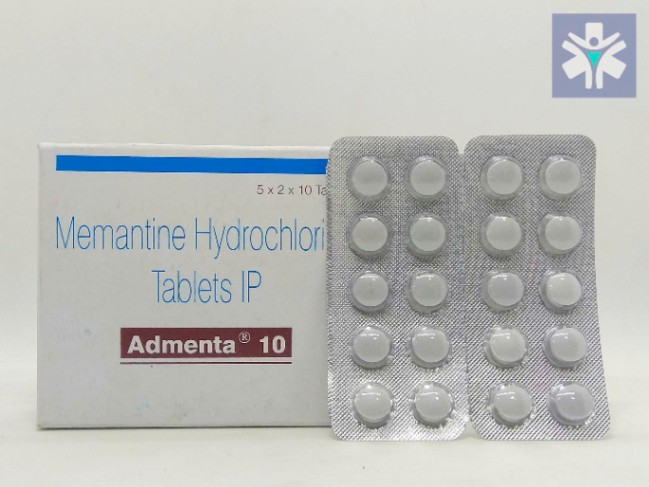
Price: Rs.280.80
13% off
In stock
Loose stock: 0
Description
ADMENTA 10MG TAB 10
Details
Composition
MEMANTINE 10 MG
# MEMANTINE 10 MG
## SHORT DESCRIPTION
**Memantine 10 mg** is a prescription medicine used primarily to help manage symptoms of **moderate to severe Alzheimer's disease**. It belongs to a group of medicines called **NMDA receptor antagonists**.
Memantine may help improve or maintain cognitive function, daily activities, and behavioral symptoms in some people with Alzheimer's disease. It does **not cure Alzheimer's disease or stop the underlying progression of dementia**.
---
## KEY BENEFITS
* Used for **moderate to severe Alzheimer's disease**.
* May help support memory and thinking abilities.
* May help maintain the ability to perform everyday activities.
* Can help with some behavioral symptoms associated with dementia.
* May be used alone or alongside certain other Alzheimer's medicines when prescribed.
* Works through a different mechanism from acetylcholinesterase inhibitors.
---
## USES / INDICATIONS
Memantine 10 mg may be prescribed for:
* **Moderate Alzheimer's disease**
* **Severe Alzheimer's disease**
* Management of cognitive symptoms associated with Alzheimer's dementia
Memantine may sometimes be continued alongside medicines such as donepezil, rivastigmine, or galantamine when considered appropriate by a healthcare professional.
> **Memantine is not approved or appropriate for every type of dementia.** The underlying cause of cognitive impairment should be assessed by a healthcare professional.
---
## HOW IT WORKS
Memantine is an **NMDA (N-methyl-D-aspartate) receptor antagonist**.
Glutamate is an important neurotransmitter involved in learning and memory. Excessive glutamate activity can lead to excessive stimulation of NMDA receptors and potentially contribute to neuronal damage.
Memantine blocks NMDA receptor activity in a **voltage-dependent and moderate manner**, helping reduce harmful excessive glutamate activity while allowing normal neurotransmission to continue.
**Memantine → modulates excessive NMDA receptor activity → reduces pathological glutamate effects → may help preserve cognitive and functional abilities.**
---
## DOSAGE & ADMINISTRATION
> **Take Memantine 10 mg exactly as prescribed by your doctor.**
### Usual Adult Dosing
Memantine treatment is generally **started at a lower dose and gradually increased** to reduce the likelihood of side effects.
A commonly used regimen with immediate-release tablets is:
* **Week 1:** 5 mg once daily
* **Week 2:** 5 mg twice daily
* **Week 3:** 5 mg in the morning and 10 mg in the evening
* **Week 4 onward:** 10 mg twice daily, if tolerated
The usual maximum for immediate-release memantine is **20 mg per day**.
For patients with significant kidney impairment, a lower maximum dose may be required.
> The exact titration schedule depends on the formulation and your doctor's instructions. **Do not start directly with 10 mg twice daily unless specifically prescribed.**
### How to Take
* Take with or without food.
* Swallow the tablet with water.
* Take doses at approximately the same time each day.
* Do not crush or split tablets unless the product instructions permit it.
### Missed Dose
Take the missed dose when remembered unless it is close to the next scheduled dose.
**Do not take two doses at once.**
If memantine treatment has been interrupted for several days, contact your doctor before restarting because the dose may need to be gradually increased again.
---
## SIDE EFFECTS
### Common Side Effects
Possible side effects include:
* Dizziness
* Headache
* Constipation
* Sleepiness
* Confusion
* Fatigue
* Increased blood pressure
* Shortness of breath in some patients
These effects may be more noticeable when treatment is first started or when the dose is increased.
### Less Common Effects
Some patients may experience:
* Hallucinations
* Vomiting
* Balance problems
* Abnormal gait
* Muscle-related symptoms
* Increased tiredness
### Serious Side Effects
Seek medical attention for severe or unusual:
* Confusion
* Hallucinations
* Severe dizziness or falls
* Seizures
* Severe allergic reactions
* Significant changes in consciousness or behavior
---
## PRECAUTIONS & WARNINGS
### Kidney Disease
Memantine is eliminated primarily through the kidneys.
Patients with **severe renal impairment** may require a lower dose or slower dose adjustment.
Tell your doctor if you have kidney disease.
### Seizure Disorders
Memantine should be used cautiously in people with a history of seizures or conditions that increase seizure risk.
### Heart Conditions
Tell your doctor if you have significant heart disease, particularly if you experience dizziness, fainting, or abnormal heart rhythms.
### Urinary Conditions
Conditions that significantly increase urine alkalinity can reduce memantine elimination and potentially increase its blood concentration.
### Dementia and Falls
Dizziness, confusion, and balance problems may increase the risk of falls, particularly in older adults.
Caregivers should monitor patients for changes in mobility or behavior.
### Pregnancy
There is limited information regarding memantine use during pregnancy. Tell your doctor if you are pregnant, planning pregnancy, or could become pregnant.
### Breastfeeding
It is not well established whether memantine passes into human breast milk. Discuss the potential risks and benefits with your healthcare professional.
---
## DRUG INTERACTIONS
Tell your doctor or pharmacist about all prescription medicines, OTC medicines, supplements, and herbal products you use.
### Amantadine
Memantine and **amantadine** both affect NMDA receptor activity. Combining them may increase the risk of adverse effects and should generally be avoided unless specifically directed by a healthcare professional.
### Ketamine
Ketamine also affects NMDA receptors. Concurrent use may increase the risk of central nervous system adverse effects.
### Dextromethorphan
Dextromethorphan has NMDA receptor activity. Combining it with memantine may increase the likelihood of adverse effects.
### Urine-Alkalinizing Medicines
Medicines or conditions that significantly alkalinize urine can decrease memantine elimination and increase its blood concentration.
Examples may include certain carbonic anhydrase inhibitors or large amounts of alkaline agents.
### Other Dementia Medicines
Memantine may be prescribed with acetylcholinesterase inhibitors such as:
* Donepezil
* Rivastigmine
* Galantamine
Combination treatment should be supervised by a healthcare professional.
### Diuretics and Other Medicines
Always provide your healthcare professional with a complete medication list, particularly if you take medicines that affect kidney function or urine pH.
---
## STORAGE INFORMATION
* Store according to the manufacturer's instructions.
* Keep at room temperature unless otherwise specified.
* Protect from excessive heat, moisture, and direct sunlight.
* Keep tablets in their original packaging.
* Keep out of reach and sight of children.
* Do not use after the expiry date.
* Do not use tablets from damaged or tampered packaging.
---
## PRESCRIPTION STATUS
**Prescription Medicine**
Memantine 10 mg should be used under the supervision of a qualified healthcare professional.
Treatment should be individualized according to the severity of dementia, kidney function, other medicines, response to treatment, and tolerability.
---
## GENUINE MEDICINE ASSURANCE
For safe treatment, purchase **Memantine 10 mg** only from a licensed pharmacy or authorized medicine supplier.
Before using the medicine, verify:
* Correct medicine name and strength
* Active ingredient
* Manufacturer
* Batch/lot number
* Manufacturing and expiry dates
* Packaging and security seal
* Regulatory information where applicable
Do not use the medicine if:
* The packaging is damaged or tampered with.
* The medicine is expired.
* Tablets appear damaged or unusual.
* Batch or labeling information is missing.
If you suspect a counterfeit or defective medicine, consult a licensed pharmacist or the appropriate medicine regulatory authority.
---
# FAQ – MEMANTINE 10 MG
### 1. What is Memantine 10 mg used for?
Memantine 10 mg is primarily used to manage symptoms of **moderate to severe Alzheimer's disease**.
### 2. Is Memantine a dementia medicine?
Yes. Memantine is used to help manage cognitive and functional symptoms associated with moderate to severe Alzheimer's dementia.
### 3. Does Memantine cure Alzheimer's disease?
No. Memantine **does not cure Alzheimer's disease** or stop the underlying progression of the disease. It may help maintain or improve certain symptoms for some patients.
### 4. How does Memantine work?
Memantine regulates excessive activity of **NMDA receptors** associated with the neurotransmitter glutamate, helping protect against potentially harmful overstimulation of brain cells.
### 5. What is the usual dose of Memantine?
Treatment is generally started at **5 mg once daily** and gradually increased. The usual target dose for immediate-release tablets is **10 mg twice daily**, depending on individual tolerance and kidney function.
### 6. Can I start directly with Memantine 10 mg?
Do not start at a higher dose unless specifically instructed. Memantine is normally **titrated gradually** to reduce side effects.
### 7. Can Memantine be taken with food?
Yes. Memantine can generally be taken **with or without food**.
### 8. What happens if I miss a Memantine dose?
Take it when remembered unless it is close to the next scheduled dose. **Do not double the dose.**
If treatment has been stopped for several days, contact your doctor before restarting because dose re-titration may be necessary.
### 9. Does Memantine improve memory?
Memantine may help maintain or improve certain cognitive functions in some people with moderate to severe Alzheimer's disease, but individual responses vary.
### 10. How long does Memantine take to work?
The response varies between individuals. Benefits may take several weeks to become noticeable, and treatment is generally assessed over time rather than after a single dose.
### 11. Can Memantine be taken with Donepezil?
Yes. Memantine and donepezil may be prescribed together for some patients with Alzheimer's disease.
### 12. Can Memantine be taken with Rivastigmine?
It may be used together with rivastigmine when clinically appropriate and prescribed by a healthcare professional.
### 13. Can Memantine cause dizziness?
Yes. Dizziness is a possible side effect and can increase the risk of falls, particularly in older adults.
### 14. Can Memantine cause constipation?
Yes. Constipation is a recognized possible side effect.
### 15. Can Memantine cause confusion?
Confusion can occur, although Alzheimer's disease itself can also cause changes in cognition and behavior. New or worsening confusion should be discussed with the treating healthcare professional.
### 16. Can Memantine cause hallucinations?
Hallucinations can occur in some patients. Report new or worsening hallucinations or major behavioral changes to the treating doctor.
### 17. Can Memantine affect blood pressure?
Memantine can cause changes in blood pressure in some patients. Blood pressure should be monitored when clinically appropriate.
### 18. Can people with kidney disease take Memantine?
Yes, but **dose adjustment may be necessary in severe kidney impairment** because memantine is primarily eliminated through the kidneys.
### 19. Can Memantine be taken with Amantadine?
This combination can increase NMDA-related adverse effects and is generally avoided unless specifically directed by a healthcare professional.
### 20. Can Memantine be taken with Dextromethorphan?
Dextromethorphan has NMDA receptor activity and may interact with memantine. Tell your doctor or pharmacist before using cough medicines containing dextromethorphan.
### 21. Can Memantine be used for mild Alzheimer's disease?
Memantine is primarily indicated for **moderate to severe Alzheimer's disease**. Your doctor will determine whether it is appropriate based on the stage and type of dementia.
### 22. Is Memantine useful for all types of dementia?
No. Memantine is primarily used for Alzheimer's disease, and its use in other types of dementia depends on the specific diagnosis and clinical circumstances.
### 23. Can Memantine be stopped suddenly?
Do not stop memantine without discussing it with your doctor. If treatment is interrupted for several days, the dose may need to be gradually restarted.
### 24. Is Memantine 10 mg available without a prescription?
No. Memantine is generally a **prescription medicine**.
### 25. Can Memantine slow Alzheimer's disease?
Memantine may help manage symptoms and preserve function for some patients, but it **does not stop or reverse the underlying neurodegenerative process**.
---
## MEDICAL DISCLAIMER
This information about **Memantine 10 mg** is provided for general educational purposes only and is **not a substitute for professional medical advice, diagnosis, or treatment**.
Memantine is a prescription medicine primarily used for moderate to severe Alzheimer's disease. Treatment should be individualized according to the patient's diagnosis, kidney function, other medicines, response, and tolerability.
**Do not start, stop, or change the dose of memantine without medical advice.** If treatment has been interrupted for several days, consult your healthcare professional before restarting.
Seek medical attention for severe allergic reactions, seizures, severe confusion, hallucinations, fainting, serious behavioral changes, or other concerning symptoms.
Always read the product label/package insert and follow the instructions provided by your doctor or pharmacist.