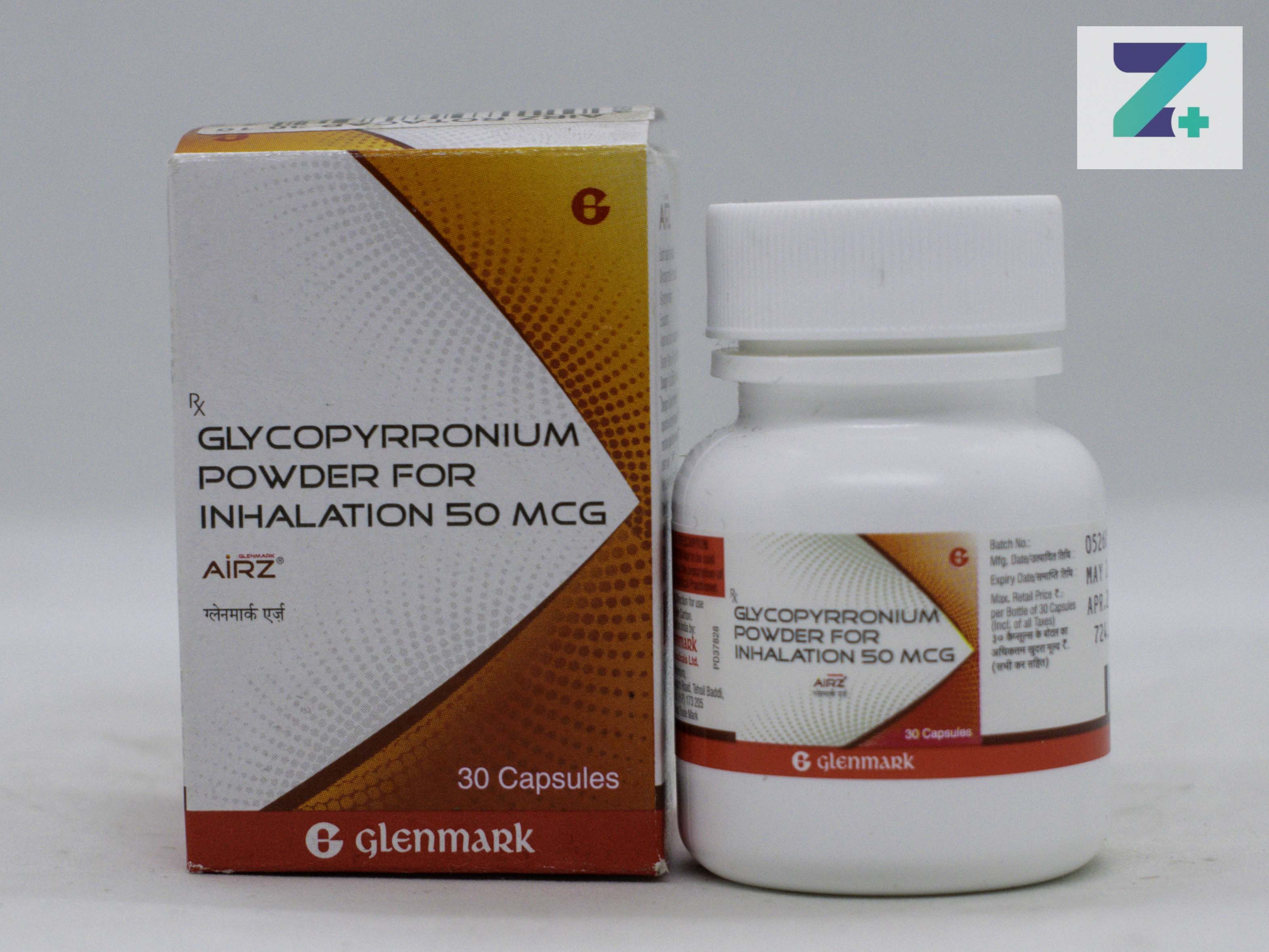
AIRZ
Price: Rs.1158.40
13% off
In stock
Loose stock: 0
Description
AIRZ ROTACAP 30
Details
Composition
GLYCOPYRROLATE 50 MCG
# Glycopyrrolate 50 mcg
## SHORT DESCRIPTION
Glycopyrrolate 50 mcg is a **long-acting inhaled anticholinergic bronchodilator** used as a maintenance treatment for **chronic obstructive pulmonary disease (COPD)**. It helps relax the muscles surrounding the airways, keeping them open and making breathing easier.
It is generally intended for **regular maintenance treatment** and is **not a rescue medicine for sudden breathing difficulty**. The exact approved use and inhaler formulation may vary by product and country.
## KEY BENEFITS
* Helps improve airflow in people with COPD
* Helps relax and open the airways
* May reduce symptoms such as wheezing, breathlessness, and chest tightness
* Supports maintenance control of COPD symptoms
* Provides prolonged bronchodilation when used regularly
* May improve exercise tolerance and daily breathing comfort
* Helps reduce airway narrowing associated with COPD
## USES / INDICATIONS
Glycopyrrolate 50 mcg may be prescribed for:
* **Maintenance treatment of chronic obstructive pulmonary disease (COPD)**
* Chronic bronchitis associated with COPD
* Emphysema associated with COPD
* Long-term control of airflow limitation and respiratory symptoms
### Important
Glycopyrrolate inhalation is generally **not intended to treat an acute asthma attack or sudden severe breathing difficulty** unless specifically directed by a healthcare professional.
## HOW IT WORKS
Glycopyrrolate is a **long-acting muscarinic antagonist (LAMA)**.
It blocks the action of acetylcholine at muscarinic receptors in the airways. This reduces contraction of the airway smooth muscles and causes **bronchodilation**.
As the airways remain more open, airflow improves and symptoms such as breathlessness and wheezing may be reduced.
Because it is a long-acting medicine, glycopyrrolate is designed for **regular maintenance treatment rather than immediate relief**.
## DOSAGE & ADMINISTRATION
* Use Glycopyrrolate 50 mcg exactly as prescribed.
* The exact dose and frequency depend on the inhaler/device and formulation.
* Use the inhaler according to the manufacturer's instructions.
* Take each dose at approximately the same time each day if prescribed for regular maintenance.
* Do not swallow inhalation capsules if your product uses capsules specifically designed for an inhaler device.
* Do not use more frequently than prescribed.
* Do not use someone else's inhaler.
### Missed Dose
Use the missed dose when remembered unless it is close to the next scheduled dose. Do not take an extra dose to compensate.
### Acute Breathing Problems
Glycopyrrolate is **not a substitute for a fast-acting rescue inhaler**. If you experience sudden or severe breathing difficulty, use your prescribed rescue medicine and seek urgent medical attention when necessary.
## SIDE EFFECTS
### Common Side Effects
* Dry mouth
* Sore throat
* Cough
* Headache
* Nasal congestion
* Hoarseness
* Constipation
* Difficulty urinating
### Other Possible Effects
Because glycopyrrolate has anticholinergic effects, it may occasionally cause:
* Blurred vision
* Eye discomfort
* Increased heart rate
* Dizziness
* Nausea
### Serious Side Effects
Seek medical attention if you experience:
* Severe difficulty breathing immediately after inhalation
* New or worsening wheezing
* Eye pain with blurred vision or halos around lights
* Severe allergic reaction
* Difficulty or inability to urinate
* Significant or persistent palpitations
## PRECAUTIONS & WARNINGS
Tell your doctor before using Glycopyrrolate if you have:
* **Glaucoma**, particularly narrow-angle glaucoma
* Difficulty urinating
* Enlarged prostate or bladder outlet obstruction
* Kidney disease
* Heart rhythm problems
* Severe constipation or intestinal obstruction
* A history of urinary retention
* An allergy to glycopyrrolate or other anticholinergic medicines
### Not a Rescue Medicine
Glycopyrrolate is a maintenance bronchodilator and does not normally provide rapid relief of an acute COPD exacerbation or sudden bronchospasm.
### Glaucoma
Avoid getting the inhaled medicine into the eyes. Anticholinergic exposure to the eyes can increase eye pressure and may trigger or worsen **narrow-angle glaucoma**.
Seek immediate medical attention for eye pain, blurred vision, halos around lights, or red eyes.
### Urinary Retention
Glycopyrrolate may worsen urinary retention, particularly in people with an enlarged prostate or urinary tract obstruction.
### Cardiovascular Effects
Anticholinergic medicines can occasionally cause increased heart rate or palpitations. Tell your doctor if you have significant cardiovascular disease or abnormal heart rhythms.
### Kidney Disease
Glycopyrrolate exposure may increase in patients with significant renal impairment. Your healthcare professional may determine whether additional monitoring or an alternative treatment is appropriate.
### Paradoxical Bronchospasm
Rarely, inhaled medicines can cause immediate worsening of wheezing or breathing difficulty after administration. If this occurs, stop using the medicine and seek medical attention.
### Pregnancy and Breastfeeding
Tell your doctor if you are pregnant, planning pregnancy, or breastfeeding before using glycopyrrolate.
## DRUG INTERACTIONS
Glycopyrrolate may interact with or have additive effects with other medicines, particularly:
* **Other anticholinergic medicines** — may increase dry mouth, constipation, urinary retention, blurred vision, and other anticholinergic effects.
* Certain medicines used for overactive bladder — may increase anticholinergic effects.
* Some antihistamines — may increase dryness and other anticholinergic effects.
* Certain antidepressants with anticholinergic properties.
* Some medicines used for Parkinson's disease.
* Other inhaled anticholinergic bronchodilators.
Always inform your doctor or pharmacist about prescription medicines, over-the-counter medicines, vitamins, and herbal supplements you take.
## STORAGE INFORMATION
* Store Glycopyrrolate 50 mcg according to the manufacturer's instructions.
* Keep the inhaler or capsules in their original packaging.
* Protect from moisture, excessive heat, and direct sunlight.
* Keep the medicine away from children.
* Do not use after the expiry date.
* Do not use damaged inhaler devices or capsules.
* If your product uses inhalation capsules, keep them in the blister until immediately before use.
## PRESCRIPTION STATUS
**Prescription Medicine**
Glycopyrrolate 50 mcg inhalation products are generally prescription medicines and should be used under the supervision of a qualified healthcare professional. Prescription requirements may vary by country.
## GENUINE MEDICINE ASSURANCE
When purchasing Glycopyrrolate 50 mcg:
* Purchase from a licensed and reputable pharmacy.
* Check that the packaging is sealed and intact.
* Verify the medicine name, strength, inhaler/device type, and manufacturer.
* Check the batch number and expiry date.
* Ensure the inhaler and packaging have been stored appropriately.
* Avoid products with damaged, altered, or suspicious packaging.
* Purchase from an authorized pharmaceutical supplier.
* Consult a pharmacist if you have concerns about product authenticity.
## FAQ — FREQUENTLY ASKED QUESTIONS
### What is Glycopyrrolate 50 mcg used for?
Glycopyrrolate 50 mcg is an inhaled long-acting bronchodilator commonly used for **maintenance treatment of COPD**.
### Is Glycopyrrolate a steroid?
No. Glycopyrrolate is an **anticholinergic bronchodilator**, specifically a long-acting muscarinic antagonist (LAMA). It is not a corticosteroid.
### Is Glycopyrrolate a rescue inhaler?
No. Glycopyrrolate is generally a **maintenance medicine** and should not be relied upon for immediate relief of sudden breathing difficulty.
### How does Glycopyrrolate help breathing?
It blocks muscarinic receptors in the airways, preventing airway muscles from tightening and helping the airways remain open.
### Is Glycopyrrolate used for COPD?
Yes. Inhaled glycopyrrolate is commonly used as a **maintenance treatment for COPD**, including chronic bronchitis and emphysema.
### Can Glycopyrrolate be used for asthma?
Glycopyrrolate inhalation products are primarily indicated for COPD. Do not use them for asthma unless specifically prescribed by your healthcare professional.
### Does Glycopyrrolate cause dry mouth?
Yes. **Dry mouth** is one of the most common anticholinergic side effects.
### Can Glycopyrrolate cause constipation?
Yes. Constipation can occur because of its anticholinergic effects.
### Can Glycopyrrolate affect the eyes?
Yes. If the medicine gets into the eyes, it may increase eye pressure and potentially worsen narrow-angle glaucoma. Avoid spraying or exposing the eyes to the inhaled medication.
### Can Glycopyrrolate cause blurred vision?
Blurred vision can occur, particularly if the medicine reaches the eyes. Seek medical attention if you develop eye pain, halos, redness, or sudden vision changes.
### Can Glycopyrrolate cause difficulty urinating?
Yes. Glycopyrrolate can cause or worsen **urinary retention**, particularly in people with prostate enlargement or urinary tract obstruction.
### Can Glycopyrrolate increase heart rate?
It can occasionally cause palpitations or an increased heart rate. Tell your doctor if you have an existing heart rhythm problem.
### How often should I use Glycopyrrolate 50 mcg?
The frequency depends on the specific glycopyrrolate formulation and inhaler device. Follow your prescription and product instructions rather than changing the frequency yourself.
### What happens if I miss a dose?
Take the dose when remembered unless it is almost time for the next scheduled dose. Do not take extra doses to compensate.
### Can I use Glycopyrrolate during a COPD attack?
Glycopyrrolate is not designed to provide rapid relief during an acute COPD attack. Use your prescribed rescue inhaler and seek urgent medical care for severe or worsening breathing difficulty.
### Can Glycopyrrolate be taken with other inhalers?
Yes, it may be prescribed with other COPD medicines, including inhaled corticosteroids or beta-agonists. However, combining it with another anticholinergic medicine can increase side effects.
### Can I use Glycopyrrolate with Tiotropium?
Both are long-acting anticholinergic bronchodilators. They are generally **not used together routinely** because combining them may increase anticholinergic adverse effects. Follow your doctor's treatment plan.
### Can Glycopyrrolate be used during pregnancy?
Tell your doctor if you are pregnant or planning pregnancy. Your healthcare professional will determine whether the potential benefits outweigh the risks.
### Can Glycopyrrolate be used while breastfeeding?
Discuss breastfeeding with your healthcare professional before using glycopyrrolate. Your doctor can assess whether it is appropriate for your individual situation.
### Is Glycopyrrolate available without a prescription?
Glycopyrrolate inhalation products are generally **prescription medicines** and should be used under medical supervision.
### Does Glycopyrrolate cure COPD?
No. Glycopyrrolate helps **control symptoms and improve airflow**, but it does not cure COPD. Long-term COPD management may include inhalers, smoking cessation, vaccinations, pulmonary rehabilitation, and other treatments as recommended.
## MEDICAL DISCLAIMER
This information is provided for educational and informational purposes only and is not a substitute for professional medical advice, diagnosis, or treatment. Glycopyrrolate 50 mcg should be used only as prescribed by a qualified healthcare professional.
Glycopyrrolate is generally a **maintenance inhaler and not a rescue treatment for sudden breathing problems**. Seek urgent medical attention for severe or rapidly worsening breathlessness, severe allergic reactions, paradoxical bronchospasm, eye pain with vision changes, or inability to urinate. Always follow the instructions supplied with your specific inhaler device.