ALDACTONE 100MG
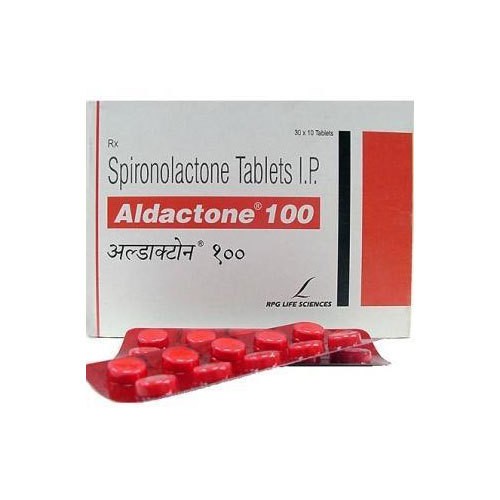
Price: Rs.408.40
13% off
In stock
Loose stock: 0
Description
ALDACTONE 100MG TAB 15
Details
Composition
SPIRONOLACTONE 100 MG
# Spironolactone 100 mg
## Short Description
**Spironolactone 100 mg** is a prescription **potassium-sparing diuretic and aldosterone antagonist**. It is used to treat conditions associated with excess fluid retention, certain cases of **high blood pressure**, **heart failure**, and **primary hyperaldosteronism**. It may also be prescribed for other hormone-related conditions when clinically appropriate.
## Key Benefits
* Helps remove excess **salt and water** while conserving potassium.
* Helps reduce **fluid retention (edema)**.
* May help control **high blood pressure**.
* Can improve outcomes in selected patients with **heart failure with reduced ejection fraction**.
* Helps treat **primary hyperaldosteronism**.
* May be used for certain hormone-related conditions, depending on the clinical indication.
> **Important:** Spironolactone can increase blood potassium levels. Regular monitoring of **potassium and kidney function** may be necessary.
## Uses / Indications
Spironolactone 100 mg may be prescribed for:
* **Heart failure**, particularly selected patients with reduced ejection fraction
* **Edema** associated with liver disease, including cirrhosis
* Edema associated with certain **kidney disorders**
* **Primary hyperaldosteronism**
* **Hypertension**, particularly as an additional treatment in selected patients
* Certain hormone-related conditions such as **hirsutism or androgen-related disorders**, when prescribed by a specialist
The 100 mg strength may not be appropriate for every condition. The dose is individualized according to the patient's diagnosis, kidney function, potassium level, and treatment response.
## How It Works
Spironolactone blocks the action of **aldosterone**, a hormone that causes the kidneys to retain sodium and water while excreting potassium.
By blocking aldosterone receptors, spironolactone:
* Increases sodium and water excretion.
* Helps reduce fluid accumulation.
* Helps lower blood pressure in some patients.
* **Reduces potassium loss** compared with many other diuretics.
Its anti-androgen effects also contribute to its use in certain hormone-related conditions.
## Dosage & Administration
* Take **Spironolactone 100 mg exactly as prescribed**.
* The dosage varies significantly depending on the condition being treated.
* It may be taken **once daily or in divided doses**, depending on the prescription.
* Take it consistently at the same time(s) each day.
* It can generally be taken with or without food, but take it consistently in relation to meals.
* Because it has a diuretic effect, taking it earlier in the day may reduce nighttime urination.
* **Do not take potassium supplements or potassium-containing salt substitutes unless your healthcare professional specifically recommends them.**
* Do not increase or decrease the dose without medical advice.
* If you miss a dose, take it when remembered unless it is close to the next dose. **Do not double the dose.**
Your healthcare professional may monitor **serum potassium, kidney function, blood pressure, and fluid status** during treatment.
## Side Effects
### Common Side Effects
Possible side effects include:
* Increased urination
* Dizziness
* Headache
* Nausea
* Stomach discomfort
* Fatigue
* Increased potassium levels (**hyperkalemia**)
* Breast tenderness
* Menstrual changes
* Erectile or sexual-function changes
### Serious Side Effects
Seek medical attention for:
* Severe weakness or muscle fatigue
* Irregular heartbeat or palpitations
* Severe dizziness or fainting
* Very low blood pressure
* Markedly reduced urine output
* Confusion
* Severe allergic reaction
* Symptoms suggesting dangerously high potassium
**Hyperkalemia can be life-threatening**, particularly in people with kidney impairment or those taking other medicines that increase potassium.
## Precautions & Warnings
### High Potassium
Spironolactone can significantly increase blood potassium levels. Avoid potassium supplements and potassium-containing salt substitutes unless prescribed.
Symptoms of severe hyperkalemia may include:
* Muscle weakness
* Abnormal heartbeat
* Numbness or tingling
* Severe fatigue
However, hyperkalemia may occur **without obvious symptoms**, which is why blood tests are important.
### Kidney Disease
Patients with impaired kidney function have a higher risk of potassium accumulation and may require a lower dose or alternative treatment.
### Dehydration and Low Blood Pressure
Although spironolactone is a relatively mild diuretic compared with some loop diuretics, excessive fluid loss can cause dizziness and low blood pressure.
### Hormonal Effects
Spironolactone has anti-androgenic effects and can cause:
* Breast tenderness or enlargement
* Menstrual irregularities
* Changes in sexual function
### Pregnancy
Spironolactone is generally **not recommended during pregnancy**, particularly because of potential anti-androgenic effects on a male fetus. If you are pregnant or planning pregnancy, discuss treatment with your healthcare professional.
### Liver Disease
People with significant liver disease may require careful monitoring of fluid balance, electrolytes, and kidney function.
## Drug Interactions
Spironolactone can interact with:
* **ACE inhibitors** such as enalapril or lisinopril — increased risk of hyperkalemia and kidney problems.
* **ARBs** such as losartan or valsartan — increased risk of hyperkalemia.
* **Potassium supplements** — may cause dangerously high potassium levels.
* **Potassium-containing salt substitutes** — may increase potassium.
* **NSAIDs** such as ibuprofen and naproxen — may reduce kidney function and increase potassium levels.
* **Trimethoprim-containing antibiotics** — can substantially increase the risk of hyperkalemia.
* **Lithium** — spironolactone may affect lithium levels.
* Other potassium-sparing diuretics — increased risk of hyperkalemia.
* **Digoxin** — spironolactone may affect digoxin concentrations and interpretation of certain laboratory measurements.
* Certain medicines that affect kidney function or the renin-angiotensin-aldosterone system.
Always tell your doctor or pharmacist about all prescription medicines, OTC medicines, vitamins, supplements, and herbal products you take.
## Storage Information
* Store according to the manufacturer's recommended conditions, generally at **room temperature**.
* Keep tablets in their original packaging.
* Protect from excessive heat, moisture, and direct sunlight.
* Keep the container tightly closed when not in use.
* Keep out of reach and sight of children.
* Do not use after the expiry date.
* Dispose of unused medicine according to local pharmacy or healthcare guidance.
## Prescription Status
**Spironolactone 100 mg is generally a prescription medicine.**
Because it can cause potentially dangerous **hyperkalemia and changes in kidney function**, it should be used under medical supervision with appropriate monitoring.
## Genuine Medicine Assurance
When purchasing Spironolactone 100 mg, obtain it from a **licensed pharmacy or authorized medicine supplier**.
Before using the medicine, verify:
* Manufacturer name
* Active ingredient and strength
* Batch/lot number
* Manufacturing and expiry dates
* Packaging and seal integrity
* Product registration or authorization information where applicable
Avoid products from unknown or unverified sources, especially medicines with damaged packaging or missing batch information.
# Frequently Asked Questions (FAQs)
### 1. What is Spironolactone 100 mg used for?
Spironolactone 100 mg may be used for **heart failure, edema, primary hyperaldosteronism, and certain cases of hypertension**. It may also be prescribed for selected hormone-related conditions.
### 2. Is Spironolactone a water pill?
Yes. Spironolactone is a **diuretic**, often called a water pill. Unlike many other diuretics, it helps conserve potassium.
### 3. How does Spironolactone 100 mg work?
It blocks **aldosterone receptors**, causing the kidneys to excrete more sodium and water while reducing potassium loss.
### 4. Does Spironolactone lower blood pressure?
Yes. Spironolactone can lower blood pressure and is sometimes used as an additional treatment for hypertension, particularly when other medicines have not provided adequate control.
### 5. Can Spironolactone 100 mg cause high potassium?
Yes. **Hyperkalemia is one of the most important risks** associated with spironolactone. Kidney function and blood potassium may need to be monitored.
### 6. Can I take potassium supplements with Spironolactone?
Do not take potassium supplements or potassium-containing salt substitutes unless specifically recommended by your healthcare professional.
### 7. Can Spironolactone be taken with ACE inhibitors?
It can sometimes be combined with ACE inhibitors, particularly in heart failure, but the combination can significantly increase the risk of **high potassium and kidney problems**. Close medical monitoring is important.
### 8. Can I take Ibuprofen with Spironolactone?
Ibuprofen and other NSAIDs can affect kidney function and increase potassium levels. Regular use should be discussed with your healthcare professional.
### 9. Does Spironolactone cause frequent urination?
Yes. Increased urination is expected because spironolactone promotes the excretion of sodium and water.
### 10. Does Spironolactone cause breast enlargement?
Yes. Spironolactone can cause **breast tenderness or enlargement** because of its hormonal and anti-androgenic effects.
### 11. Can Spironolactone affect menstrual periods?
Yes. In some women, spironolactone can cause **irregular menstrual periods or changes in menstrual bleeding**.
### 12. Can Spironolactone be used during pregnancy?
Spironolactone is generally avoided during pregnancy because of potential anti-androgenic effects. If you are pregnant or planning pregnancy, consult your healthcare professional.
### 13. Can Spironolactone be taken while breastfeeding?
Spironolactone may be used in some breastfeeding situations, but discuss it with your healthcare professional to determine whether it is appropriate for you and your infant.
### 14. Does Spironolactone cause weight loss?
It can reduce **water weight** in people with fluid retention, but it is not intended as a weight-loss medicine.
### 15. What should I do if I miss a dose of Spironolactone 100 mg?
Take the missed dose when remembered unless it is nearly time for your next dose. **Do not take two doses together.**
### 16. How long does Spironolactone take to work?
Its diuretic effects can begin relatively quickly, but the time required for meaningful improvement depends on the condition being treated. Hormonal effects may take considerably longer.
### 17. Does Spironolactone require blood tests?
Yes. Your healthcare professional may monitor **potassium and kidney function**, particularly when starting treatment, changing the dose, or using interacting medicines.
### 18. Is Spironolactone 100 mg available without a prescription?
Spironolactone is generally a **prescription-only medicine** and should be used under medical supervision.
## Medical Disclaimer
This information about **Spironolactone 100 mg** is provided for educational and SEO purposes only and does not replace professional medical advice, diagnosis, or treatment. Spironolactone can cause serious **hyperkalemia, kidney impairment, low blood pressure, and other adverse effects**, particularly when combined with certain medicines. The appropriate dose depends on the underlying condition and individual patient factors. Always use Spironolactone 100 mg according to your healthcare professional's prescription and the manufacturer's instructions. Do not start, stop, or change treatment without medical advice.