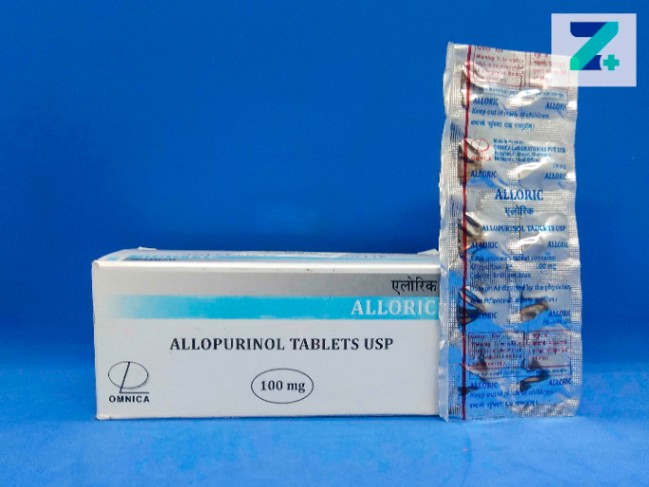
ALLORIC
Price: Rs.70.00
10% off
In stock
Loose stock: 0
Description
ALLORIC TAB 10
Details
Composition
ALLOPURINOL 100 MG
# ALLOPURINOL 100 MG
## SHORT DESCRIPTION
**Allopurinol 100 mg** is a **xanthine oxidase inhibitor** used to lower elevated levels of uric acid in the blood. It is commonly prescribed for the long-term management of **gout and hyperuricemia** and may also be used to prevent uric acid accumulation in certain medical conditions.
Allopurinol reduces the body's production of uric acid but **does not provide immediate relief from an acute gout attack**.
---
## KEY BENEFITS
* Helps lower **uric acid levels** in the blood.
* Helps prevent the formation of **urate crystals** in joints and tissues.
* Reduces the frequency of recurrent **gout attacks** when used regularly.
* Helps prevent uric acid kidney stones in appropriate patients.
* May be used to manage hyperuricemia associated with certain cancer treatments.
* Supports long-term control of gout rather than providing immediate pain relief.
---
## USES / INDICATIONS
Allopurinol 100 mg may be prescribed for:
### Gout and Hyperuricemia
* Chronic gout
* Recurrent gout attacks
* Hyperuricemia associated with gout
* Tophi associated with chronic gout
### Kidney Stone Prevention
It may be used in selected patients to help prevent **uric acid kidney stones**.
### Cancer Treatment-Related Hyperuricemia
Allopurinol may be used to prevent or treat elevated uric acid associated with certain cancer treatments, including situations involving **tumor lysis syndrome**, according to medical supervision.
### Other Conditions
A healthcare professional may prescribe allopurinol for other conditions involving excessive uric acid production when clinically appropriate.
---
## HOW IT WORKS
Allopurinol works by inhibiting an enzyme called **xanthine oxidase**.
This enzyme is involved in converting purines into **uric acid**.
By reducing xanthine oxidase activity:
**Purines → less uric acid production → lower blood urate levels**
Lower uric acid levels help reduce the formation and accumulation of **monosodium urate crystals**, which are responsible for gout-related inflammation and joint damage.
> Allopurinol controls uric acid production over time; it is **not a painkiller and does not immediately stop an acute gout attack**.
---
## DOSAGE & ADMINISTRATION
* Take Allopurinol 100 mg **exactly as prescribed**.
* The dose is usually started low and gradually adjusted according to **serum uric acid levels, kidney function, age, and treatment response**.
* Take it regularly, even when you feel well.
* It can generally be taken **with or immediately after food** to reduce stomach irritation.
* Drink adequate fluids unless your healthcare professional has advised fluid restriction.
### Typical Adult Starting Dose
For many adults with gout, treatment may begin at a low dose such as **100 mg once daily**, followed by gradual dose adjustment.
The maintenance dose varies considerably between patients.
### Kidney Impairment
People with reduced kidney function may require a **lower starting dose and careful dose adjustment**.
### During an Acute Gout Attack
Allopurinol is not intended to provide immediate pain relief. In some patients already taking allopurinol, treatment is continued during an acute attack, while the attack itself is treated with appropriate anti-inflammatory medication.
Do not start, stop, or change allopurinol treatment during an acute attack without medical advice.
### Missed Dose
Take the missed dose when remembered unless it is nearly time for the next dose.
**Do not take two doses together.**
---
## SIDE EFFECTS
### Common Side Effects
Possible side effects include:
* Nausea
* Diarrhea
* Stomach discomfort
* Headache
* Dizziness
* Mild skin rash
Taking the medicine after food may help reduce stomach upset.
### Serious Skin Reactions
Although uncommon, allopurinol can cause severe and potentially life-threatening skin reactions, including:
* Stevens-Johnson syndrome (SJS)
* Toxic epidermal necrolysis (TEN)
* Drug reaction with eosinophilia and systemic symptoms (DRESS)
**Stop taking allopurinol and seek urgent medical attention if a new rash develops**, particularly if it is accompanied by:
* Fever
* Blistering
* Skin peeling
* Mouth or eye sores
* Facial swelling
* Difficulty breathing
Do not restart allopurinol after a serious hypersensitivity reaction unless specifically directed by a specialist.
---
## PRECAUTIONS & WARNINGS
### Serious Hypersensitivity
The most important warning with allopurinol is the possibility of a **serious hypersensitivity reaction**.
A rash during the early stages of treatment should not be ignored.
### Kidney Disease
Tell your healthcare professional if you have kidney disease. The dose may need to be adjusted.
### Liver Disease
Inform your doctor if you have liver problems. Liver function may need monitoring when clinically indicated.
### HLA-B*58:01
People carrying the **HLA-B*58:01 genetic variant** have a substantially increased risk of severe allopurinol hypersensitivity reactions.
Testing may be considered for people from populations with a higher prevalence of this allele, particularly when clinically appropriate.
### Acute Gout
Allopurinol does not immediately relieve acute gout pain. Starting urate-lowering treatment can sometimes temporarily increase gout attacks, which is why preventive anti-inflammatory therapy may be prescribed when treatment begins.
### Hydration
Adequate fluid intake can help reduce the risk of uric acid stone formation, unless fluid restriction has been medically advised.
### Driving
Allopurinol may occasionally cause dizziness or drowsiness. Avoid driving if you feel impaired.
---
## DRUG INTERACTIONS
### Azathioprine and Mercaptopurine
Allopurinol can dramatically increase the effects of:
* **Azathioprine**
* **Mercaptopurine**
This can cause severe and potentially life-threatening bone marrow suppression.
The combination generally requires specialist-directed dose reduction and close monitoring.
### Warfarin
Allopurinol may increase the effect of warfarin in some patients. Monitoring of anticoagulation may be required.
### Diuretics
Medicines such as **thiazide diuretics** may increase the risk of adverse effects, particularly in people with kidney impairment.
### ACE Inhibitors
Some evidence suggests that combining allopurinol with certain ACE inhibitors may increase the risk of hypersensitivity reactions, particularly in patients with kidney impairment.
### Other Medicines
Always tell your healthcare professional if you take:
* Antibiotics
* Immunosuppressants
* Anticoagulants
* Diuretics
* Other gout medicines
* OTC medicines
* Vitamins or herbal supplements
---
## STORAGE INFORMATION
* Store Allopurinol 100 mg according to the **manufacturer's instructions**.
* Keep tablets in their original packaging.
* Protect from excessive heat, moisture, and direct sunlight.
* Keep the container tightly closed.
* Keep out of reach of children and pets.
* Do not use after the expiry date.
* Do not use tablets if the packaging is damaged or the tablets appear abnormal.
---
## PRESCRIPTION STATUS
**Allopurinol 100 mg is generally a prescription medicine.**
Treatment should be supervised by a qualified healthcare professional because the dose may need to be adjusted according to **serum uric acid levels and kidney function**, and serious hypersensitivity reactions can occur.
---
## GENUINE MEDICINE ASSURANCE
When purchasing Allopurinol 100 mg, ensure that:
* The medicine comes in **original, sealed manufacturer packaging**.
* The active ingredient and strength (**Allopurinol 100 mg**) are clearly stated.
* The manufacturer's information is present.
* The **batch/lot number and expiry date** are visible.
* Packaging shows no signs of tampering.
* Tablets have the appearance described by the manufacturer.
* The medicine is purchased from a **licensed pharmacy or authorized medicine supplier**.
* The product matches the prescribed strength and formulation.
Do not use medicine that appears counterfeit, expired, damaged, contaminated, or improperly stored.
---
# FAQ – ALLOPURINOL 100 MG
### 1. What is Allopurinol 100 mg used for?
Allopurinol 100 mg is primarily used to **lower uric acid levels** and prevent recurrent gout and complications associated with high uric acid.
### 2. Is Allopurinol a painkiller?
No. Allopurinol is **not a painkiller**. It reduces uric acid production and is intended for long-term gout management.
### 3. Does Allopurinol stop an acute gout attack?
No. It does not provide immediate relief from acute gout pain. Acute attacks generally require appropriate anti-inflammatory treatment.
### 4. How does Allopurinol work?
It inhibits **xanthine oxidase**, an enzyme involved in uric acid production, thereby reducing the amount of uric acid produced by the body.
### 5. How long does Allopurinol take to lower uric acid?
Uric acid levels begin to decrease after treatment starts, but reaching the desired target can take **several weeks or longer**, depending on the dose and individual response.
### 6. Can Allopurinol prevent gout attacks?
Yes. When taken regularly and adjusted to achieve the appropriate urate target, allopurinol can significantly reduce the frequency of **recurrent gout attacks**.
### 7. Can Allopurinol cause a gout attack when starting treatment?
Yes. Starting urate-lowering therapy can temporarily trigger gout flares. Your healthcare professional may prescribe preventive treatment during the early phase of therapy.
### 8. Should I stop Allopurinol during a gout attack?
If you are already taking allopurinol regularly, you generally should **not stop it during an acute attack unless your healthcare professional tells you to**. Seek medical advice for appropriate treatment of the flare.
### 9. Can I take Allopurinol 100 mg every day?
Yes, when prescribed. Allopurinol is generally taken **regularly every day** for long-term uric acid control.
### 10. Can people with kidney disease take Allopurinol?
Yes, but people with kidney impairment often require **careful dose selection and monitoring**.
### 11. What is the most serious side effect of Allopurinol?
A rare but potentially life-threatening **allopurinol hypersensitivity reaction** can occur. A new rash, especially with fever, blistering, mouth sores, facial swelling, or skin peeling, requires urgent medical assessment.
### 12. Can Allopurinol cause skin rash?
Yes. A rash can occur and may occasionally be the first sign of a serious hypersensitivity reaction. **Do not ignore a new rash while taking allopurinol.**
### 13. Can I drink alcohol while taking Allopurinol?
Alcohol, particularly beer and spirits, can increase uric acid levels and may contribute to gout attacks. Discuss alcohol consumption with your healthcare professional.
### 14. Can Allopurinol be taken with colchicine?
Allopurinol and colchicine are sometimes prescribed together, particularly when starting urate-lowering treatment, but the combination should be used according to medical advice.
### 15. Can Allopurinol be taken with azathioprine?
This combination can be **dangerous** because allopurinol substantially increases azathioprine exposure and can cause severe bone marrow suppression. It should only be used under specialist supervision with appropriate dose adjustment.
### 16. Can Allopurinol be taken with other medicines?
Many medicines can be taken with allopurinol, but important interactions exist. Always provide your doctor or pharmacist with a complete list of your medicines.
### 17. What should I do if I miss an Allopurinol dose?
Take the missed dose when remembered unless it is nearly time for the next dose. **Do not take a double dose.**
### 18. Can Allopurinol dissolve uric acid crystals?
By lowering uric acid over time, allopurinol can help the body gradually **dissolve existing urate deposits** and prevent new crystals from forming.
### 19. Should I drink plenty of water while taking Allopurinol?
Adequate hydration is generally encouraged, particularly when there is a risk of uric acid kidney stones, unless your doctor has advised you to restrict fluids.
### 20. Is Allopurinol 100 mg safe for long-term use?
Allopurinol is widely used for **long-term urate-lowering therapy**. Regular monitoring and appropriate dose adjustment help ensure treatment remains effective and safe.
---
## MEDICAL DISCLAIMER
This information about **Allopurinol 100 mg** is provided for educational and informational purposes only and is not a substitute for professional medical advice, diagnosis, or treatment.
The appropriate dose depends on factors such as **serum uric acid levels, kidney function, medical history, age, and other medicines being used**.
**Do not start, stop, or change Allopurinol 100 mg without consulting a qualified healthcare professional.** A new skin rash while taking allopurinol can be an early sign of a serious hypersensitivity reaction and requires prompt medical assessment.
This medicine should be used as part of an appropriate gout-management plan, which may include dietary and lifestyle measures and treatment of acute gout attacks when necessary.