AMILAX
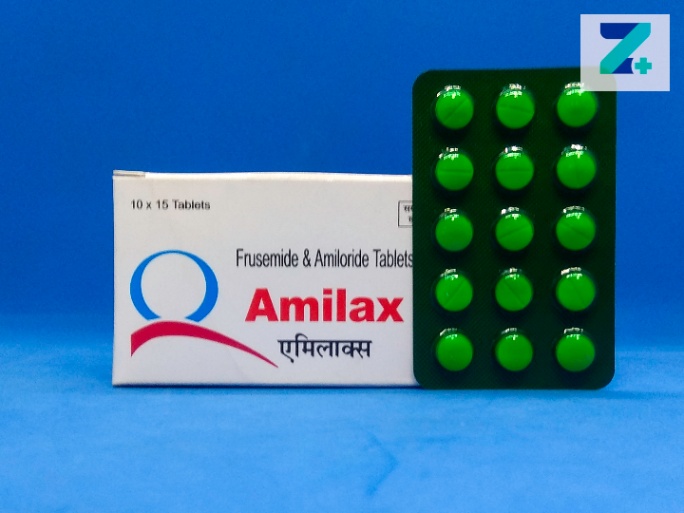
Price: Rs.47.25
10% off
In stock
Loose stock: 0
Description
AMILAX TAB 15
Details
Composition
AMILORIDE 5 MG,FUROSEMIDE 40 MG
# AMILORIDE 5 MG + FUROSEMIDE 40 MG
## Short Description
**Amiloride 5 mg + Furosemide 40 mg** is a combination **diuretic (water tablet)** used to help remove excess salt and fluid from the body. It combines the strong diuretic effect of **furosemide** with the potassium-sparing effect of **amiloride**.
This combination may be prescribed for conditions associated with **fluid retention (edema)**, including certain heart, liver, or kidney conditions. Treatment requires appropriate monitoring because both medicines can affect **blood pressure, kidney function, and electrolyte levels**.
## Key Benefits
* Helps reduce **excess fluid retention (edema)**.
* Increases urinary elimination of excess sodium and water.
* Furosemide provides a strong diuretic effect.
* Amiloride helps reduce potassium loss caused by some diuretics.
* May help reduce swelling in the legs and other areas caused by fluid accumulation.
* Can help relieve fluid-related symptoms associated with certain heart, liver, or kidney conditions.
* May help maintain a more appropriate potassium balance than furosemide alone in selected patients.
## Uses / Indications
Amiloride 5 mg + Furosemide 40 mg may be prescribed for **fluid retention (edema)** associated with conditions such as:
* **Congestive heart failure**.
* Certain liver diseases associated with fluid accumulation.
* Certain kidney disorders causing edema.
* Other conditions where a healthcare professional determines that combined diuretic therapy is appropriate.
It may also be used when maintaining potassium levels is an important consideration during diuretic treatment.
### Important
The combination is **not appropriate for everyone with swelling**. Swelling can have many causes and should be medically evaluated before treatment.
## How It Works
### Furosemide 40 mg
Furosemide is a **loop diuretic**.
It acts primarily on the **Na-K-2Cl cotransporter in the thick ascending limb of the loop of Henle** in the kidneys.
This reduces sodium and chloride reabsorption, causing increased excretion of:
* Sodium.
* Chloride.
* Water.
* Potassium and other electrolytes.
This produces a powerful diuretic effect.
### Amiloride 5 mg
Amiloride is a **potassium-sparing diuretic**.
It blocks epithelial sodium channels (**ENaC**) in the late distal tubule and collecting duct. This reduces sodium reabsorption and decreases potassium secretion into urine.
### Combined Action
**Furosemide → removes excess sodium and water**
**Amiloride → reduces potassium loss**
**Together → effective fluid removal with potassium-sparing activity**
However, the combination can still cause **high or low potassium levels**, so monitoring may be necessary.
## Dosage & Administration
The appropriate dose depends on the patient's condition, kidney function, response to treatment, and electrolyte levels.
### General Administration
* Take exactly as prescribed.
* It is usually taken **once daily or according to the prescribed schedule**.
* Because it increases urination, it is generally taken earlier in the day.
* Swallow with water.
* Take consistently at approximately the same time each day.
* Do not change the dose without medical advice.
### Monitoring
Your healthcare professional may monitor:
* Blood pressure.
* Kidney function.
* Sodium.
* Potassium.
* Other electrolytes.
* Body weight.
* Fluid status.
### Missed Dose
Take the missed dose when remembered unless it is close to the next scheduled dose.
Because the medicine increases urination, avoid taking a missed dose very late in the day unless instructed.
**Do not double the dose.**
## Side Effects
Possible side effects include:
* Increased urination.
* Dizziness.
* Light-headedness.
* Low blood pressure.
* Headache.
* Weakness.
* Nausea.
* Stomach discomfort.
* Muscle cramps.
### Electrolyte-Related Effects
Changes in potassium, sodium, magnesium, and other electrolytes may cause:
* Muscle weakness.
* Muscle cramps.
* Fatigue.
* Irregular heartbeat.
* Confusion.
* Excessive thirst.
### Serious Side Effects
Seek medical attention for:
* Severe dizziness or fainting.
* Significant dehydration.
* Severe weakness.
* Irregular or rapid heartbeat.
* Very low urine output.
* Severe allergic reaction.
* Symptoms of serious electrolyte imbalance.
## Precautions & Warnings
### Kidney Disease
Amiloride and furosemide affect kidney function and electrolyte balance.
Tell your doctor if you have:
* Kidney disease.
* Reduced kidney function.
* Difficulty passing urine.
Severe kidney impairment may make this combination inappropriate.
### High Potassium
Amiloride can increase potassium levels.
Do not take additional **potassium supplements or potassium-containing salt substitutes** unless specifically instructed.
### Dehydration
Excessive diuresis can cause:
* Dehydration.
* Low blood pressure.
* Dizziness.
* Kidney problems.
Drink fluids according to your doctor's recommendations, particularly if you are experiencing significant fluid loss.
### Liver Disease
Patients with severe liver disease may require careful monitoring because electrolyte disturbances can be particularly dangerous.
### Low Blood Pressure
This medicine can lower blood pressure. Stand up slowly if you experience dizziness.
### Diabetes
Furosemide may affect blood glucose levels in some patients. People with diabetes may require monitoring.
### Gout
Furosemide can increase uric acid levels and may worsen **gout** in susceptible individuals.
### Hearing Problems
High-dose or rapidly administered furosemide, particularly in certain clinical settings, can rarely cause **hearing impairment or tinnitus**.
Report new hearing changes promptly.
### Pregnancy and Breastfeeding
Tell your healthcare professional if you are pregnant, planning pregnancy, or breastfeeding. The combination should be used only when clinically appropriate.
## Drug Interactions
### Potassium Supplements
Combining amiloride with potassium supplements can cause **dangerously high potassium levels**.
### Potassium-Containing Salt Substitutes
Some salt substitutes contain potassium and may increase the risk of hyperkalemia.
### ACE Inhibitors and ARBs
Medicines such as:
* Enalapril.
* Lisinopril.
* Ramipril.
* Losartan.
* Telmisartan.
can increase potassium levels when combined with amiloride.
### Potassium-Sparing Diuretics
Combining amiloride with medicines such as spironolactone or triamterene can significantly increase the risk of **hyperkalemia**.
### NSAIDs
Medicines such as:
* Ibuprofen.
* Naproxen.
* Diclofenac.
may reduce the diuretic effect and can increase the risk of kidney problems.
### Lithium
Furosemide can increase lithium concentrations and potentially cause **lithium toxicity**.
### Digoxin
Changes in potassium levels caused by diuretics can increase the risk of **digoxin toxicity** and abnormal heart rhythms.
### Corticosteroids
Medicines such as prednisolone may increase electrolyte disturbances, particularly potassium loss, although amiloride may partially counteract potassium loss.
### Other Blood Pressure Medicines
Combining these diuretics with antihypertensive medicines can produce excessive blood-pressure lowering.
### Other Medicines
Tell your healthcare professional about all:
* Prescription medicines.
* OTC medicines.
* Vitamins.
* Minerals.
* Herbal products.
## Storage Information
* Store according to the manufacturer's instructions.
* Keep at room temperature unless otherwise specified.
* Protect from excessive heat, moisture, and direct sunlight.
* Keep the medicine in its original packaging.
* Keep out of reach of children.
* Keep the container tightly closed.
* Do not use after the expiry date.
* Do not use tablets from damaged or tampered packaging.
## Prescription Status
**Amiloride 5 mg + Furosemide 40 mg is generally a prescription medicine.**
Because the combination can significantly affect **blood pressure, kidney function, sodium, and potassium levels**, it should be used under appropriate medical supervision.
## Genuine Medicine Assurance
When purchasing Amiloride 5 mg + Furosemide 40 mg, obtain it from a **licensed pharmacy or authorized medicine supplier**.
Check:
* Active ingredients:
* **Amiloride 5 mg**
* **Furosemide 40 mg**
* Manufacturer details.
* Batch/lot number.
* Manufacturing and expiry dates.
* Intact packaging and seal.
* Proper storage conditions.
* Clear labeling and dosage instructions.
Do not use a product if the packaging is damaged, tampered with, incorrectly labeled, or suspicious.
## Frequently Asked Questions (FAQ)
### 1. What is Amiloride 5 mg + Furosemide 40 mg used for?
It is a combination diuretic used to help treat **fluid retention (edema)** associated with certain heart, liver, or kidney conditions.
### 2. Is Amiloride + Furosemide a diuretic?
Yes. Both medicines are diuretics, but they work at different sites in the kidney.
### 3. What is the role of furosemide?
Furosemide is a **loop diuretic** that increases the excretion of sodium and water, producing a strong fluid-removing effect.
### 4. What is the role of amiloride?
Amiloride is a **potassium-sparing diuretic** that reduces sodium reabsorption while helping decrease urinary potassium loss.
### 5. Why are amiloride and furosemide combined?
Furosemide can increase potassium loss. Amiloride helps reduce potassium excretion, so the combination may be useful when potassium preservation is desirable.
### 6. Can this medicine reduce swelling?
Yes. By increasing urinary elimination of excess salt and water, it can help reduce **edema and swelling** when fluid retention is the underlying cause.
### 7. Does Amiloride + Furosemide increase urination?
Yes. **Increased urination is an expected effect**, particularly after taking furosemide.
### 8. When should I take this medicine?
It is commonly taken earlier in the day because of its diuretic effect. Follow the exact timing prescribed by your healthcare professional.
### 9. Can I take this medicine at night?
Taking it at night may cause frequent urination and disturb sleep. Unless specifically instructed otherwise, diuretics are often scheduled earlier in the day.
### 10. Can Amiloride + Furosemide lower blood pressure?
Yes. Both fluid removal and reduced blood volume can lower blood pressure. Dizziness or light-headedness may occur, especially when starting treatment or increasing the dose.
### 11. Can this medicine cause low potassium?
Furosemide can cause potassium loss, while amiloride tends to preserve potassium. The combination can therefore still result in **either low or high potassium**, depending on the individual.
### 12. Can Amiloride + Furosemide cause high potassium?
Yes. Amiloride can increase potassium levels, particularly in people with kidney impairment or those taking ACE inhibitors, ARBs, potassium supplements, or other potassium-sparing medicines.
### 13. Can I take potassium supplements with amiloride?
Do not take potassium supplements unless specifically recommended by your healthcare professional. Amiloride can increase potassium and potentially cause **hyperkalemia**.
### 14. Can I use a potassium salt substitute?
Check with your doctor before using one. Many salt substitutes contain potassium and may be unsafe with amiloride.
### 15. Can I take ibuprofen with Amiloride + Furosemide?
NSAIDs such as ibuprofen can reduce the effectiveness of diuretics and may increase the risk of kidney problems. Consult your healthcare professional before using them regularly.
### 16. Can this medicine be used for high blood pressure?
Furosemide and amiloride can lower blood pressure, but this combination is primarily used for **fluid retention** in appropriate patients. Your doctor will determine whether it is suitable for hypertension.
### 17. Can Amiloride + Furosemide cause dehydration?
Yes. Excessive fluid loss can cause **dehydration, dizziness, low blood pressure, and kidney problems**.
### 18. What are the signs of an electrolyte imbalance?
Possible symptoms include:
* Muscle weakness.
* Muscle cramps.
* Severe fatigue.
* Confusion.
* Irregular heartbeat.
* Unusual thirst.
Seek medical advice if significant symptoms occur.
### 19. Can this medicine worsen gout?
Furosemide can increase uric acid levels and may trigger or worsen **gout** in susceptible people.
### 20. Can I take this medicine with other blood-pressure medicines?
It may be combined with other antihypertensive medicines when prescribed, but blood pressure may become too low. Your doctor may need to adjust doses.
### 21. What should I do if I miss a dose?
Take it when remembered unless it is close to the next dose. Avoid taking a missed dose late in the day unless instructed, and **do not double the dose**.
### 22. Can I stop Amiloride + Furosemide suddenly?
Do not stop prescribed diuretic treatment without medical advice. Stopping may cause fluid retention or worsening of the condition being treated.
### 23. Can I take Amiloride + Furosemide during pregnancy?
Discuss this with your healthcare professional. Diuretic use during pregnancy is generally reserved for specific clinical situations where the benefits justify the risks.
### 24. Is Amiloride 5 mg + Furosemide 40 mg available without a prescription?
It is generally a **prescription medicine**, although regulatory requirements can vary between countries.
### 25. What monitoring is required while taking this medicine?
Your healthcare professional may monitor **blood pressure, kidney function, potassium, sodium, and other electrolytes**, particularly after starting treatment or changing the dose.
## Medical Disclaimer
This information about **Amiloride 5 mg + Furosemide 40 mg** is provided for general educational and informational purposes only. It is not a substitute for professional medical advice, diagnosis, or treatment.
This combination can cause significant changes in **fluid balance, blood pressure, kidney function, and electrolytes**, including potentially dangerous high or low potassium levels. Do not change the dose, add potassium supplements, or discontinue treatment without medical advice.
Seek medical attention for **severe dehydration, fainting, significant weakness, irregular heartbeat, very low urine output, severe allergic reactions, or other serious symptoms**.