AMLONG A-25MG
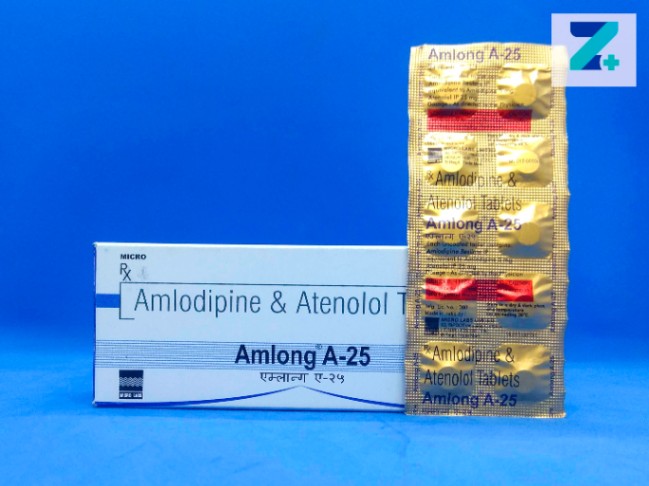
Price: Rs.108.00
13% off
In stock
Loose stock: 0
Description
AMLONG A-25MG TAB 10
Details
Composition
AMLODIPINE 5 MG,ATENOLOL 25 MG
# Amlodipine 5 mg + Atenolol 25 mg
## Short Description
**Amlodipine 5 mg + Atenolol 25 mg** is a combination medicine used primarily to help control **high blood pressure (hypertension)** and reduce the workload on the heart. Amlodipine is a calcium-channel blocker that relaxes blood vessels, while atenolol is a beta-blocker that slows the heart rate and reduces the force of contraction.
Together, these medicines can help lower blood pressure and may reduce the risk of complications associated with uncontrolled hypertension.
---
## Key Benefits
* Helps lower **high blood pressure**.
* Relaxes blood vessels and improves blood flow.
* Reduces heart rate and the heart's workload.
* May help control **angina (heart-related chest pain)** when prescribed for this purpose.
* Combines two complementary mechanisms for blood-pressure control.
* Helps maintain more consistent blood-pressure control when taken regularly.
* May reduce the cardiovascular risks associated with persistent hypertension.
---
## Uses / Indications
Amlodipine 5 mg + Atenolol 25 mg may be prescribed for:
* **Hypertension (high blood pressure)**
* **Angina pectoris (chest pain due to reduced blood flow to the heart)**
* Certain patients requiring combined calcium-channel blocker and beta-blocker therapy
The combination is not appropriate for everyone. Your doctor will determine whether both medicines are suitable based on your blood pressure, heart rate, cardiovascular history, and other medicines.
---
## How It Works
### Amlodipine 5 mg
Amlodipine is a **calcium-channel blocker (CCB)**. It relaxes the smooth muscle in the walls of blood vessels by reducing calcium entry into vascular muscle cells.
This causes blood vessels to widen, reducing resistance to blood flow and lowering blood pressure. It also improves blood flow to the heart muscle.
### Atenolol 25 mg
Atenolol is a **selective beta-1 adrenergic blocker (beta-blocker)**. It reduces the effects of adrenaline on the heart.
This:
* Slows the heart rate
* Reduces the force of heart contraction
* Decreases the heart's workload
* Helps lower blood pressure
* Reduces the heart's oxygen requirement
### Combined Effect
The two medicines lower blood pressure through **different mechanisms**, which can provide complementary cardiovascular effects.
---
## Dosage & Administration
**Take Amlodipine 5 mg + Atenolol 25 mg exactly as prescribed by your doctor.**
* Usually taken **once daily**, depending on the prescribed regimen and formulation.
* Take it at approximately the same time each day.
* It can generally be taken **with or without food**.
* Swallow the tablet with water.
* Do not take more than the prescribed dose.
* Continue treatment even if you feel well unless your doctor tells you to stop.
* Monitor your blood pressure and, when advised, your pulse/heart rate.
### Important
**Do not stop atenolol suddenly.** Abrupt withdrawal of a beta-blocker can worsen angina and, in some patients, increase the risk of serious cardiovascular complications.
If you miss a dose, take it when you remember unless it is nearly time for the next dose. **Do not double the next dose.**
---
## Side Effects
### Common Side Effects
Possible side effects include:
* Dizziness
* Headache
* Tiredness or fatigue
* Slow heartbeat
* Flushing
* Swelling of the ankles or feet
* Cold hands or feet
* Nausea
* Mild stomach discomfort
* Sleep disturbances
Amlodipine commonly causes **ankle/leg swelling**, while atenolol may cause fatigue and a slower heart rate.
### Serious Side Effects
Seek medical attention if you experience:
* Very slow heartbeat
* Fainting or severe dizziness
* Difficulty breathing or wheezing
* Severe swelling
* New or worsening chest pain
* Signs of an allergic reaction
* Severe weakness or confusion
* Symptoms of heart failure, such as increasing shortness of breath or rapid unexplained weight gain
---
## Precautions & Warnings
* **Low heart rate:** Atenolol can slow the heart rate. Inform your doctor if you already have bradycardia.
* **Heart block:** Atenolol may not be suitable for certain conduction disorders.
* **Heart failure:** Use requires careful medical assessment, particularly in patients with unstable or acute heart failure.
* **Asthma/COPD:** Although atenolol is relatively beta-1 selective, beta-blockers can sometimes cause bronchospasm. Inform your doctor about respiratory disease.
* **Diabetes:** Atenolol can mask some warning signs of low blood sugar, particularly a rapid heartbeat.
* **Kidney disease:** Atenolol is primarily eliminated by the kidneys and may require dose adjustment.
* **Liver disease:** Tell your doctor if you have significant liver problems.
* **Peripheral circulation problems:** Beta-blockers may worsen symptoms in some patients with peripheral vascular disease.
* **Elderly patients:** Blood pressure and heart rate may require closer monitoring.
* **Pregnancy:** Consult a healthcare professional before use.
* **Breastfeeding:** Discuss use with your doctor before taking this combination.
* **Driving:** Dizziness or fatigue may affect driving ability, especially when treatment is started.
* **Do not stop atenolol suddenly** without medical supervision.
---
## Drug Interactions
Amlodipine and atenolol can interact with several medicines.
Potentially important interactions include:
* Other **blood-pressure-lowering medicines**
* Other **beta-blockers**
* **Verapamil or diltiazem**, which can further slow heart rate or affect cardiac conduction
* Certain antiarrhythmic medicines
* **Digoxin**
* Some medicines used to treat diabetes
* Certain medicines that affect liver enzymes
* NSAIDs such as ibuprofen or naproxen may reduce the blood-pressure-lowering effect in some patients
* Other medicines that lower heart rate or blood pressure
Always tell your doctor or pharmacist about all **prescription medicines, over-the-counter medicines, vitamins, supplements, and herbal products** you take.
---
## Storage Information
* Store according to the manufacturer's instructions.
* Keep the tablets in their **original packaging**.
* Protect from excessive heat, moisture, and direct sunlight.
* Keep out of reach and sight of children.
* Do not use after the expiry date.
* Do not use tablets if the packaging is damaged or the medicine appears abnormal.
---
## Prescription Status
**Amlodipine 5 mg + Atenolol 25 mg is generally a prescription medicine.**
It should be used under the supervision of a qualified healthcare professional because the combination can significantly affect **blood pressure and heart rate**.
---
## Genuine Medicine Assurance
When purchasing **Amlodipine 5 mg + Atenolol 25 mg**, obtain the medicine from a **licensed pharmacy or authorized medicine supplier**.
Before using the product, check:
* Product name and strength
* Manufacturer details
* Batch/lot number
* Manufacturing date
* Expiry date
* Packaging integrity
* Registration/authorization details where applicable
* Security or authenticity features, if provided
Avoid purchasing prescription medicines from unknown or unauthorized sources.
---
# FAQ – Amlodipine 5 mg + Atenolol 25 mg
### 1. What is Amlodipine 5 mg + Atenolol 25 mg used for?
It is primarily used to treat **high blood pressure (hypertension)**. It may also be prescribed for certain patients with angina or other cardiovascular conditions.
### 2. How does Amlodipine + Atenolol work?
Amlodipine relaxes and widens blood vessels, while atenolol slows the heart rate and reduces the heart's workload. Together, they help lower blood pressure.
### 3. Is Amlodipine 5 mg + Atenolol 25 mg good for high blood pressure?
Yes. The combination can be effective for patients who need both a calcium-channel blocker and a beta-blocker to achieve adequate blood-pressure control.
### 4. Can Amlodipine + Atenolol be taken every day?
Yes, when prescribed for regular blood-pressure control. Take it consistently at the same time each day and do not stop treatment without medical advice.
### 5. Does Amlodipine + Atenolol lower heart rate?
Yes. **Atenolol lowers heart rate**, while amlodipine generally has little direct effect on resting heart rate. A healthcare professional may monitor your pulse during treatment.
### 6. Can this medicine cause low blood pressure?
Yes. Excessive blood-pressure reduction can cause dizziness, weakness, blurred vision, or fainting. Contact your healthcare professional if these symptoms are persistent or severe.
### 7. Does Amlodipine cause ankle swelling?
Yes. **Ankle or leg swelling (edema)** is a relatively common side effect of amlodipine.
### 8. Can Atenolol cause tiredness?
Yes. Fatigue, tiredness, dizziness, and reduced exercise tolerance can occur, particularly when treatment is first started.
### 9. Can I stop Amlodipine + Atenolol suddenly?
**Do not stop atenolol suddenly.** Abrupt beta-blocker withdrawal can worsen angina and may cause serious cardiovascular complications in some patients. Consult your doctor before discontinuing treatment.
### 10. Can Amlodipine + Atenolol be taken during pregnancy?
Consult your doctor before using this combination during pregnancy. The benefits and potential risks should be assessed individually.
### 11. Can Amlodipine + Atenolol be taken while breastfeeding?
Discuss the medicine with your healthcare professional before breastfeeding while taking it. Your doctor can assess whether the combination is appropriate.
### 12. Can people with diabetes take Atenolol?
Atenolol can be used in some people with diabetes, but beta-blockers may **mask some symptoms of low blood sugar**, especially a rapid heartbeat. Blood-glucose monitoring is important.
### 13. Can people with asthma take Atenolol?
Atenolol is relatively selective for beta-1 receptors, but beta-blockers can still cause or worsen bronchospasm in susceptible people. Tell your doctor if you have asthma or other breathing problems.
### 14. Can Amlodipine + Atenolol be taken with other blood-pressure medicines?
It may be combined with other medicines when prescribed, but the combination can increase the risk of excessively low blood pressure or other cardiovascular effects. Medical supervision is important.
### 15. Can I take ibuprofen with Amlodipine + Atenolol?
Ibuprofen and other NSAIDs can sometimes reduce the blood-pressure-lowering effect of antihypertensive medicines and may affect kidney function. Ask your doctor or pharmacist before using NSAIDs regularly.
### 16. Does Amlodipine + Atenolol treat chest pain?
The combination may be prescribed for **angina (stable chest pain caused by reduced blood flow to the heart)**. However, new, severe, or worsening chest pain requires urgent medical assessment.
### 17. What should I do if my heart rate becomes very slow?
Contact your healthcare professional promptly, particularly if a slow pulse is accompanied by **dizziness, weakness, fainting, shortness of breath, or chest pain**.
### 18. What happens if I miss a dose?
Take the missed dose when you remember unless it is nearly time for the next dose. **Do not take two doses together** to make up for a missed dose.
### 19. Can Amlodipine + Atenolol cause dizziness?
Yes. Dizziness can occur, especially when treatment is started or the blood pressure becomes lower than intended. Rise slowly from sitting or lying down and contact your doctor if dizziness is severe or persistent.
### 20. How long does Amlodipine + Atenolol take to work?
Both medicines begin affecting cardiovascular function relatively soon after administration, but achieving stable blood-pressure control may take time. Your doctor may adjust the dose based on your blood-pressure and heart-rate response.
---
## Medical Disclaimer
**This information is provided for educational and informational purposes only and is not a substitute for professional medical advice, diagnosis, or treatment.**
Amlodipine 5 mg + Atenolol 25 mg is generally a **prescription medicine**. The appropriate dose depends on your blood pressure, heart rate, cardiovascular history, kidney function, other medicines, and individual response.
Do not change the dose or stop atenolol suddenly without medical supervision. Seek urgent medical attention for **severe or new chest pain, fainting, severe difficulty breathing, or a very slow or irregular heartbeat**.
Always read the manufacturer's package insert and follow the approved prescribing information applicable to your country.