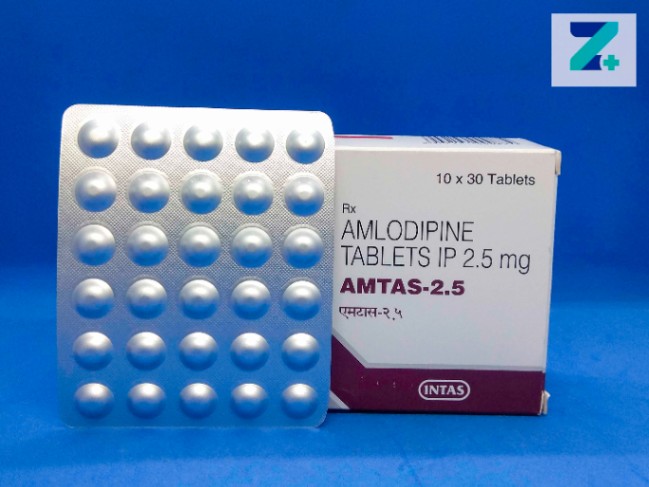
AMTAS 2.5MG
Price: Rs.68.99
13% off
In stock
Loose stock: 0
Description
AMTAS 2.5MG TAB 30
Details
Composition
AMLODIPINE 2.5 MG
# AMLODIPINE 2.5 MG
## SHORT DESCRIPTION
**Amlodipine 2.5 mg** is a **calcium channel blocker (CCB)** used primarily to treat **high blood pressure (hypertension)** and **certain types of angina (chest pain)**.
It works mainly by relaxing and widening blood vessels, which reduces the resistance against which the heart pumps and improves blood flow. Amlodipine is a long-acting medicine that is generally taken **once daily**.
---
## KEY BENEFITS
* Helps lower **high blood pressure**.
* Helps reduce the risk of cardiovascular complications associated with uncontrolled hypertension.
* Helps prevent and manage certain types of **angina (stable or vasospastic angina)**.
* Relaxes and widens blood vessels.
* Improves blood flow to the heart muscle.
* Provides long-lasting blood-pressure control with once-daily dosing.
* The **2.5 mg strength** may be useful as a lower starting dose or for patients who require a cautious dose adjustment.
> **Important:** Amlodipine controls blood pressure and helps prevent angina but does not provide immediate treatment for an acute heart attack or sudden severe chest pain.
---
## USES / INDICATIONS
### 1. Hypertension
Amlodipine 2.5 mg may be prescribed to lower elevated blood pressure.
Controlling hypertension can help reduce the long-term risk of:
* Stroke
* Heart attack
* Heart failure
* Kidney damage
* Other cardiovascular complications
### 2. Angina
Amlodipine may be used to prevent certain forms of angina, including:
* Chronic stable angina
* Vasospastic (Prinzmetal) angina
It helps improve blood flow to the heart and reduces the workload on the heart.
### 3. Coronary Artery Disease
Amlodipine may sometimes be used in patients with documented coronary artery disease as part of an overall cardiovascular treatment plan.
---
## HOW IT WORKS
Amlodipine is a **dihydropyridine calcium channel blocker**.
It inhibits the movement of calcium into vascular smooth muscle cells. This causes the arteries to **relax and widen (vasodilation)**.
### Effects of Amlodipine
**Calcium channel blockade → arterial relaxation → wider blood vessels → reduced vascular resistance → lower blood pressure**
By reducing resistance in the arteries, amlodipine also reduces the workload on the heart and can improve coronary blood flow.
Amlodipine has a long duration of action, supporting **24-hour blood-pressure control** with once-daily administration.
---
## DOSAGE & ADMINISTRATION
### Adults
For hypertension, the usual adult starting dose of amlodipine is often **5 mg once daily**.
However, **2.5 mg once daily** may be appropriate for certain patients, including some older or smaller patients, or people who may be more sensitive to blood-pressure-lowering effects.
The dose may be adjusted according to blood-pressure response.
### Maximum Dose
The usual maximum adult dose is:
**10 mg once daily**
Do not increase the dose without medical advice.
### Children
For children aged 6 years and older, dosing should be determined by a pediatric healthcare professional. The 2.5 mg strength may be used in some pediatric dosing regimens depending on the product and clinical situation.
### How to Take
* Take once daily at approximately the same time each day.
* It may be taken **with or without food**.
* Swallow the tablet with water.
* Take it consistently every day for optimal blood-pressure control.
### Missed Dose
If you forget a dose, take it when you remember unless it is nearly time for your next dose.
**Do not take two doses at once.**
---
## SIDE EFFECTS
### Common Side Effects
Possible side effects include:
* **Swelling of the ankles or feet (edema)**
* Headache
* Dizziness
* Flushing
* Fatigue
* Palpitations
* Sleepiness
* Nausea
* Abdominal discomfort
### Other Possible Effects
Some patients may experience:
* Muscle cramps
* Weakness
* Indigestion
* Increased urination
* Changes in bowel habits
### Serious Side Effects
Serious reactions are uncommon but seek medical attention for:
* Severe dizziness or fainting
* Significant low blood pressure
* New or worsening chest pain
* Severe allergic reaction
* Swelling of the face, lips, tongue, or throat
* Difficulty breathing
Rarely, angina or heart attack may occur or worsen, particularly after starting or increasing the dose in patients with severe coronary artery disease.
---
## PRECAUTIONS & WARNINGS
### Low Blood Pressure
Amlodipine can lower blood pressure. Dizziness or lightheadedness may occur, especially when starting treatment or after a dose increase.
Rise slowly from sitting or lying positions if you experience dizziness.
### Heart Disease
Tell your doctor if you have:
* Severe coronary artery disease
* Heart failure
* Recent heart attack
* Other significant heart conditions
### Liver Disease
Amlodipine is metabolized extensively by the liver. Patients with liver impairment may require a **lower starting dose and careful monitoring**.
### Older Adults
Older adults may be more sensitive to the blood-pressure-lowering effects of amlodipine and may require cautious dose adjustment.
### Pregnancy
Tell your healthcare professional if you are pregnant, planning pregnancy, or become pregnant while taking amlodipine.
### Breastfeeding
Amlodipine passes into breast milk in small amounts. Consult a healthcare professional before using it while breastfeeding.
### Do Not Stop Abruptly Without Advice
Amlodipine does not generally cause a dangerous withdrawal syndrome, but stopping antihypertensive therapy without medical guidance can result in uncontrolled blood pressure or recurrence of angina.
---
## DRUG INTERACTIONS
### Other Blood Pressure Medicines
Taking amlodipine with other antihypertensive medicines may cause an additional reduction in blood pressure.
Examples include:
* ACE inhibitors
* ARBs
* Beta-blockers
* Diuretics
* Other calcium channel blockers
### CYP3A4 Inhibitors
Medicines that strongly inhibit CYP3A4 may increase amlodipine levels.
Examples include certain:
* Azole antifungals
* Macrolide antibiotics
* HIV medicines
Monitoring may be required.
### Simvastatin
Amlodipine can increase exposure to **simvastatin**. When these medicines are used together, the simvastatin dose may need to be limited according to prescribing recommendations.
### Grapefruit
Unlike some other calcium channel blockers, grapefruit is not generally considered to cause a clinically important interaction with amlodipine. However, avoid excessive grapefruit consumption if your healthcare professional has advised otherwise.
### Other Medicines
Always tell your doctor or pharmacist about all prescription medicines, OTC medicines, vitamins, and herbal supplements you take.
---
## STORAGE INFORMATION
* Store Amlodipine 2.5 mg according to the manufacturer's instructions.
* Keep tablets in their original packaging.
* Protect from excessive heat, moisture, and direct sunlight.
* Keep out of reach and sight of children.
* Do not use after the expiry date.
* Do not use tablets if the packaging is damaged or appears tampered with.
---
## PRESCRIPTION STATUS
**Prescription Medicine – Subject to Local Regulations**
Amlodipine 2.5 mg is generally a **prescription medicine**, although dispensing requirements vary by country.
Use it only according to the directions of a qualified healthcare professional.
---
## GENUINE MEDICINE ASSURANCE
For safe and effective treatment, purchase **Amlodipine 2.5 mg** from a licensed pharmacy or authorized medicine supplier.
Before using the medicine, verify:
* Product name and strength
* Active ingredient
* Manufacturer details
* Batch/lot number
* Manufacturing and expiry dates
* Packaging and seal integrity
* Regulatory/registration information where applicable
Do not use the medicine if it is:
* Expired
* Damaged
* Discolored or unusual in appearance
* Missing batch or expiry information
* Suspected to have been tampered with
If you have concerns about authenticity, consult a licensed pharmacist or the relevant medicine regulatory authority.
---
# FAQ – AMLODIPINE 2.5 MG
### 1. What is Amlodipine 2.5 mg used for?
Amlodipine 2.5 mg is used to help treat **high blood pressure (hypertension)** and may be used to prevent certain types of **angina (chest pain)**.
### 2. Is Amlodipine 2.5 mg a blood pressure medicine?
Yes. Amlodipine is a **calcium channel blocker** that lowers blood pressure by relaxing and widening the arteries.
### 3. How does Amlodipine 2.5 mg work?
It blocks calcium entry into vascular smooth muscle, causing the arteries to relax and reducing resistance to blood flow.
### 4. What is the usual dose of Amlodipine?
The usual adult starting dose is often **5 mg once daily**, but 2.5 mg may be appropriate for certain patients. The dose should be individualized by a healthcare professional.
### 5. Is Amlodipine 2.5 mg a low dose?
Yes. **2.5 mg is a relatively low strength** and may be used as a starting dose for certain patients or when cautious dose adjustment is appropriate.
### 6. Can Amlodipine 2.5 mg be taken every day?
Yes. Amlodipine is generally intended for **once-daily regular use** when prescribed for hypertension or angina.
### 7. Can I take Amlodipine 2.5 mg with food?
Yes. Amlodipine can generally be taken **with or without food**.
### 8. What time of day should I take Amlodipine?
It can generally be taken at any convenient time once daily. Taking it at the **same time each day** can help maintain consistent use.
### 9. Does Amlodipine lower blood pressure immediately?
Amlodipine begins to work after a dose, but its full blood-pressure-lowering effect develops gradually. It is intended for **long-term blood-pressure control**, not emergency treatment.
### 10. Does Amlodipine cause ankle swelling?
Yes. **Ankle or leg swelling (peripheral edema)** is one of the more common side effects of amlodipine.
### 11. What should I do if Amlodipine causes swollen ankles?
Do not stop the medicine without medical advice. Tell your doctor if swelling is persistent, severe, or uncomfortable. Your doctor can determine whether the dose or treatment needs adjustment.
### 12. Can Amlodipine cause dizziness?
Yes. Dizziness can occur because amlodipine lowers blood pressure. If you feel dizzy, sit or lie down and avoid driving until you feel well.
### 13. Can I take Amlodipine with other blood pressure medicines?
Yes, amlodipine is commonly combined with other blood-pressure medicines when clinically appropriate. However, combinations can lower blood pressure more significantly and should be monitored.
### 14. Can Amlodipine be taken with Telmisartan?
Amlodipine and telmisartan are sometimes prescribed together because they lower blood pressure through different mechanisms. The combination should be used according to medical advice.
### 15. Can I take Amlodipine with a beta-blocker?
Yes, doctors may prescribe amlodipine with beta-blockers for certain cardiovascular conditions. Blood pressure and heart-related symptoms should be monitored.
### 16. Can Amlodipine be used for angina?
Yes. Amlodipine can help prevent **stable and vasospastic angina** by improving coronary blood flow and reducing vascular resistance.
### 17. Can Amlodipine stop sudden chest pain?
No. Amlodipine is not intended to provide immediate relief from an acute angina attack. Follow your doctor's emergency plan for sudden chest pain.
### 18. Can Amlodipine be taken during pregnancy?
If you are pregnant or planning pregnancy, consult your healthcare professional before taking amlodipine. Treatment should be based on an individual assessment.
### 19. Can Amlodipine be taken while breastfeeding?
Amlodipine passes into breast milk in small amounts. Discuss its use with your healthcare professional while breastfeeding.
### 20. Can people with liver disease take Amlodipine?
Yes, some people with liver disease can take amlodipine, but they may require a lower starting dose and closer monitoring.
### 21. Can Amlodipine cause a slow heartbeat?
Amlodipine usually has little direct effect on heart rate compared with some other calcium channel blockers. However, unusual changes in heart rate should be reported to a healthcare professional.
### 22. Can Amlodipine be stopped suddenly?
Do not stop prescribed amlodipine without consulting your healthcare professional because your blood pressure may become uncontrolled or angina may recur.
### 23. What happens if I miss an Amlodipine dose?
Take the missed dose when you remember unless it is nearly time for the next dose. **Do not take two doses together.**
### 24. What happens if I take too much Amlodipine?
An overdose can cause significant low blood pressure, dizziness, rapid heartbeat, or other cardiovascular effects. Seek urgent medical attention if you suspect an overdose.
### 25. Is Amlodipine 2.5 mg available without a prescription?
Amlodipine is generally a **prescription medicine**, although requirements vary by country.
---
## MEDICAL DISCLAIMER
This information about **Amlodipine 2.5 mg** is provided for general educational and informational purposes only. It is **not a substitute for professional medical advice, diagnosis, or treatment**.
Amlodipine is a prescription cardiovascular medicine that should be used according to an individualized treatment plan. **Ankle swelling, dizziness, headache, and flushing** are among its commonly reported adverse effects. Patients with significant liver disease, severe coronary artery disease, or other cardiovascular conditions may require additional monitoring.
Amlodipine is **not an emergency treatment for sudden severe chest pain**. Seek urgent medical attention for new, severe, or persistent chest pain, fainting, severe shortness of breath, or other serious symptoms.
**Do not start, stop, or change the dose of Amlodipine 2.5 mg without consulting a qualified healthcare professional. Always read the product label/package insert and follow your doctor's or pharmacist's instructions.**