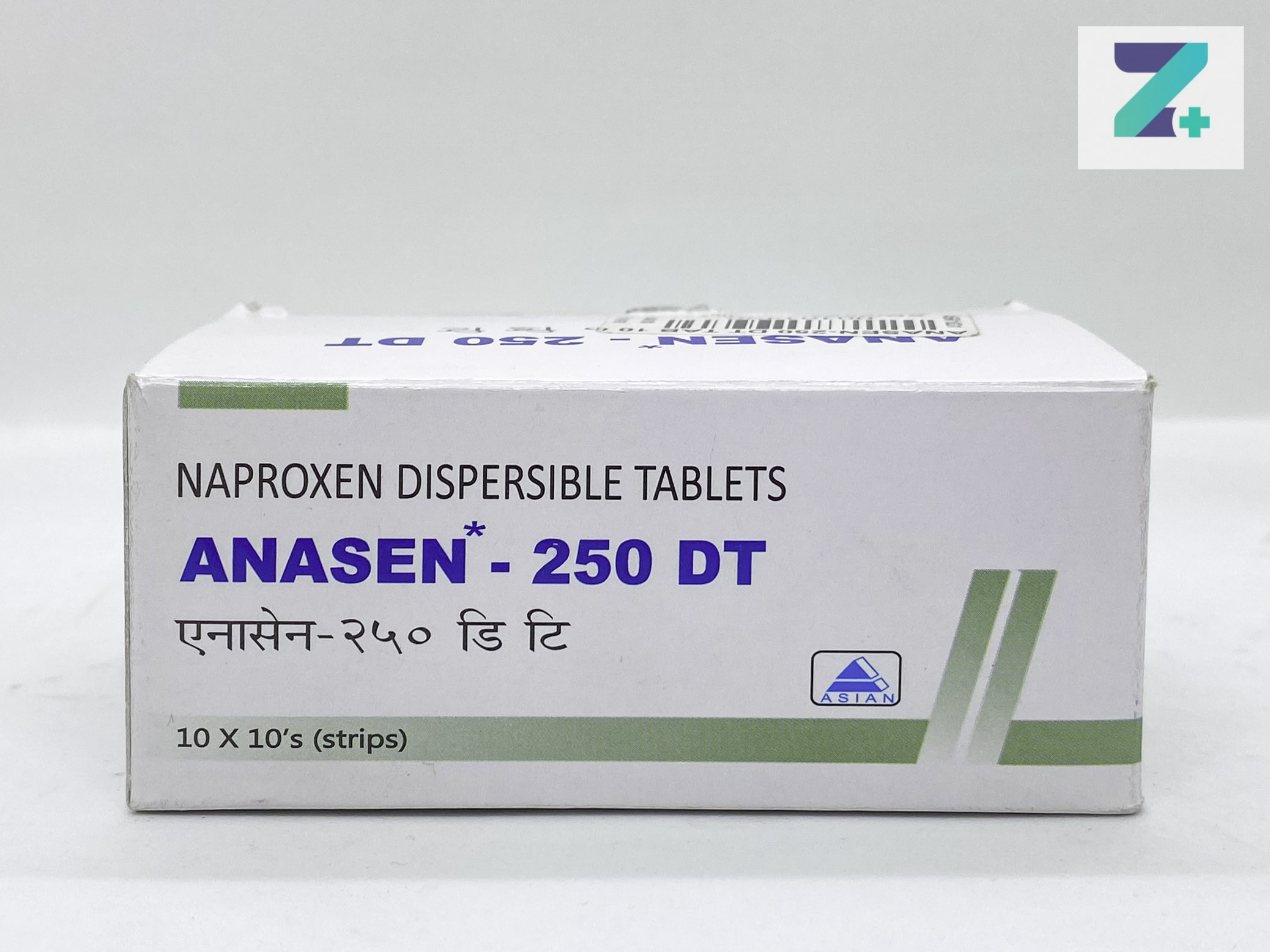
ANASEN-250 DT
Price: Rs.40.00
10% off
In stock
Loose stock: 0
Description
ANASEN-250 DT TAB 10
Details
Composition
NAPROXEN 250 MG
# Naproxen 250 mg
## Short Description
Naproxen 250 mg is a **non-steroidal anti-inflammatory drug (NSAID)** used to relieve pain, inflammation and fever. It may be prescribed or recommended for conditions such as arthritis, muscle and joint pain, menstrual pain, dental pain and other inflammatory conditions.
Naproxen should be used at the **lowest effective dose for the shortest appropriate duration** because NSAIDs can cause serious gastrointestinal, kidney and cardiovascular complications.
## Key Benefits
* Helps relieve mild to moderate pain
* Reduces inflammation and swelling
* Helps reduce fever
* May relieve joint and muscle pain
* Can help manage menstrual cramps
* May be used for certain arthritis-related pain and inflammation
* Provides longer-lasting pain relief compared with some shorter-acting NSAIDs
## Uses / Indications
Naproxen 250 mg may be used for:
* Osteoarthritis
* Rheumatoid arthritis
* Ankylosing spondylitis
* Muscle and joint pain
* Sprains and strains
* Back pain
* Tendon and other inflammatory musculoskeletal conditions
* Menstrual pain
* Dental pain
* Headache and other pain conditions when medically appropriate
* Acute gout attacks in appropriate patients
The exact indication depends on the patient's condition and the specific formulation.
## How It Works
Naproxen works by inhibiting **cyclooxygenase (COX) enzymes**, which reduces the production of prostaglandins.
Prostaglandins contribute to pain, inflammation and fever.
**Naproxen → inhibits COX enzymes → reduces prostaglandins → decreases pain, inflammation and fever**
## Dosage & Administration
The appropriate dose depends on the condition, age, medical history and other medicines being used.
* Take exactly as directed by your doctor or pharmacist
* Take with a full glass of water
* Taking naproxen with or after food may help reduce stomach irritation
* Use the **lowest effective dose for the shortest duration**
* Do not exceed the recommended daily dose
* Do not combine with another NSAID unless specifically advised
* Swallow extended-release or enteric-coated formulations whole if applicable
* Do not crush or chew modified-release tablets unless instructed
### Missed Dose
If you miss a scheduled dose, take it when remembered unless it is nearly time for the next dose. Do not take two doses together.
## Side Effects
Common side effects may include:
* Nausea
* Indigestion
* Heartburn
* Stomach discomfort
* Abdominal pain
* Diarrhea
* Constipation
* Headache
* Dizziness
### Serious Side Effects
Seek urgent medical attention if you experience:
* Vomiting blood
* Black or bloody stools
* Severe stomach pain
* Chest pain
* Difficulty breathing
* Sudden weakness or speech problems
* Severe allergic reaction
* Significant swelling
* Reduced urine production
* Severe skin rash or blistering
Naproxen can rarely cause **stomach ulcers, gastrointestinal bleeding, kidney injury, liver problems, heart attack or stroke**.
## Precautions & Warnings
* Do not use if you have had a serious allergic reaction to aspirin, naproxen or other NSAIDs
* Avoid use if you have active stomach or intestinal ulcers or bleeding
* Tell your doctor if you have a history of stomach ulcers or gastrointestinal bleeding
* Inform your doctor if you have kidney or liver disease
* Tell your doctor if you have heart disease, high blood pressure or a history of stroke
* Use cautiously if you have asthma triggered by aspirin or NSAIDs
* Avoid prolonged self-treatment
* Older adults may have a higher risk of gastrointestinal, kidney and cardiovascular complications
* Do not combine with other NSAIDs unless instructed
* Tell your doctor before surgery or dental procedures
* Avoid unnecessary alcohol consumption because it may increase gastrointestinal bleeding risk
### Pregnancy Warning
Naproxen should generally be **avoided from around 20 weeks of pregnancy onward unless specifically advised by a healthcare professional**, and NSAIDs should not be used at **20 weeks or later without medical guidance**. They are particularly contraindicated in the third trimester because of risks to the fetus and complications during delivery.
## Drug Interactions
Naproxen can interact with many medicines, including:
* **Warfarin and other anticoagulants** — increased bleeding risk
* Aspirin
* Other NSAIDs such as ibuprofen and diclofenac
* Corticosteroids — increased gastrointestinal bleeding risk
* SSRIs and SNRIs — may increase bleeding risk
* ACE inhibitors and ARBs
* Diuretics
* Lithium — naproxen may increase lithium levels
* Methotrexate — may increase methotrexate toxicity
* Cyclosporine and tacrolimus — may increase kidney-related toxicity
* Certain blood-pressure medicines
Always tell your doctor or pharmacist about all prescription medicines, OTC medicines, vitamins and herbal supplements you take.
## Storage Information
* Store according to the manufacturer's instructions
* Keep in a cool, dry place
* Protect from excessive heat, moisture and direct sunlight
* Keep tablets in their original packaging
* Keep the container tightly closed
* Keep out of reach and sight of children
* Do not use after the expiry date
## Prescription Status
Naproxen 250 mg may be **prescription-only or available without a prescription**, depending on the country, formulation and pack size.
Higher doses and long-term treatment generally require medical supervision.
## Genuine Medicine Assurance
* Purchase Naproxen 250 mg from a licensed and reputable pharmacy
* Check the medicine name and **250 mg strength**
* Verify the manufacturer's name
* Check the batch number and expiry date
* Ensure the packaging and seal are intact
* Do not purchase medicines from unverified sellers
* Do not use tablets from damaged or suspicious packaging
* Follow the manufacturer's storage instructions
* Consult a pharmacist if the appearance of the medicine differs unexpectedly from your usual supply
## Frequently Asked Questions
### What is Naproxen 250 mg used for?
Naproxen 250 mg is an NSAID used to relieve **pain, inflammation and fever**. It may be used for arthritis, muscle and joint pain, menstrual pain, dental pain and other appropriate conditions.
### Is Naproxen a painkiller?
Yes. Naproxen is a pain-relieving **NSAID** that also reduces inflammation.
### Is Naproxen an anti-inflammatory medicine?
Yes. It reduces inflammation by decreasing the production of prostaglandins.
### How does Naproxen work?
Naproxen blocks COX enzymes, reducing prostaglandins that contribute to pain, inflammation and fever.
### How should I take Naproxen 250 mg?
Take it exactly as prescribed or directed on the product label. It can be taken with or after food and should be swallowed with water.
### Can I take Naproxen on an empty stomach?
It can be taken on an empty stomach, but taking it with or after food may help reduce stomach irritation.
### How often can I take Naproxen 250 mg?
The dosing frequency depends on the condition and formulation. Follow your prescription or product instructions and do not exceed the recommended dose.
### Can I take Naproxen with Ibuprofen?
Generally, **do not combine naproxen with ibuprofen** unless specifically instructed by a healthcare professional. Both are NSAIDs and combining them increases the risk of side effects.
### Can I take Naproxen with Paracetamol?
Paracetamol can sometimes be used alongside naproxen, but the combination should be appropriate for your individual circumstances. Ask a pharmacist or doctor if you are unsure.
### Can I take Naproxen with Aspirin?
Do not routinely combine naproxen with aspirin unless your doctor specifically recommends it. The combination can increase gastrointestinal bleeding and other risks.
### Can Naproxen cause stomach ulcers?
Yes. Naproxen can cause stomach or intestinal ulcers and bleeding, particularly with prolonged use, higher doses, older age or certain interacting medicines.
### Does Naproxen affect the kidneys?
Yes. NSAIDs such as naproxen can reduce kidney blood flow and may cause kidney problems, especially in people with kidney disease, dehydration, heart failure or those taking certain medicines.
### Can Naproxen increase blood pressure?
Yes. NSAIDs can cause fluid retention and may increase blood pressure or reduce the effectiveness of some blood-pressure medicines.
### Can Naproxen cause drowsiness?
Drowsiness or dizziness can occur in some people. Avoid driving or operating machinery if you are affected.
### Can I take Naproxen during pregnancy?
Naproxen should generally be avoided during pregnancy unless specifically recommended by a healthcare professional. NSAID use later in pregnancy can cause serious fetal complications.
### Can I take Naproxen while breastfeeding?
Small amounts may pass into breast milk. Consult your doctor or pharmacist before using naproxen while breastfeeding, particularly for prolonged treatment.
### Can children take Naproxen 250 mg?
Naproxen may be prescribed to children for specific conditions, but dosing depends on age, weight and the condition being treated. Do not give a 250 mg tablet to a child unless specifically directed.
### Can Naproxen be used for menstrual pain?
Yes. Naproxen can be effective for menstrual cramps because it reduces prostaglandins involved in menstrual pain.
### Can Naproxen help with dental pain?
Yes. Naproxen may provide relief from dental pain and inflammation, but persistent dental pain requires assessment and treatment of the underlying dental problem.
### Can Naproxen treat arthritis?
Yes. Naproxen is commonly used to reduce pain and inflammation associated with osteoarthritis, rheumatoid arthritis and certain other inflammatory joint conditions.
### Can Naproxen treat gout?
Naproxen may be prescribed for acute gout attacks to reduce pain and inflammation. It does not lower uric acid levels or cure the underlying tendency to develop gout.
### Can I drink alcohol while taking Naproxen?
Alcohol can increase the risk of stomach irritation and gastrointestinal bleeding. Avoid excessive alcohol while taking naproxen.
### Can I take Naproxen with Warfarin?
Naproxen can significantly increase the risk of bleeding when combined with warfarin. **Do not combine them without medical advice.**
### Can Naproxen be taken with steroids?
Corticosteroids can increase the risk of gastrointestinal ulcers and bleeding when combined with NSAIDs. Consult your doctor before using both.
### What happens if I take too much Naproxen?
An overdose may cause nausea, vomiting, stomach pain, dizziness, drowsiness or gastrointestinal bleeding and can affect the kidneys. Seek urgent medical advice after taking substantially more than recommended.
### What should I do if I miss a dose?
Take the missed dose when remembered unless it is nearly time for your next dose. Do not double the next dose.
### Can Naproxen be used long term?
Long-term use should be supervised by a healthcare professional because the risks of gastrointestinal bleeding, kidney problems and cardiovascular complications increase with prolonged NSAID use.
### Is Naproxen 250 mg safe?
Naproxen can be safe and effective when used appropriately, but it carries important risks. The safest dose and duration depend on your medical history and other medicines.
### How quickly does Naproxen work?
Pain relief may begin within about an hour in many people, although the onset varies depending on the formulation and individual response.
### Is Naproxen stronger than Ibuprofen?
Both are NSAIDs, and their effectiveness depends on the condition and individual response. Naproxen generally has a longer duration of action than ibuprofen.
## Medical Disclaimer
This information is provided for general educational and SEO purposes only and is **not a substitute for professional medical advice, diagnosis or treatment**. Naproxen is an NSAID that can cause serious gastrointestinal bleeding, kidney problems and cardiovascular complications, particularly with high doses or prolonged use. Use the lowest effective dose for the shortest appropriate duration. Do not combine naproxen with other NSAIDs without medical advice. Tell your healthcare professional about ulcers, kidney or heart disease, high blood pressure, pregnancy, breastfeeding and all medicines you take, particularly anticoagulants such as warfarin. Always follow the prescribed dose and the manufacturer's product information.