ANTI-THYROX 20
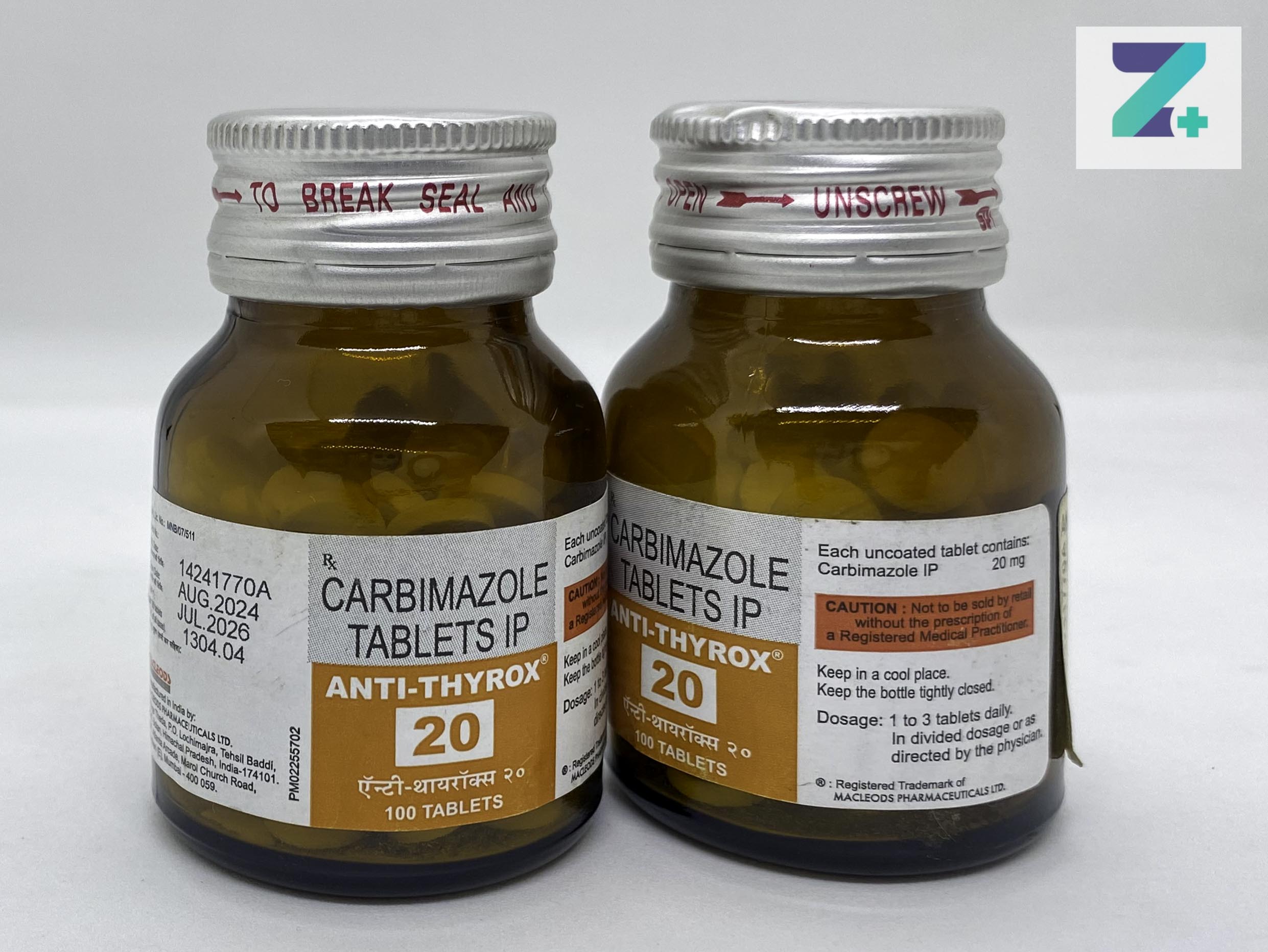
Price: Rs.1989.12
13% off
In stock
Loose stock: 0
Description
ANTI-THYROX 20 TAB 100
Details
Composition
CARBIMAZOLE 20 MG
# Carbimazole 20 mg
## SHORT DESCRIPTION
Carbimazole 20 mg is an **antithyroid medicine** used to treat an overactive thyroid (**hyperthyroidism**). It is commonly prescribed for conditions such as **Graves' disease** and may also be used to control thyroid hormone production before certain thyroid procedures.
Carbimazole is converted in the body to **methimazole (thiamazole)**, which reduces the production of thyroid hormones.
## KEY BENEFITS
* Helps reduce excessive thyroid hormone production
* Used to control **hyperthyroidism**
* Commonly used in the treatment of **Graves' disease**
* Helps relieve symptoms caused by excess thyroid hormone
* May be used before thyroid surgery or radioactive iodine treatment to control thyroid function
* Can help bring thyroid hormone levels toward the normal range
## USES / INDICATIONS
Carbimazole 20 mg may be prescribed for:
* **Hyperthyroidism**
* Graves' disease
* Overactive thyroid associated with other thyroid conditions
* Preparation for thyroid surgery
* Preparation or stabilization before radioactive iodine treatment
* Long-term medical management of hyperthyroidism when appropriate
The exact treatment plan depends on thyroid hormone levels, symptoms, age, underlying cause and response to therapy.
## HOW IT WORKS
Carbimazole is converted to **methimazole**, which inhibits the thyroid enzyme **thyroid peroxidase**.
This reduces the thyroid gland's ability to produce the hormones:
* Thyroxine (**T4**)
* Triiodothyronine (**T3**)
As thyroid hormone production decreases, symptoms such as rapid heartbeat, sweating, tremor, anxiety and heat intolerance may gradually improve.
## DOSAGE & ADMINISTRATION
* Take Carbimazole exactly as prescribed.
* The dose varies considerably depending on the severity of hyperthyroidism and thyroid blood-test results.
* Carbimazole may initially be prescribed in divided doses or as directed by your doctor.
* Once thyroid hormone levels are controlled, the dose may be reduced to a maintenance dose.
* It can generally be taken **with or without food**.
* Try to take it at the same time each day.
* Swallow tablets with water.
* Regular blood tests are important to monitor thyroid function and adjust the dose.
### Important Warning About Sore Throat or Fever
**Stop taking carbimazole and seek urgent medical advice if you develop a sore throat, fever, mouth ulcers or other signs of infection.** These can rarely indicate **agranulocytosis**, a serious reduction in white blood cells.
Your doctor may arrange an urgent blood count before you take further doses.
### Missed Dose
Take the missed dose when remembered unless it is nearly time for the next dose. Do not take a double dose unless specifically instructed.
## SIDE EFFECTS
Common side effects may include:
* Nausea
* Headache
* Mild stomach discomfort
* Joint pain
* Skin rash
* Itching
* Mild changes in taste
### Serious Side Effects
Seek immediate medical attention if you develop:
* **Sore throat or fever**
* Mouth ulcers
* Unexplained infection
* Severe weakness
* Yellowing of the skin or eyes
* Dark urine
* Severe abdominal pain
* Unusual bruising or bleeding
* Severe skin reactions
* Facial or throat swelling
* Difficulty breathing
Rare but serious complications include **agranulocytosis, liver injury and severe allergic or skin reactions**.
## PRECAUTIONS & WARNINGS
* Carbimazole can rarely cause **agranulocytosis**, which can seriously reduce infection-fighting white blood cells.
* Contact your doctor urgently for fever, sore throat or mouth ulcers.
* Liver problems can rarely occur. Report jaundice, dark urine, pale stools or persistent abdominal pain.
* Regular thyroid-function monitoring is required.
* Your dose may need adjustment as thyroid hormone levels change.
* Tell your doctor if you have a history of blood disorders or liver disease.
* Tell your doctor if you are pregnant, planning pregnancy or breastfeeding.
* Carbimazole can cross the placenta and requires careful management during pregnancy.
* Do not stop long-term treatment without medical advice because uncontrolled hyperthyroidism can be dangerous.
* If you are scheduled for surgery or radioactive iodine treatment, inform your doctor that you are taking carbimazole.
* Use caution with medicines that can also affect blood counts or liver function.
## DRUG INTERACTIONS
Carbimazole may interact with various medicines because changes in thyroid function can alter the effects of other drugs.
Important medicines to discuss with your doctor include:
* **Warfarin and other anticoagulants** — thyroid status changes can alter anticoagulant requirements.
* **Theophylline** — its effects may change as thyroid function improves.
* **Beta-blockers** — commonly used alongside antithyroid treatment, but doses may need adjustment as hyperthyroidism improves.
* **Digoxin** — requirements may change as thyroid function normalizes.
* Other medicines that can affect the **blood count or bone marrow**
* Medicines that may affect **liver function**
Always tell your doctor and pharmacist about all prescription medicines, OTC medicines, vitamins and herbal supplements you take.
## STORAGE INFORMATION
* Store Carbimazole tablets according to the manufacturer's instructions.
* Keep at room temperature unless the product label states otherwise.
* Protect from excessive heat and moisture.
* Keep tablets in their original packaging.
* Keep out of reach of children.
* Do not use after the expiry date.
* Do not use tablets from damaged or improperly stored packaging.
## PRESCRIPTION STATUS
**Prescription medicine.**
Carbimazole 20 mg should be used under the supervision of a qualified healthcare professional because the dose requires adjustment based on thyroid-function tests and the medicine can rarely cause serious blood or liver problems.
## GENUINE MEDICINE ASSURANCE
For safe and genuine Carbimazole 20 mg:
* Purchase from a licensed and reputable pharmacy.
* Check the medicine name and strength.
* Verify the manufacturer's details.
* Check the batch number and expiry date.
* Ensure the packaging and seal are intact.
* Do not use tablets from damaged or suspicious packaging.
* Purchase prescription medicines only from authorized sources.
* Store the medicine according to the manufacturer's instructions.
* Consult a pharmacist if you have concerns about product authenticity.
## FAQ
### What is Carbimazole 20 mg used for?
Carbimazole 20 mg is used to treat **hyperthyroidism**, including hyperthyroidism caused by Graves' disease.
### Is Carbimazole used for an underactive thyroid?
No. Carbimazole reduces thyroid hormone production and is therefore used for an **overactive thyroid**, not hypothyroidism.
### How does Carbimazole work?
Carbimazole is converted to methimazole, which blocks thyroid peroxidase and reduces the production of thyroid hormones **T3 and T4**.
### Is Carbimazole a steroid?
No. Carbimazole is an **antithyroid medicine**, not a steroid.
### How long does Carbimazole take to work?
Carbimazole begins reducing new thyroid hormone production relatively quickly, but symptoms and thyroid hormone levels may take **several weeks** to improve because previously produced thyroid hormones remain in the body.
### How long do I need to take Carbimazole?
Treatment duration varies. People with Graves' disease may require treatment for many months or longer, while others may need a different treatment strategy. Your doctor will determine the appropriate duration based on your thyroid condition and test results.
### Can Carbimazole cure Graves' disease?
Carbimazole can control Graves' disease and may lead to remission in some patients, but it does not guarantee a permanent cure. Other treatment options include radioactive iodine and surgery.
### What are the common side effects of Carbimazole?
Common side effects include **skin rash, itching, nausea, headache and joint discomfort**.
### Why should I stop Carbimazole if I develop a sore throat?
A sore throat, fever or mouth ulcers can rarely be an early sign of **agranulocytosis**, a serious decrease in white blood cells. Stop the medicine and seek urgent medical advice for a blood test.
### Can Carbimazole affect the liver?
Rarely, carbimazole can cause liver injury. Seek medical advice if you develop **yellow skin or eyes, dark urine, pale stools or persistent abdominal pain**.
### Does Carbimazole require blood tests?
Yes. Regular blood tests are important to monitor **TSH, free T4 and sometimes T3** and to determine whether the dose needs adjustment.
### Can Carbimazole cause weight gain?
Weight gain can occur as thyroid hormone levels return toward normal, particularly if you previously lost weight because of hyperthyroidism. Significant or rapid weight gain should be discussed with your doctor.
### Can I take Carbimazole during pregnancy?
Carbimazole can affect the developing baby and requires careful specialist management during pregnancy. **Tell your doctor immediately if you are pregnant or planning pregnancy.** Your doctor may consider an alternative antithyroid medicine during certain stages of pregnancy.
### Can Carbimazole be taken while breastfeeding?
Carbimazole may be used during breastfeeding in appropriate doses under medical supervision. Your healthcare professional may recommend monitoring the baby's thyroid function depending on the circumstances.
### Can I stop Carbimazole when I feel better?
No. Feeling better does not necessarily mean that thyroid hormone levels are normal. Stopping treatment without medical advice can cause hyperthyroidism to return.
### Can Carbimazole be taken with food?
Yes. Carbimazole can generally be taken with or without food. Taking it consistently in relation to meals can help maintain a regular routine.
### Can I take Carbimazole with beta-blockers?
Yes. Beta-blockers are sometimes prescribed alongside carbimazole to control symptoms such as rapid heartbeat and tremor. Your doctor will determine whether both medicines are appropriate.
### Can Carbimazole be taken with warfarin?
It may be used with warfarin, but thyroid-function changes can alter the effect of warfarin. **Closer monitoring of anticoagulation may be required.**
### What happens if I miss a dose of Carbimazole?
Take the missed dose when you remember unless it is nearly time for your next dose. Do not take a double dose unless your doctor specifically instructs you to do so.
### What happens if I take too much Carbimazole?
Taking too much may cause excessive suppression of thyroid function and other adverse effects. Contact a healthcare professional promptly if you have taken more than your prescribed dose.
### Can Carbimazole cause low thyroid levels?
Yes. Excessive treatment can suppress thyroid hormone production and cause **hypothyroidism**. Regular thyroid-function tests help your doctor adjust the dose.
### How should Carbimazole 20 mg be stored?
Store the tablets according to the manufacturer's instructions, away from excessive heat and moisture and out of reach of children.
## MEDICAL DISCLAIMER
This information is provided for educational and informational purposes only and does not replace professional medical advice, diagnosis or treatment. **Carbimazole 20 mg is a prescription antithyroid medicine and should be used only under the supervision of a qualified healthcare professional.** Regular thyroid-function monitoring is important, and the dose may need to change during treatment. A sore throat, fever or mouth ulcers can indicate a rare but serious blood disorder and require urgent medical assessment. Tell your doctor if you are pregnant, planning pregnancy or breastfeeding. Always follow the prescribed regimen and the specific product information supplied with your medicine.