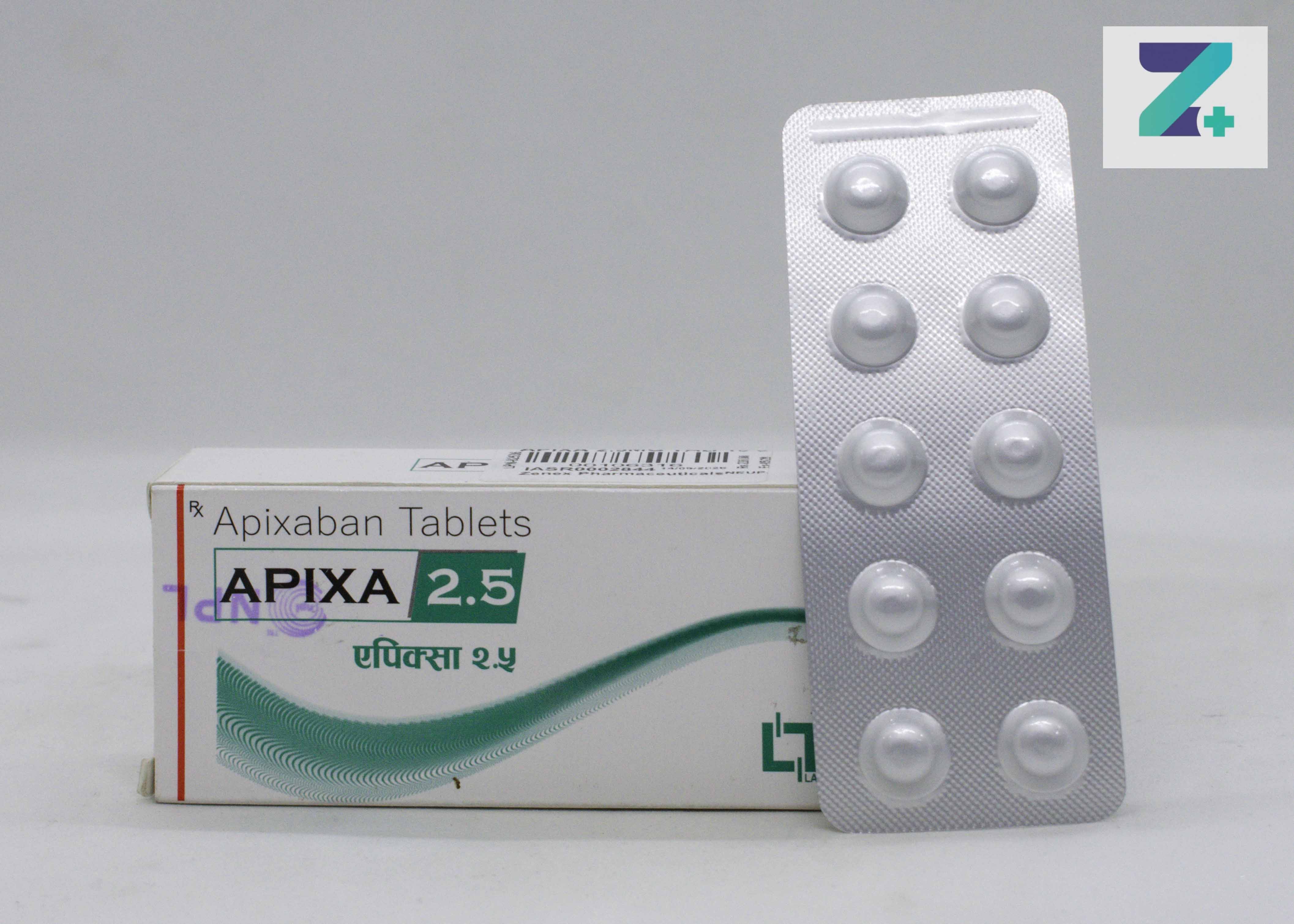
APIXA 2.5MG
Price: Rs.220.00
15% off
In stock
Loose stock: 0
Description
APIXA 2.5MG TAB 10
Details
Composition
APIXABAN 2.5 MG
# Apixaban 2.5 mg
## SHORT DESCRIPTION
Apixaban 2.5 mg is an **oral anticoagulant (blood thinner)** belonging to the direct oral anticoagulant (DOAC) group. It selectively inhibits **Factor Xa**, an important protein involved in blood clot formation.
It is used in specific situations to reduce the risk of harmful blood clots, including certain patients with **atrial fibrillation**, **deep vein thrombosis (DVT)** and **pulmonary embolism (PE)**, and for prevention of venous thromboembolism after certain surgeries.
## KEY BENEFITS
* Helps reduce the formation of harmful blood clots
* Helps lower the risk of **stroke and systemic embolism** in eligible patients with non-valvular atrial fibrillation
* Used for treatment or prevention of **DVT and pulmonary embolism** in appropriate dosing regimens
* Helps prevent blood clots following certain hip or knee replacement surgeries
* Provides predictable anticoagulant activity without routine INR monitoring in most patients
* Convenient oral administration
## USES / INDICATIONS
Apixaban may be prescribed for:
* **Stroke and systemic embolism prevention in non-valvular atrial fibrillation**
* Treatment of **deep vein thrombosis (DVT)**
* Treatment of **pulmonary embolism (PE)**
* Prevention of recurrent DVT or PE
* Prevention of venous thromboembolism after hip or knee replacement surgery
**Important:** Apixaban 2.5 mg is not the standard dose for every indication. The appropriate strength and dosing schedule depend on the condition being treated and individual patient factors.
## HOW IT WORKS
Apixaban is a **direct Factor Xa inhibitor**.
Factor Xa plays a central role in the coagulation cascade and helps convert prothrombin into thrombin. Thrombin is necessary for the formation of fibrin, which stabilizes blood clots.
By inhibiting Factor Xa, apixaban:
* Reduces thrombin generation
* Reduces fibrin formation
* Decreases the tendency of blood to form harmful clots
## DOSAGE & ADMINISTRATION
* Take apixaban exactly as prescribed by your healthcare professional.
* It can generally be taken **with or without food**.
* Take doses at approximately the same times each day.
* Swallow the tablet with water unless your doctor has provided alternative administration instructions.
* Do not stop apixaban suddenly without medical advice because stopping anticoagulation can increase the risk of blood clots and stroke.
### Important Dose Information
The **2.5 mg strength** may be used in specific circumstances, such as:
* Certain patients with non-valvular atrial fibrillation who meet dose-reduction criteria
* Prevention of recurrent DVT or PE after completion of initial anticoagulant treatment
* Prevention of venous thromboembolism following certain orthopedic surgeries
For atrial fibrillation, dose reduction to 2.5 mg twice daily is generally considered when a patient meets **at least two specific criteria** involving age, body weight and serum creatinine.
The dose for DVT/PE treatment is different from the dose used for preventing recurrent clots.
**Do not determine your dose yourself. Follow your prescribed regimen.**
### Missed Dose
Take the missed dose as soon as you remember on the same day. Continue with the regular schedule afterward. **Do not double the dose** to compensate for a missed tablet.
## SIDE EFFECTS
The most important adverse effect of apixaban is **bleeding**.
Common or possible side effects include:
* Easy bruising
* Nosebleeds
* Bleeding gums
* Prolonged bleeding from cuts
* Heavy menstrual bleeding
* Nausea
* Anemia
* Blood in the urine
### Seek Urgent Medical Attention For
* Uncontrolled or prolonged bleeding
* Vomiting blood or material resembling coffee grounds
* Black or bloody stools
* Coughing up blood
* Severe headache
* Sudden weakness, numbness or difficulty speaking
* Severe dizziness or fainting
* Significant blood loss or unexplained weakness
* Severe abdominal pain
* Any serious injury, particularly a head injury
## PRECAUTIONS & WARNINGS
* Apixaban increases the risk of **bleeding**.
* Tell your doctor if you have an active bleeding disorder or recent major bleeding.
* Inform your doctor about any history of stomach ulcers or gastrointestinal bleeding.
* Tell your healthcare professional if you have kidney or liver disease.
* Use caution if you have a condition that increases the risk of bleeding.
* Inform your doctor before surgery, dental procedures or invasive medical procedures.
* Do not discontinue apixaban without medical advice.
* Avoid activities that have a high risk of serious injury where possible.
* Tell healthcare professionals that you are taking apixaban before receiving treatment.
* Seek medical attention after a significant injury, especially a head injury.
* Spinal or epidural procedures can carry a risk of serious bleeding while taking anticoagulants; inform the relevant healthcare professional before such procedures.
* Do not take additional medicines containing anticoagulants or antiplatelet agents unless prescribed.
## DRUG INTERACTIONS
Apixaban has important interactions with medicines that affect bleeding or alter apixaban blood levels.
### Medicines That May Increase Bleeding Risk
* Aspirin
* Clopidogrel
* NSAIDs such as ibuprofen, naproxen and diclofenac
* Other anticoagulants
* Thrombolytic medicines
* Some antidepressants, particularly SSRIs and SNRIs
### Medicines That May Increase Apixaban Levels
Strong inhibitors of **CYP3A4 and P-glycoprotein (P-gp)** can increase apixaban exposure, including certain:
* Azole antifungals
* HIV protease inhibitors
* Macrolide antibiotics such as clarithromycin
### Medicines That May Reduce Apixaban Levels
Strong CYP3A4/P-gp inducers can reduce apixaban exposure, including:
* Rifampicin
* Carbamazepine
* Phenytoin
* Phenobarbital
* St John's wort
Always inform your doctor and pharmacist about **all prescription medicines, OTC medicines, vitamins and herbal supplements** you take.
## STORAGE INFORMATION
* Store at room temperature according to the manufacturer's instructions.
* Keep the tablets in their original packaging.
* Protect from excessive heat and moisture.
* Keep the container properly closed where applicable.
* Keep out of reach of children.
* Do not use after the expiry date.
## PRESCRIPTION STATUS
**Prescription medicine.**
Apixaban should be used only under the supervision of a qualified healthcare professional because inappropriate dosing or interruption can cause serious bleeding or increase the risk of potentially life-threatening blood clots.
## GENUINE MEDICINE ASSURANCE
For safe and genuine Apixaban 2.5 mg:
* Purchase from a licensed and reputable pharmacy.
* Check the medicine name and strength.
* Verify the manufacturer's details.
* Check the batch number and expiry date.
* Ensure the packaging and seal are intact.
* Do not use tablets from damaged or suspicious packaging.
* Purchase prescription medicines only through authorized sources.
* Follow the storage instructions printed on the package.
* Consult a pharmacist if you have concerns about product authenticity.
## FAQ
### What is Apixaban 2.5 mg used for?
Apixaban 2.5 mg is an anticoagulant used in specific dosing situations to help prevent harmful blood clots, including **stroke prevention in eligible patients with atrial fibrillation** and prevention of recurrent DVT or PE.
### Is Apixaban 2.5 mg a blood thinner?
Yes. Apixaban is commonly called a **blood thinner**, although it does not literally thin the blood. It reduces the blood's ability to form clots.
### How does Apixaban work?
Apixaban directly blocks **Factor Xa**, reducing thrombin generation and preventing the formation and growth of blood clots.
### Is Apixaban 2.5 mg used for atrial fibrillation?
Yes. Apixaban is used to reduce the risk of stroke and systemic embolism in appropriate patients with **non-valvular atrial fibrillation**. The 2.5 mg dose is used only when specific dose-reduction criteria are met.
### Is 2.5 mg Apixaban a standard dose?
Not for every condition. Apixaban dosing varies depending on the indication, kidney function, age, body weight and other clinical factors.
### Can I take Apixaban 2.5 mg with food?
Yes. Apixaban can generally be taken **with or without food**.
### What happens if I miss an Apixaban dose?
Take the missed dose as soon as you remember on the same day and continue your regular schedule. Do not take two doses together to compensate.
### Can I stop Apixaban suddenly?
Do not stop apixaban without medical advice. Premature discontinuation can increase the risk of **stroke, DVT or pulmonary embolism** depending on the reason you are taking it.
### What is the most common side effect of Apixaban?
**Bleeding and bruising** are among the most important side effects associated with apixaban.
### Can Apixaban cause internal bleeding?
Yes. Although uncommon, serious internal bleeding can occur. Seek urgent medical attention for black stools, vomiting blood, coughing blood, severe headache, fainting or unexplained weakness.
### Can I take aspirin with Apixaban?
Aspirin can increase bleeding risk when combined with apixaban. Take aspirin with apixaban only when specifically recommended by your healthcare professional.
### Can I take ibuprofen with Apixaban?
Ibuprofen and other NSAIDs can increase the risk of bleeding. Consult your doctor before taking ibuprofen or another NSAID while using apixaban.
### Can I take paracetamol with Apixaban?
Paracetamol is generally considered a preferred pain-relief option over NSAIDs for many people taking anticoagulants, but you should still follow the recommended dose and discuss regular use with your healthcare professional.
### Does Apixaban require INR monitoring?
Unlike warfarin, apixaban **does not normally require routine INR monitoring** to adjust its anticoagulant effect. Your doctor may still monitor kidney function, liver function, blood counts and other factors.
### Can Apixaban be used during pregnancy?
Apixaban is generally not recommended during pregnancy unless specifically directed by a specialist. Tell your doctor if you are pregnant, planning pregnancy or become pregnant while taking it.
### Can Apixaban be used while breastfeeding?
Discuss breastfeeding with your healthcare professional before taking apixaban. Your doctor can assess whether an alternative anticoagulant may be more appropriate.
### What should I do before surgery or dental treatment?
Tell your doctor, dentist or surgeon that you are taking apixaban. The medicine may need to be temporarily interrupted depending on the procedure and your risk of clotting and bleeding.
### What should I do if I have an injury while taking Apixaban?
Because apixaban increases bleeding risk, seek medical advice after a significant injury, particularly a **head injury**, even if there is initially no obvious bleeding.
### Can Apixaban interact with antibiotics?
Yes. Some antibiotics can affect apixaban levels or increase bleeding risk. Always tell your doctor that you are taking apixaban before starting an antibiotic.
### Can Apixaban be taken with other blood thinners?
Combining anticoagulants or antiplatelet medicines can substantially increase bleeding risk. Use such combinations only under specific medical supervision.
### How should Apixaban 2.5 mg be stored?
Store it according to the manufacturer's instructions, generally at room temperature and away from excessive heat and moisture. Keep it in its original packaging and out of reach of children.
## MEDICAL DISCLAIMER
This information is provided for educational and informational purposes only and does not replace professional medical advice, diagnosis or treatment. **Apixaban 2.5 mg is a prescription anticoagulant and must be taken exactly as prescribed.** The correct dose varies substantially depending on the medical condition and individual patient factors. Apixaban can cause serious or potentially life-threatening bleeding, while inappropriate interruption can increase the risk of blood clots and stroke. Do not start, stop or change the dose without consulting a qualified healthcare professional. Always inform healthcare professionals and dentists that you are taking apixaban before procedures or new medicines.