APIXA 5GM
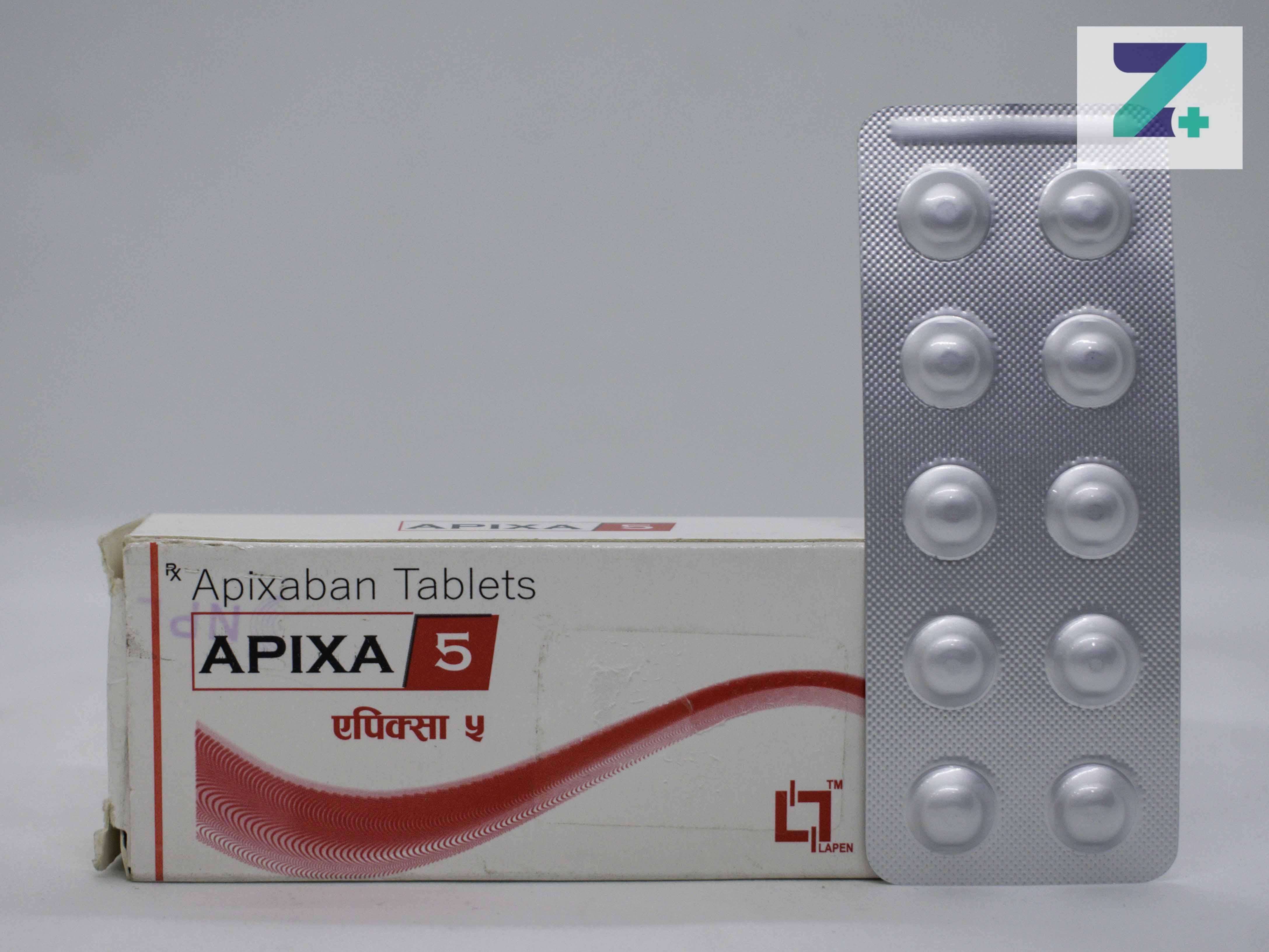
Price: Rs.300.00
13% off
In stock
Loose stock: 0
Description
APIXA 5GM TAB 10
Details
Composition
APIXABAN 5 MG
# APIXABAN 5 MG
## SHORT DESCRIPTION
**Apixaban 5 mg** is an oral anticoagulant belonging to the **direct oral anticoagulant (DOAC)** class. It is a selective **factor Xa inhibitor** used to prevent and treat certain blood clots.
It is commonly prescribed to reduce the risk of **stroke and systemic embolism in eligible patients with non-valvular atrial fibrillation**, and to treat or prevent recurrence of **deep vein thrombosis (DVT)** and **pulmonary embolism (PE)**.
## KEY BENEFITS
* Helps prevent the formation of harmful blood clots.
* Reduces the risk of **stroke and systemic embolism** in appropriate patients with non-valvular atrial fibrillation.
* Used in the treatment of **DVT** and **pulmonary embolism**.
* Helps prevent recurrent DVT and PE after initial treatment.
* Provides predictable anticoagulant activity.
* Usually does not require routine INR monitoring like warfarin.
* Convenient oral tablet administration.
## USES / INDICATIONS
Apixaban may be prescribed for:
* **Stroke and systemic embolism prevention** in adults with non-valvular atrial fibrillation.
* **Treatment of deep vein thrombosis (DVT)**.
* **Treatment of pulmonary embolism (PE)**.
* **Prevention of recurrent DVT and PE**.
* Prevention of venous thromboembolism after certain **hip or knee replacement surgeries**, depending on the approved indication in the country.
The approved uses and dosing recommendations may vary by country and patient characteristics.
## HOW IT WORKS
Apixaban directly inhibits **factor Xa**, an important component of the body's blood-clotting cascade.
By blocking factor Xa, apixaban reduces the generation of **thrombin**. Lower thrombin levels reduce the conversion of fibrinogen into fibrin, which is an important structural component of blood clots.
### In Simple Terms
**Apixaban → blocks factor Xa → reduces thrombin production → reduces fibrin formation → decreases blood-clot formation.**
Apixaban does not directly dissolve an existing blood clot. Instead, it helps prevent existing clots from becoming larger and reduces formation of new clots.
## DOSAGE & ADMINISTRATION
The appropriate dose depends on the condition being treated, age, body weight, kidney function, other medicines, and bleeding risk.
### General Administration
* Take exactly as prescribed.
* Apixaban is commonly taken **twice daily**.
* It can generally be taken **with or without food**.
* Take doses at approximately the same times every day.
* Swallow the tablet with water.
* Do not stop treatment without medical advice.
### Apixaban 5 mg for Atrial Fibrillation
For many adults with **non-valvular atrial fibrillation**, the usual dose is:
**5 mg twice daily.**
Some patients require **2.5 mg twice daily** based on specific clinical criteria, such as age, body weight, and kidney function.
### Apixaban for DVT or PE
Treatment of DVT or PE generally begins with a different initial regimen before transitioning to:
**5 mg twice daily.**
The exact treatment schedule must be determined by a healthcare professional.
### Missed Dose
If you miss a dose, take it as soon as you remember and continue with your regular schedule.
**Do not take two doses at the same time to compensate for a missed dose.**
## SIDE EFFECTS
The most important side effect of apixaban is **bleeding**.
Possible side effects include:
* Easy bruising.
* Nosebleeds.
* Bleeding gums.
* Prolonged bleeding from minor cuts.
* Heavy menstrual bleeding.
* Anemia.
* Blood in the urine.
* Gastrointestinal bleeding.
* Nausea.
### Seek Immediate Medical Attention For
* Heavy or uncontrollable bleeding.
* Vomiting blood or material resembling coffee grounds.
* Black or tarry stools.
* Coughing up blood.
* Red or dark urine.
* Severe or persistent headache.
* Sudden weakness or numbness.
* Confusion or difficulty speaking.
* Fainting or severe dizziness.
* Significant bleeding following an injury.
## PRECAUTIONS & WARNINGS
### Bleeding Risk
Apixaban reduces blood clotting and can increase the risk of serious bleeding.
Tell your healthcare professional if you have:
* A history of major bleeding.
* Active bleeding.
* Stomach or intestinal ulcers.
* A bleeding disorder.
* Recent surgery.
* Significant kidney disease.
* Liver disease.
* Uncontrolled high blood pressure.
### Do Not Stop Abruptly
Do not discontinue apixaban without medical advice.
Stopping anticoagulant treatment prematurely can increase the risk of **blood clots, stroke, DVT, or PE**, depending on the underlying condition.
### Surgery and Dental Procedures
Tell your doctor, dentist, surgeon, or anesthetist that you take apixaban before any procedure.
The medicine may need to be temporarily discontinued before certain procedures, depending on the procedure's bleeding risk and your kidney function.
### Spinal or Epidural Procedures
Apixaban requires special caution around spinal or epidural anesthesia and procedures because bleeding around the spinal cord can rarely result in serious neurological complications.
### Kidney Problems
Kidney function should be considered when determining the appropriate treatment regimen.
### Liver Problems
Inform your healthcare professional if you have significant liver disease or abnormal blood clotting.
### Injury or Falls
Because apixaban increases bleeding risk, seek medical attention after a significant injury, especially a **head injury**, even if you initially feel well.
### Pregnancy
If you are pregnant, planning pregnancy, or become pregnant while taking apixaban, contact your healthcare professional promptly. Another anticoagulant may be preferred during pregnancy.
## DRUG INTERACTIONS
Apixaban can interact with medicines that increase bleeding risk or alter apixaban concentrations.
### Other Anticoagulants
Combining apixaban with:
* Warfarin.
* Heparin.
* Enoxaparin.
* Other DOACs.
can significantly increase bleeding risk unless specifically directed during a medically supervised treatment transition.
### Antiplatelet Medicines
Medicines such as **aspirin, clopidogrel, and ticagrelor** can increase bleeding risk.
### NSAIDs
NSAIDs such as **ibuprofen, naproxen, and diclofenac** can increase the risk of bleeding, particularly gastrointestinal bleeding.
### Strong CYP3A4 and P-gp Inhibitors
Medicines such as **ketoconazole, itraconazole, ritonavir**, and certain other strong inhibitors can increase apixaban exposure and bleeding risk.
### Strong CYP3A4 and P-gp Inducers
Medicines including **rifampicin, carbamazepine, phenytoin, and phenobarbital** may reduce apixaban exposure and potentially reduce its anticoagulant effect.
### Antidepressants
Some **SSRIs and SNRIs** may increase bleeding risk when combined with anticoagulants.
### Herbal Products
**St John's wort** may reduce apixaban effectiveness and should generally be avoided unless specifically approved by a healthcare professional.
Always provide your doctor or pharmacist with a complete list of prescription medicines, OTC medicines, supplements, and herbal products you use.
## STORAGE INFORMATION
* Store according to the manufacturer's instructions.
* Keep at room temperature unless otherwise specified.
* Protect from excessive heat and moisture.
* Keep away from direct sunlight.
* Keep tablets in their original packaging.
* Keep out of reach of children.
* Do not use after the expiry date.
* Do not use tablets from damaged or tampered packaging.
## PRESCRIPTION STATUS
**Apixaban 5 mg is generally a prescription-only medicine.**
It requires appropriate medical supervision because both inadequate anticoagulation and excessive anticoagulation can have serious consequences.
Prescription requirements may vary depending on the country.
## GENUINE MEDICINE ASSURANCE
When purchasing **Apixaban 5 mg**, obtain it from a **licensed pharmacy or authorized medicine supplier**.
Before using the medicine, check:
* Active ingredient: **Apixaban**.
* Strength: **5 mg**.
* Manufacturer information.
* Batch/lot number.
* Manufacturing date.
* Expiry date.
* Intact packaging and seal.
* Clear labeling and dosage information.
Avoid medicines with damaged packaging, missing batch information, unusual appearance, unclear labeling, or questionable authenticity.
## FREQUENTLY ASKED QUESTIONS (FAQ)
### 1. What is Apixaban 5 mg used for?
Apixaban 5 mg is used to **prevent and treat certain blood clots**, including prevention of stroke in eligible patients with non-valvular atrial fibrillation and treatment of DVT and PE.
### 2. Is apixaban a blood thinner?
Yes. Apixaban is commonly called a **blood thinner**, although it does not literally thin the blood. It reduces the blood's ability to form clots.
### 3. Is apixaban an anticoagulant?
Yes. Apixaban is an **oral anticoagulant** and belongs to the DOAC class.
### 4. How does Apixaban 5 mg work?
It directly blocks **factor Xa**, reducing thrombin generation and decreasing the formation of fibrin blood clots.
### 5. Does apixaban dissolve blood clots?
No. Apixaban does not directly dissolve existing clots. It helps prevent new clots and prevents existing clots from growing while the body naturally breaks them down.
### 6. How often should Apixaban 5 mg be taken?
For many indications, it is taken **twice daily**. The exact dosage depends on the medical condition and individual patient factors.
### 7. Can Apixaban 5 mg be used for atrial fibrillation?
Yes. **5 mg twice daily** is commonly used for stroke prevention in appropriate adults with non-valvular atrial fibrillation. Certain patients require a reduced dose.
### 8. Can Apixaban 5 mg treat DVT?
Yes. Apixaban is approved for treatment of **deep vein thrombosis**. Treatment usually starts with a different initial dosing schedule before 5 mg twice daily is used.
### 9. Can Apixaban 5 mg treat pulmonary embolism?
Yes. Apixaban is used for the treatment of **pulmonary embolism** and prevention of recurrent venous thromboembolism.
### 10. What is the most common side effect of apixaban?
**Bleeding and bruising** are among the most common and clinically important adverse effects.
### 11. Can apixaban cause internal bleeding?
Yes. Serious internal bleeding is possible. Seek urgent medical attention for black stools, vomiting blood, coughing blood, severe headache, unexplained weakness, or other signs of significant bleeding.
### 12. Can I take aspirin with apixaban?
Aspirin can increase bleeding risk when combined with apixaban. Use the combination only when specifically recommended by your healthcare professional.
### 13. Can I take ibuprofen with apixaban?
Ibuprofen and other NSAIDs can increase bleeding risk. Ask your healthcare professional before using NSAIDs while taking apixaban.
### 14. Can I take paracetamol with apixaban?
Paracetamol is generally less likely than NSAIDs to increase bleeding risk and is often preferred when an analgesic is needed, but you should follow your healthcare professional's advice.
### 15. Can I drink alcohol while taking apixaban?
Heavy alcohol consumption may increase the risk of bleeding. Discuss alcohol use with your healthcare professional.
### 16. Can I stop Apixaban 5 mg suddenly?
**Do not stop apixaban without medical advice.** Stopping it prematurely may increase the risk of stroke or other serious blood clots.
### 17. What should I do if I miss an apixaban dose?
Take the missed dose when you remember and continue your regular schedule. **Do not double the dose.**
### 18. Does apixaban require INR monitoring?
Unlike warfarin, apixaban generally **does not require routine INR testing** to adjust its anticoagulant effect. However, your healthcare professional may monitor kidney function, liver function, blood counts, and other factors.
### 19. Can Apixaban 5 mg be taken with food?
Yes. Apixaban can generally be taken **with or without food**.
### 20. Can apixaban be taken during pregnancy?
Apixaban is generally **not preferred during pregnancy**. If you are pregnant or planning pregnancy, consult your healthcare professional.
### 21. Can apixaban be used during breastfeeding?
Discuss breastfeeding with your healthcare professional before using apixaban so that the benefits and potential risks can be assessed.
### 22. What should I do after a fall while taking apixaban?
A significant fall, especially one involving a **head injury**, should receive prompt medical evaluation because internal bleeding may occur even when there are no immediate symptoms.
### 23. Does apixaban lower blood pressure?
No. Apixaban is not a blood-pressure medicine. However, severe bleeding can cause low blood pressure, dizziness, or fainting.
### 24. Is Apixaban 5 mg prescription-only?
Yes, apixaban is generally a **prescription-only anticoagulant**, although legal requirements can vary by country.
### 25. How should Apixaban 5 mg be stored?
Store it according to the manufacturer's instructions, generally at room temperature and protected from **heat, moisture, and direct sunlight**. Keep it out of reach of children.
## MEDICAL DISCLAIMER
This information about **Apixaban 5 mg** is intended for general educational and informational purposes only. It does not replace professional medical advice, diagnosis, or treatment.
Apixaban is a prescription anticoagulant that can cause **serious or potentially life-threatening bleeding**. The appropriate dose depends on the indication, age, body weight, kidney function, other medicines, and individual bleeding and clotting risks.
**Do not start, stop, or change Apixaban 5 mg without consulting a qualified healthcare professional.** Always inform your doctor, dentist, and other healthcare professionals that you are taking apixaban before procedures or new medicines.
Seek urgent medical attention for uncontrolled bleeding, vomiting blood, black/tarry stools, coughing blood, severe headache, sudden neurological symptoms, or significant injury, particularly a head injury.