ASVIT
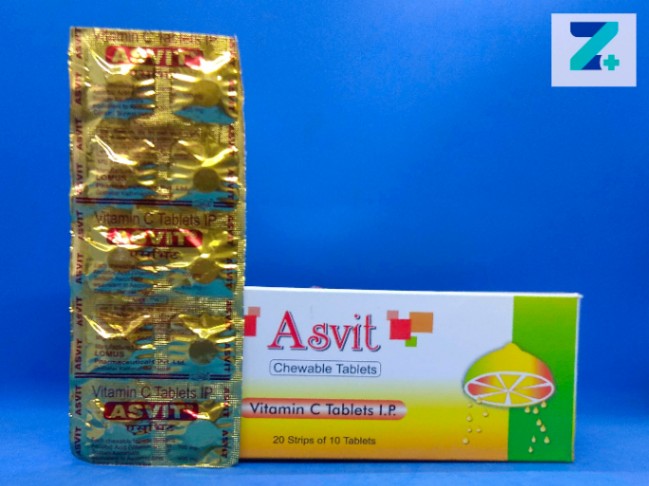
Price: Rs.60.00
10% off
In stock
Loose stock: 5
Description
ASVIT TAB 10
Details
Composition
ASCORBIC ACID 500 MG
# Ascorbic Acid 500 mg
## SHORT DESCRIPTION
**Ascorbic Acid 500 mg**, also known as **Vitamin C**, is a water-soluble vitamin that plays an important role in immune function, collagen formation, wound healing, iron absorption, and antioxidant protection. It is used to prevent or treat **vitamin C deficiency** and may be recommended when dietary intake is insufficient.
## KEY BENEFITS
* Helps prevent and treat vitamin C deficiency
* Supports normal immune system function
* Supports collagen production for healthy skin, blood vessels, bones, and connective tissue
* Helps support wound healing
* Enhances absorption of non-heme iron from plant-based foods
* Provides antioxidant activity that helps protect cells from oxidative stress
* Supports normal gum and tissue health
## USES / INDICATIONS
Ascorbic Acid 500 mg may be used for:
* **Prevention or treatment of vitamin C deficiency**
* Inadequate dietary vitamin C intake
* Increased vitamin C requirements in certain circumstances
* Supporting wound healing when vitamin C intake is inadequate
* Supporting iron absorption in people taking oral iron supplements
Vitamin C supplementation is most beneficial when dietary intake is inadequate or deficiency is present.
## HOW IT WORKS
Vitamin C acts as an antioxidant and is required for several important biological processes.
It is essential for the production and maintenance of **collagen**, a structural protein found in skin, blood vessels, cartilage, bones, gums, and connective tissue.
Vitamin C also improves the absorption of **non-heme iron** in the digestive tract.
**Ascorbic Acid → Supports collagen synthesis + antioxidant protection + iron absorption → Supports normal tissue and immune function**
## DOSAGE & ADMINISTRATION
For adults, the appropriate dose depends on the purpose of supplementation and individual dietary intake.
For a **500 mg preparation**:
* Take exactly as directed by your healthcare professional or product label.
* It may be taken with or without food.
* Taking it with food may reduce stomach discomfort in sensitive individuals.
* Swallow the tablet with water unless the product is specifically formulated to be chewed or dissolved.
* Do not routinely exceed the recommended dose.
The recommended daily intake of vitamin C for most adults is substantially lower than 500 mg, so a 500 mg supplement is generally used when additional supplementation is desired or clinically appropriate.
### Missed Dose
If you miss a scheduled dose, take it when remembered unless it is nearly time for the next dose. **Do not take two doses together.**
## SIDE EFFECTS
Ascorbic acid is generally well tolerated at recommended doses. Possible side effects, particularly at higher doses, include:
* Nausea
* Stomach discomfort
* Abdominal cramps
* Heartburn
* Diarrhea
* Headache
High doses taken for prolonged periods may increase the risk of **kidney stone formation** in susceptible individuals.
## PRECAUTIONS & WARNINGS
### Kidney Stones
People with a history of **kidney stones** should consult a healthcare professional before taking high-dose vitamin C supplements.
### Kidney Disease
People with significant kidney disease should seek medical advice before using high-dose vitamin C.
### Iron Overload Disorders
Vitamin C increases iron absorption. People with conditions such as **hemochromatosis** or other iron-overload disorders should use supplementation only under medical supervision.
### G6PD Deficiency
Very high doses of vitamin C may cause complications in people with **glucose-6-phosphate dehydrogenase (G6PD) deficiency**. Consult your doctor before taking high doses.
### Pregnancy
Vitamin C is an essential nutrient during pregnancy, but excessive supplementation should be avoided. Consult your healthcare professional regarding the appropriate dose.
### Breastfeeding
Vitamin C is normally present in breast milk. Follow recommended supplementation levels and consult your healthcare professional before taking high doses.
### Laboratory Tests
High doses of vitamin C may interfere with some laboratory tests, including certain blood and urine glucose or other diagnostic tests. Inform healthcare professionals that you are taking vitamin C supplements.
## DRUG INTERACTIONS
Vitamin C may interact with or affect the absorption or effects of certain medicines.
Important considerations include:
* **Iron supplements:** Vitamin C can increase absorption of non-heme iron.
* **Aluminum-containing antacids:** Vitamin C may increase aluminum absorption.
* **Warfarin:** High-dose vitamin C may potentially affect anticoagulant response in some individuals; monitoring may be appropriate.
* **Certain chemotherapy treatments:** High-dose antioxidant supplementation may be inappropriate during some cancer treatments. Discuss use with your oncologist.
* **Certain laboratory tests:** Vitamin C can interfere with some diagnostic tests.
Always inform your doctor or pharmacist about all prescription medicines, over-the-counter medicines, vitamins, and herbal supplements you use.
## STORAGE INFORMATION
* Store according to the manufacturer's instructions.
* Keep at room temperature unless otherwise specified.
* Protect from excessive heat, moisture, and direct sunlight.
* Keep the container tightly closed.
* Keep tablets in their original packaging.
* Keep out of reach and sight of children.
* Do not use after the expiry date.
* Do not use tablets from damaged packaging.
## PRESCRIPTION STATUS
**Ascorbic Acid 500 mg is generally available as an over-the-counter vitamin supplement**, although availability and regulatory status may vary by country and formulation.
Higher-dose or medically indicated vitamin C treatment may require professional supervision.
## GENUINE MEDICINE ASSURANCE
To help ensure you receive genuine Ascorbic Acid 500 mg:
* Purchase from a licensed and reputable pharmacy.
* Check the product name and strength.
* Verify the manufacturer's details.
* Check the batch number and expiry date.
* Ensure the packaging is sealed and undamaged.
* Confirm the strength is **500 mg**.
* Avoid products with altered, damaged, or suspicious packaging.
* Purchase supplements from authorized and reputable sources.
* Ask your pharmacist to verify the product if you have concerns about authenticity.
## FAQ SECTION
### What is Ascorbic Acid 500 mg?
Ascorbic Acid 500 mg is a **Vitamin C supplement** used primarily to prevent or treat vitamin C deficiency and support normal immune function, collagen formation, wound healing, and iron absorption.
### What are the benefits of Vitamin C 500 mg?
Vitamin C supports collagen production, immune function, antioxidant protection, wound healing, and absorption of non-heme iron.
### Is Ascorbic Acid the same as Vitamin C?
Yes. **Ascorbic acid is the chemical name for Vitamin C**, the water-soluble vitamin found naturally in many fruits and vegetables.
### What is Ascorbic Acid 500 mg used for?
It is mainly used to supplement vitamin C when dietary intake is inadequate or when additional vitamin C is medically appropriate.
### Does Vitamin C boost the immune system?
Vitamin C supports normal immune system function. However, taking extra vitamin C does not necessarily prevent infections in everyone.
### Can Vitamin C help with wound healing?
Yes. Vitamin C is required for collagen production and therefore plays an important role in normal wound healing.
### Does Vitamin C help iron absorption?
Yes. Vitamin C can increase the absorption of **non-heme iron**, particularly iron obtained from plant foods and some oral iron preparations.
### When is the best time to take Ascorbic Acid 500 mg?
It can generally be taken at any convenient time. If it causes stomach discomfort, taking it with food may help.
### Can Ascorbic Acid 500 mg be taken daily?
A 500 mg vitamin C supplement can be taken daily when appropriate. However, most healthy adults can obtain adequate vitamin C through a balanced diet, and prolonged high-dose supplementation may not be necessary.
### What are the side effects of Vitamin C 500 mg?
Possible side effects include nausea, stomach discomfort, abdominal cramps, heartburn, diarrhea, and headache, particularly at higher doses.
### Can Vitamin C cause kidney stones?
High doses of vitamin C may increase urinary oxalate in some individuals and could increase kidney-stone risk, particularly in susceptible people.
### Is Vitamin C safe during pregnancy?
Vitamin C is an essential nutrient during pregnancy, but excessive supplementation should be avoided. Consult your healthcare professional about the appropriate dose.
### Can Vitamin C be taken while breastfeeding?
Vitamin C is naturally present in breast milk. Standard supplementation is generally compatible with breastfeeding, but high-dose supplementation should be discussed with a healthcare professional.
### Can Vitamin C be taken with iron tablets?
Yes. Vitamin C can increase the absorption of non-heme iron and may be taken with an iron supplement when recommended.
### Can Vitamin C be taken with antibiotics?
Vitamin C does not generally interact significantly with most commonly used antibiotics, but specific medicines may have individual considerations. Check with your pharmacist if you are taking prescription antibiotics.
### Can Vitamin C be taken with antacids?
Vitamin C may increase the absorption of aluminum from some aluminum-containing antacids. If you regularly use these medicines, ask your healthcare professional about appropriate timing.
### Can people with diabetes take Vitamin C 500 mg?
Many people with diabetes can take standard doses of vitamin C, but high-dose supplementation may affect some laboratory tests. Discuss regular supplementation with your healthcare professional.
### Can Vitamin C cause diarrhea?
Yes. Larger amounts of vitamin C can cause diarrhea and other gastrointestinal symptoms.
### Does Vitamin C improve skin health?
Vitamin C is required for collagen formation and has antioxidant properties, so adequate vitamin C intake supports normal skin structure and health.
### Does Vitamin C make skin lighter?
Vitamin C is important for healthy skin, but oral vitamin C supplements should not be considered a guaranteed skin-lightening treatment.
### Does Vitamin C prevent colds?
Vitamin C does not reliably prevent the common cold in the general population. Regular supplementation may modestly reduce the duration or severity of colds in some people, particularly those with low vitamin C intake.
### What happens if I take too much Vitamin C?
Excessive vitamin C can cause nausea, abdominal cramps, diarrhea, and other gastrointestinal symptoms. Very high or prolonged doses may increase kidney-stone risk in susceptible individuals.
### How should Ascorbic Acid 500 mg be stored?
Store according to the manufacturer's instructions in a cool, dry place away from excessive heat and moisture. Keep the product out of reach of children.
## MEDICAL DISCLAIMER
This information about **Ascorbic Acid 500 mg (Vitamin C)** is provided for educational and informational purposes only and is not a substitute for professional medical advice, diagnosis, or treatment.
Vitamin C is an essential nutrient, but more is not always better. High-dose or prolonged supplementation may cause gastrointestinal problems and may increase kidney-stone risk in susceptible individuals. People with **kidney disease, a history of kidney stones, iron-overload disorders, or G6PD deficiency** should seek professional advice before using higher-dose vitamin C supplements.
Always follow the product label or your healthcare professional's recommendations regarding dosage, duration, precautions, and interactions.