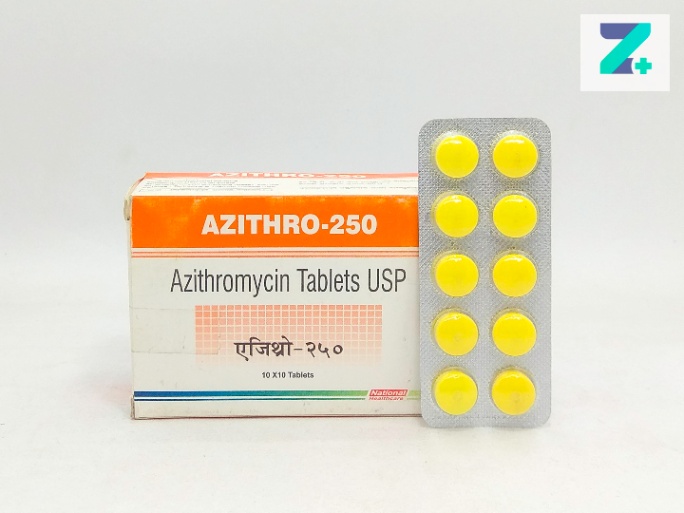
AZITHRO-250MG
Price: Rs.170.00
10% off
In stock
Loose stock: 4
Description
AZITHRO-250MG TAB 10
Details
Composition
AZITHROMYCIN 250 MG
# AZITHROMYCIN 250 MG
## SHORT DESCRIPTION
**Azithromycin 250 mg** is a **macrolide antibiotic** used to treat certain bacterial infections. It works by inhibiting bacterial protein synthesis, which prevents susceptible bacteria from growing and multiplying.
It may be prescribed for certain **respiratory tract infections, skin and soft-tissue infections, and sexually transmitted bacterial infections**, depending on the causative organism and local prescribing guidelines.
> **Important:** Azithromycin does **not** treat viral infections such as the common cold or influenza.
---
## KEY BENEFITS
* **Treats Certain Bacterial Infections:** Effective against susceptible bacteria when appropriately prescribed.
* **Respiratory Infection Treatment:** May be used for selected bacterial respiratory infections.
* **Helps Treat Certain Skin Infections:** Can be prescribed for susceptible bacterial skin and soft-tissue infections.
* **Convenient Dosing:** Many treatment regimens use once-daily dosing and relatively short courses.
* **Useful Against Certain STIs:** May be prescribed for specific bacterial sexually transmitted infections when clinically appropriate.
* **Broad Tissue Distribution:** Azithromycin reaches therapeutic concentrations in many tissues.
---
## USES / INDICATIONS
Azithromycin 250 mg may be prescribed for susceptible bacterial infections such as:
* Certain **community-acquired respiratory tract infections**
* Acute bacterial sinusitis in selected cases
* Certain bacterial pharyngitis/tonsillitis when appropriate
* Certain skin and soft-tissue infections
* Certain sexually transmitted bacterial infections
* Certain atypical bacterial infections
* Other infections caused by susceptible organisms as determined by a healthcare professional
The approved indications vary by country, formulation, bacterial susceptibility, and clinical guidelines.
### Important
Azithromycin should **not be used routinely for viral infections**, including:
* Common cold
* Influenza (flu)
* Most viral sore throats
* Other viral respiratory infections
---
## HOW IT WORKS
Azithromycin belongs to the **macrolide antibiotic** class.
It binds to the **50S subunit of bacterial ribosomes**, interfering with bacterial protein synthesis.
This prevents susceptible bacteria from producing proteins required for growth and reproduction, helping the body's immune system eliminate the infection.
Azithromycin does not directly kill viruses because viruses do not use bacterial ribosomes for protein production.
---
## DOSAGE & ADMINISTRATION
**Take Azithromycin 250 mg exactly as prescribed by your doctor.**
The dose and duration depend on:
* Type and severity of infection
* Bacterial susceptibility
* Age and body weight
* Kidney and liver function
* Other medicines being taken
### General Administration
* Azithromycin tablets may generally be taken **with or without food**.
* Take the medicine at approximately the same time each day.
* Swallow the tablet with water.
* Complete the **full prescribed course**, even if you begin feeling better.
* Do not share antibiotics with another person.
* Do not use leftover antibiotics for a future illness.
### Common Adult Regimens
Depending on the infection, adult treatment may involve:
* **500 mg once daily for 3 days**, or
* **500 mg on day 1 followed by 250 mg once daily on days 2–5**
However, some infections require different dosing schedules.
**A 250 mg tablet does not mean that every infection should be treated with one tablet daily.** Follow the specific prescription provided for your condition.
### Missed Dose
Take the missed dose when remembered unless it is nearly time for the next dose.
If it is close to the next scheduled dose, skip the missed dose.
**Do not take two doses together unless specifically instructed by your healthcare professional.**
---
## SIDE EFFECTS
### Common Side Effects
* Diarrhea
* Nausea
* Abdominal pain
* Vomiting
* Headache
* Indigestion
### Less Common Side Effects
* Dizziness
* Fatigue
* Changes in taste
* Skin rash
* Flatulence
### Serious Side Effects
Seek medical attention if you develop:
* Severe or persistent diarrhea
* Severe abdominal pain
* Yellowing of the skin or eyes
* Dark urine
* Severe skin rash or blistering
* Facial or throat swelling
* Difficulty breathing
* Fainting
* Rapid or irregular heartbeat
### Heart Rhythm Effects
Azithromycin can **prolong the QT interval** in susceptible individuals and may rarely cause serious abnormal heart rhythms.
The risk may be higher in people with:
* Existing QT prolongation
* Certain heart rhythm disorders
* Low potassium or magnesium
* Significant heart disease
* Certain other medicines that prolong the QT interval
---
## PRECAUTIONS & WARNINGS
Before taking Azithromycin 250 mg, tell your doctor if you have:
* Heart rhythm problems
* Long QT syndrome
* Low potassium or magnesium
* Liver disease
* Kidney disease
* Myasthenia gravis
* A history of severe antibiotic-associated diarrhea
* Previous allergic reaction to macrolide or ketolide antibiotics
### Antibiotic Resistance
Use azithromycin only when a **bacterial infection is suspected or confirmed** and the antibiotic is appropriate.
Unnecessary use can contribute to **antibiotic resistance**.
### Diarrhea
Antibiotics can occasionally cause **Clostridioides difficile-associated diarrhea**, which can occur during treatment or even weeks afterward.
Seek medical advice if you develop severe, persistent, or bloody diarrhea.
### Liver Problems
Stop treatment and seek medical attention if you develop symptoms such as:
* Yellowing of the eyes or skin
* Dark urine
* Severe fatigue
* Persistent nausea
* Upper abdominal pain
### Pregnancy & Breastfeeding
Tell your healthcare professional if you are **pregnant, planning pregnancy, or breastfeeding** before taking azithromycin.
---
## DRUG INTERACTIONS
Azithromycin can interact with certain medicines.
Important potential interactions include:
* **Warfarin**
* Digoxin
* Certain medicines that prolong the QT interval
* Some antiarrhythmic medicines
* Certain antipsychotic medicines
* Some antidepressants
* Cyclosporine
* Other medicines that may affect heart rhythm
Always tell your doctor or pharmacist about **all prescription medicines, OTC medicines, vitamins, and herbal supplements** you take.
### Antacids
Certain aluminum- or magnesium-containing antacids may be taken with azithromycin, but follow the specific product instructions regarding timing.
---
## STORAGE INFORMATION
* Store according to the manufacturer's instructions.
* Keep at room temperature unless otherwise specified.
* Protect from excessive heat, moisture, and direct sunlight.
* Keep tablets in their original packaging.
* Keep the container tightly closed.
* Keep out of reach and sight of children.
* Do not use after the expiry date.
---
## PRESCRIPTION STATUS
**Azithromycin 250 mg is a prescription antibiotic in many countries.**
Because inappropriate antibiotic use can contribute to resistance and treatment failure, it should be taken only when prescribed or recommended by an appropriately qualified healthcare professional.
---
## GENUINE MEDICINE ASSURANCE
For safe and reliable use:
* Purchase Azithromycin 250 mg from a **licensed pharmacy or authorized medicine supplier**.
* Check the manufacturer's name, batch number, and expiry date.
* Confirm the strength is **250 mg**.
* Ensure the packaging is sealed and undamaged.
* Check the tablets for unusual discoloration or damage.
* Avoid medicines from unauthorized or suspicious sources.
* Do not use expired medicines.
* Follow the manufacturer's storage instructions.
---
# FAQ – Frequently Asked Questions
### 1. What is Azithromycin 250 mg used for?
Azithromycin 250 mg is an antibiotic used to treat **certain bacterial infections**, including selected respiratory, skin, and sexually transmitted bacterial infections.
### 2. Is Azithromycin an antibiotic?
Yes. Azithromycin is a **macrolide antibiotic**.
### 3. Does Azithromycin treat viral infections?
No. Azithromycin does **not treat viruses** such as those that cause most colds and influenza.
### 4. How does Azithromycin work?
It binds to the **50S bacterial ribosome** and interferes with bacterial protein production, preventing susceptible bacteria from growing and multiplying.
### 5. How should I take Azithromycin 250 mg?
Take it exactly as prescribed. Tablets can generally be taken with or without food, depending on the specific product instructions.
### 6. Is Azithromycin 250 mg taken once daily?
Many azithromycin regimens use once-daily dosing, but the correct dose varies by infection. **Do not determine your dose solely from the tablet strength.**
### 7. How long should I take Azithromycin?
The treatment duration depends on the infection. Some courses last **3 days**, while others use a 5-day regimen or another schedule. Complete the course prescribed by your doctor.
### 8. Can I stop Azithromycin when I feel better?
Do not stop treatment early unless your healthcare professional tells you to. Completing the prescribed course helps ensure appropriate treatment.
### 9. What are the common side effects of Azithromycin?
Common side effects include **diarrhea, nausea, abdominal pain, vomiting, headache, and indigestion**.
### 10. Can Azithromycin cause diarrhea?
Yes. Diarrhea is a common side effect. Severe, persistent, or bloody diarrhea should be medically evaluated because it can sometimes indicate an antibiotic-associated intestinal infection.
### 11. Can Azithromycin affect the heart?
Azithromycin can rarely affect heart rhythm by **prolonging the QT interval**. People with existing heart rhythm problems or those taking certain interacting medicines may have a higher risk.
### 12. Can Azithromycin be taken with alcohol?
There is no major direct alcohol interaction for most people, but alcohol may worsen nausea, dizziness, or other side effects. Follow your healthcare professional's advice.
### 13. Can Azithromycin be taken during pregnancy?
Azithromycin may be used during pregnancy when medically indicated. If you are pregnant or planning pregnancy, discuss its use with your healthcare professional.
### 14. Can Azithromycin be used while breastfeeding?
Azithromycin may be used in breastfeeding in certain circumstances, but you should discuss your individual situation with a healthcare professional.
### 15. Can I take Azithromycin with other medicines?
Potential interactions exist, particularly with **warfarin, digoxin, and medicines that affect heart rhythm**. Provide your healthcare professional with a complete list of medicines you use.
### 16. Can Azithromycin treat a sore throat?
It can treat certain **bacterial throat infections**, but many sore throats are viral and do not require antibiotics. A healthcare professional should determine whether antibiotic treatment is appropriate.
### 17. Can Azithromycin treat a cough?
Azithromycin may help if the cough is caused by a **susceptible bacterial infection**, but it will not treat most viral coughs.
### 18. Is Azithromycin 250 mg available without a prescription?
Azithromycin 250 mg is **prescription-only in many countries**. Regulations vary by location.
### 19. What should I do if I miss an Azithromycin dose?
Take the missed dose when remembered unless it is almost time for the next dose. Do not double the next dose unless specifically instructed by your healthcare professional.
### 20. Why should Azithromycin not be used unnecessarily?
Unnecessary antibiotic use can cause side effects and contribute to **antibiotic resistance**, making bacterial infections harder to treat in the future.
---
## MEDICAL DISCLAIMER
This information is provided for **educational and informational purposes only** and does not replace professional medical advice, diagnosis, or treatment.
Azithromycin 250 mg should be used only when appropriate for a **bacterial infection** and according to the prescription or instructions of a qualified healthcare professional. The correct dose and duration depend on the type of infection, bacterial susceptibility, patient age, medical history, and other medicines being used.
Do not use leftover antibiotics or share azithromycin with others. Seek medical attention for **severe allergic reactions, persistent or bloody diarrhea, jaundice, fainting, severe skin reactions, or symptoms of an abnormal heartbeat**.