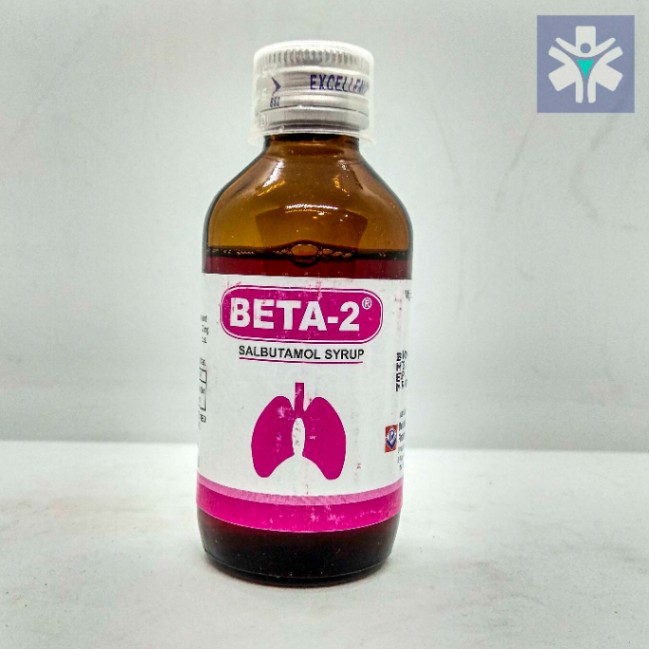
BETA-2
Price: Rs.66.00
10% off
In stock
Loose stock: 0
Description
BETA-2 SYR 100ML
Details
Composition
SALBUTAMOL 2 MG
# Salbutamol 2 mg
## SHORT DESCRIPTION
Salbutamol 2 mg is a **short-acting beta-2 adrenergic bronchodilator** used to relieve symptoms of airway narrowing, such as wheezing, coughing, chest tightness, and shortness of breath. It relaxes the muscles surrounding the airways, helping the airways open and making breathing easier.
Salbutamol 2 mg may be available as an oral tablet or other formulation depending on the manufacturer. The appropriate dose and formulation should be determined by a healthcare professional.
## KEY BENEFITS
* Helps relax narrowed airways
* Provides relief from bronchospasm
* Helps reduce wheezing and breathing difficulty
* May relieve chest tightness associated with reversible airway obstruction
* Provides bronchodilator action relatively quickly
* May be used in conditions such as asthma and certain obstructive airway disorders
## USES / INDICATIONS
Salbutamol 2 mg may be prescribed for:
* **Bronchial asthma**
* Bronchospasm associated with reversible airway obstruction
* Chronic obstructive airway conditions when a short-acting bronchodilator is appropriate
* Wheezing and breathing difficulty caused by bronchoconstriction
* Exercise-induced bronchospasm, depending on the prescribed formulation
The exact use depends on the patient's condition and the formulation prescribed.
## HOW IT WORKS
Salbutamol selectively stimulates **beta-2 adrenergic receptors** in the smooth muscles of the airways.
This causes the airway muscles to relax, resulting in **bronchodilation**. The airways become wider, allowing air to move more easily into and out of the lungs.
Salbutamol primarily provides symptom relief and does not treat the underlying airway inflammation associated with asthma.
## DOSAGE & ADMINISTRATION
* Take Salbutamol 2 mg exactly as prescribed by your doctor.
* The dosage depends on age, severity of symptoms, medical condition, and formulation.
* If supplied as an oral tablet, swallow it with water as directed.
* Do not take more frequently or in higher doses than prescribed.
* Do not use an oral tablet as a substitute for a prescribed inhaler unless your doctor specifically instructs you to do so.
* If a dose is missed, take it when remembered unless it is nearly time for the next dose. Do not take two doses together.
* If you require salbutamol more frequently than usual, consult your doctor because this may indicate worsening airway disease.
## SIDE EFFECTS
Common side effects may include:
* Tremor or shakiness
* Headache
* Nervousness
* Restlessness
* Increased heart rate
* Palpitations
* Muscle cramps
* Dizziness
* Nausea
Less common or serious side effects may include:
* Irregular heartbeat
* Chest pain
* Significant changes in blood pressure
* Low potassium levels
* Severe allergic reactions
* Paradoxical bronchospasm, in which breathing suddenly becomes worse after administration
Seek urgent medical attention if you experience severe chest pain, fainting, severe palpitations, or sudden worsening of breathing.
## PRECAUTIONS & WARNINGS
* Use salbutamol exactly as prescribed.
* Tell your doctor if you have heart disease, abnormal heart rhythm, high blood pressure, or other cardiovascular conditions.
* Inform your doctor if you have diabetes, hyperthyroidism, or low potassium levels.
* Salbutamol can cause temporary increases in heart rate and may produce palpitations.
* Excessive use can increase the risk of side effects and low potassium levels.
* If asthma symptoms are becoming more frequent or severe, seek medical advice rather than repeatedly increasing the salbutamol dose.
* Seek urgent medical care if your usual treatment is not relieving severe breathing difficulty.
* Tell your doctor if you are pregnant or breastfeeding.
* Do not discontinue prescribed controller medicines, such as inhaled corticosteroids, without medical advice.
## DRUG INTERACTIONS
Salbutamol may interact with:
* **Beta-blockers**, which may reduce the bronchodilator effect of salbutamol and may cause bronchospasm in susceptible patients.
* Other sympathomimetic medicines, which may increase cardiovascular side effects.
* Diuretics, which may increase the risk of low potassium levels.
* Corticosteroids, which may contribute to potassium reduction in some circumstances.
* Digoxin, as salbutamol-induced potassium changes may affect digoxin-related risks.
* Certain antidepressants, particularly monoamine oxidase inhibitors and tricyclic antidepressants, which may increase cardiovascular effects.
Always tell your doctor or pharmacist about all prescription medicines, over-the-counter medicines, vitamins, and supplements you take.
## STORAGE INFORMATION
* Store according to the manufacturer's instructions.
* Keep at room temperature unless otherwise specified on the product label.
* Protect from excessive heat, moisture, and direct sunlight.
* Keep the medicine in its original packaging.
* Keep out of reach and sight of children.
* Do not use after the expiry date.
* Do not use the medicine if the packaging is damaged or the tablets appear abnormal.
## PRESCRIPTION STATUS
Salbutamol 2 mg is generally a **prescription medicine**, although dispensing requirements vary depending on the country and formulation.
Use it under the guidance of a qualified healthcare professional, particularly when treating asthma or other chronic respiratory conditions.
## GENUINE MEDICINE ASSURANCE
For genuine medicine assurance:
* Purchase Salbutamol 2 mg from a licensed and reputable pharmacy.
* Check the product name, strength, manufacturer, batch number, and expiry date.
* Ensure the packaging and seal are intact.
* Do not use medicines with damaged, altered, or suspicious packaging.
* Check that the strength corresponds to your prescription.
* Store the medicine according to the manufacturer's instructions.
* Consult a pharmacist if you have concerns about product authenticity.
## FAQ
### What is Salbutamol 2 mg used for?
Salbutamol 2 mg is used to relieve bronchospasm and symptoms such as wheezing, chest tightness, coughing, and shortness of breath associated with reversible airway narrowing.
### Is Salbutamol a steroid?
No. Salbutamol is a **short-acting beta-2 bronchodilator**, not a corticosteroid. It relaxes airway muscles but does not directly treat airway inflammation.
### How does Salbutamol work?
Salbutamol stimulates beta-2 receptors in the airway muscles, causing them to relax and allowing the airways to open.
### Is Salbutamol used for asthma?
Yes. Salbutamol is commonly used as a reliever medicine for bronchospasm associated with asthma.
### Does Salbutamol cure asthma?
No. Salbutamol relieves bronchospasm and breathing symptoms but does not cure asthma or control the underlying airway inflammation. People with persistent asthma may require a controller medicine prescribed by their doctor.
### How should I take Salbutamol 2 mg?
Take the tablet exactly as prescribed by your healthcare professional. The appropriate dose and frequency depend on your age, condition, and formulation.
### Can Salbutamol 2 mg be used for sudden breathing difficulty?
Salbutamol is a reliever medicine, but the **appropriate rescue formulation depends on the treatment plan**. If you have severe or rapidly worsening breathing difficulty, seek emergency medical care rather than relying on repeated oral doses.
### Can Salbutamol cause a fast heartbeat?
Yes. Increased heart rate and palpitations are known side effects of salbutamol. Persistent or severe palpitations should be medically assessed.
### Can Salbutamol cause shaking?
Yes. Tremor or shakiness is a common side effect, particularly after higher doses.
### Can Salbutamol lower potassium levels?
Yes. Salbutamol can cause potassium to move into cells, potentially lowering blood potassium, particularly with high doses or certain combinations of medicines.
### Can Salbutamol be taken with beta-blockers?
Beta-blockers can reduce the effectiveness of salbutamol and may cause bronchospasm in susceptible individuals. Consult your doctor before combining these medicines.
### Can Salbutamol be taken during pregnancy?
Salbutamol may be used during pregnancy when clinically appropriate. Uncontrolled asthma can also pose risks during pregnancy, so consult your doctor before starting or changing treatment.
### Can Salbutamol be used while breastfeeding?
Salbutamol is generally considered compatible with breastfeeding when used appropriately, but you should still inform your doctor that you are breastfeeding.
### What happens if I take too much Salbutamol?
An excessive dose can cause pronounced tremor, rapid heartbeat, palpitations, headache, agitation, and potentially low potassium or abnormal heart rhythms. Seek medical advice promptly if you take significantly more than prescribed.
### What should I do if I miss a Salbutamol dose?
Take the missed dose when remembered unless it is almost time for the next scheduled dose. Do not take two doses together.
### Can I take Salbutamol with other asthma medicines?
Yes, salbutamol may be prescribed alongside other asthma medicines. However, the combination should be determined by your doctor, particularly if you are taking corticosteroids, theophylline, or other bronchodilators.
### How often can I take Salbutamol?
The frequency depends on the formulation and your individual treatment plan. Do not increase the frequency without medical advice.
### Why am I needing Salbutamol more often?
Increasing reliance on a reliever medicine can indicate worsening asthma or another respiratory condition. Contact your healthcare professional for assessment rather than simply increasing the dose.
### Can Salbutamol cause chest pain?
Chest discomfort or pain can occur, although it is not a common effect. **New, severe, or persistent chest pain requires urgent medical evaluation.**
### Does Salbutamol make you sleepy?
Sleepiness is not a typical effect. Some people may experience nervousness, restlessness, headache, or dizziness.
## MEDICAL DISCLAIMER
This information is provided for educational and informational purposes only and is not a substitute for professional medical advice, diagnosis, or treatment. Salbutamol 2 mg should be used according to the prescribed formulation and dosage. Oral salbutamol is not interchangeable with inhaled rescue therapy unless specifically directed by a healthcare professional. Frequent or increasing use of salbutamol may indicate poorly controlled respiratory disease and requires medical assessment. Always read the product label and consult your doctor or pharmacist for personalized advice.