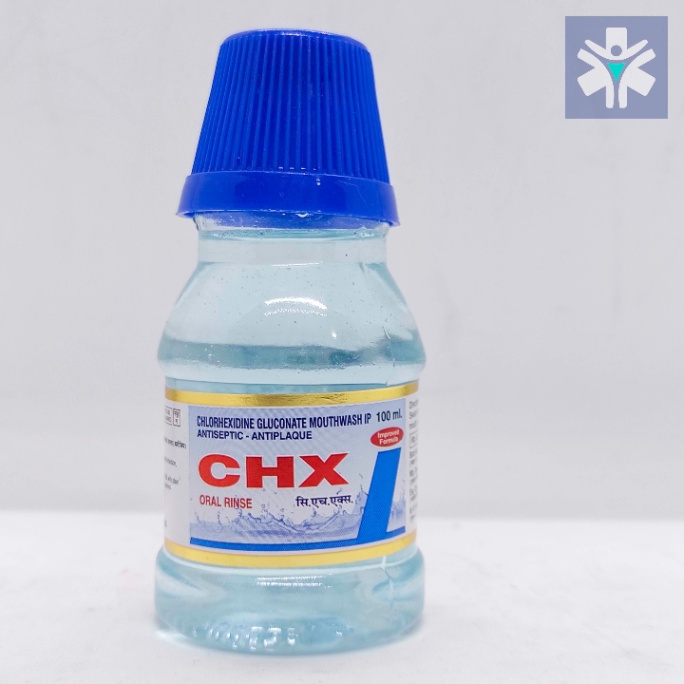
C H X
Price: Rs.100.00
10% off
In stock
Loose stock: 0
Description
C H X MOUTHWASH 100ML
Details
Composition
CHLORHEXIDINE 0.2 % W/V
# Chlorhexidine 0.2% w/v
## Short Description
**Chlorhexidine 0.2% w/v** is an **antiseptic and antimicrobial medicine** used to reduce harmful microorganisms. At this concentration, chlorhexidine is commonly found in **oral mouthwash/gargle preparations** for reducing oral bacteria and supporting gum health.
It may be used as part of oral hygiene and for the management of certain gum conditions, depending on the specific product formulation and local labeling.
> **Important:** Chlorhexidine 0.2% w/v products may have different formulations and routes of administration. The information below primarily applies to **oral chlorhexidine mouthwash/gargle preparations**. Always follow the product label.
---
# Key Benefits
* Helps reduce **harmful bacteria in the mouth**.
* Supports improved oral hygiene.
* Helps reduce **plaque formation**.
* May help reduce **gum inflammation and bleeding** associated with gingivitis.
* Can be used as an adjunct to professional dental treatment.
* Provides prolonged antimicrobial activity on oral surfaces compared with some other antiseptic agents.
---
# Uses / Indications
Chlorhexidine 0.2% w/v mouthwash may be recommended for:
### 1. Gingivitis
It can help reduce plaque and inflammation associated with **gingivitis**.
### 2. Plaque Control
Chlorhexidine may be used when enhanced chemical plaque control is required, particularly when normal brushing is temporarily difficult.
### 3. Oral Hygiene After Dental Procedures
A dentist may recommend chlorhexidine following certain dental procedures or when oral hygiene is difficult to maintain.
### 4. Other Oral Conditions
Depending on the formulation and professional recommendation, chlorhexidine may be used as an adjunct in managing certain oral infections or inflammatory conditions.
> **Important:** Chlorhexidine mouthwash is generally intended as a **short-term adjunct**, not a replacement for regular brushing, flossing, and professional dental care.
---
# How It Works
Chlorhexidine is a **broad-spectrum antiseptic**.
It binds to the surface of microorganisms and disrupts their cell membranes. At appropriate concentrations, this can cause leakage of cellular contents and ultimately lead to microbial death.
Chlorhexidine also has **substantivity**, meaning it can remain attached to oral tissues and surfaces for a period of time, allowing continued antimicrobial activity after rinsing.
---
# Dosage & Administration
### Typical Adult Oral Use
For many **0.2% chlorhexidine mouthwash** preparations:
**Rinse with approximately 10 mL for about 1 minute, usually twice daily, or as directed by your dentist or product label.**
### How to Use
1. Measure the recommended amount using the supplied measuring cup.
2. Rinse the mouth thoroughly for the recommended duration.
3. **Do not swallow.**
4. Spit out the solution after rinsing.
5. Do not rinse your mouth immediately with large amounts of water unless instructed.
6. Avoid eating or drinking for approximately **30 minutes after use**, unless the product instructions state otherwise.
### Important: Toothpaste Interaction
Some toothpaste ingredients, particularly certain **anionic surfactants**, may reduce the effectiveness of chlorhexidine.
For best results, use chlorhexidine at a different time from toothbrushing—for example, **after allowing an appropriate interval following brushing** according to the product or dental professional's instructions.
### Duration of Treatment
Chlorhexidine is generally intended for **short-term use**. Prolonged use should be undertaken only on the advice of a dentist or healthcare professional.
---
# Side Effects
## Common Side Effects
Possible side effects include:
* Temporary alteration of taste
* Bitter or unpleasant taste
* **Brown or yellow staining of teeth**
* Staining of the tongue
* Increased tartar/calculus formation
* Dry or irritated mouth
* Mild mouth irritation
Tooth staining is more likely with prolonged use and can generally be removed professionally.
## Serious Side Effects
Rarely, chlorhexidine can cause a serious allergic reaction.
Seek urgent medical attention if you develop:
* Swelling of the face, lips, tongue, or throat
* Difficulty breathing
* Severe rash
* Severe dizziness or fainting
Stop using the product and seek medical advice if significant oral irritation or swelling occurs.
---
# Precautions & Warnings
### Do Not Swallow
Chlorhexidine mouthwash is intended for **oral rinsing and spitting**, not ingestion.
Keep it away from children.
### Tooth Staining
Long-term or repeated use can cause **brownish staining of teeth, tongue, or oral surfaces**.
Regular dental cleaning can usually remove chlorhexidine-related surface staining.
### Taste Changes
Temporary changes in taste can occur during treatment and generally improve after stopping the product.
### Oral Hygiene
Chlorhexidine should not replace:
* Toothbrushing
* Flossing/interdental cleaning
* Routine dental examinations
### Children
Use in children should follow the age restrictions on the specific product label and/or advice from a dentist.
Children who cannot reliably rinse and spit should generally not use mouthwash without professional supervision.
### Pregnancy and Breastfeeding
Chlorhexidine used as an oral rinse has limited systemic absorption when used correctly. However, pregnant or breastfeeding individuals should still discuss prolonged or repeated use with a healthcare professional.
### Allergy
Do not use chlorhexidine if you have previously experienced an allergic reaction to chlorhexidine or a chlorhexidine-containing product.
---
# Drug Interactions
### Toothpaste
Certain toothpaste ingredients may reduce chlorhexidine activity.
To minimize this interaction, use chlorhexidine separately from toothbrushing according to the product instructions or dental professional's recommendation.
### Other Oral Products
Avoid immediately combining chlorhexidine with other mouthwashes or oral antiseptic products unless specifically recommended.
### Medicines
Because chlorhexidine mouthwash has limited systemic absorption, significant interactions with most oral medicines are unlikely when it is used correctly.
However, always inform your dentist or healthcare professional about the medicines and oral products you use.
---
# Storage Information
* Store Chlorhexidine 0.2% w/v according to the manufacturer's instructions.
* Keep the bottle tightly closed.
* Protect from excessive heat and direct sunlight.
* Do not freeze unless specifically permitted by the manufacturer.
* Keep out of reach of children.
* Do not use after the expiry date.
* Do not use the product if the bottle is damaged, leaking, or contaminated.
* Do not transfer the solution to another container.
---
# Prescription Status
**Chlorhexidine 0.2% w/v mouthwash may be available without a prescription in some countries**, while certain formulations or indications may require professional recommendation or a prescription.
Prescription and pharmacy requirements vary by country and product formulation.
---
# Genuine Medicine Assurance
When purchasing Chlorhexidine 0.2% w/v:
* Purchase from a **licensed and reputable pharmacy**.
* Verify the concentration and intended route of administration.
* Check the manufacturer's name, batch/lot number, and expiry date.
* Ensure the bottle and packaging are intact.
* Avoid products from unauthorized or suspicious sellers.
* Do not use products with damaged or tampered packaging.
* Follow the manufacturer's storage and usage instructions.
**Genuine medicine assurance:** Product authenticity should be verified through the dispensing pharmacy, manufacturer, or relevant national medicines regulatory authority.
---
# FAQ – Chlorhexidine 0.2% w/v
### 1. What is Chlorhexidine 0.2% w/v used for?
Chlorhexidine 0.2% w/v is commonly used as an **antiseptic mouthwash** to reduce oral bacteria, control plaque, and help manage gingivitis.
### 2. Is Chlorhexidine 0.2% an antiseptic?
Yes. Chlorhexidine is a broad-spectrum **antiseptic and antimicrobial agent**.
### 3. Does Chlorhexidine 0.2% help with gingivitis?
Yes. Chlorhexidine can help reduce **plaque, gum inflammation, and bleeding associated with gingivitis** when used appropriately.
### 4. Does Chlorhexidine 0.2% kill bacteria?
Yes. Chlorhexidine damages bacterial cell membranes and can kill or inhibit many oral microorganisms.
### 5. Can Chlorhexidine 0.2% be used every day?
It can be used for a limited period when recommended by a dentist or according to the product label. **Long-term routine use is generally not recommended** because it can cause tooth staining, taste changes, and increased tartar.
### 6. Can I swallow Chlorhexidine mouthwash?
**No.** Chlorhexidine mouthwash should be rinsed around the mouth and then spit out.
### 7. Should I rinse my mouth with water after Chlorhexidine?
Generally, do not immediately rinse with large amounts of water unless directed by the product instructions or your dentist. Follow the specific product directions.
### 8. Can I eat or drink after using Chlorhexidine 0.2%?
It is generally recommended to avoid eating or drinking for around **30 minutes after using chlorhexidine**, unless your product label gives different instructions.
### 9. Can Chlorhexidine 0.2% stain teeth?
Yes. **Brown or yellow tooth staining** is a well-known effect of chlorhexidine, especially with prolonged use. Dental professionals can generally remove this type of surface staining.
### 10. Does Chlorhexidine change taste?
Yes. Temporary **taste alteration or a bitter taste** can occur. Taste usually returns to normal after treatment is discontinued.
### 11. Can Chlorhexidine be used after dental surgery?
A dentist may recommend chlorhexidine after certain dental procedures to support oral hygiene and reduce bacterial load. Follow your dentist's specific instructions.
### 12. Can I use Chlorhexidine immediately after brushing my teeth?
Some toothpaste ingredients can reduce chlorhexidine's activity. It is generally better to **separate chlorhexidine use from toothbrushing** according to the product instructions or your dentist's recommendation.
### 13. Can Chlorhexidine 0.2% replace brushing?
No. Chlorhexidine is an **adjunctive treatment** and does not replace brushing, interdental cleaning, or regular dental care.
### 14. Is Chlorhexidine 0.2% safe for children?
Use depends on the child's age and ability to rinse and spit safely. Follow the product's age restrictions and seek advice from a dentist or healthcare professional.
### 15. Can Chlorhexidine be used during pregnancy?
Chlorhexidine has limited systemic absorption when used correctly as an oral rinse. However, discuss prolonged or repeated use with your healthcare professional during pregnancy.
### 16. Can Chlorhexidine be used while breastfeeding?
When used correctly as an oral rinse, systemic absorption is limited. Nevertheless, consult a healthcare professional if prolonged treatment is required.
### 17. Can Chlorhexidine cause dry mouth?
Yes. Some people may experience **dryness or irritation of the mouth** during treatment.
### 18. How long should I use Chlorhexidine 0.2%?
The duration depends on why it was prescribed or recommended. It is generally intended for **short-term use**, particularly because prolonged use increases the likelihood of staining and taste changes.
### 19. Can Chlorhexidine treat a dental infection?
Chlorhexidine can reduce oral microorganisms but **does not replace professional treatment for a dental abscess or serious dental infection**. Dental infections may require drainage, dental treatment, and/or other medicines.
### 20. Is Chlorhexidine 0.2% available without a prescription?
Many chlorhexidine mouthwash products are available without a prescription, but availability and legal classification vary by country and specific formulation.
---
# Medical Disclaimer
This information about **Chlorhexidine 0.2% w/v** is provided for educational and informational purposes only and does not replace professional medical or dental advice, diagnosis, or treatment.
The information above primarily applies to **0.2% chlorhexidine oral mouthwash/gargle preparations**. Chlorhexidine is also available in other formulations and concentrations for different uses. **Always verify the exact product label, concentration, and intended route of administration before use.**
Do not swallow chlorhexidine mouthwash. Seek professional dental care for persistent gum bleeding, severe toothache, facial swelling, pus, fever, or symptoms of a dental abscess.
**Stop using chlorhexidine and seek urgent medical attention if you develop facial or throat swelling, difficulty breathing, severe dizziness, or other symptoms of a serious allergic reaction.**