CALCIGEN-F
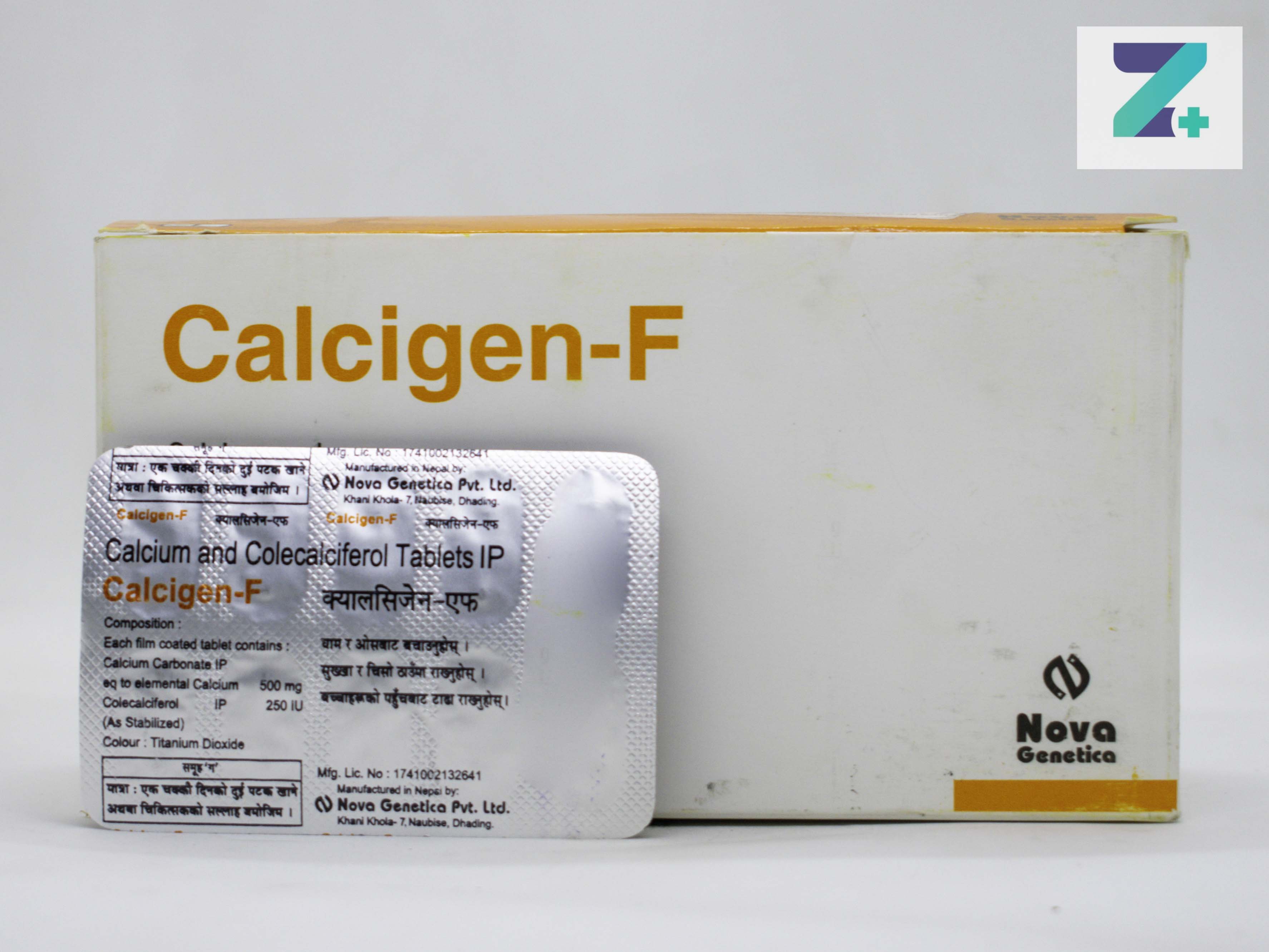
Price: Rs.60.00
10% off
In stock
Loose stock: 0
Description
CALCIGEN-F TAB 10
Details
Composition
CALCIUM CARBONATE 500 MG,COLECALCIFEROL 250 IU
# Calcium Carbonate 500 mg + Colecalciferol 250 IU
## SHORT DESCRIPTION
**Calcium Carbonate 500 mg + Colecalciferol 250 IU** is a nutritional supplement containing **calcium** and **vitamin D3 (colecalciferol)**. It is commonly used to support healthy bones and teeth and to help prevent or manage calcium and vitamin D deficiency when dietary intake is insufficient.
Calcium is an essential mineral required for maintaining bones, teeth, muscles, nerves, and normal blood clotting. Vitamin D3 helps the body absorb calcium efficiently from the intestine.
> **Note:** The amount of elemental calcium provided by 500 mg of calcium carbonate depends on the formulation. Calcium carbonate itself contains approximately 40% elemental calcium, but the product label should be checked for the actual elemental calcium content.
---
## KEY BENEFITS
* Helps support **strong and healthy bones**
* Supports normal **calcium levels**
* Vitamin D3 improves **calcium absorption**
* Helps maintain healthy teeth
* Supports normal **muscle and nerve function**
* May help prevent calcium and vitamin D deficiency
* Useful when dietary calcium or vitamin D intake is inadequate
* Supports bone health in individuals at increased risk of deficiency when recommended by a healthcare professional
---
## USES / INDICATIONS
Calcium Carbonate + Colecalciferol may be used for:
### Calcium Deficiency
Helps supplement calcium when dietary intake is insufficient.
### Vitamin D Deficiency
Provides vitamin D3 to support adequate vitamin D levels.
### Bone Health
Used as a nutritional supplement to support bone mineralization and skeletal health.
### Osteoporosis Support
Calcium and vitamin D supplementation may be recommended as part of a broader osteoporosis management plan.
### Increased Nutritional Requirements
A healthcare professional may recommend supplementation when calcium or vitamin D requirements are increased or dietary intake is inadequate.
> This supplement is **not a standalone treatment for osteoporosis or severe vitamin D deficiency** unless specifically prescribed as part of a medical treatment plan.
---
## HOW IT WORKS
### Calcium Carbonate
Calcium carbonate provides calcium, which is needed for:
* Bone and teeth formation
* Bone mineralization
* Muscle contraction
* Normal nerve transmission
* Normal blood clotting
### Colecalciferol (Vitamin D3)
Vitamin D3 is converted in the body into active vitamin D metabolites. Vitamin D helps increase **intestinal absorption of calcium and phosphate**, supporting normal bone mineralization.
**Calcium → provides essential calcium**
**Vitamin D3 → improves calcium absorption**
**Combined effect → supports healthy bones and normal calcium metabolism**
---
## DOSAGE & ADMINISTRATION
> **Use according to the product label or your healthcare professional's recommendation.**
The appropriate dose depends on age, dietary intake, nutritional status, medical conditions, and other sources of calcium and vitamin D.
### General Administration
* Take the medicine exactly as directed.
* Calcium carbonate is generally best taken **with or shortly after food**, because stomach acid helps its absorption.
* Swallow with sufficient water unless the formulation is intended to be chewed or dissolved.
* Do not exceed the recommended daily dose unless specifically instructed by a healthcare professional.
### Chewable Tablets
If supplied as a chewable tablet, **chew thoroughly before swallowing**.
### Children
Dosage for children should be determined according to their age, dietary calcium intake, and healthcare professional's advice.
### Missed Dose
Take the missed dose when remembered unless it is nearly time for the next dose.
**Do not take a double dose.**
---
## SIDE EFFECTS
### Common Side Effects
Possible side effects include:
* Constipation
* Bloating
* Gas
* Abdominal discomfort
* Nausea
* Mild stomach upset
### Excessive Calcium Intake
Taking excessive calcium may cause:
* Increased thirst
* Frequent urination
* Nausea or vomiting
* Constipation
* Abdominal pain
* Weakness
* Confusion
Very high calcium levels can potentially cause **kidney problems or abnormal heart rhythms**.
### Excess Vitamin D
Excessive vitamin D intake can increase calcium levels and may cause:
* Nausea
* Vomiting
* Weakness
* Excessive thirst
* Frequent urination
* Confusion
* Kidney stones
Seek medical attention if symptoms suggesting significantly elevated calcium levels occur.
---
## PRECAUTIONS & WARNINGS
### Kidney Stones
Tell your doctor if you have a history of **kidney stones**. Excessive calcium supplementation may increase the risk in susceptible individuals.
### Kidney Disease
Patients with kidney disease may have altered calcium and vitamin D metabolism and should use supplementation under medical supervision.
### High Calcium Levels
Do not use additional calcium or vitamin D without medical advice if you have:
* Hypercalcemia
* Hypercalciuria
* Certain parathyroid disorders
### Sarcoidosis and Other Granulomatous Disorders
Some conditions can increase sensitivity to vitamin D and raise calcium levels. Medical supervision may be necessary.
### Other Calcium or Vitamin D Supplements
Check other supplements and fortified foods to avoid accidentally consuming excessive amounts of calcium or vitamin D.
### Pregnancy
Calcium and vitamin D are important during pregnancy, but supplementation should remain within recommended amounts. Consult your healthcare professional before taking additional supplements.
### Breastfeeding
Calcium and vitamin D are important during breastfeeding. Tell your healthcare professional about all supplements you are taking.
### Long-Term Use
People taking calcium and vitamin D for extended periods may require monitoring depending on their health status, dosage, kidney function, and other medicines.
---
## DRUG INTERACTIONS
Calcium can interfere with the absorption of several medicines.
### Levothyroxine
Calcium can significantly reduce absorption of **levothyroxine**.
Separate administration by approximately **4 hours**, unless your doctor provides different instructions.
### Tetracycline Antibiotics
Calcium can reduce absorption of tetracycline antibiotics such as doxycycline.
These medicines generally need to be taken several hours apart.
### Quinolone Antibiotics
Calcium can reduce absorption of medicines such as:
* Ciprofloxacin
* Levofloxacin
* Moxifloxacin
Follow your healthcare professional's instructions regarding separation of doses.
### Bisphosphonates
Calcium can interfere with absorption of oral bisphosphonates such as alendronate.
The medicines should generally be taken at separate times according to the specific prescribing instructions.
### Iron Supplements
Calcium may reduce absorption of oral iron.
Separating calcium and iron supplements may be recommended.
### Thiazide Diuretics
Medicines such as hydrochlorothiazide can reduce urinary calcium excretion and may increase the risk of elevated calcium levels when combined with calcium/vitamin D supplementation.
### Digoxin
High calcium levels can increase the risk of cardiac effects in patients taking **digoxin**.
Tell your doctor if you use digoxin.
### Other Medicines
Always tell your doctor or pharmacist about all prescription medicines, OTC medicines, vitamins, and supplements you take.
---
## STORAGE INFORMATION
* Store at room temperature according to the manufacturer's instructions.
* Keep in the original container.
* Protect from excessive heat and moisture.
* Keep away from direct sunlight.
* Keep the container tightly closed.
* Keep out of reach and sight of children.
* Do not use after the expiry date.
* Do not use if the packaging is damaged or the product has changed significantly in appearance, smell, or texture.
---
## PRESCRIPTION STATUS
**Calcium Carbonate 500 mg + Colecalciferol 250 IU is generally available as an over-the-counter nutritional supplement**, although prescription requirements may vary depending on the country, formulation, and intended use.
Higher-dose calcium or vitamin D products may require medical supervision.
---
## GENUINE MEDICINE ASSURANCE
When purchasing **Calcium Carbonate 500 mg + Colecalciferol 250 IU**:
* Purchase from a **licensed pharmacy or authorized medicine supplier**.
* Check the product name and ingredient strengths.
* Verify the manufacturer's name.
* Check the batch/lot number and expiry date.
* Ensure the packaging is sealed and undamaged.
* Avoid products with suspicious or altered packaging.
* Follow the manufacturer's recommended storage conditions.
* Do not use expired supplements.
* If you suspect a counterfeit product, consult a pharmacist or contact the manufacturer using the details printed on the packaging.
---
# FAQ – Calcium Carbonate 500 mg + Colecalciferol 250 IU
### 1. What is Calcium Carbonate 500 mg + Colecalciferol 250 IU used for?
It is used to supplement **calcium and vitamin D3** and support healthy bones and teeth, particularly when dietary intake is inadequate.
### 2. What is colecalciferol?
**Colecalciferol is vitamin D3**, a form of vitamin D that helps the body absorb calcium and supports normal bone health.
### 3. Why are calcium and vitamin D3 combined?
Vitamin D3 helps the intestine absorb calcium more efficiently. Combining the two nutrients can therefore support **calcium absorption and bone mineralization**.
### 4. Is Calcium Carbonate the same as elemental calcium?
No. Calcium carbonate is a calcium-containing compound. It contains approximately **40% elemental calcium by weight**. Check the product label to determine the exact amount of elemental calcium supplied.
### 5. When is the best time to take calcium carbonate?
Calcium carbonate is generally best taken **with or shortly after a meal** because food and stomach acid improve its absorption.
### 6. Can Calcium Carbonate + Vitamin D3 be taken every day?
It may be taken daily when recommended, but the appropriate amount depends on dietary intake, age, health status, and other calcium or vitamin D sources.
### 7. Can this supplement prevent osteoporosis?
Adequate calcium and vitamin D contribute to bone health and may help reduce deficiency-related bone loss. However, osteoporosis may require additional treatment and lifestyle measures.
### 8. Can calcium supplements cause constipation?
Yes. **Constipation** is a common side effect of some calcium supplements.
### 9. Can Calcium Carbonate cause kidney stones?
Excessive calcium intake may increase kidney stone risk in susceptible individuals. People with a history of kidney stones should discuss supplementation with their healthcare professional.
### 10. Can I take calcium with iron supplements?
Calcium may reduce iron absorption. Your doctor or pharmacist may recommend taking the two supplements at **different times**.
### 11. Can I take calcium with levothyroxine?
Calcium can reduce levothyroxine absorption. It is generally recommended to separate calcium and levothyroxine by approximately **4 hours**.
### 12. Can I take calcium with antibiotics?
Calcium can interfere with absorption of certain antibiotics, particularly **tetracyclines and fluoroquinolones**. Ask your pharmacist how far apart to take them.
### 13. Can I take calcium and vitamin D during pregnancy?
Calcium and vitamin D are important nutrients during pregnancy. However, additional supplementation should be taken according to recommended amounts and healthcare professional advice.
### 14. Can breastfeeding mothers take Calcium Carbonate + Vitamin D3?
Calcium and vitamin D are important during breastfeeding. Consult your healthcare professional about the appropriate supplemental dose.
### 15. Can children take this supplement?
Children may require calcium and vitamin D supplementation in specific circumstances, but the dose should be appropriate for their age and nutritional needs and should be determined by a healthcare professional.
### 16. What happens if I take too much calcium?
Excessive calcium intake can cause **hypercalcemia**, potentially resulting in nausea, constipation, excessive thirst, frequent urination, weakness, confusion, or kidney problems.
### 17. Can I take other vitamin D supplements with this product?
Check the total amount of vitamin D from all supplements and medicines before adding another vitamin D product. Excessive vitamin D can increase calcium levels.
### 18. Can Calcium Carbonate interact with thyroid medicine?
Yes. Calcium can reduce absorption of **levothyroxine**. Separating the doses is generally recommended.
### 19. Is Calcium Carbonate 500 mg + Colecalciferol 250 IU a prescription medicine?
It is generally available as an **OTC nutritional supplement**, but regulations can vary by country and formulation.
### 20. How long does it take for calcium and vitamin D to work?
The nutrients are absorbed after administration, but improvements in nutritional status and bone health occur over time. The effect depends on baseline deficiency, diet, dosage, and overall health.
### 21. Can I take calcium on an empty stomach?
Calcium carbonate is generally absorbed better **with food**. Other calcium formulations, such as calcium citrate, can be taken with or without food.
### 22. Does vitamin D3 help calcium absorption?
Yes. Vitamin D3 plays an important role in increasing **intestinal calcium absorption**.
### 23. Can calcium supplements cause gas or bloating?
Yes. Some people experience **gas, bloating, or abdominal discomfort** while taking calcium supplements.
### 24. Should I take calcium if I already consume enough dairy products?
Not necessarily. Supplementation should take into account your **total dietary calcium intake** and individual requirements. Unnecessary supplementation may increase the risk of excessive calcium intake.
### 25. Who should consult a doctor before taking this supplement?
People with **kidney disease, kidney stones, high calcium levels, parathyroid disorders, sarcoidosis, or those taking multiple medicines** should consult a healthcare professional before starting supplementation.
---
## MEDICAL DISCLAIMER
This information about **Calcium Carbonate 500 mg + Colecalciferol 250 IU** is provided for educational and informational purposes only. It is **not a substitute for professional medical advice, diagnosis, or treatment**.
Nutritional requirements vary between individuals. Avoid taking excessive amounts of calcium or vitamin D, particularly if you have kidney disease, a history of kidney stones, or conditions affecting calcium metabolism.
Always consider calcium and vitamin D obtained from **food, fortified products, supplements, and other medicines** when determining total intake.
**Always follow the product label and consult a doctor or pharmacist if you are unsure about the appropriate dose or potential medicine interactions.**