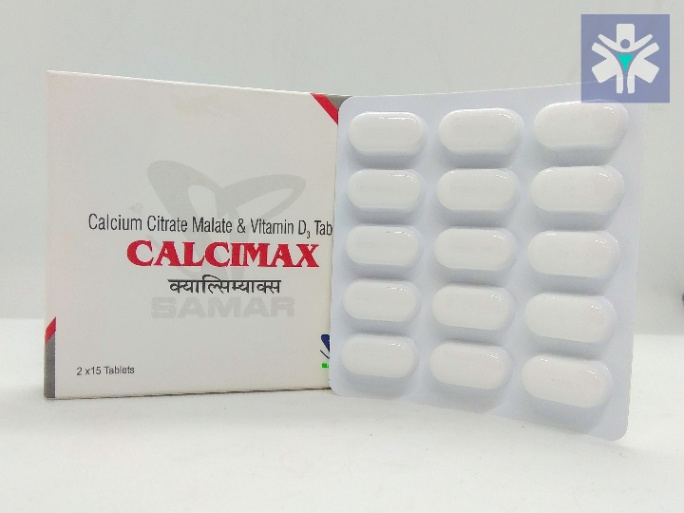
CALCIMAX
Price: Rs.150.00
10% off
In stock
Loose stock: 0
Description
CALCIMAX TAB 15
Details
Composition
CALCIUM CITRATE 250 MG,VITAMIN D3 200 IU
# Calcium Citrate 250 mg + Vitamin D3 200 IU
## Short Description
**Calcium Citrate 250 mg + Vitamin D3 200 IU** is a calcium and vitamin D supplement designed to support **bone health, calcium intake and normal muscle and nerve function**.
**Calcium citrate** provides elemental calcium needed for bones, teeth, muscle contraction and nerve signaling. **Vitamin D3 (cholecalciferol)** helps the body absorb calcium from the intestine and supports normal calcium and phosphate metabolism.
This supplement may be recommended when dietary intake of calcium and/or vitamin D is inadequate or when supplementation is clinically appropriate.
> **Note:** The actual amount of elemental calcium supplied by a calcium citrate preparation can vary depending on the formulation. Check the product label for the stated **elemental calcium** content.
---
## Key Benefits
* Supports **strong bones and teeth**.
* Helps provide calcium when dietary intake is insufficient.
* Vitamin D3 supports **calcium absorption**.
* Supports normal **muscle function**.
* Supports normal **nerve function**.
* Helps maintain normal calcium and phosphate balance.
* May help support bone health in people at risk of inadequate calcium or vitamin D intake.
---
## Uses / Indications
Calcium citrate with Vitamin D3 may be used for:
### 1. Calcium Supplementation
To supplement dietary calcium when daily dietary intake is inadequate.
### 2. Vitamin D Supplementation
Provides vitamin D3 to help maintain adequate vitamin D levels.
### 3. Bone Health
Calcium and vitamin D are important nutrients for maintaining normal bone mineralization and skeletal health.
### 4. Increased Nutritional Requirements
Supplementation may be recommended in people whose dietary intake or nutritional requirements make adequate calcium and vitamin D intake difficult.
### 5. Prevention of Nutritional Deficiency
A healthcare professional may recommend calcium and vitamin D supplementation when there is an increased risk of deficiency.
> This supplement is **not a substitute for a balanced diet** and should not be used to self-treat unexplained bone pain or suspected osteoporosis without appropriate medical assessment.
---
## How It Works
### Calcium Citrate
Calcium is an essential mineral required for:
* Bone and tooth formation
* Muscle contraction
* Nerve transmission
* Normal blood clotting
* Various cellular processes
Calcium citrate is a calcium salt that provides calcium for absorption in the digestive tract.
### Vitamin D3
Vitamin D3 is converted in the body to active vitamin D metabolites. These help regulate calcium and phosphate metabolism and **increase intestinal calcium absorption**.
### Simple Mechanism
**Calcium citrate → provides calcium → supports bones, teeth, nerves and muscles.**
**Vitamin D3 → improves calcium absorption and regulates mineral metabolism → supports bone health.**
---
## Dosage & Administration
> **Dosage depends on the amount of elemental calcium and vitamin D3 in the specific product. Follow the manufacturer's instructions or your healthcare professional's recommendation.**
### Adults
The appropriate daily amount should be based on:
* Dietary calcium intake
* Age
* Vitamin D status
* Medical conditions
* Other calcium or vitamin D supplements being taken
Do not automatically assume that one tablet provides the full daily calcium requirement.
### How to Take
* Take the recommended dose with water.
* Calcium citrate can generally be taken **with or without food**.
* If taking larger amounts of calcium, dividing the daily dose may improve absorption and tolerance.
* Do not exceed the recommended dose unless advised by a healthcare professional.
### Children
Children should receive calcium and vitamin D according to their **age-specific nutritional requirements** and healthcare professional's advice.
### Missed Dose
Take the missed dose when remembered unless it is close to the next scheduled dose.
**Do not double the dose.**
---
## Side Effects
### Common Side Effects
Calcium supplements may cause:
* Constipation
* Bloating
* Gas
* Abdominal discomfort
* Nausea
### Excessive Calcium or Vitamin D Intake
Taking excessive amounts may result in **hypercalcemia** or other electrolyte abnormalities.
Possible symptoms include:
* Nausea or vomiting
* Constipation
* Excessive thirst
* Frequent urination
* Abdominal pain
* Muscle weakness
* Confusion
* Fatigue
Severe hypercalcemia can cause **kidney problems and abnormal heart rhythms**.
### Kidney Stones
High calcium intake from supplements may increase the risk of kidney stones in susceptible individuals.
---
## Precautions & Warnings
### Kidney Disease
People with chronic kidney disease should consult a healthcare professional before using calcium and vitamin D supplements because calcium and phosphate metabolism may be altered.
### Kidney Stones
Tell your healthcare professional if you have a history of **kidney stones** before taking calcium supplements.
### High Calcium Levels
Do not use additional calcium or vitamin D without medical advice if you have **hypercalcemia or hypercalciuria**.
### Sarcoidosis and Certain Granulomatous Conditions
Some conditions can increase vitamin D activity and calcium levels. Medical supervision may be necessary.
### Other Calcium or Vitamin D Products
Check all supplements and medicines you take to avoid accidentally consuming excessive amounts of calcium or vitamin D.
### Pregnancy
Calcium and vitamin D are important during pregnancy, but supplementation should remain within recommended amounts. Consult your healthcare professional before using additional supplements.
### Breastfeeding
Calcium and vitamin D are important nutrients during breastfeeding. Follow recommended dietary and supplemental intake.
### Long-Term Use
Long-term supplementation should be appropriate for the individual's nutritional needs and medical circumstances.
---
## Drug Interactions
Calcium can reduce the absorption of several medicines when taken at the same time.
### Levothyroxine
Calcium can reduce absorption of **levothyroxine**.
It is generally recommended to separate calcium supplements from levothyroxine by **at least 4 hours**, unless your healthcare professional advises otherwise.
### Tetracycline Antibiotics
Calcium can reduce absorption of antibiotics such as:
* Doxycycline
* Tetracycline
These medicines generally need to be taken at a different time from calcium.
### Quinolone Antibiotics
Calcium can reduce absorption of medicines such as:
* Ciprofloxacin
* Levofloxacin
Follow the specific separation instructions provided by your pharmacist or doctor.
### Bisphosphonates
Calcium can reduce absorption of oral bisphosphonates such as **alendronate**.
These medicines should generally be taken separately according to their specific administration instructions.
### Iron Supplements
Calcium may reduce iron absorption when taken together. Separate administration may be recommended.
### Other Vitamin D or Calcium Products
Combining several calcium or vitamin D products can increase the risk of excessive intake.
### Thiazide Diuretics
Medicines such as hydrochlorothiazide can reduce urinary calcium excretion and may increase the risk of high calcium levels when combined with calcium or vitamin D supplementation.
> Always tell your doctor or pharmacist about all prescription medicines, OTC medicines, vitamins and herbal supplements you take.
---
## Storage Information
* Store according to the manufacturer's recommended temperature.
* Keep in a cool, dry place.
* Protect from excessive moisture and direct sunlight.
* Keep the container tightly closed.
* Keep out of reach of children.
* Keep tablets in their original packaging.
* Do not use after the expiry date.
* Do not use if the packaging is damaged or the product has changed significantly in appearance.
---
## Prescription Status
**Calcium citrate + Vitamin D3 supplements are generally available without a prescription**, although availability and regulatory classification can vary by country and formulation.
Higher-dose preparations or supplementation for specific medical conditions may be recommended or prescribed by a healthcare professional.
---
## Genuine Medicine Assurance
When purchasing **Calcium Citrate 250 mg + Vitamin D3 200 IU**:
* Purchase from a **licensed and reputable pharmacy**.
* Check the exact calcium and vitamin D3 strengths on the label.
* Confirm the manufacturer's name and product information.
* Check the batch/lot number and expiry date.
* Ensure the packaging and seal are intact.
* Avoid products with altered labels or suspicious packaging.
* Do not purchase supplements from unauthorized sellers.
* Follow the manufacturer's storage instructions.
* If you suspect a counterfeit product, contact the manufacturer, licensed pharmacy or relevant regulatory authority.
> **Important:** Check whether the stated "250 mg calcium citrate" refers to the calcium citrate compound or to **250 mg of elemental calcium**. These are not equivalent amounts.
---
# Frequently Asked Questions (FAQ)
### 1. What is Calcium Citrate 250 mg + Vitamin D3 200 IU used for?
It is used as a nutritional supplement to provide **calcium and vitamin D3**, supporting bone health and normal muscle and nerve function.
### 2. What are the benefits of Calcium Citrate with Vitamin D3?
Calcium supports bones, teeth, muscles and nerves, while vitamin D3 helps the body **absorb calcium and maintain normal mineral metabolism**.
### 3. Does Vitamin D3 help calcium absorption?
Yes. Vitamin D helps increase the intestinal absorption of calcium and is important for maintaining healthy calcium levels.
### 4. Is Calcium Citrate better absorbed than other forms of calcium?
Calcium citrate is well absorbed and does not require stomach acid to the same extent as calcium carbonate. It can generally be taken with or without food.
### 5. Can Calcium Citrate be taken on an empty stomach?
Yes. Calcium citrate can generally be taken **with or without food**.
### 6. Can Calcium Citrate cause constipation?
Yes. Calcium supplements can cause constipation, although calcium citrate may be better tolerated by some people than other calcium formulations.
### 7. Can Calcium Citrate cause kidney stones?
High supplemental calcium intake may increase kidney stone risk in susceptible individuals. People with a history of kidney stones should discuss supplementation with a healthcare professional.
### 8. Can I take Calcium Citrate with Vitamin D every day?
It can be taken daily when appropriate, but the correct amount depends on your **dietary intake, age, health status and total calcium/vitamin D intake**.
### 9. Can I take Calcium Citrate with milk?
Calcium citrate can generally be taken with dairy products, but you should consider your **total daily calcium intake** to avoid unnecessary excessive supplementation.
### 10. Can I take Calcium Citrate with iron?
Calcium may interfere with iron absorption. If both are needed, your healthcare professional may recommend taking them at different times.
### 11. Can I take Calcium Citrate with Levothyroxine?
Calcium can reduce levothyroxine absorption. These medicines should generally be separated by **at least 4 hours**.
### 12. Can I take Calcium Citrate with antibiotics?
Calcium can interfere with absorption of certain antibiotics, particularly **tetracyclines and fluoroquinolones**. Ask your pharmacist about the appropriate time interval.
### 13. Is Calcium Citrate safe during pregnancy?
Calcium and vitamin D are essential nutrients during pregnancy, but additional supplementation should be based on dietary intake and professional advice.
### 14. Can breastfeeding mothers take Calcium Citrate with Vitamin D3?
Calcium and vitamin D are important during breastfeeding. Supplementation may be appropriate when dietary intake is insufficient, but follow professional advice regarding the dose.
### 15. Can people with kidney disease take Calcium Citrate?
They should consult a healthcare professional before taking calcium and vitamin D supplements because kidney disease can affect calcium, phosphate and vitamin D metabolism.
### 16. What happens if I take too much calcium?
Excessive calcium intake can cause **hypercalcemia**, with symptoms such as nausea, constipation, excessive thirst, frequent urination and weakness. Severe cases can affect kidney and heart function.
### 17. Is 200 IU of Vitamin D3 a high dose?
No. **200 IU is a relatively small amount of vitamin D3** compared with many commonly marketed vitamin D supplements. The appropriate total intake depends on dietary sources, individual requirements and medical advice.
### 18. Is Calcium Citrate the same as elemental calcium?
No. Calcium citrate is the **compound containing calcium**, whereas elemental calcium refers to the actual amount of calcium provided by the compound. Always check the product label carefully.
### 19. Can Calcium Citrate strengthen bones?
Adequate calcium and vitamin D are important for maintaining normal bone health. However, supplementation alone cannot prevent or treat every cause of weak bones or osteoporosis.
### 20. Is Calcium Citrate + Vitamin D3 available without a prescription?
Most standard nutritional calcium and vitamin D supplements are available without a prescription, although local regulations and formulations vary.
---
## Medical Disclaimer
This information about **Calcium Citrate 250 mg + Vitamin D3 200 IU** is provided for educational and general informational purposes only. It is **not a substitute for professional medical advice, diagnosis or treatment**.
Calcium and vitamin D are essential nutrients, but excessive supplementation can cause adverse effects, including **high blood calcium levels and kidney complications**. People with kidney disease, kidney stones, hypercalcemia or other relevant medical conditions should consult a healthcare professional before supplementation.
Always check the product label to determine the **elemental calcium content**, follow the recommended dosage and consider calcium and vitamin D obtained from food and other supplements when determining total intake.