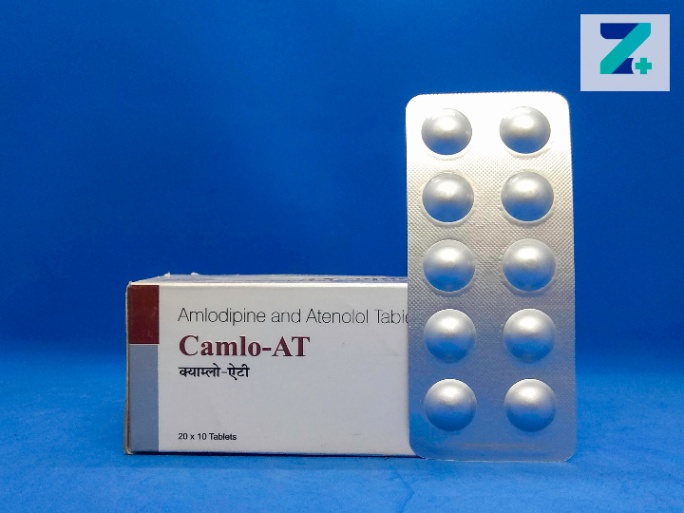
CAMLO- AT
Price: Rs.90.00
15% off
In stock
Loose stock: 0
Description
CAMLO- AT TAB 10
Details
Composition
AMLODIPINE 5 MG,ATENOLOL 50 MG
# Amlodipine 5 mg + Atenolol 50 mg
## Short Description
**Amlodipine 5 mg + Atenolol 50 mg** is a prescription combination medicine containing a **calcium channel blocker** and a **beta-blocker**. It is primarily used to help control **high blood pressure (hypertension)** and may also be prescribed for certain heart-related conditions, including **angina (chest pain)**.
Amlodipine relaxes and widens blood vessels, while atenolol slows the heart rate and reduces the heart's workload. Together, they can provide complementary control of blood pressure and cardiovascular workload.
---
## Key Benefits
* Helps lower **high blood pressure**
* May help reduce the frequency of **stable angina** when prescribed for this purpose
* Amlodipine relaxes blood vessels and improves blood flow
* Atenolol reduces heart rate and cardiac workload
* Provides two complementary mechanisms for cardiovascular control
* May be convenient for patients who require both medicines
---
## Uses / Indications
### Hypertension
Amlodipine + atenolol may be prescribed to help control **high blood pressure** when treatment with one medicine alone is insufficient or when combination therapy is considered appropriate.
Effective blood pressure control can help reduce the long-term risk of:
* Stroke
* Heart attack
* Heart failure
* Kidney complications
* Other cardiovascular complications
### Angina
The combination may be used in selected patients with **stable angina** to reduce symptoms and decrease the heart's oxygen demand.
> It is **not intended to provide immediate relief during an acute attack of chest pain**.
---
## How It Works
### Amlodipine
Amlodipine is a **calcium channel blocker (CCB)**.
It blocks calcium entry into vascular smooth muscle, causing the arteries to relax and widen. This reduces peripheral vascular resistance and lowers blood pressure.
### Atenolol
Atenolol is a **beta-1 selective adrenergic blocker**.
It:
* Slows the heart rate
* Reduces the force of heart contraction
* Decreases cardiac workload
* Reduces the heart's oxygen demand
* Helps lower blood pressure
### Combined Action
**Amlodipine → relaxes blood vessels → lowers vascular resistance**
**Atenolol → slows heart rate + reduces cardiac workload → lowers cardiovascular demand**
Together, these effects can provide more comprehensive blood pressure and heart-rate control.
---
## Dosage & Administration
> **The appropriate dose must be individualized by a healthcare professional.** The information below describes the commonly used strengths requested and should not replace the prescribed regimen.
### Usual Administration
A tablet containing **Amlodipine 5 mg + Atenolol 50 mg** is generally taken **once daily**, when prescribed in this strength.
Your doctor may adjust treatment according to:
* Blood pressure
* Heart rate
* Age
* Kidney and liver function
* Other cardiovascular medicines
* Response and tolerability
### How to Take
* Take exactly as prescribed.
* Take the tablet at approximately the same time each day.
* It can generally be taken with or without food.
* Swallow with water.
* Do not stop atenolol suddenly unless specifically instructed by your doctor.
### Missed Dose
Take the missed dose when remembered unless it is nearly time for the next dose.
**Do not take two doses together.**
---
## Side Effects
### Common Side Effects
Possible side effects include:
* Dizziness
* Headache
* Tiredness or fatigue
* Slow heart rate
* Low blood pressure
* Cold hands and feet
* Flushing
* Ankle or leg swelling
* Nausea
* Constipation
* Sleep disturbances
### Amlodipine-Related Effects
Amlodipine commonly causes:
* Ankle swelling
* Flushing
* Headache
* Dizziness
* Palpitations
### Atenolol-Related Effects
Atenolol may cause:
* Fatigue
* Slow heartbeat
* Cold extremities
* Dizziness
* Reduced exercise tolerance
* Sleep disturbances
### Serious Side Effects
Seek medical attention for:
* Very slow heartbeat
* Fainting
* Severe dizziness
* Severe breathing difficulty
* New or worsening chest pain
* Significant swelling
* Severe allergic reaction
---
## Precautions & Warnings
### Low Heart Rate
Atenolol can slow the heart rate. Tell your doctor if you have **bradycardia** or a heart conduction disorder.
### Low Blood Pressure
Both medicines can lower blood pressure. Excessive lowering may cause dizziness or fainting.
### Heart Block
Atenolol should be used cautiously or may be unsuitable in certain types of heart block unless appropriate specialist management is provided.
### Heart Failure
Beta-blockers may be used in selected patients with heart failure, but treatment requires careful medical supervision. Amlodipine may also be used in some cardiovascular patients when clinically appropriate.
### Asthma and Breathing Disorders
Although atenolol is relatively beta-1 selective, beta-blockers can sometimes cause **bronchospasm**.
Tell your doctor if you have:
* Asthma
* COPD
* Other breathing disorders
### Diabetes
Atenolol may **mask some warning symptoms of low blood sugar**, particularly a rapid heartbeat.
People with diabetes should monitor blood glucose as recommended.
### Peripheral Circulation Problems
Beta-blockers may worsen symptoms in some people with peripheral vascular disease or severe circulation problems.
### Kidney or Liver Disease
Tell your doctor if you have kidney or liver problems. Atenolol is primarily eliminated by the kidneys and may require dose adjustment.
### Surgery
Inform your doctor or anesthetist that you take atenolol before planned surgery.
### Pregnancy
Tell your doctor if you are pregnant or planning pregnancy. The benefits and risks of this combination should be assessed individually.
### Breastfeeding
Discuss use with your healthcare professional if you are breastfeeding.
### Do Not Stop Atenolol Suddenly
Abrupt discontinuation of beta-blocker therapy can cause **rebound increases in heart rate and blood pressure** and may worsen angina or increase cardiovascular risk in susceptible patients.
Dose reduction should generally be gradual under medical supervision.
---
## Drug Interactions
### Other Blood Pressure Medicines
Combining this medicine with other antihypertensives may cause excessive lowering of blood pressure.
### Other Beta-Blockers
Taking atenolol with another beta-blocker is generally avoided unless specifically directed by a healthcare professional.
### Verapamil and Diltiazem
These medicines can further slow the heart rate or impair cardiac conduction when combined with atenolol.
### Digoxin
Digoxin and atenolol can both slow heart rate and may increase the risk of **bradycardia or conduction problems**.
### Medicines Affecting Heart Rhythm
Certain antiarrhythmic medicines may increase cardiovascular effects when combined with atenolol.
### Diabetes Medicines
Atenolol may alter the body's response to hypoglycemia and can mask some warning symptoms of low blood sugar.
### NSAIDs
Some non-steroidal anti-inflammatory drugs may reduce the blood-pressure-lowering effect of antihypertensive medicines in certain patients.
### Anesthetic Medicines
Tell your anesthetist about atenolol before surgery because anesthetic agents can interact with beta-blockers and affect blood pressure or heart rate.
### CYP3A4 Inhibitors
Certain medicines that affect amlodipine metabolism may increase its blood levels and potentially increase adverse effects.
Always inform your doctor or pharmacist about all prescription medicines, OTC medicines, supplements, and herbal products you use.
---
## Storage Information
* Store according to the manufacturer's recommended conditions.
* Keep tablets in the original packaging.
* Protect from excessive heat, moisture, and direct sunlight.
* Keep out of reach and sight of children.
* Do not use after the expiry date.
* Do not use tablets from damaged or tampered packaging.
---
## Prescription Status
**Amlodipine 5 mg + Atenolol 50 mg is generally a prescription-only medicine.**
Treatment should be supervised by a qualified healthcare professional, particularly because atenolol affects heart rate and cardiac conduction.
Prescription requirements may vary by country.
---
## Genuine Medicine Assurance
When purchasing **Amlodipine 5 mg + Atenolol 50 mg**:
* Purchase only from a **licensed pharmacy or authorized medicine supplier**.
* Verify the medicine name and strength.
* Check the manufacturer's name.
* Check the batch/lot number and expiry date.
* Ensure the blister and outer packaging are intact.
* Do not use medicines from damaged or suspicious packaging.
* Avoid unauthorized online or informal sellers.
* Keep the original packaging and product information.
* If authenticity is uncertain, consult a pharmacist or contact the manufacturer using the details printed on the package.
---
# FAQ – Amlodipine 5 mg + Atenolol 50 mg
### 1. What is Amlodipine 5 mg + Atenolol 50 mg used for?
It is primarily used to control **high blood pressure** and may also be prescribed for certain patients with **stable angina**.
### 2. How does amlodipine work?
Amlodipine relaxes and widens blood vessels by blocking calcium channels in vascular smooth muscle, helping reduce blood pressure.
### 3. How does atenolol work?
Atenolol is a beta-blocker that slows the heart rate and reduces the force of contraction, lowering the heart's workload and blood pressure.
### 4. Can amlodipine and atenolol be taken together?
Yes. They have complementary effects and may be prescribed together when a single medicine does not adequately control blood pressure or when combination treatment is appropriate.
### 5. Is this medicine used for chest pain?
It may be prescribed to help prevent **stable angina**. It should not be relied upon for immediate relief of an acute chest-pain attack.
### 6. Does Amlodipine + Atenolol lower heart rate?
Yes. Atenolol can lower heart rate. Amlodipine primarily works by relaxing blood vessels and generally has much less effect on heart rate.
### 7. Can this medicine cause dizziness?
Yes. Dizziness can occur, particularly when treatment is started or when blood pressure becomes too low.
### 8. Can Amlodipine + Atenolol cause ankle swelling?
Yes. **Ankle or leg swelling** is a relatively common side effect of amlodipine.
### 9. Can atenolol cause tiredness?
Yes. Fatigue and reduced exercise tolerance can occur because atenolol slows the heart rate and reduces sympathetic activity.
### 10. Can I stop atenolol suddenly?
No. Suddenly stopping atenolol may cause rebound cardiovascular effects and can worsen angina in susceptible patients. Dose reduction should generally be supervised by a doctor.
### 11. Can people with asthma take atenolol?
Atenolol is relatively beta-1 selective, but beta-blockers can still cause bronchospasm. People with asthma should discuss this medicine with their doctor before use.
### 12. Can this medicine be used in diabetes?
It may be used in people with diabetes when medically appropriate. However, atenolol can mask some symptoms of hypoglycemia, such as a rapid heartbeat.
### 13. Can I drink alcohol while taking Amlodipine + Atenolol?
Alcohol may increase dizziness and blood-pressure-lowering effects. Ask your healthcare professional about alcohol consumption while taking this medicine.
### 14. Can I take this medicine with other blood pressure tablets?
Sometimes, but combining blood pressure medicines can cause excessive blood pressure reduction. Use additional medicines only as directed by your healthcare professional.
### 15. What should I do if I miss a dose?
Take it when remembered unless it is almost time for the next dose. **Do not double the next dose.**
### 16. Can I take Amlodipine + Atenolol during pregnancy?
Tell your doctor if you are pregnant or planning pregnancy. Your healthcare professional will determine whether this combination is appropriate.
### 17. Can I take it while breastfeeding?
Discuss the medicine with your doctor before breastfeeding because both active ingredients can be relevant to nursing considerations.
### 18. Does this medicine cure high blood pressure?
No. It helps **control blood pressure** while it is being taken. Long-term management may also involve diet, exercise, weight management, and other lifestyle measures.
### 19. How long does Amlodipine + Atenolol take to work?
Blood pressure effects can begin after treatment starts, but the full response may require continued treatment and dose adjustment. Take it consistently as prescribed.
### 20. Is Amlodipine 5 mg + Atenolol 50 mg available without a prescription?
It is generally a **prescription-only medicine**.
### 21. What happens if I take too much?
An overdose can cause **very low blood pressure, slow heart rate, dizziness, fainting, breathing problems, or other serious cardiovascular effects**. Seek urgent medical attention if an overdose is suspected.
### 22. Can I drive after taking this medicine?
If the medicine causes dizziness, fatigue, or low blood pressure, driving may be unsafe. Avoid driving until you know how it affects you.
### 23. Should Amlodipine + Atenolol be taken in the morning or at night?
It can generally be taken at a consistent time each day. Follow your doctor's instructions and take it at the same time each day.
### 24. Does amlodipine cause a slow heartbeat?
Amlodipine generally has little effect on heart rate compared with beta-blockers. **Atenolol** is primarily responsible for slowing the heart rate in this combination.
### 25. What should I do if I develop severe chest pain?
Do not rely on this medicine for immediate relief of new or severe chest pain. **Seek urgent medical attention**, particularly if chest pain is severe, persistent, or associated with sweating, shortness of breath, nausea, or pain spreading to the arm, jaw, back, or shoulder.
---
## Medical Disclaimer
This information about **Amlodipine 5 mg + Atenolol 50 mg** is provided for educational and informational purposes only and is **not a substitute for professional medical advice, diagnosis, or treatment**.
The appropriate dose depends on blood pressure, heart rate, cardiovascular status, kidney and liver function, other medicines, and individual response. Do not start, stop, or change the dose without consulting a qualified healthcare professional.
**Atenolol should generally not be stopped abruptly**, particularly in patients with coronary artery disease or angina. Seek urgent medical attention for severe chest pain, fainting, severe breathing difficulty, extremely slow heartbeat, or suspected overdose.
Always follow the specific product label and the instructions provided by your physician or pharmacist.