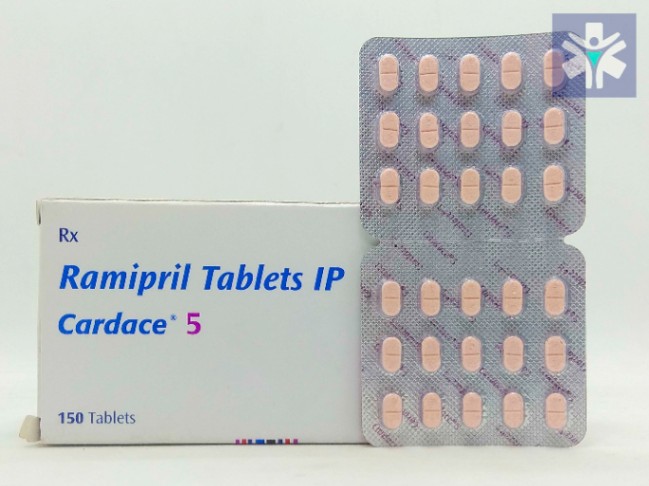
CARDACE 5MG
Price: Rs.209.60
13% off
In stock
Loose stock: 0
Description
CARDACE 5MG TAB 15
Details
Composition
RAMIPRIL 5 MG
# RAMIPRIL 5 MG
## SHORT DESCRIPTION
**Ramipril 5 mg** is an **angiotensin-converting enzyme (ACE) inhibitor** used to treat **high blood pressure (hypertension)** and certain cardiovascular conditions. It may also be prescribed to reduce the risk of cardiovascular events in appropriate high-risk patients and to manage heart failure.
Ramipril works by relaxing blood vessels and reducing the workload on the heart, helping lower blood pressure and improve blood flow.
---
## KEY BENEFITS
* **Helps Lower Blood Pressure:** Relaxes blood vessels to reduce elevated blood pressure.
* **Supports Heart Health:** Reduces the workload on the heart.
* **Helps Reduce Cardiovascular Risk:** May reduce the risk of heart attack, stroke, or cardiovascular death in certain high-risk patients.
* **Supports Heart Failure Management:** May be used as part of treatment for selected patients with heart failure.
* **Supports Kidney Protection:** ACE inhibitors may help protect kidney function in certain patients, particularly those with hypertension or diabetes, when appropriately prescribed.
---
## USES / INDICATIONS
Ramipril may be prescribed for:
* **Hypertension (high blood pressure)**
* **Heart failure**
* Certain patients following **myocardial infarction (heart attack)**
* Reduction of cardiovascular risk in selected high-risk patients
* Certain kidney-related conditions when specifically recommended by a healthcare professional
The approved indications can vary depending on the country and product labeling.
---
## HOW IT WORKS
Ramipril is an **ACE inhibitor**.
After administration, ramipril is converted to its active metabolite, **ramiprilat**. Ramiprilat inhibits the angiotensin-converting enzyme, reducing the formation of **angiotensin II**.
This causes:
* Relaxation of blood vessels
* Reduced blood pressure
* Reduced workload on the heart
* Reduced release of aldosterone
* Reduced retention of sodium and water
ACE inhibition also increases **bradykinin**, which contributes to blood-vessel relaxation but may also be responsible for the characteristic ACE-inhibitor cough experienced by some patients.
---
## DOSAGE & ADMINISTRATION
**Take Ramipril 5 mg exactly as prescribed by your doctor.**
The appropriate dose depends on the condition being treated, blood pressure response, kidney function, age, and other medicines.
* Ramipril is commonly taken **once or twice daily**, depending on the prescribed regimen.
* It can generally be taken **with or without food**.
* Take it at approximately the same time each day.
* Swallow the capsule or tablet with water.
* Your doctor may start treatment at a lower dose and gradually increase it.
* Blood pressure, kidney function, and potassium levels may be monitored during treatment.
### Missed Dose
Take the missed dose when remembered unless it is nearly time for your next dose.
If it is close to the next scheduled dose, skip the missed dose.
**Do not take two doses together.**
### Do Not Stop Without Medical Advice
Do not discontinue ramipril without consulting your healthcare professional, even if you feel well. High blood pressure often causes no noticeable symptoms.
---
## SIDE EFFECTS
### Common Side Effects
* Dry, persistent cough
* Dizziness
* Headache
* Fatigue
* Low blood pressure
* Nausea
* Mild gastrointestinal discomfort
Dizziness may be more noticeable when treatment is first started or when the dose is increased.
### Serious Side Effects
Seek immediate medical attention if you develop:
* **Swelling of the face, lips, tongue, or throat (angioedema)**
* Difficulty breathing or swallowing
* Severe dizziness or fainting
* Significant decrease in urine output
* Signs of kidney problems
* Severe weakness or irregular heartbeat
### Changes in Blood Tests
Ramipril can increase **potassium levels** and may affect kidney function. Your healthcare professional may order blood tests to monitor these parameters.
---
## PRECAUTIONS & WARNINGS
Before taking Ramipril, tell your doctor if you have:
* Kidney disease
* Liver disease
* High potassium levels
* Low blood pressure
* Dehydration
* Heart valve problems
* Diabetes
* A history of angioedema
* Recently experienced severe vomiting or diarrhea
### Pregnancy
**Ramipril should not be used during pregnancy.**
ACE inhibitors can cause serious injury or death to the developing fetus, particularly during the second and third trimesters.
Tell your healthcare professional immediately if you become pregnant while taking ramipril.
### Kidney Function
Ramipril can affect kidney function, particularly in people with renal artery narrowing, dehydration, or certain other kidney conditions. Kidney function should be monitored when appropriate.
### Potassium
Ramipril may increase blood potassium levels. Avoid potassium supplements or potassium-containing salt substitutes unless recommended by your healthcare professional.
### Angioedema
Rarely, ACE inhibitors can cause potentially life-threatening **angioedema**. Stop the medicine and seek urgent medical attention if swelling of the face, lips, tongue, or throat occurs.
---
## DRUG INTERACTIONS
Ramipril can interact with several medicines.
Important interactions include:
* **Potassium supplements**
* Potassium-containing salt substitutes
* **Potassium-sparing diuretics**, such as spironolactone
* Other medicines that increase potassium
* **NSAIDs**, such as ibuprofen or naproxen
* Other blood-pressure-lowering medicines
* **Lithium**
* Other medicines affecting kidney function
* **Aliskiren**, particularly in certain patients with diabetes or kidney impairment
* **Angiotensin receptor blockers (ARBs)**
* Sacubitril/valsartan
### Important Interaction With Sacubitril/Valsartan
Ramipril should **not be taken at the same time as sacubitril/valsartan**. A suitable washout period is required when switching between an ACE inhibitor and sacubitril/valsartan because of the risk of angioedema.
Always tell your doctor or pharmacist about **all prescription medicines, OTC medicines, vitamins, and herbal supplements** you take.
---
## STORAGE INFORMATION
* Store according to the manufacturer's instructions.
* Keep at room temperature unless otherwise specified.
* Protect from excessive heat, moisture, and direct sunlight.
* Keep tablets/capsules in their original packaging.
* Keep the container tightly closed.
* Keep out of reach and sight of children.
* Do not use after the expiry date.
---
## PRESCRIPTION STATUS
**Ramipril 5 mg is a prescription medicine in many countries.**
Because it affects blood pressure, kidney function, and potassium levels, treatment should be initiated and monitored by a qualified healthcare professional.
---
## GENUINE MEDICINE ASSURANCE
For safe and reliable use:
* Purchase Ramipril 5 mg from a **licensed pharmacy or authorized medicine supplier**.
* Check the manufacturer's name, batch number, expiry date, and packaging.
* Confirm the strength is **5 mg** before use.
* Ensure the packaging is sealed and undamaged.
* Avoid medicines from unauthorized or suspicious sources.
* Do not use expired tablets or capsules.
* Store the medicine according to the manufacturer's instructions.
---
# FAQ – Frequently Asked Questions
### 1. What is Ramipril 5 mg used for?
Ramipril 5 mg is an ACE inhibitor used primarily to treat **high blood pressure** and may also be prescribed for heart failure, cardiovascular risk reduction, and certain other cardiovascular or kidney-related conditions.
### 2. Is Ramipril 5 mg a blood pressure medicine?
Yes. Ramipril is commonly prescribed to **lower high blood pressure** by relaxing blood vessels.
### 3. How does Ramipril lower blood pressure?
Ramipril reduces the production of **angiotensin II**, a substance that causes blood vessels to narrow. This allows blood vessels to relax and helps lower blood pressure.
### 4. Can Ramipril be used for heart failure?
Yes. ACE inhibitors such as ramipril may be used as part of treatment for **selected patients with heart failure**.
### 5. Does Ramipril protect the kidneys?
ACE inhibitors can provide kidney benefits in certain patients, particularly those with hypertension or some forms of kidney disease. However, ramipril can also affect kidney function in some patients, so monitoring may be required.
### 6. Can Ramipril cause a cough?
Yes. A **dry, persistent cough** is a well-known side effect of ACE inhibitors such as ramipril.
### 7. What should I do if Ramipril causes a cough?
Speak with your doctor. Do not stop ramipril on your own. Your doctor may determine whether the cough is caused by ramipril and whether an alternative treatment is appropriate.
### 8. Can Ramipril cause dizziness?
Yes. Ramipril can lower blood pressure and may cause dizziness, particularly when treatment is started or the dose is increased.
### 9. Can I stop taking Ramipril if my blood pressure becomes normal?
No. Normal blood pressure may indicate that the medicine is working. **Do not stop ramipril without medical advice.**
### 10. Can Ramipril be taken with ibuprofen?
Ibuprofen and other NSAIDs may interact with ramipril and can increase the risk of **kidney problems or reduced blood-pressure control**, particularly with prolonged use. Ask your healthcare professional before combining them.
### 11. Can Ramipril be taken with potassium supplements?
Ramipril can increase potassium levels. Do not take potassium supplements or potassium-containing salt substitutes unless specifically recommended by your doctor.
### 12. Can Ramipril be taken during pregnancy?
**No. Ramipril should not be used during pregnancy.** ACE inhibitors can cause serious harm to the fetus. Contact your healthcare professional immediately if you become pregnant while taking ramipril.
### 13. Can Ramipril be used while breastfeeding?
Discuss this with your healthcare professional before use. The choice of treatment depends on the mother's condition and the specific circumstances.
### 14. What is the difference between Ramipril 5 mg and Ramipril 10 mg?
Both contain ramipril but in different strengths. **5 mg is not automatically interchangeable with 10 mg**; the appropriate dose depends on the patient's condition and response.
### 15. What happens if I miss a dose of Ramipril?
Take the missed dose when remembered unless it is nearly time for your next dose. If it is close to your next dose, skip it.
**Do not double the dose.**
### 16. Can Ramipril cause high potassium?
Yes. Ramipril can increase blood potassium levels, particularly in people with kidney disease or those taking other medicines that increase potassium.
### 17. What is angioedema caused by Ramipril?
Angioedema is a rare but potentially serious reaction causing **swelling of the face, lips, tongue, throat, or other tissues**. Difficulty breathing or swallowing requires emergency medical attention.
### 18. Is Ramipril 5 mg available without a prescription?
Ramipril 5 mg is a **prescription medicine in many countries** and should be used under medical supervision.
---
## MEDICAL DISCLAIMER
This information is provided for **educational and informational purposes only** and does not replace professional medical advice, diagnosis, or treatment.
Ramipril 5 mg requires individualized dosing and may require monitoring of **blood pressure, kidney function, and potassium levels**. Do not start, stop, or change the dose without consulting a qualified healthcare professional.
**Ramipril must not be used during pregnancy.** Seek immediate medical attention if swelling of the face, lips, tongue, or throat, difficulty breathing, severe dizziness, fainting, or other serious symptoms occur.