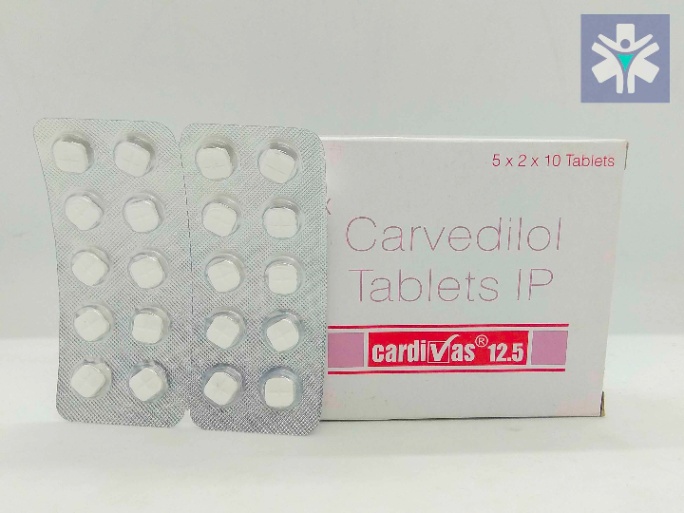
CARDIVAS 12.5MG
Price: Rs.152.00
13% off
In stock
Loose stock: 0
Description
CARDIVAS 12.5MG TAB 10
Details
Composition
CARVEDILOL 12.5 MG
# Carvedilol 12.5 mg
## SHORT DESCRIPTION
Carvedilol 12.5 mg is a **beta-blocker with alpha-blocking activity** used to treat high blood pressure and certain heart conditions. It slows the heart rate, reduces the force of heart contraction and relaxes blood vessels, thereby reducing the workload on the heart.
It may be prescribed for **hypertension, chronic heart failure and certain patients with left ventricular dysfunction following a heart attack**, depending on the clinical situation.
## KEY BENEFITS
* Helps lower high blood pressure
* Reduces heart rate and cardiac workload
* Helps relax blood vessels
* Reduces the workload placed on the heart
* Used as part of treatment for certain types of chronic heart failure
* May reduce cardiovascular hospitalization and mortality in appropriate heart-failure patients
* Helps reduce the effects of stress hormones such as adrenaline on the heart
## USES / INDICATIONS
Carvedilol 12.5 mg may be prescribed for:
* **High blood pressure (hypertension)**
* **Chronic heart failure**, particularly heart failure with reduced ejection fraction
* Left ventricular dysfunction following certain heart attacks
* Other cardiovascular conditions when specifically prescribed by a healthcare professional
The approved indications may vary according to the formulation and local medical guidelines.
## HOW IT WORKS
Carvedilol blocks **beta-adrenergic receptors** and **alpha-1 receptors**.
### Beta-blocking action
It slows the heart rate and reduces the force of cardiac contraction, decreasing the heart's workload and oxygen requirement.
### Alpha-1 blocking action
It relaxes blood vessels, reducing vascular resistance and helping lower blood pressure.
### Overall Effect
These combined effects reduce blood pressure and cardiac workload and can improve cardiovascular function in appropriately selected patients.
## DOSAGE & ADMINISTRATION
* Take Carvedilol 12.5 mg exactly as prescribed.
* The appropriate dose depends on the condition being treated, heart rate, blood pressure and individual response.
* Carvedilol is generally **started at a lower dose and gradually increased** when necessary.
* Take the medicine **with food**, particularly when used for heart failure.
* Take it at approximately the same time each day.
* Swallow the tablet with water.
* Do not crush or alter the dosage form unless your pharmacist confirms it is appropriate.
* Do not increase or decrease the dose without medical advice.
* Do not stop carvedilol suddenly.
### Missed Dose
Take the missed dose when remembered unless it is nearly time for your next dose. Do not take two doses together.
## SIDE EFFECTS
Common side effects may include:
* Dizziness
* Tiredness
* Weakness
* Low blood pressure
* Slow heart rate
* Headache
* Diarrhea
* Nausea
* Cold hands or feet
* Weight gain or fluid retention in some heart-failure patients
Dizziness may be more noticeable when treatment is first started or after a dose increase.
### Serious Side Effects
Seek medical attention for:
* Severe dizziness or fainting
* Very slow heartbeat
* Difficulty breathing
* Worsening shortness of breath
* Severe swelling of the legs or sudden weight gain
* Chest pain
* Severe allergic reaction
* Symptoms suggesting worsening heart failure
## PRECAUTIONS & WARNINGS
* **Do not stop carvedilol suddenly**, as abrupt withdrawal can worsen angina and other cardiovascular conditions.
* Carvedilol can cause low blood pressure and dizziness, especially when treatment begins or the dose is increased.
* It can slow the heart rate.
* Tell your doctor if you have asthma, COPD or another breathing disorder because beta-blockers can cause bronchospasm in susceptible patients.
* Patients with diabetes should monitor blood glucose carefully. Carvedilol may mask some symptoms of hypoglycemia, particularly a rapid heartbeat.
* Tell your doctor if you have liver disease.
* Patients with heart failure may experience temporary worsening of fluid retention or symptoms when treatment is initiated or increased; close medical supervision is important.
* Tell your doctor if you have circulation problems in your hands or feet.
* Rise slowly from sitting or lying down to reduce dizziness.
* Tell your doctor if you have thyroid disease because beta-blockers can mask some symptoms of hyperthyroidism.
* Inform your healthcare professional before surgery or anesthesia.
* Avoid driving or operating machinery if you experience dizziness, weakness or reduced alertness.
* Tell your doctor if you are pregnant, planning pregnancy or breastfeeding.
## DRUG INTERACTIONS
Carvedilol may interact with:
* **Other antihypertensive medicines** — may increase the risk of low blood pressure.
* **Verapamil or diltiazem** — may further slow heart rate or affect cardiac conduction.
* **Digoxin** — may increase the risk of slow heart rate and conduction problems.
* **Insulin and other diabetes medicines** — carvedilol may mask some symptoms of low blood sugar.
* **Clonidine** — combination requires careful medical supervision.
* **Amiodarone and other antiarrhythmic medicines** — may increase the risk of bradycardia or conduction abnormalities.
* **Rifampicin** — may reduce carvedilol concentrations.
* **Fluoxetine and paroxetine** — may increase carvedilol exposure.
* **NSAIDs** such as ibuprofen and diclofenac — may reduce the blood-pressure-lowering effect and potentially worsen fluid retention.
* **Alcohol** — may increase dizziness and blood-pressure-lowering effects.
Always inform your doctor or pharmacist about prescription medicines, over-the-counter medicines, vitamins and herbal supplements you use.
## STORAGE INFORMATION
* Store according to the manufacturer's instructions.
* Keep tablets in their original packaging.
* Store at the recommended room temperature.
* Protect from excessive heat, moisture and direct sunlight.
* Keep the container tightly closed where applicable.
* Keep out of reach of children.
* Do not use after the expiry date.
* Do not use the medicine if the packaging is damaged or the tablets appear abnormal.
## PRESCRIPTION STATUS
**Prescription medicine.** Carvedilol 12.5 mg should be used under the supervision of a qualified healthcare professional.
Prescription requirements may vary according to local regulations.
## GENUINE MEDICINE ASSURANCE
For safe and genuine medicine use:
* Purchase Carvedilol 12.5 mg only from a licensed and reputable pharmacy.
* Check the medicine name and **12.5 mg strength**.
* Verify the batch number and expiry date.
* Ensure the packaging and seal are intact.
* Check the manufacturer's details.
* Avoid products with damaged, altered or suspicious packaging.
* Purchase medicines only from authorized sources.
* Consult a pharmacist if you have concerns about product authenticity.
## FAQ
### What is Carvedilol 12.5 mg used for?
Carvedilol 12.5 mg is used to treat **high blood pressure and certain types of heart failure**. It may also be used for left ventricular dysfunction following certain heart attacks.
### Is Carvedilol 12.5 mg a beta-blocker?
Yes. Carvedilol is a **non-selective beta-blocker with alpha-1 blocking activity**.
### How does Carvedilol lower blood pressure?
It slows the heart rate and reduces cardiac workload while relaxing blood vessels through alpha-1 receptor blockade.
### Does Carvedilol help heart failure?
Yes. Carvedilol is an established treatment for certain patients with **chronic heart failure with reduced ejection fraction** and can improve cardiovascular outcomes when appropriately prescribed.
### Should Carvedilol 12.5 mg be taken with food?
Yes. Carvedilol is generally taken **with food**, particularly in patients being treated for heart failure, to reduce the risk of dizziness from rapid absorption.
### Can Carvedilol lower heart rate?
Yes. Lowering the heart rate is part of its therapeutic effect. However, an excessively slow heart rate requires medical evaluation.
### Does Carvedilol cause dizziness?
Yes. Dizziness is relatively common, particularly when starting treatment or increasing the dose. Stand up slowly to reduce the risk of lightheadedness.
### Can I stop Carvedilol suddenly?
**No.** Stopping carvedilol abruptly can worsen chest pain and other cardiovascular conditions. Your doctor may gradually reduce the dose when discontinuation is appropriate.
### Does Carvedilol cause low blood pressure?
Yes. Low blood pressure can occur, especially during initial treatment or after dose increases.
### Can diabetic patients take Carvedilol?
Yes, carvedilol may be prescribed to patients with diabetes when appropriate. However, beta-blockers can mask some symptoms of hypoglycemia, so blood glucose monitoring is important.
### Can Carvedilol be taken with Amlodipine?
It may be prescribed with amlodipine in selected patients. Since both medicines can lower blood pressure, monitoring may be required.
### Can Carvedilol be taken with Losartan?
Yes. Carvedilol and losartan may be used together in selected patients with hypertension or heart failure. Blood pressure, kidney function and electrolytes may require monitoring.
### Can Carvedilol be taken with Digoxin?
The medicines may be used together in certain heart-failure patients, but both can slow the heart rate. Your healthcare professional may monitor heart rate and cardiac conduction.
### Can I take Carvedilol with Ibuprofen?
NSAIDs such as ibuprofen can reduce the blood-pressure-lowering effect of carvedilol and may increase the risk of kidney problems or fluid retention. Consult your healthcare professional before regular NSAID use.
### Can I drink alcohol while taking Carvedilol?
Alcohol can increase dizziness and low blood pressure. It is advisable to discuss alcohol consumption with your healthcare professional.
### Can Carvedilol be taken during pregnancy?
Carvedilol should be used during pregnancy only when specifically recommended by a healthcare professional after assessing the potential benefits and risks.
### Can Carvedilol be taken while breastfeeding?
Consult your healthcare professional before taking carvedilol while breastfeeding so that the benefits and potential risks can be assessed.
### Does Carvedilol cause weight gain?
Weight gain may occur in some patients, particularly those being treated for heart failure. Sudden weight gain accompanied by swelling or worsening breathlessness may indicate fluid retention and should be reported promptly.
### Can Carvedilol cause shortness of breath?
Carvedilol may cause breathing difficulties in susceptible patients, especially those with asthma or bronchospastic disease. New or worsening shortness of breath in a heart-failure patient should be medically evaluated.
### How long does Carvedilol take to work?
Blood-pressure and heart-rate effects can begin after treatment starts, while the full cardiovascular benefit in heart failure may take **weeks or longer** as the dose is gradually adjusted.
### What should I do if I miss a dose?
Take the missed dose when remembered unless it is nearly time for the next dose. Do not take a double dose.
### What happens if I take too much Carvedilol?
An overdose can cause severe low blood pressure, slow heart rate, breathing difficulties, low blood sugar and other serious cardiovascular effects. Seek **urgent medical attention** if an overdose is suspected.
### How should Carvedilol 12.5 mg be stored?
Store it according to the manufacturer's instructions at the recommended room temperature, away from excessive heat and moisture. Keep it in its original packaging and out of reach of children.
## MEDICAL DISCLAIMER
This information is provided for educational and informational purposes only and should not replace professional medical advice, diagnosis or treatment. Carvedilol 12.5 mg is a prescription medicine that affects **heart rate, blood pressure and cardiac function**. Use it only as directed by a healthcare professional. Do not stop carvedilol suddenly without medical advice. Patients with asthma, diabetes, liver disease, low blood pressure, slow heart rate or heart-conduction problems may require special precautions. Seek urgent medical attention for severe fainting, chest pain, severe breathing difficulty, very slow heartbeat or suspected overdose. Always inform your healthcare professional about all medicines and supplements you are taking.