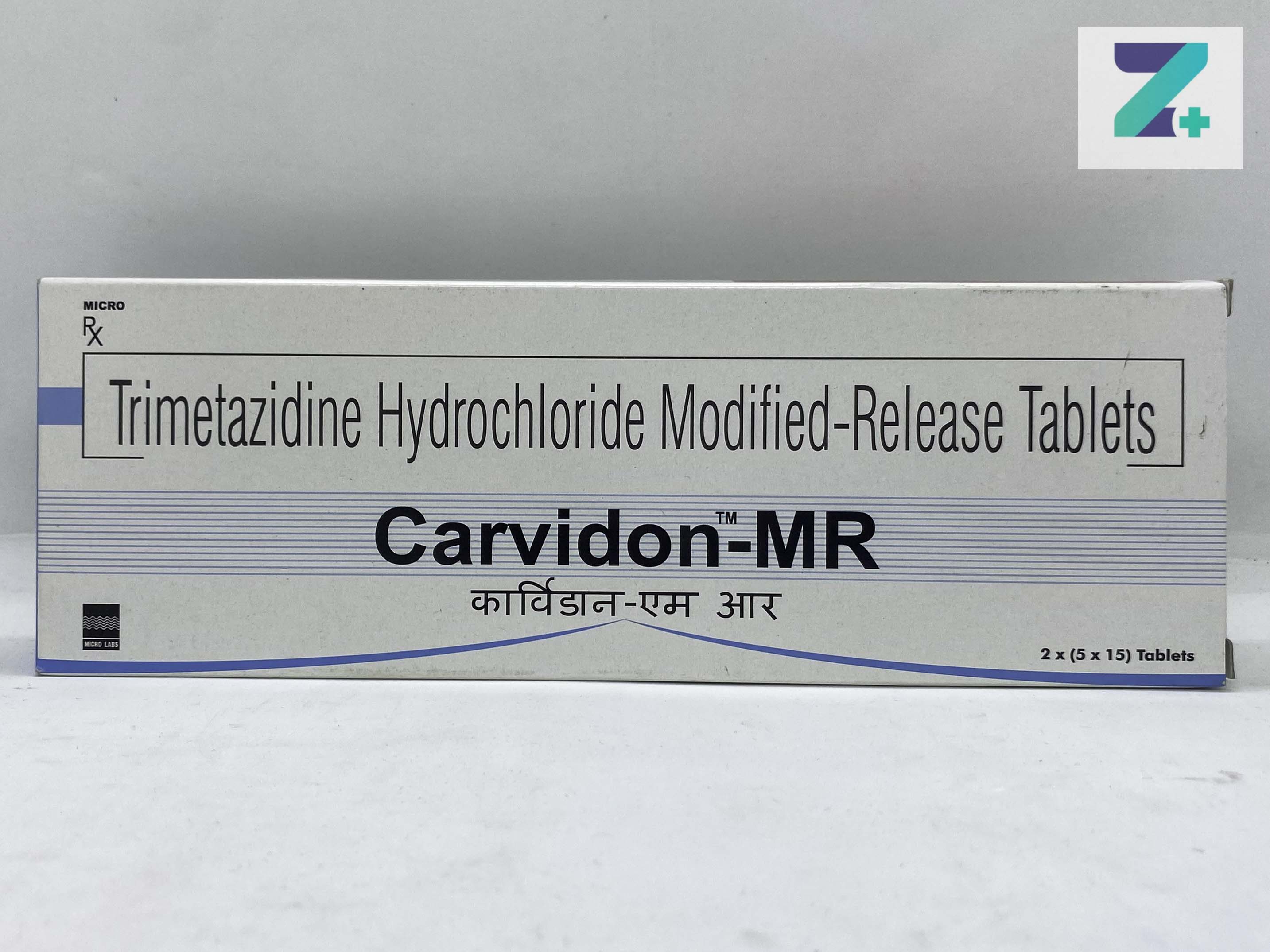
CARVIDON MR
Price: Rs.499.20
10% off
In stock
Loose stock: 0
Description
CARVIDON MR TAB 15
Details
Composition
TRIMETAZIDINE 35 MG
# Trimetazidine 35 mg
## SHORT DESCRIPTION
**Trimetazidine 35 mg** is a metabolic anti-anginal medicine used as an **add-on treatment for stable angina pectoris** when symptoms are not adequately controlled with other appropriate anti-anginal medicines or when those medicines are not tolerated.
The 35 mg formulation is commonly a **modified-release tablet**, depending on the manufacturer. Trimetazidine is **not intended to treat an acute angina attack** and should not replace emergency treatment such as prescribed short-acting nitrates.
## KEY BENEFITS
* Helps reduce symptoms of **stable angina**
* Supports the heart's energy metabolism during reduced oxygen availability
* May improve exercise tolerance in some patients with stable angina
* Helps optimize energy production in heart muscle cells
* May be used as an add-on to other anti-anginal treatment when appropriate
* Does not significantly lower heart rate or blood pressure when used at recommended doses
## USES / INDICATIONS
Trimetazidine 35 mg may be prescribed as **add-on therapy for symptomatic treatment of stable angina pectoris** when:
* First-line anti-anginal medicines do not provide adequate symptom control, or
* First-line medicines are not tolerated or are unsuitable
### Important
Trimetazidine is **not a treatment for an acute angina attack** and should not be relied upon for sudden chest pain.
It is also not generally intended to replace standard treatments that reduce cardiovascular risk, such as medicines prescribed for blood pressure, cholesterol, or prevention of blood clots.
## HOW IT WORKS
Trimetazidine is considered a **cardiac metabolic modulator**.
It helps shift myocardial energy metabolism toward **glucose oxidation**, which is more oxygen-efficient than fatty-acid oxidation. This can help heart muscle cells maintain energy production when oxygen availability is reduced.
Unlike many traditional anti-anginal medicines, trimetazidine does not primarily work by lowering heart rate or blood pressure.
**Trimetazidine → Modifies cardiac energy metabolism → Improves oxygen efficiency → Supports myocardial energy production during ischemia**
## DOSAGE & ADMINISTRATION
For the commonly used **35 mg modified-release formulation**, the usual adult regimen is:
**35 mg twice daily with meals**, approximately 12 hours apart.
However, the exact regimen may vary according to the product, kidney function, age, and local prescribing recommendations.
* Take the medicine exactly as prescribed.
* Take modified-release tablets **with meals**.
* Swallow the tablet whole with water.
* Do not crush, chew, or break a modified-release tablet unless the product instructions specifically permit it.
* Patients with reduced kidney function may require a lower dose or may need to avoid the medicine.
* Elderly patients may require additional assessment of kidney function.
### Missed Dose
Take the missed dose when remembered unless it is nearly time for the next dose. **Do not take two doses together.**
## SIDE EFFECTS
Possible side effects include:
* Dizziness
* Headache
* Abdominal discomfort
* Nausea
* Vomiting
* Diarrhea
* Indigestion
* Weakness or fatigue
* Rash or itching
### Important Neurological Side Effects
Trimetazidine can rarely cause or worsen **movement disorders**, particularly in older adults or people with kidney impairment.
Contact your doctor if you develop:
* Tremor
* Muscle stiffness
* Slowness of movement
* Difficulty walking
* Balance problems
* Restlessness or unusual movements
These symptoms may improve after the medicine is discontinued under medical supervision.
### Serious Allergic Reaction
Seek immediate medical attention for:
* Facial or throat swelling
* Difficulty breathing
* Severe rash
* Severe dizziness or fainting
## PRECAUTIONS & WARNINGS
### Parkinson's Disease and Movement Disorders
Trimetazidine is **contraindicated in Parkinson's disease, parkinsonian symptoms, tremor, restless-leg syndrome, and other significant movement disorders** in many regulatory settings.
Tell your doctor if you have:
* Parkinson's disease
* Tremor
* Muscle rigidity
* Difficulty walking
* Restless-leg symptoms
* Other movement disorders
### Kidney Disease
Trimetazidine is eliminated largely through the kidneys. Dose adjustment or avoidance may be necessary in people with impaired kidney function.
### Elderly Patients
Kidney function should be assessed in older adults because reduced kidney function can increase exposure to trimetazidine.
### Acute Angina
Trimetazidine **should not be used to treat an acute angina attack**.
If you experience sudden or severe chest pain, follow your emergency treatment plan and seek urgent medical attention.
### Pregnancy
Tell your doctor if you are pregnant or planning pregnancy. Trimetazidine is generally not recommended during pregnancy unless specifically considered necessary by a healthcare professional.
### Breastfeeding
Consult your doctor before using trimetazidine while breastfeeding.
## DRUG INTERACTIONS
Trimetazidine has relatively few major pharmacokinetic interactions, but your doctor should know about all medicines you take.
Tell your healthcare professional if you use:
* Other medicines for angina
* Blood-pressure medicines
* Medicines for heart rhythm disorders
* Medicines that affect the nervous system
* Medicines used to treat Parkinson's disease or movement disorders
* Prescription medicines, over-the-counter medicines, vitamins, or herbal supplements
Trimetazidine may be used alongside other anti-anginal medicines when prescribed, but it should not replace emergency treatment for acute angina.
## STORAGE INFORMATION
* Store according to the manufacturer's instructions.
* Keep at room temperature unless otherwise specified.
* Protect from excessive heat, moisture, and direct sunlight.
* Keep tablets in their original packaging.
* Keep the container tightly closed.
* Keep out of reach and sight of children.
* Do not use after the expiry date.
* Do not use tablets from damaged packaging.
## PRESCRIPTION STATUS
**Trimetazidine 35 mg is generally a prescription medicine.**
It should be used under medical supervision, particularly because kidney function and the presence of movement disorders need to be considered before treatment.
## GENUINE MEDICINE ASSURANCE
To help ensure you receive genuine Trimetazidine 35 mg:
* Purchase from a licensed and reputable pharmacy.
* Check the medicine name and strength.
* Verify the manufacturer's details.
* Check the batch number and expiry date.
* Ensure the packaging is sealed and undamaged.
* Confirm that the product is the correct **35 mg formulation**.
* Avoid products with altered or suspicious packaging.
* Purchase prescription medicines only from authorized sources.
* Ask your pharmacist to verify the product if you have concerns about authenticity.
## FAQ SECTION
### What is Trimetazidine 35 mg used for?
Trimetazidine 35 mg is used as an **add-on treatment for symptoms of stable angina pectoris** when other appropriate anti-anginal treatments are insufficient or not tolerated.
### Is Trimetazidine a heart medicine?
Yes. Trimetazidine is a cardiovascular medicine used for the symptomatic treatment of **stable angina**.
### How does Trimetazidine work?
It modifies cardiac energy metabolism by favoring glucose oxidation, allowing heart muscle cells to produce energy more efficiently when oxygen availability is reduced.
### Is Trimetazidine a nitrate?
No. Trimetazidine is a **metabolic anti-anginal medicine**, not a nitrate such as nitroglycerin or isosorbide mononitrate.
### Can Trimetazidine stop an angina attack?
No. Trimetazidine is **not intended for the immediate treatment of an acute angina attack**. Follow your doctor's emergency plan for sudden chest pain.
### Can Trimetazidine prevent angina?
It may help reduce the frequency or severity of symptoms associated with **stable angina** when used as prescribed, but it does not eliminate the underlying cardiovascular disease.
### Is Trimetazidine 35 mg a modified-release tablet?
In many products, 35 mg is supplied as a **modified-release formulation**. Check the specific product packaging because formulations can vary.
### Should Trimetazidine 35 mg be taken with food?
Yes. The commonly used 35 mg modified-release formulation is generally taken **with meals**.
### Can Trimetazidine be taken twice daily?
The commonly used 35 mg modified-release formulation is often prescribed **twice daily with meals**, but follow your doctor's specific instructions.
### Can Trimetazidine lower blood pressure?
Trimetazidine does not primarily work by lowering blood pressure and generally has little direct effect on heart rate or blood pressure at recommended doses.
### Can Trimetazidine lower heart rate?
It does not primarily lower heart rate. This differentiates it from medicines such as beta-blockers.
### Can Trimetazidine be used with other heart medicines?
It may be prescribed together with other anti-anginal medicines as add-on therapy. Your doctor should review your complete medication list before treatment.
### Who should not take Trimetazidine?
People with **Parkinson's disease, parkinsonian symptoms, tremor, restless-leg syndrome, or significant movement disorders** should generally avoid trimetazidine. Severe kidney impairment may also be a contraindication.
### Can Trimetazidine cause Parkinson-like symptoms?
Rarely, trimetazidine can cause or worsen movement symptoms such as tremor, rigidity, slow movement, and gait disturbances, particularly in susceptible patients.
### Can Trimetazidine be used in kidney disease?
The dose may need to be reduced in patients with moderate kidney impairment, while severe kidney impairment may make the medicine unsuitable. Kidney function should be assessed by a healthcare professional.
### Can elderly people take Trimetazidine?
It may be used in selected older adults, but kidney function and the risk of movement-related adverse effects should be carefully considered.
### Can Trimetazidine be used during pregnancy?
Trimetazidine is generally avoided during pregnancy unless a healthcare professional determines that treatment is necessary.
### Can Trimetazidine be taken while breastfeeding?
Consult your doctor before using trimetazidine while breastfeeding.
### What are the common side effects of Trimetazidine?
Common or possible side effects include dizziness, headache, nausea, abdominal discomfort, diarrhea, vomiting, weakness, and skin reactions.
### Can Trimetazidine cause dizziness?
Yes. Dizziness can occur. Avoid driving or operating machinery if you feel dizzy or unsteady.
### What happens if I miss a dose?
Take it when remembered unless it is nearly time for your next dose. Do not take two doses together.
### Can I stop Trimetazidine suddenly?
Do not change or discontinue prescribed treatment without discussing it with your doctor. Your doctor will determine whether another anti-anginal treatment is needed.
### How long does Trimetazidine take to work?
The clinical benefit develops with continued treatment and varies between individuals. It is intended for ongoing symptomatic management of stable angina rather than immediate relief of an acute attack.
### Is Trimetazidine a blood thinner?
No. Trimetazidine is **not an anticoagulant or antiplatelet medicine** and does not work by preventing blood clots.
### Is Trimetazidine a cholesterol medicine?
No. It does not lower cholesterol. It is used to modify cardiac energy metabolism and manage symptoms of stable angina.
### How should Trimetazidine 35 mg be stored?
Store it according to the manufacturer's instructions, away from excessive heat and moisture, and keep it out of reach of children.
## MEDICAL DISCLAIMER
This information about **Trimetazidine 35 mg** is provided for educational and informational purposes only and is not a substitute for professional medical advice, diagnosis, or treatment.
Trimetazidine is intended for the **symptomatic treatment of stable angina** and should not be used as emergency treatment for sudden chest pain. It should not replace other cardiovascular treatments prescribed to reduce the risk of heart attack or other complications.
Trimetazidine is generally **not appropriate for people with Parkinson's disease, parkinsonian symptoms, tremor, restless-leg syndrome, or significant movement disorders**, and kidney function should be considered before treatment.
**Seek emergency medical attention for new, severe, prolonged, or worsening chest pain, particularly if accompanied by shortness of breath, sweating, fainting, or pain spreading to the arm, jaw, back, or shoulder.**
Always follow your doctor's prescription and the manufacturer's instructions regarding dosage, administration, contraindications, drug interactions, and duration of treatment.