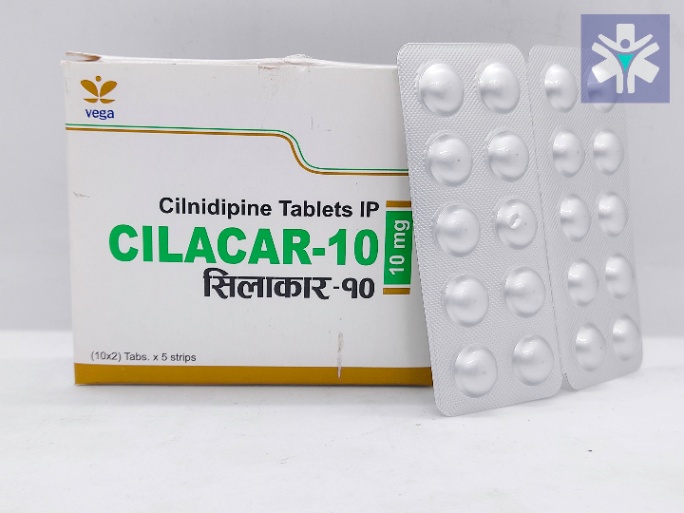
CILACAR-10MG
Price: Rs.45.00
15% off
In stock
Loose stock: 0
Description
CILACAR-10MG TAB 10
Details
Composition
CLINIDIPINE 10 MG
# CLINIDIPINE 10 MG
## Short Description
**Clinidipine 10 mg** is a prescription medicine belonging to the **calcium channel blocker (CCB)** class. It is primarily used to treat **high blood pressure (hypertension)**.
Clinidipine relaxes and widens blood vessels, allowing blood to flow more easily and reducing the pressure against the walls of the arteries. It is a long-acting antihypertensive medicine that may be used alone or alongside other blood-pressure medicines.
---
## Key Benefits
* Helps control **high blood pressure (hypertension)**.
* Relaxes and widens blood vessels.
* Reduces resistance to blood flow.
* Helps lower the workload on the heart.
* May help reduce the long-term risk of complications associated with uncontrolled hypertension.
* Can be used alone or in combination with other antihypertensive medicines when prescribed.
* Provides sustained blood-pressure control when taken regularly.
> **Important:** Clinidipine controls blood pressure but does not cure hypertension. Continue taking it as prescribed even if you feel well.
---
## Uses / Indications
Clinidipine 10 mg is primarily used for:
### Hypertension
It may be prescribed to lower elevated blood pressure and reduce the risk of complications associated with prolonged hypertension, including:
* Stroke
* Heart attack
* Heart failure
* Kidney damage
* Other cardiovascular complications
### Combination Therapy
Clinidipine may be combined with other blood-pressure medicines, such as:
* ACE inhibitors
* ARBs
* Beta-blockers
* Diuretics
The combination should be determined by a healthcare professional.
---
## How It Works
Clinidipine is a **dihydropyridine calcium channel blocker**.
It blocks **L-type and N-type calcium channels** in vascular smooth muscle and other tissues.
This reduces calcium entry into the smooth muscle cells of blood vessels, causing the arteries to **relax and widen (vasodilation)**.
The result is:
**Reduced peripheral vascular resistance → improved blood flow → lower blood pressure**
Its activity on N-type calcium channels may also contribute to reduced sympathetic nerve activity, although the primary blood-pressure-lowering effect is due to vascular relaxation.
---
## Dosage & Administration
* Take **Clinidipine 10 mg exactly as prescribed by your doctor**.
* It is generally taken **once daily**, preferably at approximately the same time each day.
* Clinidipine can usually be taken with or without food, according to the product instructions.
* Swallow the tablet whole with water.
* Do not crush or chew the tablet unless specifically instructed.
* Your doctor may adjust the dose depending on your blood-pressure response and overall health.
### Missed Dose
If you forget to take a dose, take it when you remember unless it is almost time for the next dose.
**Do not take two doses together.**
### Important
Blood pressure may improve before you notice any symptoms. Do not stop treatment simply because you feel well.
---
## Side Effects
Clinidipine is generally well tolerated, but possible side effects include:
* Headache
* Dizziness
* Flushing
* Palpitations
* Fatigue
* Nausea
* Mild gastrointestinal discomfort
* Increased heart rate
* **Ankle or foot swelling (peripheral edema)**
### Peripheral Edema
Like other dihydropyridine calcium channel blockers, clinidipine can cause swelling around the ankles or feet.
Contact your doctor if swelling is persistent, severe, or accompanied by shortness of breath.
### Low Blood Pressure
Excessive blood-pressure reduction may cause:
* Dizziness
* Weakness
* Lightheadedness
* Fainting
### Serious Side Effects
Seek medical attention if you experience:
* Severe dizziness or fainting
* Significant palpitations or irregular heartbeat
* Severe allergic reaction
* Swelling of the face, lips, tongue, or throat
* Difficulty breathing
* Severe or persistent chest pain
---
## Precautions & Warnings
* Do not use if you are allergic to clinidipine or any ingredient in the formulation.
* Monitor blood pressure regularly, especially when beginning treatment or changing the dose.
* Use cautiously if you have **very low blood pressure**.
* Tell your doctor if you have significant heart disease or a history of heart failure.
* Tell your doctor if you have liver disease, as calcium channel blockers may require additional caution in hepatic impairment.
* Stand up slowly if you experience dizziness.
* Avoid driving or operating machinery if you feel dizzy or lightheaded.
* Do not stop treatment abruptly without medical advice.
* Tell your doctor if you are pregnant, planning pregnancy, or breastfeeding.
* Inform your doctor about all medicines and supplements you take.
### Elderly Patients
Older adults may be more sensitive to blood-pressure-lowering effects and may require careful dose selection and monitoring.
---
## Drug Interactions
Clinically significant interactions are possible with medicines that affect blood pressure or the metabolism of calcium channel blockers.
### Other Blood Pressure Medicines
Combining clinidipine with:
* ACE inhibitors
* ARBs
* Beta-blockers
* Diuretics
* Other calcium channel blockers
may produce an additive blood-pressure-lowering effect.
### CYP3A4 Inhibitors
Clinidipine is metabolized in the liver, and medicines that inhibit relevant metabolic enzymes may potentially increase its exposure.
Examples include certain:
* Azole antifungals
* Macrolide antibiotics
* Other strong enzyme inhibitors
### CYP3A4 Inducers
Certain medicines that increase metabolic enzyme activity may potentially reduce the effect of clinidipine.
### Grapefruit
Depending on the formulation and local product information, grapefruit or grapefruit products may potentially affect the metabolism of certain calcium channel blockers. Ask your pharmacist or doctor whether you should avoid grapefruit.
### Other Medicines
Always tell your healthcare professional about:
* Prescription medicines
* OTC medicines
* Vitamins
* Herbal supplements
* Other blood-pressure medicines
---
## Storage Information
* Store at **room temperature according to the manufacturer's instructions**.
* Keep the tablets in their original packaging.
* Protect from excessive heat, moisture, and direct sunlight.
* Keep the container tightly closed.
* Keep out of reach of children.
* Do not use after the expiry date.
* Do not use tablets if the packaging is damaged or the medicine appears deteriorated.
---
## Prescription Status
**Clinidipine 10 mg is generally a prescription medicine.**
It should be used under the supervision of a qualified healthcare professional because the appropriate dose depends on blood pressure, age, cardiovascular status, other medicines, and individual response.
Prescription requirements may vary by country.
---
## Genuine Medicine Assurance
When purchasing **Clinidipine 10 mg**, ensure that you:
* Purchase from a **licensed pharmacy or authorized medicine supplier**.
* Verify the generic name and strength.
* Check the manufacturer's name.
* Verify the batch/lot number and expiry date.
* Ensure the packaging and security seal are intact.
* Check that the tablet appearance and labeling correspond to the manufacturer's information.
* Avoid products with suspicious packaging or unusually low prices.
* Do not purchase prescription medicines from unauthorized sellers.
* Follow local medicine regulations.
For additional authenticity assurance, compare the packaging and product information with information supplied by the manufacturer or the relevant national medicines regulatory authority.
---
# FAQ
### 1. What is Clinidipine 10 mg used for?
Clinidipine 10 mg is primarily used to treat **high blood pressure (hypertension)**.
### 2. Is Clinidipine a blood-pressure medicine?
Yes. Clinidipine is a **calcium channel blocker** that lowers blood pressure by relaxing and widening the arteries.
### 3. How does Clinidipine lower blood pressure?
It blocks calcium channels in vascular smooth muscle, causing the arteries to relax. This reduces resistance to blood flow and lowers blood pressure.
### 4. Is Clinidipine 10 mg a high dose?
The appropriate dose depends on the individual. **10 mg is a commonly used strength**, but your doctor determines whether it is suitable based on your blood-pressure response and medical condition.
### 5. When should I take Clinidipine 10 mg?
Clinidipine is generally taken **once daily at approximately the same time each day**. Follow your prescription and the specific product instructions.
### 6. Can Clinidipine be taken with food?
Many clinidipine products can be taken with or without food. Follow the instructions supplied with your particular product.
### 7. Does Clinidipine cause dizziness?
Yes. Dizziness can occur, particularly when starting treatment or when blood pressure falls more than expected.
### 8. Can Clinidipine cause ankle swelling?
Yes. **Peripheral edema, particularly ankle or foot swelling**, is a possible adverse effect of dihydropyridine calcium channel blockers.
### 9. Can I stop Clinidipine when my blood pressure becomes normal?
No. Normal blood pressure may indicate that the medicine is working. Do not stop treatment without consulting your doctor.
### 10. Can Clinidipine cure hypertension?
Clinidipine **controls blood pressure but does not cure the underlying tendency toward hypertension**. Long-term treatment and lifestyle measures may be necessary.
### 11. Can Clinidipine be taken with other blood-pressure medicines?
Yes, it may be combined with other antihypertensive medicines when prescribed. Your doctor may use combinations when one medicine alone does not adequately control blood pressure.
### 12. Can I take Clinidipine with a beta-blocker?
Clinidipine may be prescribed with a beta-blocker in appropriate patients. The combination can lower blood pressure more strongly, so medical supervision is important.
### 13. Can I take Clinidipine with alcohol?
Alcohol may increase dizziness or blood-pressure-lowering effects in some people. Discuss alcohol consumption with your healthcare professional.
### 14. Can Clinidipine be used during pregnancy?
If you are pregnant or planning pregnancy, consult your doctor before using clinidipine. Your healthcare professional can determine the most appropriate blood-pressure treatment during pregnancy.
### 15. Can Clinidipine be used while breastfeeding?
Consult your doctor before using clinidipine while breastfeeding because the safety profile should be assessed based on the individual situation.
### 16. Does Clinidipine affect heart rate?
Clinidipine primarily acts on blood vessels. Compared with some other calcium channel blockers, its effects on heart rate may differ, but **palpitations or changes in heart rate can occur**.
### 17. Can Clinidipine be used in elderly patients?
It may be used in older adults, but careful monitoring is recommended because older patients may be more sensitive to blood-pressure lowering and dizziness.
### 18. What should I do if I miss a dose of Clinidipine?
Take the missed dose when remembered unless it is close to the next scheduled dose. **Do not double the dose.**
### 19. What happens if I take too much Clinidipine?
An overdose may cause **excessive low blood pressure, dizziness, fainting, and potentially cardiovascular complications**. Seek urgent medical attention if an overdose is suspected.
### 20. What lifestyle changes help control blood pressure with Clinidipine?
Helpful measures may include:
* Reducing excess dietary salt
* Maintaining a healthy weight
* Regular physical activity
* Avoiding tobacco
* Limiting alcohol
* Eating a balanced diet
* Taking prescribed medicines consistently
* Monitoring blood pressure regularly
---
## Medical Disclaimer
This information is provided for **educational and informational purposes only** and is not a substitute for professional medical advice, diagnosis, or treatment.
**Clinidipine 10 mg is a prescription antihypertensive medicine and should be used according to the instructions of a qualified healthcare professional.** The appropriate dose and treatment duration depend on blood pressure, age, cardiovascular health, liver and kidney function, other medicines, and individual response.
Clinidipine may cause **dizziness, headache, flushing, palpitations, low blood pressure, and peripheral edema**. Seek medical attention for severe dizziness, fainting, significant chest symptoms, difficulty breathing, or signs of a serious allergic reaction.
Do not stop or change the dose without medical advice, even if your blood pressure becomes normal. Regular blood-pressure monitoring is important during treatment.
Always read the **specific manufacturer's package insert and product information**, as approved indications, dosing recommendations, contraindications, warnings, and prescription requirements may vary between products and countries.