CITAL LIQUID
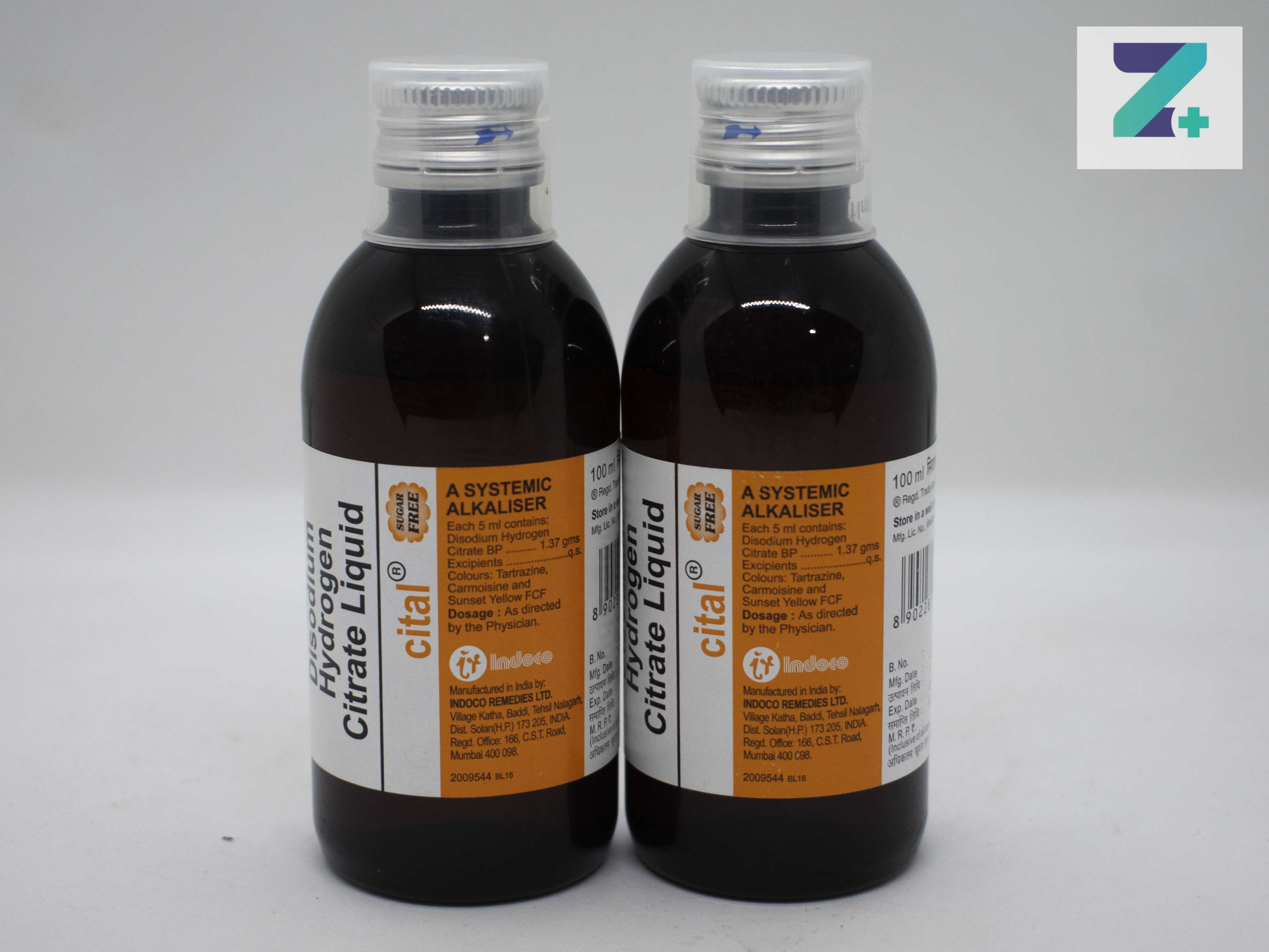
Price: Rs.104.40
10% off
In stock
Loose stock: 0
Description
CITAL LIQUID LIQUID 100ML
Details
Composition
DISODIUM HYDROGEN CITRATE 1.37 G
# Disodium Hydrogen Citrate 1.37 g
## Short Description
**Disodium Hydrogen Citrate 1.37 g** is a urinary alkalinizing medicine that helps **reduce the acidity of urine**. It is commonly used to relieve burning or discomfort associated with acidic urine and as supportive treatment in certain **urinary tract conditions**, including some cases of uric acid kidney stones.
It works by providing citrate, which is metabolized to bicarbonate and increases urinary pH, making the urine less acidic.
> **Important:** Disodium hydrogen citrate does not directly treat bacterial urinary tract infections. If a UTI is present, appropriate antimicrobial treatment may also be required.
---
## Key Benefits
* Helps **alkalize urine** and reduce urinary acidity.
* May relieve burning or discomfort associated with highly acidic urine.
* Supports management of **uric acid kidney stones** when medically appropriate.
* May help increase urinary citrate availability.
* Can reduce the acidity of urine in certain metabolic or urinary conditions.
* Available as an oral urinary alkalinizer.
---
## Uses / Indications
Disodium Hydrogen Citrate 1.37 g may be used for:
### Urinary Alkalinization
It may be prescribed to make urine **less acidic** in people who require urinary alkalinization.
### Uric Acid Kidney Stones
Increasing urine pH can help make **uric acid more soluble**, which may assist in preventing or managing uric acid stone formation.
### Urinary Burning and Discomfort
It may provide symptomatic relief from burning or discomfort associated with acidic urine, including some urinary conditions.
### Supportive Treatment in UTIs
A urinary alkalinizer may sometimes be used to help relieve urinary discomfort during treatment of a UTI.
> **Important:** Disodium hydrogen citrate is **not an antibiotic** and should not be used as a substitute for appropriate treatment of a bacterial UTI.
---
## How It Works
Disodium hydrogen citrate is a **citrate salt**.
After oral administration, citrate is metabolized in the body and contributes to an alkaline effect. This increases urinary pH and makes the urine less acidic.
A higher urine pH can increase the solubility of **uric acid**, which may help prevent the formation or support dissolution of uric acid crystals in appropriate patients.
### In simple terms:
**Disodium hydrogen citrate → citrate metabolism → increased urinary alkalinity → less acidic urine → improved urinary environment.**
---
## Dosage & Administration
### Adults
The appropriate dose depends on the formulation, indication and individual patient factors.
For a product containing **1.37 g disodium hydrogen citrate**, follow the dosage specified on the product label or prescribed by the healthcare professional.
If supplied as a liquid preparation:
* Measure the prescribed quantity accurately.
* Dilute with an appropriate amount of water if instructed.
* Drink after preparation.
* Follow the recommended frequency and duration.
### General Administration
* Take exactly as directed.
* It is commonly taken **after meals**, depending on the product instructions.
* Maintain adequate fluid intake unless your doctor has advised fluid restriction.
* Do not exceed the recommended dose.
> **Important:** The 1.37 g strength alone does not determine the correct number of doses per day. Follow the instructions for the **specific formulation and indication**.
---
## Side Effects
### Common Side Effects
Possible side effects include:
* Nausea
* Vomiting
* Stomach discomfort
* Abdominal bloating
* Diarrhea
* Mild gastrointestinal irritation
* Unpleasant taste, particularly with liquid formulations
### Excessive Alkalinization or Sodium Intake
Excessive use may potentially cause:
* Increased blood sodium
* Metabolic alkalosis
* Fluid retention
* Increased thirst
* Weakness or confusion in severe cases
Seek medical attention if severe vomiting, marked weakness, confusion, swelling or breathing difficulty develops.
---
## Precautions & Warnings
### Kidney Disease
People with **significant kidney impairment** should use disodium hydrogen citrate only under medical supervision because impaired kidney function can affect electrolyte and acid-base balance.
### High Blood Pressure
Some formulations provide a significant amount of **sodium**. Patients with hypertension should check the sodium content and consult a healthcare professional before prolonged use.
### Heart Failure
People with **heart failure or fluid retention** may need to avoid or carefully monitor sodium-containing urinary alkalinizers.
### Liver Disease
Patients with significant liver disease should consult their healthcare professional before use.
### Electrolyte Disorders
Use cautiously in patients with existing electrolyte abnormalities or acid-base disorders.
### Kidney Stones
Different types of kidney stones require different treatment approaches. Excessive urine alkalinization can potentially promote formation of certain types of stones, such as **calcium phosphate stones**.
Treatment of recurrent kidney stones should therefore be guided by appropriate medical evaluation.
### Persistent Urinary Symptoms
Burning urination can be caused by a UTI, kidney stone or other condition. Seek medical evaluation if symptoms persist, worsen or are associated with fever, back/flank pain or blood in the urine.
### Pregnancy and Breastfeeding
Consult a healthcare professional before using disodium hydrogen citrate during pregnancy or breastfeeding, particularly for prolonged treatment.
---
## Drug Interactions
### Medicines Affected by Urinary pH
Changing urinary pH can potentially affect the elimination of some medicines through the kidneys and consequently alter their blood concentrations.
### Sodium-Containing Medicines
Concurrent use with other sodium-containing medicines or supplements may increase total sodium intake.
### Medicines Affecting Electrolytes
Tell your healthcare professional if you take medicines that affect sodium, potassium or fluid balance, including certain:
* Diuretics
* Blood-pressure medicines
* Corticosteroids
* Electrolyte supplements
### Antacids and Alkalinizing Products
Avoid unnecessary simultaneous use of multiple alkalinizing products unless recommended by a healthcare professional.
Always tell your doctor or pharmacist about all prescription medicines, OTC medicines, vitamins and herbal supplements you use.
---
## Storage Information
* Store at **room temperature**, according to the manufacturer's instructions.
* Keep the container tightly closed.
* Protect from excessive heat, moisture and direct sunlight.
* Keep out of reach of children.
* Do not use after the expiry date.
* If supplied as a liquid, follow the manufacturer's specific storage instructions after opening.
* Do not use the product if its appearance, odor or packaging has changed unexpectedly.
---
## Prescription Status
**Disodium Hydrogen Citrate 1.37 g may be available without a prescription in some countries**, while dispensing requirements vary according to the formulation, indication and local regulations.
For prolonged treatment of kidney stones or recurrent urinary symptoms, medical supervision is recommended.
---
## Genuine Medicine Assurance
When purchasing **Disodium Hydrogen Citrate 1.37 g**:
* Purchase from a **licensed and reputable pharmacy**.
* Check that the packaging is sealed and undamaged.
* Verify the active ingredient and strength.
* Check the manufacturer's name, batch/lot number and expiry date.
* Confirm that the product is intended for oral use.
* Avoid products with suspicious packaging or altered labels.
* Purchase medicines only from authorized sellers.
* Follow the manufacturer's storage instructions.
* If counterfeit medicine is suspected, contact the manufacturer, licensed pharmacy or relevant medicines regulatory authority.
---
# Frequently Asked Questions (FAQ)
### 1. What is Disodium Hydrogen Citrate 1.37 g used for?
Disodium hydrogen citrate is a **urinary alkalinizer** used to reduce urine acidity. It may be used for urinary discomfort and as supportive treatment for certain conditions such as uric acid kidney stones.
### 2. Is Disodium Hydrogen Citrate an antibiotic?
**No.** It is not an antibiotic and does not kill the bacteria responsible for a bacterial UTI.
### 3. Does Disodium Hydrogen Citrate help with burning urination?
It may help relieve burning or discomfort associated with **acidic urine**, but it does not treat every cause of painful urination.
### 4. Does it treat urinary tract infections?
It may provide **symptomatic relief** in some patients, but it does not eradicate the bacteria causing a UTI. Appropriate medical treatment may be necessary.
### 5. How does Disodium Hydrogen Citrate work?
It provides citrate that contributes to an **alkalinizing effect**, increasing urinary pH and making urine less acidic.
### 6. Can Disodium Hydrogen Citrate help kidney stones?
It may be useful in managing **uric acid stones** because increasing urine pH can make uric acid more soluble. Treatment depends on the specific type of kidney stone.
### 7. Can Disodium Hydrogen Citrate dissolve kidney stones?
It may help dissolve or prevent **uric acid stones** when urine is appropriately alkalinized. It is not effective for dissolving every type of kidney stone.
### 8. How should Disodium Hydrogen Citrate 1.37 g be taken?
Follow the instructions for the specific product. If it is supplied as a liquid, measure the prescribed quantity and dilute it with water when instructed.
### 9. Should Disodium Hydrogen Citrate be taken after food?
Many formulations are recommended **after meals**, but follow the specific product label or healthcare professional's instructions.
### 10. Should I drink more water while taking it?
Adequate hydration is often important in urinary conditions and kidney-stone prevention. However, people with **heart failure, kidney disease or fluid restrictions** should follow their healthcare professional's fluid recommendations.
### 11. Can people with high blood pressure take Disodium Hydrogen Citrate?
Some formulations contain sodium, which may be important for people with hypertension. Consult a healthcare professional before prolonged use.
### 12. Can Disodium Hydrogen Citrate cause side effects?
Yes. Possible side effects include **nausea, stomach discomfort, vomiting, bloating and diarrhea**.
### 13. Can I take Disodium Hydrogen Citrate every day?
It may be used regularly when medically indicated, but prolonged use should be guided by a healthcare professional, particularly in people with kidney, heart or electrolyte problems.
### 14. Can Disodium Hydrogen Citrate be used during pregnancy?
Consult your healthcare professional before using it during pregnancy, particularly for prolonged treatment.
### 15. Can it be used while breastfeeding?
Discuss its use with a healthcare professional before taking it during breastfeeding.
### 16. Can Disodium Hydrogen Citrate prevent kidney stones?
It may help prevent **uric acid stones** in appropriately selected patients by increasing urine pH. Prevention depends on the stone type and underlying cause.
### 17. What should I do if I have fever with painful urination?
Fever, chills, flank/back pain or feeling seriously unwell may indicate a **more significant urinary infection**. Seek medical evaluation rather than relying only on a urinary alkalinizer.
### 18. Can Disodium Hydrogen Citrate be taken with other medicines?
Potential interactions are possible because urinary alkalinization and sodium intake can affect some medicines and electrolyte balance. Tell your healthcare professional about all medicines you take.
### 19. Is Disodium Hydrogen Citrate 1.37 g available without a prescription?
It may be available **over the counter in some countries**, but prescription and pharmacy requirements vary by location and formulation.
### 20. Is Disodium Hydrogen Citrate the same as potassium citrate?
**No.** Both can alkalinize urine, but they contain different salts and have different sodium/potassium considerations. They should not automatically be substituted for one another.
---
## Medical Disclaimer
This information about **Disodium Hydrogen Citrate 1.37 g** is provided for educational and general informational purposes only. It is **not a substitute for professional medical advice, diagnosis or treatment**.
Disodium hydrogen citrate may provide symptomatic relief from urinary acidity but **does not treat the underlying bacterial cause of a urinary tract infection**. Kidney-stone treatment should be based on the type of stone and appropriate medical evaluation.
Patients with **kidney disease, heart failure, hypertension, electrolyte abnormalities or conditions requiring sodium restriction** should consult a healthcare professional before use. Seek medical attention for fever, chills, severe flank or back pain, blood in the urine, persistent urinary symptoms or difficulty passing urine.
**Do not exceed the recommended dose or use prolonged treatment without appropriate medical guidance.**