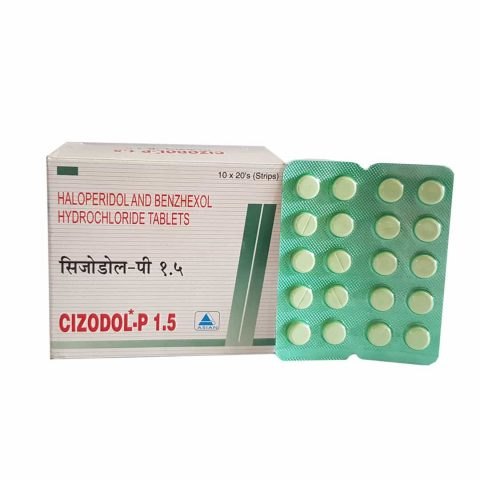
CIZODOL-P 1.5
Price: Rs.38.50
15% off
In stock
Loose stock: 0
Description
CIZODOL-P 1.5 TAB 10
Details
Composition
BENZHEXOL 2 MG,HALOPERIDOL 1.5 MG
# BENZHEXOL 2 MG + HALOPERIDOL 1.5 MG
## SHORT DESCRIPTION
**Benzhexol 2 mg + Haloperidol 1.5 mg** is a combination of a **centrally acting anticholinergic medicine** and an **antipsychotic medicine**. It may be prescribed when haloperidol is needed to manage certain psychiatric or behavioral symptoms and benzhexol is used to help control specific **extrapyramidal symptoms (EPS)** such as medication-induced muscle stiffness, tremor, or abnormal movements.
**Benzhexol (trihexyphenidyl)** does not treat the underlying psychiatric condition; it is mainly used to manage certain movement-related adverse effects caused by antipsychotic medicines.
---
# KEY BENEFITS
* Helps manage certain **extrapyramidal symptoms** associated with antipsychotic treatment.
* Benzhexol may reduce medication-induced:
* Muscle stiffness
* Tremor
* Rigidity
* Certain muscle spasms
* Haloperidol helps control **psychotic symptoms** when clinically indicated.
* May help improve tolerability of haloperidol in patients who develop specific movement-related adverse effects.
* Combines antipsychotic treatment with symptomatic management of selected movement disorders.
> **Important:** Benzhexol is not routinely recommended simply to prevent all antipsychotic side effects. Its use should be individualized by a healthcare professional.
---
# USES / INDICATIONS
The combination may be prescribed in selected patients receiving haloperidol for conditions such as:
* Schizophrenia and other psychotic disorders
* Severe agitation associated with certain psychiatric conditions
* Other conditions where haloperidol is clinically indicated
Benzhexol may be used to treat certain **drug-induced extrapyramidal symptoms**, including:
* Parkinsonism caused by antipsychotic medicines
* Tremor
* Rigidity
* Muscle stiffness
* Certain acute dystonic reactions
The specific indication depends on the patient's diagnosis and clinical circumstances.
---
# HOW IT WORKS
### Haloperidol 1.5 mg
Haloperidol is a **first-generation (typical) antipsychotic**.
It primarily blocks **dopamine D2 receptors** in the brain. This reduces excessive dopamine signaling associated with psychotic symptoms such as:
* Hallucinations
* Delusions
* Severe agitation
* Disorganized thinking
Because dopamine blockade can also affect movement pathways, haloperidol may cause extrapyramidal side effects.
### Benzhexol 2 mg
Benzhexol, also known as **trihexyphenidyl**, is an anticholinergic medicine.
It reduces certain cholinergic effects in the brain and can help restore the balance between dopamine and acetylcholine in movement-related pathways.
This can reduce symptoms such as:
* Tremor
* Rigidity
* Muscle stiffness
* Some drug-induced dystonic symptoms
### Combined Action
**Haloperidol → treats psychotic symptoms**
**Benzhexol → helps control selected movement-related adverse effects**
---
# DOSAGE & ADMINISTRATION
Take this medicine **exactly as prescribed**.
The appropriate dose depends on the patient's condition, response to treatment, age, other medicines, and overall health.
### General Instructions
* Take the prescribed dose at the scheduled time.
* Swallow tablets with water.
* It may be taken with or without food unless the product label states otherwise.
* Do not increase or decrease the dose without medical advice.
* Do not stop haloperidol suddenly without consulting your healthcare professional.
### Missed Dose
Take the missed dose when remembered unless it is almost time for the next dose.
**Do not double the next dose.**
### Duration
Treatment duration is individualized. Benzhexol should not automatically be continued indefinitely because prolonged anticholinergic exposure can cause adverse effects and may not be necessary in every patient.
---
# SIDE EFFECTS
## Common Side Effects
Possible side effects include:
* Dry mouth
* Constipation
* Blurred vision
* Drowsiness
* Dizziness
* Increased heart rate
* Difficulty urinating
* Reduced sweating
## Haloperidol-Related Movement Effects
Haloperidol may cause:
* Muscle stiffness
* Tremor
* Restlessness (**akathisia**)
* Abnormal muscle contractions (**dystonia**)
* Slowed movements
* Parkinsonism
* Involuntary movements
Benzhexol may help some of these symptoms but does not prevent every type of movement disorder.
## Serious Side Effects
Seek urgent medical attention for:
* Severe muscle rigidity
* High fever
* Confusion
* Severe agitation
* Fainting
* Abnormal heart rhythm
* Severe involuntary movements
* Difficulty swallowing or breathing
* Severe allergic reaction
A rare but serious reaction to haloperidol is **neuroleptic malignant syndrome (NMS)**.
## Long-Term Haloperidol Use
Long-term treatment can cause **tardive dyskinesia**, which may involve repetitive involuntary movements, particularly of the face, mouth, or tongue.
Benzhexol does not reliably prevent tardive dyskinesia and may sometimes worsen it.
---
# PRECAUTIONS & WARNINGS
## Neuroleptic Malignant Syndrome
Haloperidol can rarely cause NMS, a potentially life-threatening condition characterized by:
* High fever
* Severe muscle rigidity
* Confusion
* Sweating
* Rapid heartbeat
* Changes in blood pressure
**Seek emergency medical attention if these symptoms occur.**
## Heart Rhythm Problems
Haloperidol can prolong the **QT interval** and increase the risk of potentially serious abnormal heart rhythms.
Tell your doctor if you have:
* Long QT syndrome
* Abnormal heart rhythm
* Heart disease
* A history of fainting
* Low potassium or magnesium
## Tardive Dyskinesia
Long-term haloperidol treatment can cause potentially persistent involuntary movements.
Report unusual movements of the:
* Face
* Tongue
* Mouth
* Jaw
* Limbs
to your healthcare professional.
## Benzhexol and Anticholinergic Effects
Benzhexol can cause significant anticholinergic effects, including:
* Dry mouth
* Blurred vision
* Constipation
* Urinary retention
* Confusion
* Memory problems
Older adults may be particularly sensitive.
## Glaucoma
Benzhexol may increase pressure inside the eye and can be dangerous in people with **narrow-angle glaucoma**.
Tell your doctor if you have glaucoma.
## Urinary Problems
Use caution if you have:
* Enlarged prostate
* Difficulty urinating
* Urinary retention
Benzhexol can worsen these problems.
## Gastrointestinal Obstruction
Anticholinergic medicines may reduce intestinal movement. Tell your doctor if you have intestinal obstruction or severe constipation.
## Heat and Reduced Sweating
Benzhexol can reduce sweating, potentially increasing the risk of **overheating or heat stroke**, especially in hot environments.
Stay adequately hydrated and avoid excessive heat.
## Seizure Disorders
Haloperidol can lower the seizure threshold in some patients. Tell your healthcare professional if you have epilepsy or a history of seizures.
## Dementia-Related Psychosis
Antipsychotics including haloperidol are associated with an increased risk of death in elderly patients with **dementia-related psychosis** and are not approved for this indication unless specifically justified under applicable medical guidance.
## Pregnancy and Breastfeeding
Tell your healthcare professional if you are pregnant, planning pregnancy, or breastfeeding.
Haloperidol can pass into breast milk, and the decision to use it during breastfeeding should be made with medical guidance.
---
# DRUG INTERACTIONS
### Other Antipsychotics
Combining haloperidol with other antipsychotic medicines may increase the risk of:
* Movement disorders
* Sedation
* QT prolongation
* Other adverse effects
### Medicines That Prolong QT
The risk of abnormal heart rhythms may increase with medicines such as certain:
* Antiarrhythmics
* Antibiotics
* Antidepressants
* Other antipsychotics
### CNS Depressants
Alcohol, opioids, sedatives, and other central nervous system depressants may increase:
* Drowsiness
* Dizziness
* Impaired coordination
### Anticholinergic Medicines
Other anticholinergic medicines can increase benzhexol-related effects such as:
* Dry mouth
* Constipation
* Blurred vision
* Urinary retention
* Confusion
### Parkinson's Medicines
Benzhexol may interact with other medicines used for Parkinsonism, while haloperidol can oppose the effects of dopaminergic medicines.
### Levodopa
Haloperidol may reduce the effectiveness of **levodopa** and other dopamine-enhancing treatments.
### Antihypertensive Medicines
Haloperidol may enhance blood-pressure-lowering effects in some patients.
### Alcohol
Alcohol can increase CNS depression and impairment.
**Avoid alcohol unless your healthcare professional says it is safe.**
Always tell your doctor or pharmacist about all prescription medicines, OTC medicines, vitamins, supplements, and herbal products you take.
---
# STORAGE INFORMATION
* Store according to the manufacturer's instructions.
* Keep at the recommended room temperature.
* Protect from excessive heat, moisture, and direct sunlight.
* Keep in the original packaging.
* Keep out of reach of children.
* Do not use after the expiry date.
* Do not use tablets that are damaged, discolored, or otherwise abnormal.
---
# PRESCRIPTION STATUS
**Benzhexol 2 mg + Haloperidol 1.5 mg is generally a prescription medicine.**
Haloperidol requires medical supervision because of its potential neurological, cardiovascular, and metabolic adverse effects.
Benzhexol should also be used only when clinically appropriate.
---
# GENUINE MEDICINE ASSURANCE
When purchasing **Benzhexol 2 mg + Haloperidol 1.5 mg**, obtain it from a **licensed pharmacy or authorized medicine supplier**.
Check for:
* Correct medicine name and strengths
* Manufacturer information
* Batch/lot number
* Manufacturing and expiry dates
* Intact packaging and seal
* Regulatory information
* Patient information leaflet
Avoid medicines with damaged packaging, altered labels, missing batch details, or questionable authenticity.
---
# FAQ – BENZHEXOL 2 MG + HALOPERIDOL 1.5 MG
### 1. What is Benzhexol 2 mg + Haloperidol 1.5 mg used for?
It may be prescribed when **haloperidol is required to treat psychotic symptoms** and benzhexol is needed to manage certain antipsychotic-induced movement symptoms.
### 2. What is Haloperidol?
Haloperidol is a **typical antipsychotic medicine** that primarily blocks dopamine D2 receptors and is used to treat certain psychotic and severe behavioral symptoms.
### 3. What is Benzhexol?
Benzhexol, also called **trihexyphenidyl**, is an anticholinergic medicine used primarily to manage certain movement disorders, including medication-induced parkinsonism and dystonia.
### 4. Why are Benzhexol and Haloperidol combined?
Benzhexol may be prescribed alongside haloperidol when a patient develops certain **extrapyramidal symptoms**, such as stiffness, tremor, or dystonia.
### 5. Does Benzhexol treat schizophrenia?
No. Benzhexol does **not treat the underlying psychotic disorder**. Haloperidol is the component responsible for antipsychotic treatment.
### 6. Can this medicine cause drowsiness?
Yes. Haloperidol and benzhexol can both contribute to drowsiness, dizziness, or impaired alertness.
### 7. Can I drive while taking this medicine?
Avoid driving or operating machinery until you know how the medicine affects you. Do not drive if you experience drowsiness, dizziness, blurred vision, or impaired coordination.
### 8. Can Benzhexol cause dry mouth?
Yes. Dry mouth is a common anticholinergic effect of benzhexol.
### 9. Can Benzhexol cause constipation?
Yes. Benzhexol can reduce intestinal movement and may cause or worsen constipation.
### 10. Can Benzhexol cause blurred vision?
Yes. Anticholinergic effects can cause blurred vision and may increase eye pressure in susceptible individuals.
### 11. Can Benzhexol be used for Parkinson's disease?
Benzhexol can help certain Parkinsonian symptoms, particularly tremor and rigidity, but it is not interchangeable with dopaminergic treatments and should be used under medical supervision.
### 12. Can Haloperidol cause abnormal movements?
Yes. Haloperidol can cause **extrapyramidal symptoms**, including dystonia, akathisia, parkinsonism, and tardive dyskinesia.
### 13. What is tardive dyskinesia?
Tardive dyskinesia is a potentially persistent movement disorder associated with prolonged exposure to dopamine-blocking medicines. It can cause repetitive involuntary movements of the face, tongue, mouth, or other body parts.
### 14. Does Benzhexol prevent tardive dyskinesia?
No. Benzhexol does not reliably prevent tardive dyskinesia and may sometimes worsen it.
### 15. Can this medicine affect the heart?
Yes. Haloperidol can prolong the QT interval and, in susceptible patients, increase the risk of serious abnormal heart rhythms.
### 16. Can I drink alcohol with Benzhexol + Haloperidol?
Alcohol may increase drowsiness, dizziness, and impaired coordination. **Avoid alcohol unless your healthcare professional advises otherwise.**
### 17. Can I take this medicine with other antipsychotics?
Do not combine antipsychotic medicines without medical supervision because this can increase the risk of neurological, cardiovascular, and other adverse effects.
### 18. Can I take Benzhexol with levodopa?
This combination requires medical supervision. Haloperidol can oppose the effects of levodopa, while benzhexol has its own effects on movement symptoms.
### 19. Can older adults take this medicine?
Older adults may be more susceptible to confusion, sedation, low blood pressure, anticholinergic effects, and movement disorders. Treatment should be carefully individualized.
### 20. Can this medicine be used during pregnancy?
Consult your healthcare professional before use during pregnancy. The benefits and potential risks should be assessed individually.
### 21. Can I use this medicine while breastfeeding?
Haloperidol can pass into breast milk. Consult your healthcare professional before breastfeeding while taking this combination.
### 22. Can I stop Haloperidol suddenly?
Do not stop haloperidol abruptly without medical advice. Your doctor may gradually adjust the treatment depending on your condition.
### 23. What should I do if I develop severe muscle stiffness and fever?
Seek **urgent medical attention**. Severe muscle rigidity, high fever, confusion, and sweating can be signs of **neuroleptic malignant syndrome**, a rare but potentially life-threatening reaction.
### 24. What happens if I take too much Benzhexol + Haloperidol?
Overdose can cause severe drowsiness, confusion, abnormal movements, agitation, changes in heart rhythm, seizures, or severe anticholinergic effects. Seek **emergency medical attention** if an overdose is suspected.
---
# MEDICAL DISCLAIMER
This information about **Benzhexol 2 mg + Haloperidol 1.5 mg** is provided for general educational purposes only and does not replace professional medical advice, diagnosis, or treatment.
This combination contains a **prescription antipsychotic and an anticholinergic medicine**. Haloperidol can cause serious adverse effects including extrapyramidal symptoms, tardive dyskinesia, QT prolongation, and rarely neuroleptic malignant syndrome. Benzhexol can cause significant anticholinergic effects such as confusion, urinary retention, constipation, blurred vision, and reduced sweating.
Do not use this medicine for self-treatment of psychiatric symptoms or movement disorders. Do not change the dose or discontinue treatment without consulting a qualified healthcare professional.
**Seek urgent medical attention for severe muscle rigidity, high fever, severe confusion, fainting, serious abnormal movements, difficulty breathing, or symptoms suggestive of an abnormal heart rhythm.**
**Use only according to the prescription and instructions of a qualified healthcare professional.**