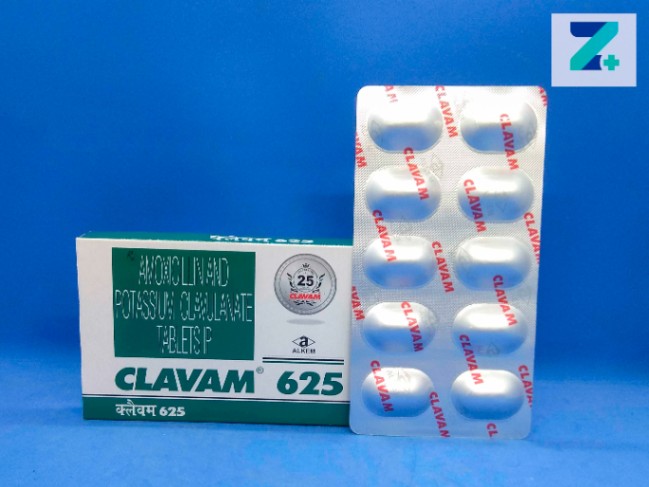
CLAVAM 625 MG
Price: Rs.315.00
10% off
In stock
Loose stock: 3
Description
CLAVAM 625 MG TAB 10
Details
Composition
AMOXICILLIN 500MG,CALVULANIC ACID 125 MG
# AMOXICILLIN 500 MG + CLAVULANIC ACID 125 MG
## SHORT DESCRIPTION
**Amoxicillin 500 mg + Clavulanic Acid 125 mg** is a prescription **penicillin-class antibiotic combination** used to treat a variety of bacterial infections. It combines **amoxicillin**, which kills susceptible bacteria, with **clavulanic acid (clavulanate)**, which helps protect amoxicillin from certain bacterial enzymes called beta-lactamases.
This combination is commonly used when bacteria may be resistant to amoxicillin alone.
> **Important:** This medicine treats **bacterial infections only** and does not work against viral infections such as the common cold or influenza.
---
# KEY BENEFITS
* Provides broad-spectrum antibacterial activity against many susceptible bacteria.
* Combines amoxicillin with clavulanic acid to overcome certain **beta-lactamase-mediated bacterial resistance**.
* May be used for infections affecting the:
* Respiratory tract
* Ear, nose, and throat
* Urinary tract
* Skin and soft tissues
* Teeth and gums
* Bones and joints
* Helps treat bacterial infections when amoxicillin alone may not be effective.
---
# USES / INDICATIONS
Amoxicillin + clavulanic acid may be prescribed for susceptible bacterial infections such as:
### Respiratory Tract Infections
* Bacterial sinusitis
* Lower respiratory tract infections
* Certain bacterial pneumonia
* Exacerbations of chronic bronchitis when bacterial infection is suspected
### Ear, Nose & Throat Infections
* Otitis media
* Certain bacterial throat or tonsil infections
* Sinus infections
### Urinary Tract Infections
* Certain susceptible urinary tract infections
### Skin & Soft-Tissue Infections
* Cellulitis
* Skin infections
* Certain wound infections
* Animal or human bite infections
### Dental Infections
* Certain bacterial dental and gum infections
### Bone & Joint Infections
* Selected susceptible bone and joint infections
The exact indication depends on the type of bacteria, infection severity, local resistance patterns, and the patient's medical history.
---
# HOW IT WORKS
This medicine contains two active ingredients:
### Amoxicillin
Amoxicillin is a **beta-lactam antibiotic**. It interferes with bacterial cell-wall synthesis by binding to penicillin-binding proteins.
This weakens the bacterial cell wall and can ultimately cause the bacteria to die.
### Clavulanic Acid
Some bacteria produce enzymes called **beta-lactamases** that can destroy amoxicillin.
Clavulanic acid inhibits certain of these beta-lactamase enzymes, helping protect amoxicillin from breakdown.
**Amoxicillin → inhibits bacterial cell-wall formation → bacterial death**
**Clavulanic acid → inhibits certain beta-lactamases → protects amoxicillin → improves antibacterial activity**
---
# DOSAGE & ADMINISTRATION
> **Take Amoxicillin 500 mg + Clavulanic Acid 125 mg exactly as prescribed by your doctor.**
### Usual Adult Regimen
For the **500 mg/125 mg immediate-release formulation**, a commonly used adult regimen is:
**One tablet every 8 hours (three times daily)** for appropriate infections.
However, the correct dose and duration depend on:
* Type and severity of infection
* Kidney function
* Age and body weight
* Local antibiotic resistance
* Patient-specific medical factors
**Do not self-prescribe antibiotics or change the dose without medical advice.**
### How to Take
* Take the medicine **at the start of a meal or snack** to improve clavulanate absorption and reduce stomach upset.
* Swallow the tablet with water.
* Take doses at evenly spaced intervals.
* Complete the prescribed course even if you begin to feel better, unless your healthcare professional tells you to stop.
### Missed Dose
Take the missed dose when remembered.
If it is nearly time for your next dose, skip the missed dose and continue with your normal schedule.
**Do not take two doses together.**
### Important
The **500 mg/125 mg formulation should not automatically be substituted for other strengths** because different formulations may have different dosing schedules and clavulanate exposure.
---
# SIDE EFFECTS
## Common Side Effects
Possible side effects include:
* Diarrhea
* Nausea
* Vomiting
* Abdominal discomfort
* Indigestion
* Headache
* Skin rash
Taking the medicine at the beginning of a meal can help reduce gastrointestinal side effects.
## Serious Side Effects
Seek medical attention promptly for:
* Severe or persistent diarrhea
* Bloody or watery diarrhea
* Severe abdominal pain
* Yellowing of the skin or eyes
* Dark urine
* Severe skin rash
* Blistering or peeling skin
* Swelling of the face, lips, tongue, or throat
* Difficulty breathing
* Severe allergic reaction
Antibiotic-associated diarrhea can sometimes be caused by **Clostridioides difficile**, which may require specific treatment.
---
# PRECAUTIONS & WARNINGS
## Penicillin Allergy
Do not take this medicine if you have previously experienced a serious allergic reaction to:
* Amoxicillin
* Penicillin antibiotics
* Other beta-lactam antibiotics
* Certain cephalosporins, depending on the nature of the previous reaction
Tell your doctor about any history of antibiotic allergy.
## Liver Problems
Amoxicillin/clavulanate can rarely cause **liver injury or cholestatic jaundice**.
Tell your doctor if you have:
* Previous liver problems associated with antibiotics
* Liver disease
* Abnormal liver-function tests
Seek medical attention if you develop yellow skin or eyes, dark urine, pale stools, or persistent severe fatigue.
## Kidney Disease
Dose adjustment may be necessary in patients with significant kidney impairment.
Tell your doctor if you have kidney disease or are receiving dialysis.
## Antibiotic-Associated Diarrhea
Severe or persistent diarrhea during or after treatment may indicate **C. difficile-associated diarrhea**.
Do not self-treat severe antibiotic-associated diarrhea with anti-diarrheal medicines without medical advice.
## Infectious Mononucleosis
People with infectious mononucleosis who receive amoxicillin may be more likely to develop a widespread skin rash.
## Prolonged Treatment
If treatment is prolonged, your healthcare professional may monitor:
* Liver function
* Kidney function
* Blood counts
as clinically appropriate.
## Pregnancy
Tell your doctor if you are pregnant or planning pregnancy. Your healthcare professional can determine whether this antibiotic combination is appropriate.
## Breastfeeding
Amoxicillin and clavulanic acid can pass into breast milk. Generally, they may be used when clinically appropriate, but discuss treatment with your doctor if breastfeeding.
---
# DRUG INTERACTIONS
Tell your doctor or pharmacist about all prescription medicines, OTC products, vitamins, and supplements you use.
### Warfarin and Other Anticoagulants
Amoxicillin/clavulanate may occasionally affect anticoagulant control, particularly in patients taking **warfarin**.
Your doctor may recommend additional **INR monitoring**.
### Methotrexate
Penicillins may reduce the elimination of **methotrexate**, potentially increasing toxicity.
Tell your doctor if you take methotrexate.
### Allopurinol
Taking amoxicillin with **allopurinol** may increase the likelihood of skin rash.
### Probenecid
Probenecid can increase and prolong amoxicillin concentrations.
### Oral Contraceptives
There is no consistent evidence that most antibiotics significantly reduce the effectiveness of hormonal contraception. However, vomiting or severe diarrhea can interfere with oral contraceptive absorption.
Follow the contraceptive manufacturer's instructions and ask your healthcare professional if additional protection is appropriate.
### Other Antibiotics
Do not combine antibiotics without medical advice. Some combinations may be unnecessary or inappropriate.
---
# STORAGE INFORMATION
### Tablets
* Store according to the manufacturer's instructions.
* Keep at room temperature unless the product label specifies otherwise.
* Protect from moisture and excessive heat.
* Keep tablets in their original packaging.
* Keep out of reach and sight of children.
* Do not use after the expiry date.
### Important
Different formulations, especially **oral suspensions**, have specific storage requirements. Always follow the instructions on the product label.
---
# PRESCRIPTION STATUS
**Prescription Medicine**
Amoxicillin 500 mg + Clavulanic Acid 125 mg should be used only under the direction of a qualified healthcare professional.
Prescription requirements may vary between countries.
---
# GENUINE MEDICINE ASSURANCE
For safe treatment, purchase **Amoxicillin 500 mg + Clavulanic Acid 125 mg** only from a licensed pharmacy or authorized medicine supplier.
Before use, check:
* Correct medicine name and strength
* Active ingredients
* Manufacturer
* Batch/lot number
* Manufacturing and expiry dates
* Packaging and security seal
* Regulatory information where applicable
Do not use the medicine if:
* The packaging is damaged or tampered with.
* The medicine is expired.
* Tablets appear discolored, damaged, or unusual.
* Batch or labeling information is missing.
If you suspect a counterfeit or defective medicine, consult a licensed pharmacist or the appropriate medicine regulatory authority.
---
# FAQ – AMOXICILLIN 500 MG + CLAVULANIC ACID 125 MG
### 1. What is Amoxicillin 500 mg + Clavulanic Acid 125 mg used for?
It is used to treat various **susceptible bacterial infections**, including certain respiratory, ear, sinus, urinary, skin, dental, and other infections.
### 2. Is Amoxicillin + Clavulanic Acid an antibiotic?
Yes. It is a **penicillin-class antibiotic combination**.
### 3. What is the difference between Amoxicillin and Clavulanic Acid?
Amoxicillin kills susceptible bacteria by interfering with their cell-wall formation. Clavulanic acid blocks certain bacterial beta-lactamase enzymes that can otherwise destroy amoxicillin.
### 4. Does this medicine work for viral infections?
No. It does not treat viral infections such as:
* Common cold
* Influenza
* Most viral sore throats
### 5. How should I take Amoxicillin/Clavulanic Acid 500/125 mg?
It is generally taken **at the beginning of a meal**, according to the dosing schedule prescribed by your healthcare professional.
### 6. How often is the 500/125 mg tablet taken?
A commonly used adult regimen for the immediate-release 500/125 mg formulation is **one tablet every 8 hours**, but your doctor may prescribe a different schedule depending on the infection and your kidney function.
### 7. Why should I take this medicine with food?
Taking it at the beginning of a meal can improve clavulanate absorption and may help reduce stomach-related side effects.
### 8. Can I stop taking the antibiotic when I feel better?
Do not stop or change the treatment course without consulting your healthcare professional. Take the medicine for the duration prescribed.
### 9. What happens if I miss a dose?
Take it when you remember unless it is nearly time for the next dose. Do not take two doses together.
### 10. Can Amoxicillin/Clavulanic Acid cause diarrhea?
Yes. Diarrhea is one of the most common side effects of this antibiotic combination.
### 11. Is severe diarrhea after antibiotics dangerous?
It can be. Severe, persistent, watery, or bloody diarrhea may indicate **C. difficile-associated diarrhea** and requires medical evaluation.
### 12. Can this medicine cause an allergic reaction?
Yes. Penicillin antibiotics can cause allergic reactions, which can occasionally be severe.
Seek emergency medical attention for difficulty breathing, facial or throat swelling, or severe allergic symptoms.
### 13. Can I take this medicine if I am allergic to penicillin?
Tell your doctor about your allergy. People with a history of serious penicillin or certain beta-lactam allergies may need an alternative antibiotic.
### 14. Can Amoxicillin/Clavulanic Acid affect the liver?
Rarely, it can cause liver injury or cholestatic jaundice. Seek medical attention for yellow skin or eyes, dark urine, pale stools, or severe persistent fatigue.
### 15. Can I take Amoxicillin/Clavulanic Acid with paracetamol?
There is generally no major direct interaction between these medicines, but always follow the recommended doses and inform your healthcare professional about all medicines you take.
### 16. Can I take it with ibuprofen?
There is generally no major direct interaction, but whether ibuprofen is appropriate depends on your medical history, kidney function, stomach health, and other medicines.
### 17. Can I take Amoxicillin/Clavulanic Acid with Warfarin?
It may affect anticoagulation control in some patients. If you take warfarin, your healthcare professional may recommend additional INR monitoring.
### 18. Can I take it with Methotrexate?
Penicillin antibiotics can potentially increase methotrexate toxicity. Tell your doctor if you use methotrexate before starting this antibiotic.
### 19. Can Amoxicillin/Clavulanic Acid affect birth control?
Most antibiotics do not significantly reduce hormonal contraceptive effectiveness. However, vomiting or severe diarrhea may reduce absorption of oral contraceptives.
### 20. Is Amoxicillin/Clavulanic Acid safe during pregnancy?
It may be used during pregnancy when clinically appropriate. Your doctor should determine whether treatment is necessary.
### 21. Can I take this antibiotic while breastfeeding?
Amoxicillin and clavulanic acid can pass into breast milk, but they are commonly considered compatible with breastfeeding when medically indicated. Discuss your situation with your healthcare professional.
### 22. Can children take Amoxicillin/Clavulanic Acid?
Yes, it can be prescribed to children, but pediatric dosing is generally based on **body weight, age, infection, and kidney function**. The adult 500/125 mg dose should not be given to a child unless specifically prescribed.
### 23. Can I drink alcohol while taking Amoxicillin/Clavulanic Acid?
There is no specific major alcohol interaction comparable to some other antibiotics, but alcohol may worsen nausea, dizziness, or gastrointestinal symptoms and may interfere with recovery. Avoid excessive alcohol.
### 24. Does Amoxicillin/Clavulanic Acid treat tooth infections?
It may be prescribed for certain **bacterial dental infections**, particularly when broader antibacterial coverage is required. Dental evaluation is important because some dental problems require procedures rather than antibiotics alone.
### 25. Does it treat sinus infections?
It can treat certain **bacterial sinus infections** when antibiotic treatment is appropriate. Most uncomplicated viral sinus infections do not require antibiotics.
### 26. Can Amoxicillin/Clavulanic Acid treat urinary tract infections?
Yes, it may be used for certain susceptible urinary tract infections, but the choice of antibiotic should be based on the suspected or confirmed bacteria and local resistance patterns.
### 27. Can this medicine treat a cough?
The medicine does not directly treat cough. It may help only if the cough is caused by a **susceptible bacterial infection** for which this antibiotic has been prescribed.
### 28. Can antibiotic resistance occur with Amoxicillin/Clavulanic Acid?
Yes. Bacteria can develop resistance to antibiotics. Unnecessary use, incorrect dosing, or inappropriate treatment can contribute to antibiotic resistance.
### 29. Is Amoxicillin/Clavulanic Acid stronger than Amoxicillin alone?
It has broader activity against certain bacteria because clavulanic acid inhibits some beta-lactamase enzymes. However, **broader does not always mean better**; the antibiotic should be selected according to the specific infection.
### 30. What should I do if I develop a rash?
Contact your healthcare professional, especially if the rash is widespread or accompanied by itching, swelling, fever, blistering, or breathing difficulties.
### 31. Can I take an expired Amoxicillin/Clavulanic Acid tablet?
No. Do not use expired antibiotics. Obtain a new supply from a licensed pharmacy if treatment is still required.
### 32. What should I do with leftover antibiotics?
Do not save leftover antibiotics for future illnesses or give them to another person. Ask your pharmacist about appropriate disposal.
### 33. Why is antibiotic stewardship important?
Using antibiotics only when medically necessary helps reduce **antibiotic resistance**, protects the effectiveness of existing medicines, and reduces unnecessary adverse effects.
---
# MEDICAL DISCLAIMER
This information about **Amoxicillin 500 mg + Clavulanic Acid 125 mg** is provided for general educational purposes only and is **not a substitute for professional medical advice, diagnosis, or treatment**.
Antibiotics should be used only when prescribed or recommended by a qualified healthcare professional. The correct antibiotic, dose, and duration depend on the infection, bacterial susceptibility, kidney function, age, medical history, and other factors.
**Do not self-medicate with antibiotics, share them with others, or use leftover antibiotics.** Do not stop or change your prescribed treatment without consulting your healthcare professional.
Seek urgent medical attention for difficulty breathing, facial or throat swelling, severe allergic reactions, severe skin reactions, or other serious symptoms. Contact a healthcare professional for severe or persistent diarrhea or symptoms suggesting liver problems.
Always read the manufacturer's package insert and follow the instructions provided by your doctor or pharmacist.