CLINACE
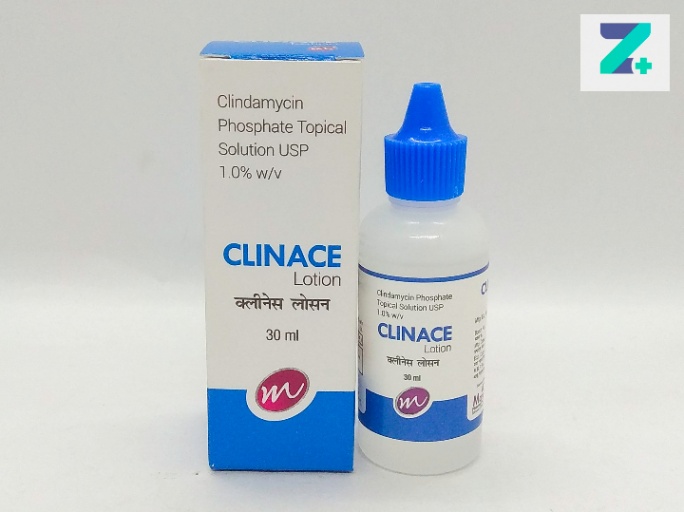
Price: Rs.135.00
10% off
In stock
Loose stock: 0
Description
CLINACE GEL 15GM
Details
Composition
CLINDAMYCIN 1 % W/V
# Clindamycin 1% w/v
## SHORT DESCRIPTION
Clindamycin 1% w/v is a **topical antibiotic** used primarily to treat **acne vulgaris** and other susceptible bacterial skin conditions, depending on the specific formulation. It helps reduce acne-causing bacteria and inflammation in the skin.
Clindamycin topical products are available as solutions, lotions, gels, and other formulations. The exact directions may vary depending on the product.
## KEY BENEFITS
* Helps treat mild to moderate inflammatory acne
* Reduces acne-causing bacteria on the skin
* Helps reduce redness and inflammation associated with acne
* May reduce the formation of new inflammatory acne lesions
* Works directly at the affected skin area
* Can be used as part of an acne treatment regimen prescribed by a healthcare professional
## USES / INDICATIONS
Clindamycin 1% w/v may be used for:
* **Acne vulgaris**
* Inflammatory acne lesions such as papules and pustules
* Certain localized bacterial skin infections when specifically prescribed
Topical clindamycin is generally intended for bacterial skin conditions and **does not treat fungal or viral skin infections**.
## HOW IT WORKS
Clindamycin belongs to the **lincosamide antibiotic** class.
It binds to the **50S subunit of bacterial ribosomes** and inhibits bacterial protein synthesis. This prevents susceptible bacteria from producing proteins needed for growth.
When used for acne, topical clindamycin helps reduce populations of *Cutibacterium acnes* and can decrease the inflammation associated with acne lesions.
## DOSAGE & ADMINISTRATION
* Use Clindamycin 1% w/v exactly as directed by your doctor or according to the product label.
* Clean and gently dry the affected skin before application.
* Apply a thin layer to the affected area, usually **once or twice daily**, depending on the prescribed formulation.
* Avoid applying excessive amounts.
* Wash your hands before and after application unless the hands are being treated.
* Avoid contact with the eyes, mouth, inside of the nose, and other mucous membranes.
* Do not apply to severely irritated or broken skin unless specifically instructed.
* Do not cover treated areas with airtight or occlusive dressings unless directed by your healthcare professional.
### Important for Acne Treatment
Topical antibiotics such as clindamycin are often used with **benzoyl peroxide** to reduce the development of antibiotic resistance. Follow your healthcare professional's treatment plan.
### Missed Dose
Apply the missed dose when you remember unless it is nearly time for the next application. Do not apply extra medicine to compensate.
## SIDE EFFECTS
### Common Side Effects
* Dryness
* Skin irritation
* Redness
* Burning or stinging
* Itching
* Peeling or scaling
* Increased skin sensitivity
### Serious Side Effects
Although uncommon with topical use, clindamycin can rarely cause significant intestinal side effects.
Seek medical attention if you develop:
* Severe or persistent diarrhea
* Watery or bloody stools
* Severe abdominal cramps
* Significant skin swelling or irritation
* Signs of a serious allergic reaction
* Difficulty breathing
* Swelling of the face, lips, tongue, or throat
Antibiotic-associated **Clostridioides difficile colitis** can rarely occur even with topical clindamycin.
## PRECAUTIONS & WARNINGS
Tell your doctor before using Clindamycin 1% w/v if you have:
* A history of antibiotic-associated colitis
* Inflammatory bowel disease
* Ulcerative colitis
* Crohn's disease
* Previous severe diarrhea associated with antibiotics
* An allergy to clindamycin or lincomycin
### Important Safety Information
* **For external use only.**
* Do not swallow the medicine.
* Avoid contact with the eyes and mucous membranes.
* Stop use and seek medical advice if severe diarrhea develops.
* Do not use topical clindamycin unnecessarily or for longer than prescribed.
* Prolonged antibiotic use can contribute to **antibiotic resistance**.
* Avoid using multiple topical acne medicines at the same time unless recommended by your healthcare professional, as this may increase irritation.
* Keep away from children.
## DRUG INTERACTIONS
Because topical clindamycin has relatively limited systemic absorption, significant drug interactions are uncommon. However, inform your doctor if you are using:
* **Erythromycin-containing products** — concurrent topical use is generally avoided because of possible antagonistic effects.
* **Other topical acne medicines** — may increase dryness and skin irritation.
* **Neuromuscular-blocking medicines** — clindamycin may enhance neuromuscular blockade, although this is more relevant to systemic clindamycin.
* Other prescription or non-prescription topical treatments.
Always inform your doctor or pharmacist about all medicines, supplements, and topical products you are using.
## STORAGE INFORMATION
* Store Clindamycin 1% w/v according to the manufacturer's instructions.
* Keep the container tightly closed when not in use.
* Store at room temperature unless the product label specifies otherwise.
* Protect from excessive heat and direct sunlight.
* Keep away from moisture.
* Keep out of the sight and reach of children.
* Do not use after the expiry date.
* Avoid freezing unless the manufacturer specifically permits it.
* Do not use the product if the container is damaged or the solution has changed significantly in appearance.
## PRESCRIPTION STATUS
**Prescription Medicine**
Clindamycin 1% topical preparations are generally prescription medicines, although availability may vary by country and formulation.
Use under the supervision of a qualified healthcare professional.
## GENUINE MEDICINE ASSURANCE
When purchasing Clindamycin 1% w/v:
* Purchase from a licensed and reputable pharmacy.
* Check that the packaging is sealed and intact.
* Verify the medicine name, concentration, and dosage form.
* Check the batch number and expiry date.
* Ensure the product has been stored appropriately.
* Avoid products with damaged, altered, or suspicious packaging.
* Purchase from authorized pharmaceutical suppliers.
* Consult a pharmacist if you have concerns about authenticity or product quality.
## FAQ — FREQUENTLY ASKED QUESTIONS
### What is Clindamycin 1% w/v used for?
Clindamycin 1% w/v is a topical antibiotic primarily used to treat **inflammatory acne** and, depending on the formulation, certain susceptible bacterial skin infections.
### Is Clindamycin 1% an antibiotic?
Yes. Clindamycin is a lincosamide antibiotic that inhibits bacterial protein production.
### How does Clindamycin work for acne?
It reduces susceptible acne-associated bacteria and helps decrease inflammation in the skin, which can reduce inflammatory pimples such as papules and pustules.
### How often should I apply Clindamycin 1%?
The frequency depends on the specific formulation and your prescription. It is commonly applied once or twice daily, but you should follow your doctor's or product label's instructions.
### Can Clindamycin 1% be used every day?
Yes, when prescribed, it can be used daily for the recommended treatment period. Do not use it for longer than directed because prolonged antibiotic use can contribute to resistance.
### How long does topical Clindamycin take to work?
Acne improvement generally takes several weeks. Consistent use is important, and maximum improvement may require longer treatment depending on the severity of acne and other medicines being used.
### Can Clindamycin 1% cure acne permanently?
Clindamycin can help control inflammatory acne but does not necessarily provide a permanent cure. Acne may return after treatment is stopped, and long-term management may require other treatments.
### Can Clindamycin be used with benzoyl peroxide?
Yes. Topical clindamycin is often combined with benzoyl peroxide because benzoyl peroxide can help reduce the development of antibiotic-resistant bacteria.
### Can Clindamycin 1% be used for fungal infections?
No. Clindamycin is an antibiotic and does not treat fungal infections such as ringworm or candidiasis.
### Can Clindamycin be used for viral infections?
No. Clindamycin does not treat viral infections.
### Can Clindamycin cause dry skin?
Yes. Dryness, peeling, redness, burning, and irritation can occur, particularly when combined with other acne treatments.
### Can Clindamycin cause diarrhea?
Although topical absorption is limited, diarrhea can rarely occur. Severe, persistent, or bloody diarrhea should be medically evaluated.
### Can I apply Clindamycin 1% near my eyes?
No. Avoid contact with the eyes. If the product accidentally enters the eyes, rinse thoroughly with clean water.
### Can I use makeup while using Clindamycin?
Generally, makeup can be used if it does not irritate the skin. Choose non-comedogenic products and allow the medicine to absorb before applying other products.
### Can Clindamycin 1% be used during pregnancy?
Discuss topical clindamycin use with your healthcare professional if you are pregnant or planning pregnancy. Your doctor can determine whether it is appropriate for your situation.
### Can Clindamycin 1% be used while breastfeeding?
Consult your healthcare professional before use while breastfeeding. Avoid applying the medicine to the breast or nipple area where it could be ingested by the infant.
### What should I do if I miss an application?
Apply it when you remember unless it is nearly time for the next application. Do not apply an excessive amount to make up for the missed application.
### Can I stop Clindamycin when my acne improves?
Follow your healthcare professional's treatment plan. Do not extend or discontinue antibiotic treatment without discussing it with your doctor.
### Is Clindamycin 1% available without a prescription?
Topical clindamycin is generally a prescription medicine, although regulations may vary by country.
## MEDICAL DISCLAIMER
This information is provided for educational and informational purposes only and is not a substitute for professional medical advice, diagnosis, or treatment. Clindamycin 1% w/v should be used according to the specific product label or as prescribed by a qualified healthcare professional.
Topical clindamycin should not be used unnecessarily or for prolonged periods because inappropriate antibiotic use can contribute to bacterial resistance. Although systemic absorption is limited, serious antibiotic-associated diarrhea and colitis can rarely occur. Seek medical attention for severe or persistent diarrhea, bloody stools, or signs of a serious allergic reaction.