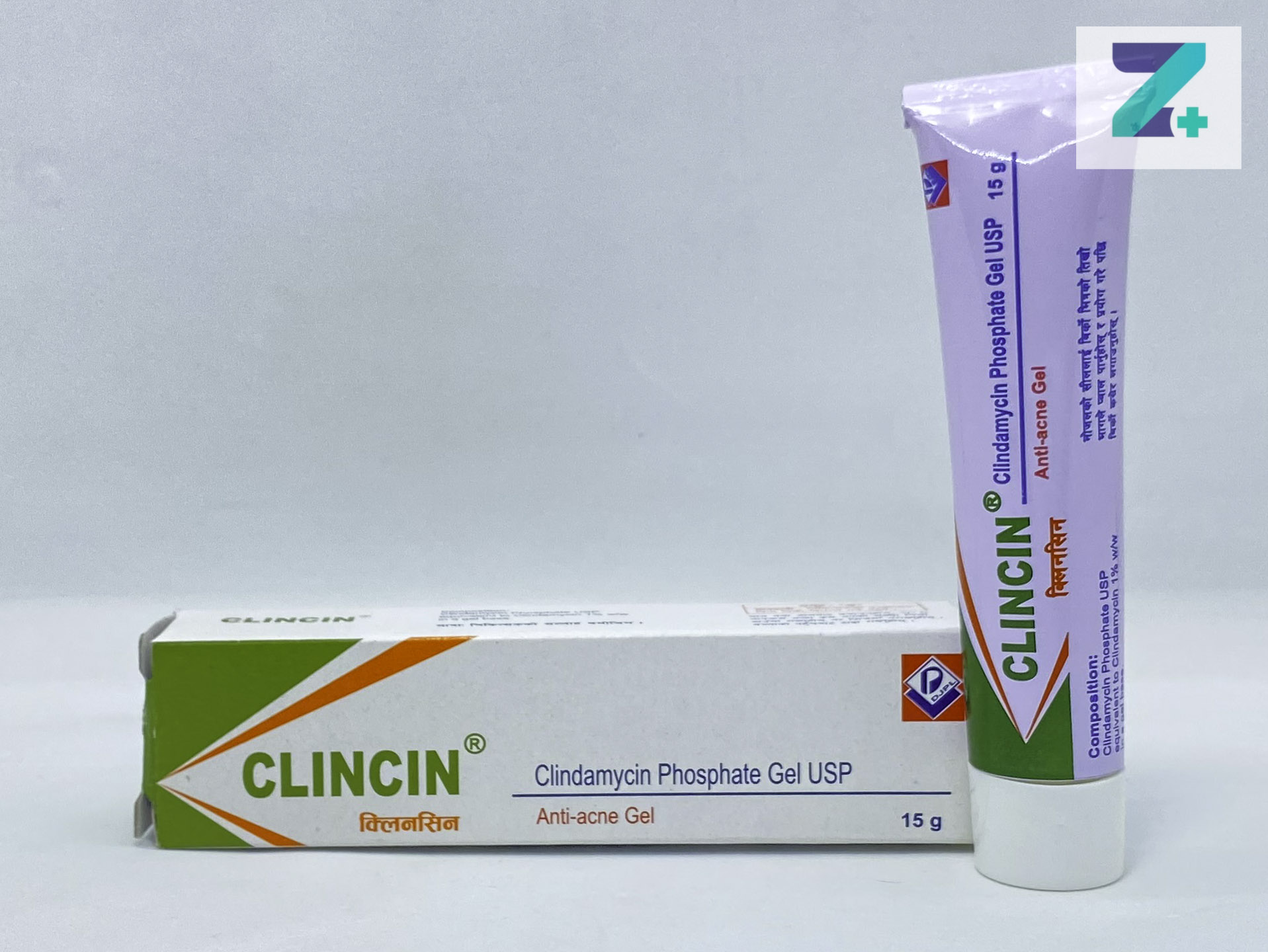
CLINCIN
Price: Rs.135.00
10% off
In stock
Loose stock: 0
Description
CLINCIN GEL 15GM
Details
Composition
CLINDAMYCIN PHOSPHATE 1 % W/W
# Clindamycin Phosphate 1% w/w
## Short Description
**Clindamycin Phosphate 1% w/w** is a **topical antibiotic medicine** used primarily for the treatment of **acne vulgaris** and certain susceptible bacterial skin infections. It works by reducing acne-causing bacteria and decreasing inflammation associated with pimples, helping improve skin clarity and reduce new acne breakouts. Clindamycin phosphate is commonly available as a gel, lotion, solution, or cream and should be used exactly as prescribed to minimize antibiotic resistance.
---
# Key Benefits
- Helps treat mild to moderate acne vulgaris.
- Reduces acne-causing bacteria on the skin.
- Decreases redness, swelling, and inflammation associated with acne.
- Helps prevent the formation of new acne lesions.
- Improves overall skin appearance and texture with regular use.
- Can be used alone or combined with other acne treatments as recommended.
- Convenient topical application directly to affected skin areas.
- Supports long-term acne control when used appropriately.
---
# Uses / Indications
Clindamycin Phosphate 1% w/w is indicated for:
- Acne vulgaris (common acne)
- Inflammatory acne lesions such as papules and pustules
- Bacterial skin infections caused by susceptible bacteria (when prescribed)
- Other dermatological conditions requiring topical antibiotic therapy as determined by a healthcare provider
> **Note:** Clindamycin phosphate does not treat fungal, viral, or non-bacterial skin conditions.
---
# How It Works
Clindamycin phosphate is a **lincosamide antibiotic**.
After application to the skin, it is converted into active Clindamycin, which works by:
- Binding to the **50S subunit of bacterial ribosomes**.
- Blocking bacterial protein production.
- Reducing the growth and multiplication of acne-causing bacteria, especially *Cutibacterium acnes*.
- Decreasing inflammation associated with bacterial activity in acne.
By reducing bacteria and inflammation, Clindamycin helps improve acne lesions and prevent new breakouts.
---
# Dosage & Administration
Always use Clindamycin Phosphate 1% w/w exactly as directed by your healthcare provider.
### General Guidelines
- Clean and dry the affected skin area before application.
- Apply a thin layer to the affected area, usually **once or twice daily**, or as prescribed.
- Avoid applying more than recommended, as excessive use does not improve results and may increase irritation.
- Wash your hands before and after application.
- Avoid contact with eyes, lips, mouth, and broken skin.
- Continue treatment for the prescribed duration, even if acne improves early.
- Use sunscreen during the day if increased skin sensitivity occurs.
### Missed Dose
- Apply the missed dose when you remember.
- If it is close to your next scheduled application, skip the missed dose.
- Do not apply extra medication to compensate for a missed dose.
---
# Side Effects
Like all medicines, Clindamycin Phosphate 1% may cause side effects, although not everyone experiences them.
## Common Side Effects
- Dryness of skin
- Redness
- Burning sensation
- Stinging
- Peeling
- Itching
- Skin irritation
## Less Common Side Effects
- Oily skin
- Contact dermatitis
- Increased skin sensitivity
- Mild rash
## Serious Side Effects (Seek Immediate Medical Attention)
- Severe diarrhea
- Persistent abdominal cramps
- Blood or mucus in stools
- Severe allergic reactions
- Swelling of the face, lips, tongue, or throat
- Difficulty breathing
> **Important:** Although rare with topical use, Clindamycin may be associated with antibiotic-related colitis.
---
# Precautions & Warnings
Before using Clindamycin Phosphate, inform your healthcare provider if you:
- Have a history of colitis or inflammatory bowel disease.
- Are allergic to Clindamycin, Lincomycin, or any ingredient.
- Are pregnant or planning pregnancy.
- Are breastfeeding.
- Have severe skin irritation or eczema.
- Are using multiple acne treatments.
### Important Warnings
- For **external use only**.
- Avoid contact with eyes, mouth, and mucous membranes.
- Do not apply to cuts, wounds, or severely irritated skin.
- Avoid prolonged or unnecessary use to reduce the risk of antibiotic resistance.
- Improvement may require several weeks of consistent treatment.
- Do not stop or change treatment without medical advice if prescribed for a specific duration.
---
# Drug Interactions
Because topical absorption is usually low, significant interactions are uncommon. However, inform your healthcare provider if you are using:
- Other topical antibiotics
- Erythromycin-containing acne products
- Benzoyl peroxide
- Retinoids such as Adapalene or Tretinoin
- Abrasive skin products
- Medicated soaps or exfoliating agents
- Neuromuscular blocking medicines (rare concern with systemic absorption)
### Important Note
Using Clindamycin alone for acne may increase antibiotic resistance. Doctors often recommend combining it with **benzoyl peroxide** or another appropriate acne treatment.
---
# Storage Information
- Store below **25°C** or according to manufacturer instructions.
- Keep away from direct sunlight and excessive heat.
- Do not freeze.
- Keep the container tightly closed after use.
- Keep out of reach of children.
- Do not use after the expiry date.
---
# Prescription Status
**Prescription Only Medicine (Rx)**
Clindamycin Phosphate 1% w/w should be used under the guidance of a qualified healthcare professional.
---
# Genuine Medicine Assurance
We provide **100% genuine, quality-assured medicines** sourced from authorized pharmaceutical manufacturers and licensed distributors. Every product is stored and handled according to recommended pharmaceutical standards to help ensure its safety, quality, and effectiveness.
---
# Frequently Asked Questions (FAQ)
### 1. What is Clindamycin Phosphate 1% used for?
Clindamycin Phosphate 1% is mainly used for treating acne vulgaris by reducing acne-causing bacteria and inflammation. It may also be used for certain bacterial skin infections when prescribed.
### 2. How does Clindamycin Phosphate work for acne?
It reduces the growth of *Cutibacterium acnes* bacteria and decreases inflammation, helping improve pimples and prevent new acne lesions.
### 3. How long does Clindamycin take to show results?
Improvement is usually noticed after **4 to 8 weeks** of regular use, although maximum benefits may take several months depending on acne severity.
### 4. Can Clindamycin Phosphate be used every day?
Yes. It is commonly applied once or twice daily as prescribed by a healthcare provider. Follow the recommended schedule.
### 5. Can I use moisturizer with Clindamycin?
Yes. A non-comedogenic moisturizer can help reduce dryness and irritation while using Clindamycin.
### 6. Can Clindamycin Phosphate cure acne permanently?
No. It helps control acne by reducing bacteria and inflammation but does not permanently cure acne. Continued skincare and maintenance treatment may be needed.
### 7. Can I use Clindamycin with Benzoyl Peroxide?
Yes. Combining Clindamycin with benzoyl peroxide is commonly recommended because it improves acne treatment effectiveness and helps reduce antibiotic resistance.
### 8. Can Clindamycin Phosphate cause dryness?
Yes. Dryness, peeling, redness, and irritation may occur, especially during the first few weeks of treatment.
### 9. Can I apply Clindamycin on my whole face?
Apply only as directed by your healthcare provider. For acne treatment, it is usually applied as a thin layer over acne-prone areas rather than only individual pimples.
### 10. Is Clindamycin Phosphate safe during pregnancy?
Use during pregnancy only if recommended by your healthcare provider after evaluating the potential benefits and risks.
### 11. What should I do if I miss an application?
Apply it when you remember unless it is close to the next application time. Do not apply extra medication.
### 12. Can I use makeup while applying Clindamycin?
Yes. Use non-comedogenic makeup and allow the medication to absorb before applying cosmetics.
### 13. How should Clindamycin Phosphate be stored?
Store below **25°C**, protect from heat and sunlight, keep tightly closed, and keep away from children.
### 14. When should I stop using Clindamycin and seek medical help?
Seek medical advice if you develop severe diarrhea, abdominal cramps, blood in stools, severe allergic reactions, facial swelling, or breathing difficulty.
---
# Medical Disclaimer
The information provided on this page is intended for **educational and informational purposes only** and should not replace professional medical advice, diagnosis, or treatment. Always consult a qualified healthcare provider before starting, stopping, or changing any medication. **Clindamycin Phosphate 1% w/w** should only be used as directed by a licensed healthcare professional. Seek immediate medical attention if you experience severe allergic reactions, persistent diarrhea, or any serious adverse effects.