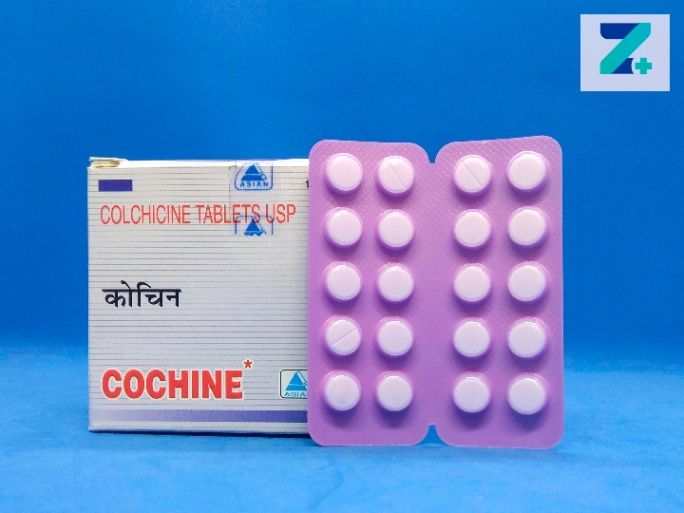
COCHINE
Price: Rs.55.00
10% off
In stock
Loose stock: 5
Description
COCHINE TAB 10
Details
Composition
COLCHICINE 0.5 MG
# Colchicine 0.5 mg
## Short Description
**Colchicine 0.5 mg** is an anti-inflammatory medicine primarily used to prevent and treat **gout flares** and to prevent gout attacks when starting urate-lowering therapy. It may also be prescribed for **familial Mediterranean fever (FMF)** and certain other inflammatory conditions when clinically appropriate.
Colchicine does **not** lower uric acid levels. Instead, it reduces the inflammatory response caused by urate crystals.
> **Important:** Colchicine has a **narrow therapeutic range**, meaning the difference between an effective dose and a toxic dose can be small. Take it exactly as prescribed and never exceed the recommended dose.
---
## Key Benefits
* Helps relieve inflammation associated with **acute gout flares**
* Helps prevent recurrent gout attacks
* May be used to prevent gout flares when starting uric-acid-lowering medicines
* Can be used for **familial Mediterranean fever (FMF)** when prescribed
* Reduces inflammation caused by urate crystal deposition
* Available in a convenient **0.5 mg strength** for individualized dosing
---
## Uses / Indications
### **Acute Gout Flares**
Colchicine may be prescribed early during an acute gout attack to reduce inflammation, pain, swelling, and tenderness caused by urate crystals.
### **Prevention of Gout Flares**
Low-dose colchicine may be used to prevent recurrent attacks of gout, particularly when starting or adjusting medicines such as:
* Allopurinol
* Febuxostat
* Other urate-lowering therapies
### **Familial Mediterranean Fever**
Colchicine is an established treatment for **familial Mediterranean fever (FMF)** and can help reduce inflammatory attacks and complications associated with the condition.
### Other Uses
Doctors may prescribe colchicine for certain other inflammatory conditions based on clinical judgment and local treatment guidelines.
---
## How It Works
Colchicine works by interfering with **microtubules**, structures that are important for the movement and activity of inflammatory cells.
During a gout attack, urate crystals can trigger an intense inflammatory response.
**Urate crystals → activate inflammatory cells → inflammation and pain**
Colchicine interferes with inflammatory cell activity and reduces the inflammatory response.
**Colchicine → disrupts microtubule function → reduces inflammatory cell activity → decreases gout-related inflammation**
Colchicine **does not dissolve uric acid crystals and does not directly lower blood uric acid levels**.
---
## Dosage & Administration
> **Important:** Colchicine dosing varies considerably depending on the condition, kidney/liver function, age, other medicines, and the specific product. Follow your prescription exactly.
### For Acute Gout
Colchicine is most effective when started **early after symptoms begin**.
The exact acute-gout regimen depends on the formulation and local prescribing information. Do not repeatedly take additional doses simply because pain continues.
### For Prevention of Gout Flares
A healthcare professional may prescribe a low daily dose, such as **0.5 mg once or twice daily**, depending on the patient's circumstances.
### Familial Mediterranean Fever
The dose is individualized according to:
* Age
* Disease severity
* Kidney function
* Liver function
* Response to treatment
### How to Take Colchicine
* Take exactly as prescribed.
* Swallow the tablet with water.
* It can generally be taken with or without food.
* Taking it with food may help reduce stomach irritation in some people.
* Do not increase the dose without medical advice.
### Kidney or Liver Impairment
Patients with kidney or liver disease may require dose reduction or increased monitoring.
Some combinations of kidney/liver impairment and interacting medicines may make colchicine **unsafe**.
### Missed Dose
For preventive treatment, take the missed dose when remembered unless it is nearly time for the next dose.
**Do not double the dose.**
If colchicine is being used for an acute gout attack, follow the specific instructions provided by your healthcare professional.
---
## Side Effects
### Common Side Effects
The most common adverse effects are gastrointestinal and may include:
* Diarrhea
* Nausea
* Vomiting
* Abdominal pain
* Stomach discomfort
**Diarrhea can be an early warning sign of colchicine toxicity**, particularly if it is severe or persistent.
### Serious Side Effects
High levels of colchicine can cause serious toxicity, including:
* Severe vomiting or diarrhea
* Muscle weakness
* Muscle pain
* Numbness or tingling
* Bone marrow suppression
* Unusual bruising or bleeding
* Severe infection
* Kidney problems
* Liver problems
* Nerve damage
* Severe muscle injury (**rhabdomyolysis**)
* Multiple-organ failure
Colchicine overdose can be **life-threatening**.
Seek urgent medical attention if you suspect an overdose.
---
## Precautions & Warnings
### Narrow Therapeutic Range
Colchicine has a narrow safety margin. Taking more than prescribed can result in severe or fatal toxicity.
**Never take extra colchicine to obtain faster relief.**
### Kidney Disease
People with impaired kidney function may accumulate colchicine and have a higher risk of toxicity.
Tell your doctor if you have kidney disease or are receiving dialysis.
### Liver Disease
Liver impairment can increase the risk of colchicine accumulation and toxicity.
### Older Adults
Older adults may have a higher risk of muscle and nerve toxicity, particularly when kidney function is reduced or interacting medicines are being taken.
### Blood Disorders
Long-term or excessive colchicine exposure can suppress bone marrow and reduce blood-cell production.
Tell your healthcare professional if you develop:
* Unexplained bruising
* Bleeding
* Persistent fever
* Sore throat
* Unusual infections
* Severe weakness
### Muscle Toxicity
Colchicine can rarely cause muscle injury or weakness, especially in patients with kidney disease or those taking certain interacting medicines.
Report unexplained muscle pain, tenderness, or weakness.
### Pregnancy
If you are pregnant or planning pregnancy, discuss colchicine treatment with your healthcare professional.
### Breastfeeding
Colchicine can pass into breast milk. Discuss its use with your healthcare professional if you are breastfeeding.
### Dehydration
Severe vomiting or diarrhea can worsen dehydration and increase the risk of complications.
---
## Drug Interactions
Colchicine has several clinically important drug interactions.
### Clarithromycin and Erythromycin
Macrolide antibiotics such as **clarithromycin** and erythromycin can increase colchicine concentrations and significantly increase the risk of toxicity.
The combination may be contraindicated in some patients, particularly those with kidney or liver impairment.
### Strong CYP3A4 Inhibitors
Medicines that strongly inhibit CYP3A4 can increase colchicine levels.
Examples include certain:
* Antifungal medicines
* Macrolide antibiotics
* HIV medicines
### P-glycoprotein (P-gp) Inhibitors
Medicines such as **cyclosporine** and certain other P-gp inhibitors can substantially increase colchicine exposure.
### Statins
Combining colchicine with statins may increase the risk of **muscle toxicity**, including myopathy or rhabdomyolysis.
Examples include:
* Atorvastatin
* Simvastatin
* Rosuvastatin
This does not mean they can never be used together, but medical monitoring may be necessary.
### Other Medicines That Affect the Liver or Kidneys
Certain medicines may increase the risk of colchicine toxicity, especially in patients with impaired kidney or liver function.
Always tell your doctor about **all prescription medicines, over-the-counter medicines, vitamins, and herbal supplements** you take.
---
## Storage Information
* Store colchicine according to the manufacturer's recommended temperature.
* Keep tablets in the original packaging.
* Protect from excessive heat and moisture.
* Keep away from direct sunlight.
* Keep out of reach and sight of children.
* Do not use after the expiry date.
* Do not use tablets from damaged or tampered packaging.
---
## Prescription Status
**Colchicine 0.5 mg is generally a prescription medicine**, although legal classification can vary between countries.
Because colchicine can cause serious toxicity when overdosed or combined with certain medicines, it should be used according to professional medical advice.
---
## Genuine Medicine Assurance
When purchasing **Colchicine 0.5 mg**:
* Purchase from a **licensed pharmacy or authorized medicine supplier**.
* Check the medicine name and strength.
* Verify the manufacturer's information.
* Check the batch/lot number and expiry date.
* Ensure the packaging and seal are intact.
* Avoid medicines from unauthorized or suspicious sources.
* Do not use tablets from damaged or tampered packaging.
* If authenticity is uncertain, ask a pharmacist or contact the manufacturer using the information printed on the package.
---
# FAQ – Colchicine 0.5 mg
### 1. What is Colchicine 0.5 mg used for?
Colchicine 0.5 mg is mainly used to **prevent or treat gout flares**. It may also be prescribed for familial Mediterranean fever and certain other inflammatory conditions.
### 2. Does Colchicine reduce uric acid?
No. Colchicine **does not lower uric acid levels**. It reduces the inflammation caused by urate crystals.
### 3. Is Colchicine a painkiller?
No. Colchicine is an **anti-inflammatory medicine** rather than a conventional painkiller. It reduces gout-related inflammation, which can subsequently relieve pain and swelling.
### 4. How does Colchicine work for gout?
It interferes with microtubule function and reduces the activity of inflammatory cells responding to urate crystals.
### 5. Can Colchicine stop a gout attack?
Colchicine can reduce the inflammation and symptoms of an acute gout flare, especially when started early, when appropriately prescribed.
### 6. Can I take Colchicine every day?
Yes, low-dose colchicine may be prescribed daily to prevent gout attacks or for conditions such as familial Mediterranean fever. The dose and duration must be determined by your healthcare professional.
### 7. Is 0.5 mg a low dose of Colchicine?
Yes. **0.5 mg is a commonly available low-strength tablet** and may be used for preventive therapy or individualized dosing.
### 8. Can I take Colchicine with Allopurinol?
Yes. Colchicine is sometimes prescribed alongside **allopurinol** when starting urate-lowering treatment to help prevent gout flares.
### 9. Can I take Colchicine with Febuxostat?
Yes, colchicine may be used with febuxostat as flare prevention when initiating or adjusting urate-lowering therapy, if prescribed by a healthcare professional.
### 10. What is the most common side effect of Colchicine?
**Diarrhea** is one of the most common side effects. Nausea, vomiting, and abdominal pain can also occur.
### 11. Is diarrhea from Colchicine serious?
Severe or persistent diarrhea can be a warning sign of **colchicine toxicity**, particularly if accompanied by vomiting, weakness, or other symptoms. Contact a healthcare professional promptly.
### 12. Can Colchicine damage the kidneys?
Colchicine toxicity can cause serious complications, and people with kidney impairment are at increased risk because the medicine may accumulate. Dose adjustment and monitoring may be necessary.
### 13. Can Colchicine cause muscle weakness?
Yes. Muscle pain, weakness, and rarely severe muscle injury can occur, particularly in patients with kidney disease or those taking interacting medicines.
### 14. Can I take Colchicine with a statin?
Sometimes, but the combination may increase the risk of muscle toxicity. Tell your doctor if you take medicines such as atorvastatin, simvastatin, or rosuvastatin.
### 15. Can I take Colchicine with antibiotics?
Some antibiotics, particularly **clarithromycin and erythromycin**, can significantly increase colchicine levels and may cause dangerous toxicity. Always check with your doctor or pharmacist before combining them.
### 16. Can I drink alcohol while taking Colchicine?
Alcohol does not have the same direct interaction as some medicines, but excessive alcohol can worsen gout and dehydration. Discuss alcohol consumption with your healthcare professional.
### 17. Can Colchicine be taken during pregnancy?
Discuss colchicine use with your healthcare professional if you are pregnant or planning pregnancy. Treatment should be based on an individual assessment of benefits and risks.
### 18. Can I take Colchicine while breastfeeding?
Colchicine can pass into breast milk. Discuss its use with your doctor before breastfeeding while taking this medicine.
### 19. What happens if I take too much Colchicine?
Colchicine overdose can cause **severe and potentially life-threatening poisoning**, including vomiting, diarrhea, bone marrow suppression, muscle injury, organ failure, and cardiovascular complications.
Seek emergency medical attention immediately if an overdose is suspected.
### 20. Can I take extra Colchicine if my gout pain is severe?
**No.** Never exceed the prescribed dose. Colchicine has a narrow therapeutic range, and taking extra tablets can cause serious or fatal toxicity.
### 21. Does Colchicine cure gout permanently?
No. Colchicine controls inflammation and helps prevent flares but does **not remove the underlying excess uric acid**. Long-term gout management may require urate-lowering treatment and lifestyle measures.
### 22. How long can I take Colchicine?
The duration depends on the reason for treatment. Some people use it short-term for an acute flare, while others take a lower dose for longer-term prevention under medical supervision.
### 23. What should I do if I miss a Colchicine dose?
For preventive treatment, take it when remembered unless it is nearly time for the next dose. **Do not double the dose.**
### 24. Can elderly people take Colchicine?
Older adults may take colchicine when appropriate, but they may have an increased risk of toxicity, especially with kidney impairment or interacting medicines. Careful dosing is important.
### 25. Is Colchicine 0.5 mg available without a prescription?
Colchicine is generally a **prescription medicine**, although its legal status varies between countries.
---
## Medical Disclaimer
This information about **Colchicine 0.5 mg** is provided for **educational and informational purposes only** and is not a substitute for professional medical advice, diagnosis, or treatment.
Colchicine has a **narrow therapeutic range**, and overdose can be extremely dangerous or fatal. Do not take more than the prescribed amount, even if gout pain continues. Certain medicines—including some antibiotics, antifungals, immunosuppressants, and other drugs that affect CYP3A4 or P-glycoprotein—can substantially increase colchicine toxicity.
Patients with kidney or liver disease may require dose adjustments or may need to avoid certain combinations. Seek urgent medical attention if an overdose is suspected or if severe vomiting/diarrhea, muscle weakness, unusual bleeding, severe weakness, difficulty breathing, or other serious symptoms develop.
Always follow the prescribing information supplied with your specific product and the instructions of your healthcare professional.