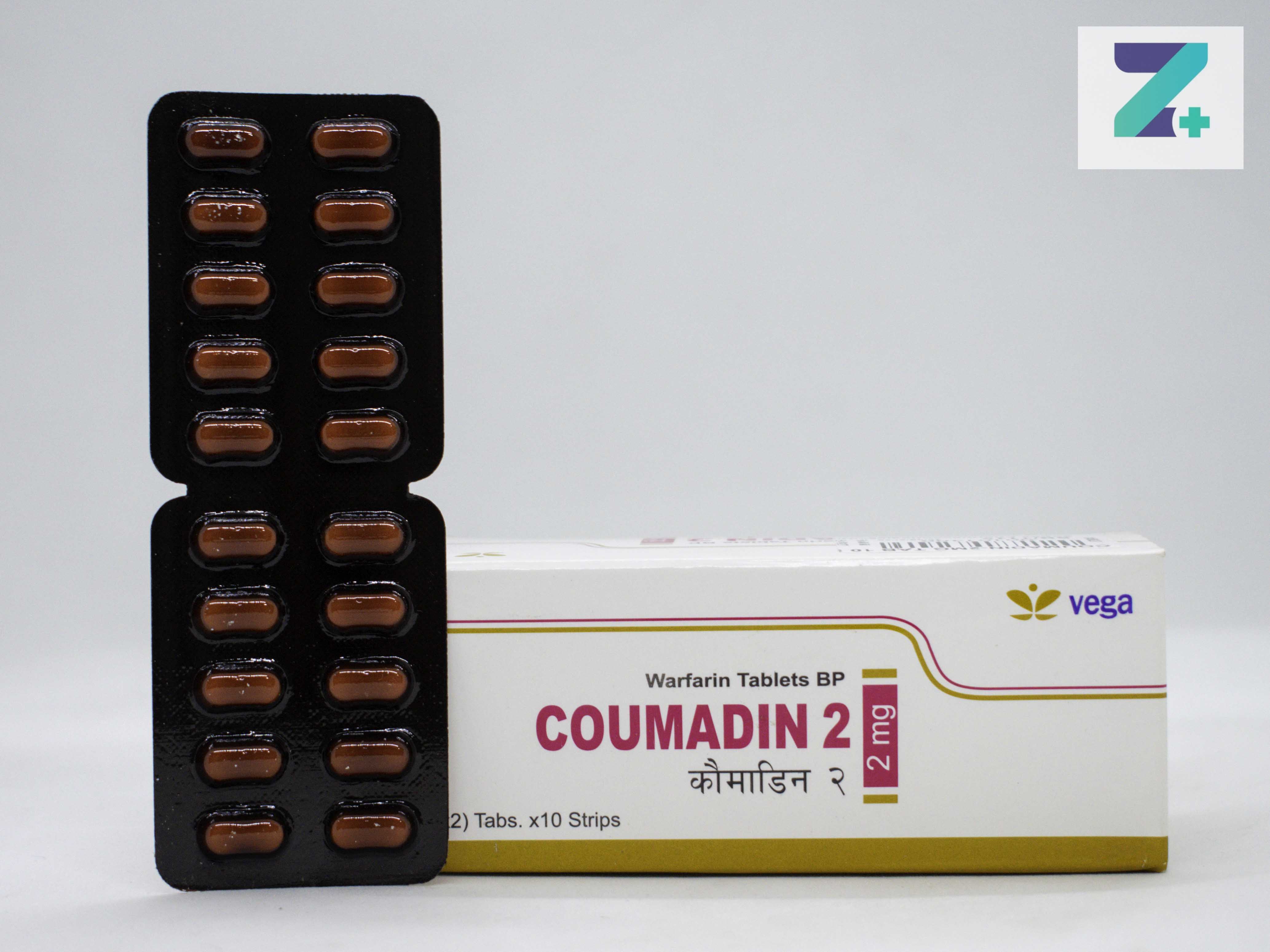
COUMADIN-2MG
Price: Rs.40.00
15% off
In stock
Loose stock: 0
Description
COUMADIN-2MG TAB 10
Details
Composition
WARFARIN 2 MG
# WARFARIN 2 MG
## SHORT DESCRIPTION
**Warfarin 2 mg** is an oral **anticoagulant (blood thinner)** used to reduce the formation of harmful blood clots. It is a vitamin K antagonist that interferes with the body's production of several clotting factors.
Warfarin may be prescribed to prevent and treat conditions such as **deep vein thrombosis (DVT), pulmonary embolism (PE), and blood clots associated with certain heart conditions**, including selected patients with atrial fibrillation or mechanical heart valves.
> **Important:** Warfarin has a **narrow therapeutic range**. The correct dose varies significantly between individuals and must be guided by regular blood tests, particularly the **INR (International Normalized Ratio)**.
---
## KEY BENEFITS
* Helps **prevent harmful blood clots** from forming.
* Used to treat certain existing blood-clot conditions.
* Helps reduce the risk of **stroke and systemic embolism** in appropriate patients with atrial fibrillation.
* Helps prevent clot formation in people with certain **mechanical heart valves**.
* Can be used for prevention and treatment of **DVT and pulmonary embolism**.
* Provides adjustable anticoagulation based on INR monitoring.
> Warfarin does **not dissolve an existing clot directly**. It prevents the clot from growing and reduces the formation of new clots while the body gradually processes the existing clot.
---
## USES / INDICATIONS
### 1. Deep Vein Thrombosis (DVT)
Warfarin can be used to treat and prevent recurrence of blood clots in deep veins, commonly in the legs.
### 2. Pulmonary Embolism (PE)
It may be used to prevent and treat blood clots that travel to the lungs.
### 3. Atrial Fibrillation
In selected patients with **atrial fibrillation**, warfarin reduces the risk of blood clots that can lead to ischemic stroke.
### 4. Mechanical Heart Valves
Warfarin is commonly required for patients with certain **mechanical prosthetic heart valves** because these valves can increase the risk of clot formation.
### 5. Other Thromboembolic Conditions
Depending on the patient's condition, risk factors, and clinical guidelines, warfarin may be prescribed for other thromboembolic disorders.
---
## HOW IT WORKS
Warfarin is a **vitamin K antagonist**.
Vitamin K is required by the liver to produce several important clotting factors, including:
* Factor II
* Factor VII
* Factor IX
* Factor X
Warfarin inhibits **vitamin K epoxide reductase**, reducing the recycling of active vitamin K.
This decreases the production of vitamin-K-dependent clotting factors and makes the blood **less likely to form clots**.
### Simple Explanation
**Warfarin → reduces active vitamin K → decreases clotting-factor production → reduces blood clot formation**
Because existing clotting factors must naturally disappear from the bloodstream, warfarin does not produce its full anticoagulant effect immediately.
---
## DOSAGE & ADMINISTRATION
### Important: Individualized Dosing
There is **no single standard dose of warfarin that is appropriate for everyone**.
Although this product contains **2 mg warfarin**, the prescribed daily dose may be different and may change over time according to INR results.
Your healthcare professional may prescribe different tablet strengths or combinations to achieve the required dose.
### INR Monitoring
Warfarin treatment requires regular blood tests to measure the **INR**.
The target INR depends on the condition being treated.
For many indications, the target is commonly around **2.0–3.0**, while certain mechanical heart valves may require a different target.
**Always follow the INR target given by your anticoagulation clinic or doctor.**
### How to Take
* Take warfarin exactly as prescribed.
* Take it at approximately the **same time every day**.
* Many patients are advised to take it in the evening so that dose adjustments can be made after INR testing, but follow your prescriber's instructions.
* Swallow with water.
* Do not change your dose based on how you feel.
* Do not stop warfarin without medical advice.
### Missed Dose
If you remember a missed dose **on the same day**, take it when remembered unless your healthcare professional has given different instructions.
If you do not remember until the following day, **do not double the dose**.
Contact your anticoagulation clinic or healthcare professional if you are unsure what to do.
### Never Double Warfarin
Taking an extra dose can significantly increase the risk of serious bleeding.
---
## SIDE EFFECTS
### Common Side Effect
The most important adverse effect of warfarin is **bleeding**.
Possible symptoms include:
* Easy bruising
* Nosebleeds
* Bleeding gums
* Prolonged bleeding from minor cuts
* Heavier menstrual bleeding
* Blood in urine
* Blood in stool
### Serious Bleeding
Seek urgent medical attention for:
* Vomiting blood
* Coughing up blood
* Black, tarry stools
* Heavy or uncontrolled bleeding
* Severe headache
* Sudden weakness
* Sudden confusion
* Severe dizziness or fainting
* Unexplained large bruises
### Other Possible Side Effects
Rarely, warfarin may cause:
* Skin or tissue necrosis
* Purple or painful discoloration of toes
* Hair loss
* Nausea
* Abdominal discomfort
Warfarin-related skin necrosis is rare but serious and requires immediate medical attention.
---
## PRECAUTIONS & WARNINGS
### Bleeding Risk
Warfarin significantly increases bleeding risk.
Contact your healthcare professional if you experience unusual or persistent bleeding.
### Regular INR Testing
Regular INR monitoring is essential.
An INR that is:
* **Too low** → may mean insufficient anticoagulation and increased clot risk.
* **Too high** → may mean excessive anticoagulation and increased bleeding risk.
### Surgery and Dental Procedures
Tell your doctor, dentist, or surgeon that you take warfarin before:
* Surgery
* Dental procedures
* Invasive procedures
Do not stop warfarin on your own.
### Injury or Head Trauma
Because warfarin increases bleeding risk, seek prompt medical evaluation after a significant head injury, even if you initially feel well.
### Diet and Vitamin K
You do **not usually need to avoid vitamin-K-containing foods completely**.
However, large or sudden changes in vitamin K intake can affect INR.
Foods high in vitamin K include:
* Spinach
* Kale
* Broccoli
* Cabbage
* Other dark green leafy vegetables
The key is to maintain a **consistent dietary pattern** and inform your healthcare professional about major dietary changes.
### Alcohol
Alcohol can affect warfarin metabolism and increase bleeding risk.
Avoid excessive alcohol consumption and discuss alcohol use with your healthcare professional.
### Pregnancy
Warfarin can cause serious fetal harm and is **generally contraindicated during pregnancy**, except in selected circumstances where specialist management determines that the benefits outweigh the risks.
Women who may become pregnant should discuss contraception and pregnancy planning with their healthcare professional.
### Breastfeeding
Warfarin is generally considered compatible with breastfeeding, but treatment should still be managed by a healthcare professional.
---
## DRUG INTERACTIONS
Warfarin interacts with **many medicines, supplements, and foods**.
### Antibiotics
Several antibiotics can significantly alter INR and bleeding risk, including some:
* Macrolides
* Fluoroquinolones
* Sulfonamides
* Other broad-spectrum antibiotics
Additional INR monitoring may be required.
### NSAIDs
Medicines such as:
* Ibuprofen
* Naproxen
* Diclofenac
* Aspirin
may increase bleeding risk, particularly when used without medical supervision.
### Antiplatelet Medicines
Medicines such as:
* Clopidogrel
* Aspirin
can increase bleeding risk when combined with warfarin.
### Other Anticoagulants
Combining warfarin with other anticoagulants can substantially increase bleeding risk and should only occur under specific medical instructions.
### Antidepressants
Some antidepressants, particularly certain SSRIs and SNRIs, may increase bleeding risk or alter warfarin effects.
### Amiodarone
**Amiodarone** can significantly increase the effect of warfarin and often requires warfarin dose adjustment and closer INR monitoring.
### Antifungal Medicines
Some antifungal medicines can substantially increase warfarin effects.
### Herbal and Dietary Supplements
Potential interactions include:
* Ginkgo
* Garlic supplements
* Ginseng
* St. John's wort
* Vitamin K supplements
Do not start or stop herbal supplements without discussing them with your healthcare professional.
### Cranberry and Other Foods
Large changes in consumption of certain foods or beverages may affect INR in some individuals. Maintain consistency and discuss significant dietary changes with your anticoagulation team.
---
## STORAGE INFORMATION
* Store Warfarin 2 mg according to the manufacturer's instructions.
* Keep tablets in the original packaging.
* Protect from excessive heat, moisture, and direct sunlight.
* Keep the medicine securely stored away from children.
* Keep the container tightly closed where applicable.
* Do not use after the expiry date.
* Do not use tablets if the packaging is damaged or appears tampered with.
---
## PRESCRIPTION STATUS
**Prescription Medicine**
Warfarin 2 mg is a **prescription-only anticoagulant**.
It requires medical supervision and regular **INR blood testing** to ensure that anticoagulation remains within the appropriate therapeutic range.
---
## GENUINE MEDICINE ASSURANCE
For safe treatment, purchase **Warfarin 2 mg** only from a licensed pharmacy or authorized medicine supplier.
Before use, verify:
* Product name and strength
* Active ingredient
* Manufacturer
* Batch/lot number
* Manufacturing and expiry dates
* Packaging and seal integrity
* Regulatory information where applicable
Because warfarin is a high-risk medicine, do not use tablets obtained from an unverified source.
Do not use the product if it is:
* Expired
* Damaged
* Tampered with
* Missing batch or expiry information
* Unusual in appearance
If authenticity is uncertain, consult a licensed pharmacist or relevant medicine regulatory authority.
---
# FAQ – WARFARIN 2 MG
### 1. What is Warfarin 2 mg used for?
Warfarin 2 mg is an anticoagulant used to **prevent and treat certain blood clots**, including DVT and pulmonary embolism, and to reduce clot-related stroke risk in selected patients with atrial fibrillation or mechanical heart valves.
### 2. Is Warfarin a blood thinner?
Yes. Warfarin is commonly called a **blood thinner**, although it does not literally make the blood thinner. It reduces the blood's ability to form clots.
### 3. How does Warfarin work?
Warfarin blocks the recycling of **vitamin K**, reducing the liver's production of several clotting factors and making blood less likely to form harmful clots.
### 4. Is Warfarin 2 mg a high dose?
The 2 mg tablet is a **tablet strength**, not necessarily the patient's daily dose. Warfarin dosing is individualized and may be adjusted according to INR results.
### 5. Why do I need an INR test while taking Warfarin?
INR testing measures how strongly warfarin is affecting blood clotting. It helps doctors adjust the dose to maintain effective anticoagulation while minimizing bleeding risk.
### 6. What is the normal INR range while taking Warfarin?
The target depends on the condition. For many indications it is approximately **2.0–3.0**, while certain mechanical heart valves may require different targets.
### 7. Can Warfarin dissolve an existing blood clot?
No. Warfarin does not directly dissolve clots. It prevents new clots and prevents existing clots from growing while the body's natural clot-removal mechanisms work.
### 8. Can Warfarin prevent stroke?
Yes. In appropriate patients with conditions such as **atrial fibrillation or certain mechanical heart valves**, warfarin can significantly reduce the risk of clot-related stroke.
### 9. Can I stop Warfarin when I feel better?
No. Stopping warfarin without medical advice can increase the risk of serious blood clots and stroke.
### 10. Can Warfarin be stopped suddenly?
Warfarin should only be stopped according to your healthcare professional's instructions. Do not discontinue it on your own.
### 11. What happens if I miss a Warfarin dose?
If you remember the missed dose on the same day, take it as instructed by your anticoagulation team. If you remember the following day, generally **do not double the dose**. Contact your healthcare professional if uncertain.
### 12. Can I take Warfarin with Paracetamol?
Occasional paracetamol may sometimes be used with warfarin, but regular or high-dose use can affect INR in some patients. Discuss frequent use with your healthcare professional.
### 13. Can I take Ibuprofen with Warfarin?
Ibuprofen and other NSAIDs can significantly increase bleeding risk when combined with warfarin. **Do not regularly take ibuprofen without medical advice.**
### 14. Can I eat green vegetables while taking Warfarin?
Yes. You generally do not need to avoid green vegetables. However, maintain a **consistent intake of vitamin-K-rich foods** rather than making sudden large dietary changes.
### 15. Can I drink alcohol while taking Warfarin?
Alcohol can affect warfarin and increase bleeding risk. Avoid excessive alcohol and discuss your alcohol intake with your healthcare professional.
### 16. Can Warfarin be taken during pregnancy?
Warfarin can cause serious fetal harm and is generally avoided during pregnancy except in selected situations requiring specialist management.
### 17. Can Warfarin be taken while breastfeeding?
Warfarin is generally considered compatible with breastfeeding, but treatment should remain under medical supervision.
### 18. Can Warfarin cause bleeding?
Yes. **Bleeding is the most important potential complication** of warfarin therapy.
### 19. What are signs of dangerous bleeding with Warfarin?
Warning signs include:
* Black stools
* Vomiting blood
* Blood in urine
* Severe unexplained bruising
* Uncontrolled bleeding
* Severe headache
* Sudden weakness or confusion
Seek urgent medical attention if these occur.
### 20. What should I do after a head injury while taking Warfarin?
Because warfarin increases bleeding risk, seek **prompt medical evaluation after significant head trauma**, even if you initially feel well.
### 21. Can antibiotics affect Warfarin?
Yes. Many antibiotics can alter warfarin's effect and may cause the INR to rise or fall. Additional INR monitoring may be necessary.
### 22. Can Warfarin interact with herbal supplements?
Yes. Several herbal products can affect warfarin's anticoagulant effect or bleeding risk. Always tell your healthcare professional about supplements.
### 23. Is Warfarin the same as aspirin?
No. Warfarin is an **anticoagulant**, while aspirin is primarily an **antiplatelet medicine**. They work differently and should not be substituted for one another without medical advice.
### 24. Is Warfarin 2 mg available without a prescription?
No. Warfarin is generally a **prescription-only medicine** because it requires individualized dosing and regular INR monitoring.
### 25. How long do I need to take Warfarin?
Treatment duration varies widely. Some people need warfarin for several months, while others—such as certain patients with mechanical heart valves—may require **long-term or lifelong anticoagulation**.
---
## MEDICAL DISCLAIMER
This information about **Warfarin 2 mg** is provided for general educational and informational purposes only. It is **not a substitute for professional medical advice, diagnosis, treatment, or individualized anticoagulation management**.
Warfarin is a **high-risk prescription medicine** with a narrow therapeutic range. The correct dose is individualized according to the patient's medical condition, medications, diet, genetics, and INR results.
**Do not start, stop, skip, or change your Warfarin dose without medical advice.** Maintain regular INR monitoring and inform your healthcare professional before starting or stopping any prescription medicine, OTC medicine, vitamin, herbal product, or major dietary change.
Seek **urgent medical attention** for uncontrolled bleeding, vomiting blood, black stools, blood in urine, severe unexplained bruising, severe headache, sudden weakness/confusion, or significant injury—particularly head trauma.
**Always follow the instructions of your prescribing doctor or anticoagulation clinic and read the product label/package insert carefully.**