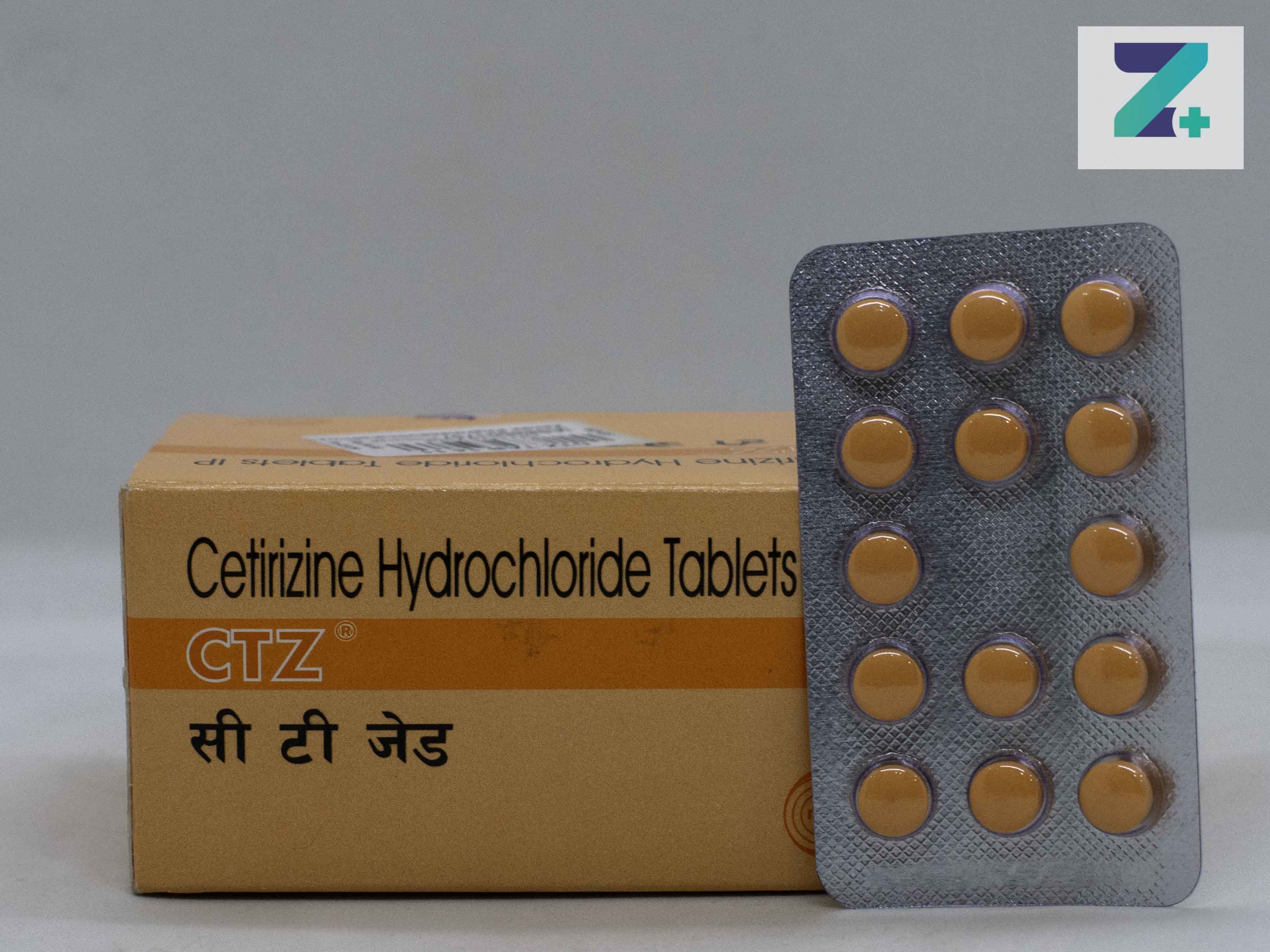
CTZ
Price: Rs.56.00
10% off
In stock
Loose stock: 3
Description
CTZ TAB 14
Details
Composition
CETIRIZINE 10 MG
# CETIRIZINE 10 MG
## SHORT DESCRIPTION
**Cetirizine 10 mg** is a second-generation **antihistamine** used to relieve symptoms of allergies such as sneezing, runny nose, itchy or watery eyes, and itching of the nose or throat. It is also commonly used to relieve **urticaria (hives)** and associated itching.
Cetirizine works by blocking the effects of **histamine**, a substance released during allergic reactions. It generally causes less drowsiness than older antihistamines, although **sleepiness can still occur** in some people.
---
## KEY BENEFITS
* Provides relief from **allergy symptoms**.
* Helps reduce **sneezing and runny nose**.
* Relieves **itchy or watery eyes** associated with allergies.
* Helps relieve **nose and throat itching**.
* Reduces **skin itching and hives (urticaria)**.
* Usually provides approximately **24-hour symptom relief** with once-daily dosing in adults.
* Generally causes less sedation than many first-generation antihistamines.
---
## USES / INDICATIONS
Cetirizine 10 mg may be used for:
### Allergic Rhinitis
It can relieve symptoms of:
* Seasonal allergic rhinitis (hay fever)
* Perennial allergic rhinitis
* Sneezing
* Runny or itchy nose
* Itchy or watery eyes
### Urticaria
Cetirizine may be used to relieve:
* Hives
* Skin itching
* Redness associated with allergic skin reactions
### Other Allergic Conditions
It may be recommended for certain other **histamine-mediated allergic symptoms** according to a healthcare professional's advice.
> Cetirizine does not treat the underlying cause of an allergy and does not cure infections such as the common cold.
---
## HOW IT WORKS
Cetirizine is a **selective H1 antihistamine**.
During an allergic reaction, the body releases histamine, which binds to H1 receptors and contributes to symptoms such as:
* Sneezing
* Itching
* Runny nose
* Watery eyes
* Skin hives
Cetirizine blocks H1 histamine receptors, reducing the effects of histamine and therefore relieving allergic symptoms.
Because cetirizine has relatively limited penetration into the brain compared with older antihistamines, it generally causes **less sedation**, although drowsiness remains possible.
---
## DOSAGE & ADMINISTRATION
### Adults and Adolescents 12 Years and Older
The usual dose is:
**10 mg once daily.**
Some people with mild symptoms may obtain adequate relief with a lower dose.
### Children
Dosing for children depends on **age, formulation, and medical advice**. Do not give the 10 mg adult-strength tablet to a young child unless specifically instructed by a healthcare professional.
### Older Adults
Older adults may require dose consideration depending on kidney function and overall health.
### Kidney Impairment
Patients with reduced kidney function may require a **lower dose or longer dosing interval**.
### Administration
* May be taken **with or without food**.
* Take with water.
* Take at approximately the same time each day when used regularly.
### Missed Dose
Take the missed dose when remembered unless it is nearly time for the next dose.
**Do not take two doses at the same time.**
---
## SIDE EFFECTS
### Common Side Effects
Possible side effects include:
* Drowsiness or sleepiness
* Fatigue
* Headache
* Dry mouth
* Dizziness
* Nausea
* Sore throat
Although cetirizine is considered less sedating than many older antihistamines, **some individuals can still become significantly drowsy**.
### Serious Side Effects
Serious allergic reactions are uncommon but may include:
* Swelling of the face, lips, tongue, or throat
* Difficulty breathing
* Severe skin reactions
Seek immediate medical attention if these symptoms occur.
---
## PRECAUTIONS & WARNINGS
* Cetirizine may cause **drowsiness**, particularly when first starting treatment.
* Avoid driving or operating machinery until you know how cetirizine affects you.
* Avoid or limit alcohol because it may increase sedation.
* Tell your healthcare professional if you have **kidney disease**.
* Older adults may be more susceptible to drowsiness or other adverse effects.
* Tell your doctor if you have difficulty urinating or conditions that may cause urinary retention.
* Do not exceed the recommended dose.
* Consult a healthcare professional before giving cetirizine to young children.
* If allergy symptoms persist or worsen despite treatment, seek medical advice.
---
## DRUG INTERACTIONS
Cetirizine has relatively few clinically significant drug interactions, but certain substances can increase sedation.
### Alcohol
Alcohol may increase **drowsiness and impaired alertness**.
### Sedatives and CNS Depressants
Increased sedation may occur with:
* Sleeping medicines
* Sedative medicines
* Opioid pain medicines
* Certain anti-anxiety medicines
* Other medicines that cause drowsiness
### Other Antihistamines
Avoid taking multiple antihistamines together unless specifically recommended by a healthcare professional.
### Theophylline
Some evidence indicates that theophylline may slightly reduce cetirizine clearance. Discuss regular use of both medicines with your healthcare professional.
Always tell your doctor or pharmacist about all prescription medicines, OTC medicines, vitamins, and herbal products you take.
---
## STORAGE INFORMATION
* Store Cetirizine 10 mg according to the **manufacturer's instructions**.
* Keep tablets in their original packaging.
* Protect from excessive heat, moisture, and direct sunlight.
* Keep the container tightly closed.
* Keep out of reach of children.
* Do not use after the expiry date.
* Do not use tablets if the packaging is damaged or the tablets appear abnormal.
---
## PRESCRIPTION STATUS
**Cetirizine 10 mg may be available without a prescription in many countries**, although regulations can vary by country and product.
Even when available OTC, consult a healthcare professional if symptoms are persistent, severe, recurrent, or associated with breathing difficulty.
---
## GENUINE MEDICINE ASSURANCE
When purchasing Cetirizine 10 mg, ensure that:
* The medicine comes in **original, sealed manufacturer packaging**.
* The active ingredient and strength (**Cetirizine 10 mg**) are clearly stated.
* The manufacturer's information is present.
* The **batch/lot number and expiry date** are visible.
* Packaging shows no signs of tampering.
* Tablets have the expected appearance described by the manufacturer.
* The medicine is purchased from a **licensed pharmacy or authorized medicine supplier**.
Do not use medicines that appear counterfeit, expired, damaged, contaminated, or improperly stored.
---
# FAQ – CETIRIZINE 10 MG
### 1. What is Cetirizine 10 mg used for?
Cetirizine 10 mg is used to relieve **allergy symptoms**, including sneezing, runny nose, itchy or watery eyes, and skin itching associated with hives.
### 2. Is Cetirizine 10 mg an antihistamine?
Yes. Cetirizine is a **second-generation H1 antihistamine**.
### 3. How does Cetirizine 10 mg work?
It blocks **H1 histamine receptors**, reducing the effects of histamine that cause many allergy symptoms.
### 4. Does Cetirizine make you sleepy?
It can. Cetirizine is generally less sedating than older antihistamines, but **drowsiness can still occur**, particularly in some individuals.
### 5. Can I drive after taking Cetirizine?
If cetirizine makes you sleepy, dizzy, or less alert, **do not drive or operate machinery**. See how the medicine affects you before performing activities requiring full alertness.
### 6. How often can I take Cetirizine 10 mg?
For many adults and adolescents aged 12 years and older, the usual dose is **10 mg once daily**. Do not exceed the recommended dose without medical advice.
### 7. Can Cetirizine be taken with food?
Yes. Cetirizine can generally be taken **with or without food**.
### 8. How long does Cetirizine take to work?
Cetirizine generally begins providing allergy relief relatively quickly, although the exact onset varies between individuals.
### 9. How long does Cetirizine 10 mg last?
A standard 10 mg dose generally provides **approximately 24 hours of allergy symptom relief** in many patients.
### 10. Can Cetirizine be used for hives?
Yes. Cetirizine is commonly used to relieve **itching and other symptoms associated with urticaria (hives)**.
### 11. Can Cetirizine treat a common cold?
Cetirizine is an allergy medicine and **does not treat the viral cause of a common cold**. It may help certain symptoms in some situations but should not be considered a treatment for the infection itself.
### 12. Can I take Cetirizine every day?
Cetirizine may be taken daily when appropriate, particularly for persistent allergies, but long-term regular use should follow the product directions or healthcare professional's advice.
### 13. Can I take Cetirizine with alcohol?
Alcohol may increase **drowsiness and impaired alertness**. It is safer to avoid or limit alcohol while taking cetirizine.
### 14. Can I take Cetirizine with other allergy medicines?
Some combinations may be appropriate, but taking multiple antihistamines together is generally unnecessary and may increase side effects. Ask a healthcare professional before combining allergy medicines.
### 15. Can people with kidney disease take Cetirizine?
People with reduced kidney function may require a **lower dose or different dosing schedule**. Consult a healthcare professional before use.
### 16. Can children take Cetirizine 10 mg?
Cetirizine is available in pediatric formulations and doses. The appropriate dose depends on the child's **age and formulation**. Do not give a 10 mg adult-strength dose to a young child unless specifically instructed.
### 17. Can Cetirizine be taken during pregnancy?
If you are pregnant, consult your healthcare professional before taking cetirizine. The decision should consider the expected benefits and potential risks.
### 18. Can Cetirizine be taken while breastfeeding?
Cetirizine may be used in some breastfeeding individuals, but you should discuss its use with a healthcare professional, particularly if the infant is premature or medically vulnerable.
### 19. What should I do if I miss a dose of Cetirizine?
Take it when remembered unless it is nearly time for the next dose. **Do not take a double dose.**
### 20. Is Cetirizine 10 mg safe?
Cetirizine is generally well tolerated when used at recommended doses. **Drowsiness, fatigue, headache, and dry mouth** can occur. People with kidney impairment or those taking sedating medicines should seek appropriate medical advice.
---
## MEDICAL DISCLAIMER
This information about **Cetirizine 10 mg** is provided for educational and informational purposes only and is not a substitute for professional medical advice, diagnosis, or treatment.
The appropriate dose may vary according to **age, kidney function, medical conditions, and other medicines being used**. Always follow the product label or your healthcare professional's instructions.
**Do not exceed the recommended dose.** Avoid driving or operating machinery if cetirizine causes drowsiness. Seek urgent medical attention for severe allergic reactions, including difficulty breathing or swelling of the face, lips, tongue, or throat.