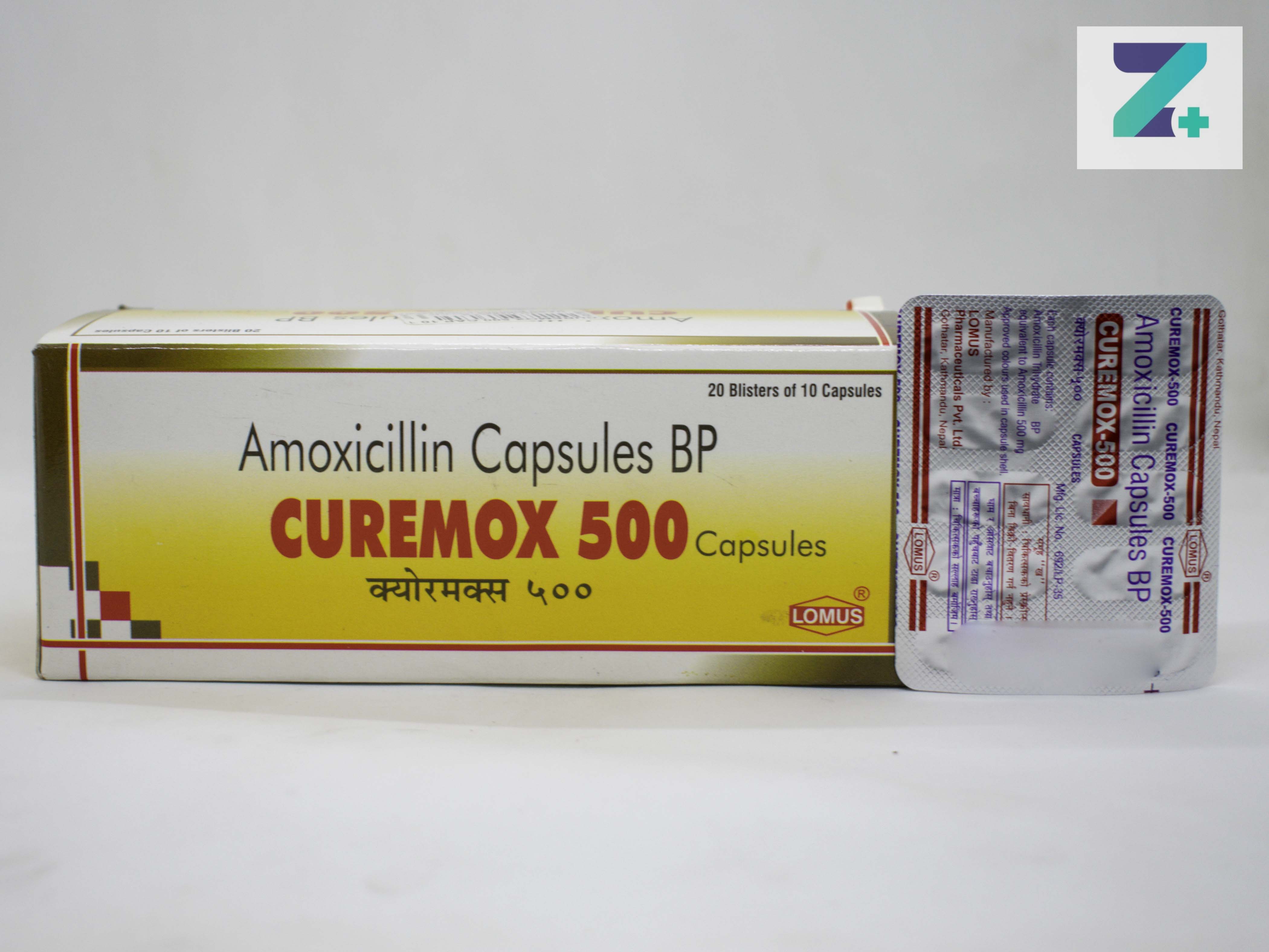
CUREMOX 500
Price: Rs.80.00
10% off
In stock
Loose stock: 1
Description
CUREMOX 500 CAP 10
Details
Composition
AMOXYCILLIN 500 MG
# Amoxicillin 500 mg
## SHORT DESCRIPTION
Amoxicillin 500 mg is a **penicillin-type antibiotic** used to treat a variety of bacterial infections. It works by interfering with the formation of the bacterial cell wall, causing susceptible bacteria to die.
Amoxicillin is effective against certain bacteria responsible for respiratory, ear, throat, urinary tract, dental, and skin infections. It **does not treat viral infections** such as the common cold or influenza.
## KEY BENEFITS
* Helps treat susceptible bacterial infections
* Effective against a range of respiratory tract infections
* May be used for certain ear, nose, and throat infections
* May help treat susceptible urinary tract infections
* Can be prescribed for certain dental and skin infections
* May be used as part of combination therapy for certain *Helicobacter pylori* infections
* Generally well tolerated when used appropriately
## USES / INDICATIONS
Amoxicillin 500 mg may be prescribed for susceptible bacterial infections, including:
* Respiratory tract infections
* Pneumonia
* Tonsillitis and certain bacterial throat infections
* Middle-ear infections
* Sinusitis
* Urinary tract infections
* Certain skin and soft-tissue infections
* Dental infections
* Certain gastrointestinal infections, including as part of combination treatment for *Helicobacter pylori*
* Other infections caused by susceptible bacteria
The appropriate antibiotic depends on the type of infection, bacterial susceptibility, local resistance patterns, and individual patient factors.
**Amoxicillin should not be used to treat viral infections.**
## HOW IT WORKS
Amoxicillin is a **beta-lactam antibiotic** belonging to the penicillin group.
It interferes with bacterial cell-wall synthesis by binding to proteins involved in building and maintaining the bacterial cell wall. This weakens the cell wall and can cause susceptible bacteria to rupture and die.
## DOSAGE & ADMINISTRATION
* Take Amoxicillin 500 mg exactly as prescribed by your doctor.
* The dose and treatment duration depend on the type and severity of infection.
* It may be taken with or without food.
* Taking it with food may help reduce stomach discomfort.
* Swallow the capsule or tablet with water.
* Space doses evenly throughout the day when multiple daily doses are prescribed.
* Complete the prescribed course unless your healthcare professional advises otherwise.
* Do not share antibiotics or use leftover antibiotics for another illness.
* If you miss a dose, take it when you remember unless it is almost time for your next dose. Do not take two doses together.
## SIDE EFFECTS
Common side effects may include:
* Nausea
* Vomiting
* Diarrhoea
* Abdominal discomfort
* Headache
* Skin rash
Less common but potentially serious side effects include:
* Severe allergic reactions
* Severe or persistent diarrhoea
* Antibiotic-associated colitis
* Liver enzyme abnormalities
* Severe skin reactions
* Changes in blood-cell counts
Seek urgent medical attention if you experience difficulty breathing, swelling of the face or throat, severe rash, fainting, or severe or bloody diarrhoea.
## PRECAUTIONS & WARNINGS
* **Do not take amoxicillin if you have a serious allergy to penicillins or have previously experienced a severe immediate allergic reaction to a beta-lactam antibiotic.**
* Tell your doctor if you have previously had an allergic reaction to penicillin or cephalosporin antibiotics.
* Inform your doctor if you have kidney disease because dosage adjustment may be necessary.
* Antibiotic-associated diarrhoea can occur during or after treatment.
* Complete the prescribed treatment unless your doctor tells you otherwise.
* Do not use amoxicillin unnecessarily, as inappropriate antibiotic use can contribute to antimicrobial resistance.
* Inform your doctor if you have infectious mononucleosis because amoxicillin can cause a prominent skin rash in people with this infection.
* Tell your doctor if you are pregnant, planning pregnancy, or breastfeeding.
* Contact your healthcare professional if symptoms do not improve or become worse during treatment.
## DRUG INTERACTIONS
Amoxicillin may interact with:
* **Warfarin and other anticoagulants**
* Methotrexate
* Probenecid
* Allopurinol
* Other antibiotics
* Certain hormonal contraceptives in specific circumstances
Amoxicillin may affect anticoagulant control in some patients, particularly those taking warfarin, and monitoring may be required.
Probenecid can reduce the elimination of amoxicillin and increase its blood concentration.
Always inform your doctor or pharmacist about all prescription medicines, over-the-counter medicines, vitamins, and herbal supplements you take.
## STORAGE INFORMATION
* Store at room temperature according to the manufacturer's instructions.
* Keep away from excessive heat, moisture, and direct sunlight.
* Keep capsules or tablets in their original packaging.
* Keep out of reach and sight of children.
* Do not use after the expiry date printed on the package.
* If using an amoxicillin liquid suspension, follow the specific storage instructions on the product label.
## PRESCRIPTION STATUS
Amoxicillin 500 mg is generally a **prescription antibiotic**. It should be used only under the direction of a qualified healthcare professional. Unnecessary or incorrect antibiotic use can contribute to antibiotic resistance.
## GENUINE MEDICINE ASSURANCE
For genuine medicine assurance:
* Purchase Amoxicillin 500 mg from a licensed and reputable pharmacy.
* Check the product name, strength, manufacturer details, batch number, and expiry date.
* Ensure the packaging and seal are intact.
* Do not use medicines with damaged, altered, or suspicious packaging.
* Follow the manufacturer's storage instructions.
* Consult a pharmacist if you have concerns about product authenticity.
## FAQ
### What is Amoxicillin 500 mg used for?
Amoxicillin 500 mg is used to treat certain bacterial infections, including some respiratory, ear, throat, urinary tract, skin, and dental infections.
### Is Amoxicillin an antibiotic?
Yes. Amoxicillin is a penicillin-type beta-lactam antibiotic.
### Does Amoxicillin treat viral infections?
No. Amoxicillin does not treat viral infections such as the common cold, influenza, or most viral coughs.
### How does Amoxicillin 500 mg work?
Amoxicillin interferes with bacterial cell-wall formation. This weakens the cell wall and causes susceptible bacteria to die.
### How often should I take Amoxicillin 500 mg?
The frequency depends on the infection, age, kidney function, and the treatment prescribed by your doctor. Follow the exact dosing schedule on your prescription.
### Can Amoxicillin 500 mg be taken with food?
Yes. Amoxicillin can generally be taken with or without food. Taking it with food may help reduce stomach discomfort.
### How long does Amoxicillin take to work?
Many bacterial infections begin improving within a few days, but the timeframe varies. If symptoms do not improve or become worse, contact your healthcare professional.
### Should I complete the Amoxicillin course?
Yes. If amoxicillin has been prescribed for a bacterial infection, follow the prescribed treatment duration unless your doctor tells you to stop.
### Can Amoxicillin cause diarrhoea?
Yes. Diarrhoea is a relatively common antibiotic side effect. Severe, persistent, or bloody diarrhoea requires medical evaluation because it may indicate antibiotic-associated colitis.
### Can Amoxicillin cause an allergic reaction?
Yes. Allergic reactions can occur, particularly in people with penicillin allergies. Seek emergency medical attention for difficulty breathing, facial or throat swelling, or a severe widespread rash.
### Can I take Amoxicillin if I am allergic to Penicillin?
No, not without medical evaluation. Amoxicillin is a penicillin antibiotic. People with a history of serious penicillin allergy should not take it unless specifically evaluated and advised by a healthcare professional.
### Can Amoxicillin be used during pregnancy?
Amoxicillin may be used during pregnancy when medically appropriate. If you are pregnant or planning pregnancy, consult your healthcare professional before taking it.
### Can Amoxicillin be taken while breastfeeding?
Amoxicillin is generally considered compatible with breastfeeding in many situations, but you should still inform your healthcare professional that you are breastfeeding before starting treatment.
### Can Amoxicillin be taken with Paracetamol?
Amoxicillin can generally be taken with paracetamol (acetaminophen), but always follow the recommended doses and consult a healthcare professional if you take other medicines or have underlying health conditions.
### Can Amoxicillin be taken with other antibiotics?
Sometimes amoxicillin is intentionally combined with another antibiotic, such as in specific treatment regimens. However, do not combine antibiotics on your own because this may increase side effects and antibiotic resistance.
### What happens if I miss a dose of Amoxicillin?
Take the missed dose when you remember unless it is nearly time for the next dose. Do not take two doses together to compensate for a missed dose.
### Can Amoxicillin be used for tooth infection?
Amoxicillin may be prescribed for certain bacterial dental infections when antibiotics are clinically indicated. Dental treatment is often necessary to address the underlying cause of the infection.
### Can Amoxicillin be used for a sore throat?
It may be prescribed for certain bacterial throat infections, such as streptococcal infection. Many sore throats are caused by viruses and do not require antibiotics.
### Does Amoxicillin cause antibiotic resistance?
Incorrect or unnecessary antibiotic use can contribute to antibiotic resistance. Use amoxicillin only when prescribed and follow the recommended treatment instructions.
## MEDICAL DISCLAIMER
This information is provided for educational and informational purposes only and is not a substitute for professional medical advice, diagnosis, or treatment. Amoxicillin 500 mg should be used only when prescribed or recommended by a qualified healthcare professional. The appropriate dose and treatment duration depend on the type and severity of infection, bacterial susceptibility, kidney function, age, and other medicines being used. **Do not use amoxicillin if you have a serious penicillin allergy.** Do not use antibiotics for viral infections or share leftover antibiotics. Always read the product label and consult your doctor or pharmacist for personalized guidance.