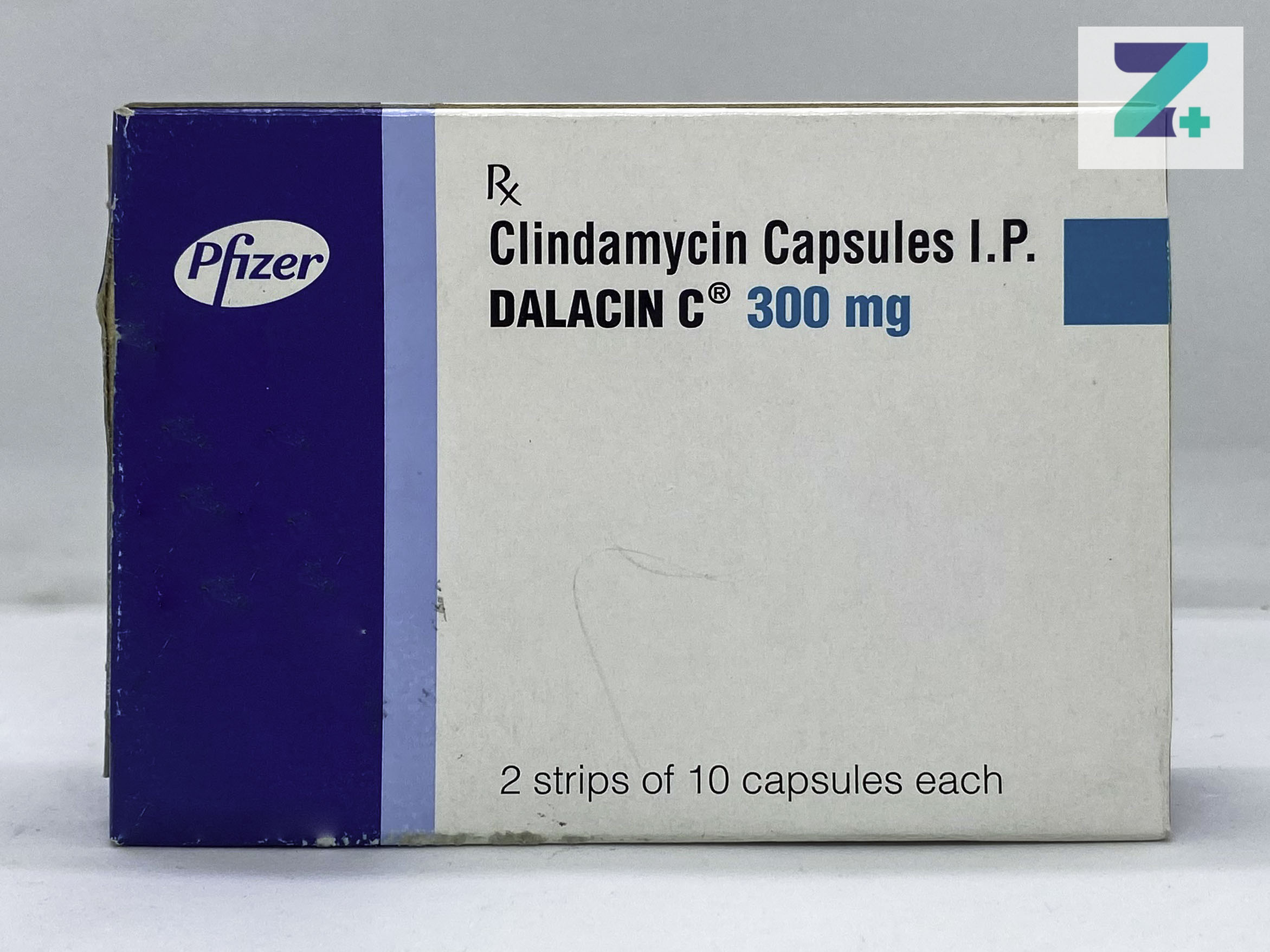
DALACIN C 300MG
Price: Rs.476.16
10% off
In stock
Loose stock: 0
Description
DALACIN C 300MG CAP 10
Details
Composition
CLINDAMYCIN 300 MG
# CLINDAMYCIN 300 MG
## SHORT DESCRIPTION
**Clindamycin 300 mg** is a prescription **lincosamide antibiotic** used to treat certain serious bacterial infections. It works by inhibiting bacterial protein production, thereby stopping the growth and multiplication of susceptible bacteria.
Clindamycin may be used for infections involving the **skin and soft tissues, bones and joints, teeth and gums, respiratory tract, and certain pelvic or abdominal infections**, depending on the bacteria involved and the healthcare professional's assessment.
> **Important:** Clindamycin should only be used for bacterial infections for which it is appropriate. It does **not** treat viral infections such as the common cold or influenza.
---
## KEY BENEFITS
* Treats certain **susceptible bacterial infections**.
* Effective against several types of Gram-positive and anaerobic bacteria.
* Can reach tissues and sites where susceptible bacterial infections occur.
* Available as an oral antibiotic for patients who require systemic treatment.
* May be useful when certain other antibiotics are unsuitable, based on bacterial susceptibility and clinical judgment.
* Can be used for selected dental, skin, bone, joint, respiratory, and other bacterial infections.
---
## USES / INDICATIONS
Clindamycin 300 mg may be prescribed for susceptible bacterial infections such as:
### Skin & Soft-Tissue Infections
* Cellulitis
* Abscesses
* Certain infected wounds
* Other susceptible skin and soft-tissue infections
### Dental Infections
* Certain bacterial dental infections
* Dental abscesses
* Infections involving teeth or surrounding tissues
### Bone & Joint Infections
* Osteomyelitis
* Certain bacterial joint infections
### Respiratory Infections
Depending on the causative organism, clindamycin may be used for:
* Certain bacterial pneumonia
* Lung abscess
* Empyema
* Other susceptible respiratory infections
### Other Infections
Clindamycin may also be used for selected:
* Pelvic infections
* Intra-abdominal infections
* Gynecological infections
* Anaerobic bacterial infections
The specific indication depends on the **site of infection, suspected or confirmed bacteria, antibiotic susceptibility, and local treatment guidelines**.
---
## HOW IT WORKS
Clindamycin is a **lincosamide antibiotic**.
It binds to the **50S subunit of bacterial ribosomes** and interferes with bacterial protein synthesis.
Without adequate protein production, susceptible bacteria cannot grow and multiply normally.
### In simple terms:
**Clindamycin → blocks bacterial protein production → inhibits bacterial growth → helps control the infection.**
Clindamycin is primarily **bacteriostatic**, although it may have bactericidal activity against certain organisms at appropriate concentrations.
---
## DOSAGE & ADMINISTRATION
* Take Clindamycin 300 mg **exactly as prescribed**.
* The dose and frequency depend on the type and severity of infection, the causative organism, and the patient's medical condition.
* Swallow the capsule/tablet with a **full glass of water**.
* Remain upright for at least **10 minutes after taking the capsule** to reduce the risk of esophageal irritation.
* It may generally be taken with or without food.
* Take doses at evenly spaced intervals.
* Complete the prescribed course unless your healthcare professional tells you to stop.
### Important
**Clindamycin 300 mg is not automatically the correct dose for every infection.** Some infections require different doses or intravenous treatment.
Do not increase or decrease the dose yourself.
### Missed Dose
Take the missed dose when remembered unless it is nearly time for the next dose.
**Do not take two doses at once.**
---
## SIDE EFFECTS
### Common Side Effects
Possible side effects include:
* Nausea
* Vomiting
* Abdominal discomfort
* Diarrhea
* Stomach pain
* Unpleasant or metallic taste
* Skin rash
### Important Gastrointestinal Warning
Clindamycin has a well-known risk of causing **Clostridioides difficile-associated diarrhea (C. difficile infection)**.
Seek medical attention if you develop:
* Severe or persistent diarrhea
* Watery diarrhea
* Bloody stools
* Significant abdominal cramps
* Fever
These symptoms can occur **during treatment or even weeks after completing clindamycin**.
Do not self-treat significant antibiotic-associated diarrhea with anti-diarrheal medicines without medical advice.
### Serious Allergic Reactions
Seek urgent medical attention for:
* Facial or throat swelling
* Difficulty breathing
* Severe skin rash
* Blistering or peeling skin
* Severe widespread allergic reaction
---
## PRECAUTIONS & WARNINGS
### C. difficile-Associated Diarrhea
Clindamycin can cause potentially serious antibiotic-associated diarrhea and colitis.
Contact your healthcare professional if significant diarrhea develops during or after treatment.
### Previous Colitis or Gastrointestinal Disease
Tell your doctor if you have a history of:
* Antibiotic-associated colitis
* Colitis
* Severe gastrointestinal disease
### Liver Disease
Patients with significant liver disease may require medical monitoring or dose adjustment depending on the clinical situation.
### Allergies
Tell your healthcare professional if you have previously experienced an allergic reaction to:
* Clindamycin
* Lincomycin
* Other antibiotics
### Antibiotic Resistance
Using clindamycin when it is not necessary can promote **antibiotic resistance**.
It should only be used for bacterial infections when clinically appropriate.
### Pregnancy and Breastfeeding
Tell your healthcare professional if you are pregnant, planning pregnancy, or breastfeeding. Clindamycin may be used in pregnancy when clinically indicated, but treatment should be determined by a healthcare professional.
Clindamycin can pass into breast milk and may occasionally cause gastrointestinal effects in a breastfed infant.
### Do Not Share Antibiotics
Do not give clindamycin to another person, even if they have symptoms that appear similar.
---
## DRUG INTERACTIONS
### Neuromuscular Blocking Agents
Clindamycin can enhance the effects of certain **neuromuscular blocking agents**, which may be important during surgery or anesthesia.
Tell your anesthetist if you are taking clindamycin.
### Erythromycin
Clindamycin and erythromycin may interfere with each other's activity at the bacterial ribosome and are generally **not recommended together** unless specifically directed.
### Other Antibiotics
Tell your doctor about other antibiotics you are taking. Combining antibiotics should be done only when clinically justified.
### Antidiarrheal Medicines
If significant diarrhea occurs during or after clindamycin treatment, do not automatically use anti-diarrheal medicines without medical advice because they may be inappropriate in some cases of antibiotic-associated colitis.
Always inform your doctor or pharmacist about **all prescription medicines, OTC medicines, vitamins, and supplements** you use.
---
## STORAGE INFORMATION
* Store Clindamycin 300 mg according to the **manufacturer's instructions**.
* Keep the capsules in their original packaging.
* Store in a cool, dry place.
* Protect from excessive heat, moisture, and direct sunlight.
* Keep the medicine tightly closed.
* Keep out of reach of children and pets.
* Do not use after the expiry date.
* Do not use capsules if the packaging is damaged or the medicine appears abnormal.
---
## PRESCRIPTION STATUS
**Clindamycin 300 mg is a prescription antibiotic.**
It should be used under the supervision of a qualified healthcare professional because inappropriate antibiotic use can cause **antibiotic resistance and serious adverse effects, including C. difficile-associated diarrhea**.
---
## GENUINE MEDICINE ASSURANCE
When purchasing Clindamycin 300 mg, ensure that:
* The medicine comes in **original, sealed manufacturer packaging**.
* The label clearly states **Clindamycin 300 mg** and the correct formulation.
* The manufacturer's information is present.
* The **batch/lot number and expiry date** are clearly visible.
* Packaging shows no signs of tampering.
* The medicine is purchased from a **licensed pharmacy or authorized medicine supplier**.
* The product has the appropriate regulatory authorization for the market.
* The medicine has been stored according to the manufacturer's instructions.
Do not use medicine that is expired, damaged, improperly stored, or suspected to be counterfeit.
---
# FAQ – CLINDAMYCIN 300 MG
### 1. What is Clindamycin 300 mg used for?
Clindamycin 300 mg is used to treat certain **susceptible bacterial infections**, including selected skin, dental, bone, joint, respiratory, pelvic, and anaerobic infections.
### 2. Is Clindamycin 300 mg an antibiotic?
Yes. Clindamycin is a **lincosamide antibiotic**.
### 3. Does Clindamycin treat viral infections?
**No.** Clindamycin does not treat viral infections such as colds, influenza, or most viral sore throats.
### 4. How does Clindamycin work?
It binds to the bacterial **50S ribosomal subunit** and inhibits protein synthesis, preventing susceptible bacteria from growing and multiplying normally.
### 5. Is Clindamycin good for dental infections?
Clindamycin may be prescribed for certain **bacterial dental infections**, particularly in specific clinical circumstances. The choice of antibiotic should be determined by a dental or medical professional.
### 6. Is Clindamycin used for skin infections?
Yes. It can be used for certain **skin and soft-tissue bacterial infections**, depending on the bacteria and local resistance patterns.
### 7. How should I take Clindamycin 300 mg?
Take it exactly as prescribed with a **full glass of water**. Remaining upright for at least 10 minutes afterward can help reduce esophageal irritation.
### 8. Can Clindamycin 300 mg be taken with food?
Yes, oral clindamycin can generally be taken **with or without food**. Taking it with food may help some people tolerate stomach upset.
### 9. How long should I take Clindamycin?
The duration depends on the infection and your response to treatment. Take it for the **full prescribed duration**, unless your healthcare professional tells you otherwise.
### 10. What happens if I miss a dose of Clindamycin?
Take it when remembered unless it is nearly time for the next dose. **Do not double the dose.**
### 11. Can Clindamycin cause diarrhea?
Yes. Diarrhea is a relatively common side effect. However, **severe, persistent, watery, or bloody diarrhea requires medical evaluation** because clindamycin can cause C. difficile-associated colitis.
### 12. Can diarrhea occur after finishing Clindamycin?
Yes. Antibiotic-associated C. difficile infection can occur **during treatment or weeks after completing the antibiotic**.
### 13. Can I take anti-diarrhea medicine while taking Clindamycin?
If significant diarrhea develops, consult a healthcare professional before taking anti-diarrheal medicines because they may not be appropriate in some cases.
### 14. Can I drink alcohol while taking Clindamycin?
There is no specific alcohol interaction comparable to some other antibiotics, but alcohol can worsen **nausea, stomach irritation, or dizziness** in some people. Avoid excessive alcohol during treatment.
### 15. Can Clindamycin be taken during pregnancy?
Clindamycin may be used during pregnancy when medically necessary. Your healthcare professional should determine whether it is appropriate for you.
### 16. Can Clindamycin be used while breastfeeding?
Clindamycin can pass into breast milk. Tell your healthcare professional if you are breastfeeding so the potential benefits and risks can be assessed.
### 17. Can I stop Clindamycin when I feel better?
Do not stop an antibiotic early unless your healthcare professional tells you to. Follow the prescribed treatment duration.
### 18. Can Clindamycin cause an allergic reaction?
Yes. Seek urgent medical attention if you develop **difficulty breathing, facial or throat swelling, severe rash, blistering, or skin peeling**.
### 19. Is Clindamycin 300 mg safe for everyone?
No medicine is appropriate for everyone. Clindamycin requires particular caution in people with a history of **severe gastrointestinal disease, antibiotic-associated colitis, or certain allergies**.
### 20. Is Clindamycin 300 mg available without a prescription?
In many countries, oral clindamycin is **prescription-only** because inappropriate use can cause antibiotic resistance and potentially serious adverse effects.
---
## MEDICAL DISCLAIMER
This information about **Clindamycin 300 mg** is provided for educational and informational purposes only and is not a substitute for professional medical advice, diagnosis, or treatment.
Clindamycin should only be used when a **susceptible bacterial infection is suspected or confirmed and treatment is clinically appropriate**. The correct dose and duration depend on the infection, its severity, bacterial susceptibility, age, medical history, and other medicines being used.
**Do not self-medicate with antibiotics or share clindamycin with others.** Seek medical attention for severe or persistent diarrhea, bloody stools, severe abdominal pain, difficulty breathing, facial or throat swelling, or severe skin reactions during or after treatment.