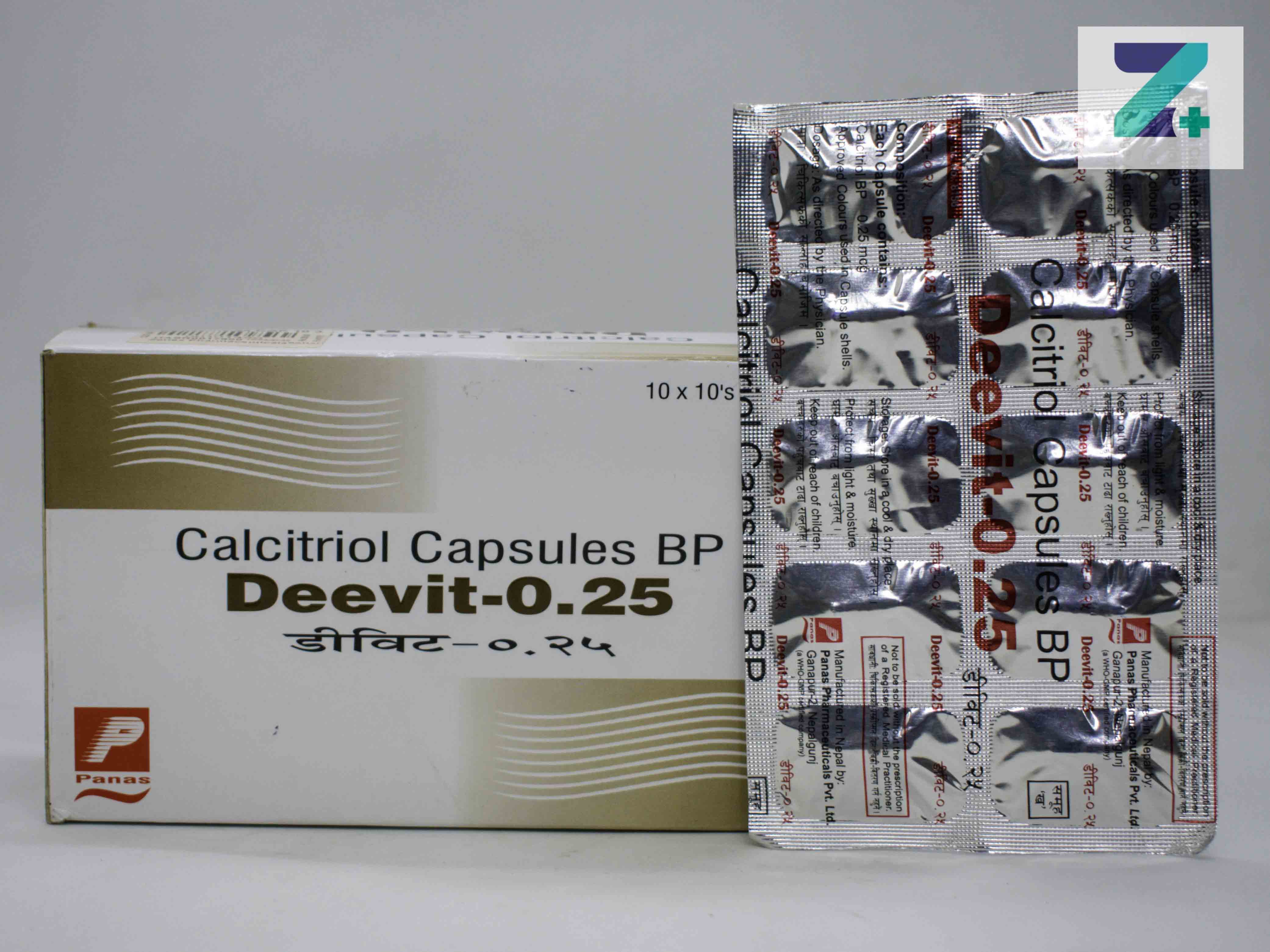
DEEVIT-0.25
Price: Rs.250.00
10% off
In stock
Loose stock: 0
Description
DEEVIT-0.25 CAP 10
Details
Composition
CALCITRIOL 0.25 MCG
# Calcitriol 0.25 mcg
## Short Description
**Calcitriol 0.25 mcg** is the active form of **vitamin D3 (vitamin D)**. It helps the body absorb calcium and phosphate and plays an important role in maintaining healthy bones and regulating blood calcium levels. Calcitriol is used for certain conditions involving impaired vitamin D metabolism, including **hypocalcemia associated with chronic kidney disease, hypoparathyroidism, and related mineral-bone disorders**, depending on the patient's condition and the specific product indication.
Because calcitriol is a potent, active form of vitamin D, it should be used under medical supervision with appropriate monitoring of **calcium and phosphate levels**.
---
## Key Benefits
* Helps maintain **normal calcium levels** in the blood.
* Improves **intestinal absorption of calcium and phosphate**.
* Supports normal **bone mineralization and bone health**.
* Helps manage low calcium levels associated with certain medical conditions.
* Can help correct disturbances in **calcium-phosphate metabolism**.
* Particularly useful when the body cannot adequately convert vitamin D into its active form.
---
## Uses / Indications
Calcitriol 0.25 mcg may be prescribed for:
1. **Hypocalcemia associated with chronic kidney disease**, particularly in patients with impaired vitamin D activation.
2. **Hypoparathyroidism**, when active vitamin D therapy is required.
3. Certain forms of **renal osteodystrophy** or chronic kidney disease–mineral and bone disorder.
4. Other disorders of calcium and vitamin D metabolism when specifically prescribed by a healthcare professional.
> The approved indications can vary depending on the country, formulation, and manufacturer.
---
## How It Works
Calcitriol is the **biologically active form of vitamin D**.
Normally, vitamin D undergoes activation in the liver and kidneys. In some diseases, especially advanced kidney disease, the body's ability to produce active vitamin D is reduced.
Calcitriol acts directly on vitamin D receptors and:
* Increases **calcium absorption from the intestine**.
* Helps regulate **phosphate absorption and metabolism**.
* Supports normal bone mineralization.
* Helps regulate **parathyroid hormone (PTH)** production.
Through these effects, calcitriol helps restore balance in calcium and phosphate metabolism.
---
## Dosage & Administration
### Usual Adult Dose
The appropriate dose depends on the medical condition, calcium level, kidney function, and response to treatment.
For many adult indications, treatment may be started at approximately **0.25 mcg once daily**, with the dose adjusted by the healthcare professional according to laboratory results and clinical response.
**Do not change the dose without medical advice.**
### How to Take Calcitriol
* Take exactly as prescribed.
* It may generally be taken **with or without food**.
* Take it at approximately the same time each day if prescribed as a daily medicine.
* Swallow capsules/tablets whole unless your particular product instructions say otherwise.
* Do not take additional vitamin D or calcium supplements unless recommended by your healthcare professional.
### Monitoring
During treatment, your doctor may monitor:
* Serum **calcium**
* Serum **phosphate**
* Kidney function
* PTH levels when appropriate
* Other mineral-bone parameters
Because calcitriol can increase calcium levels, laboratory monitoring is particularly important.
### Missed Dose
If you miss a dose, take it when you remember unless it is nearly time for your next dose. **Do not double the dose** to make up for a missed dose.
---
## Side Effects
### Common or Possible Side Effects
Some people may experience:
* Headache
* Nausea
* Vomiting
* Abdominal discomfort
* Constipation
* Loss of appetite
* Weakness or fatigue
Many adverse effects are related to **excess calcium levels (hypercalcemia)**.
### Symptoms of Excess Calcium
Contact your healthcare professional if you develop:
* Nausea or vomiting
* Constipation
* Increased thirst
* Frequent urination
* Loss of appetite
* Muscle weakness
* Headache
* Confusion
* Unusual tiredness
### Serious Side Effects
Seek medical attention if symptoms of severe hypercalcemia occur, such as:
* Severe weakness
* Significant confusion or changes in mental status
* Irregular heartbeat
* Severe dehydration
* Persistent vomiting
Long-term excessive calcium levels can contribute to **kidney problems or kidney stones**.
---
## Precautions & Warnings
Before taking Calcitriol 0.25 mcg, inform your doctor if you:
* Have **high blood calcium levels (hypercalcemia)**.
* Have kidney disease or a history of kidney stones.
* Have high phosphate levels.
* Have heart disease.
* Have previously experienced vitamin D toxicity.
* Are taking calcium or vitamin D supplements.
* Are pregnant, planning pregnancy, or breastfeeding.
### Important Hypercalcemia Warning
Calcitriol can increase calcium absorption and therefore may cause **hypercalcemia** if the dose is too high or if excessive calcium/vitamin D is consumed.
Do not take extra vitamin D, calcium supplements, or vitamin D-containing products unless specifically recommended.
### Regular Monitoring
Patients receiving calcitriol may require regular blood tests to ensure that calcium and phosphate levels remain within the appropriate range.
---
## Drug Interactions
Tell your doctor or pharmacist about all medicines, vitamins, and supplements you use.
### Calcium Supplements
Taking excessive amounts of calcium together with calcitriol can increase the risk of **hypercalcemia**.
### Other Vitamin D Products
Avoid taking additional vitamin D or vitamin D analogues unless specifically prescribed, as combined use can increase the risk of excessive vitamin D activity and high calcium levels.
### Magnesium-Containing Products
Large amounts of magnesium-containing antacids or laxatives may cause **high magnesium levels**, particularly in people with impaired kidney function.
### Thiazide Diuretics
Medicines such as hydrochlorothiazide can reduce urinary calcium excretion. Combined use with calcitriol may increase the risk of **hypercalcemia**.
### Digoxin
High calcium levels may increase the risk of **cardiac arrhythmias** in people taking digoxin. Patients receiving both medicines may require careful monitoring.
### Cholestyramine and Certain Bile-Acid Sequestrants
These medicines may reduce absorption of fat-soluble vitamins and may potentially interfere with vitamin D-related therapy.
Always provide your healthcare professional with a complete list of your medicines and supplements.
---
## Storage Information
* Store Calcitriol 0.25 mcg at **room temperature**, according to the manufacturer's instructions.
* Keep the medicine in its **original packaging**.
* Protect it from excessive heat, moisture, and direct light.
* Keep out of reach and sight of children.
* Do not use the medicine after the **expiry date**.
* Dispose of expired or unused medicine appropriately according to local pharmaceutical disposal guidance.
---
## Prescription Status
**Calcitriol 0.25 mcg is generally a prescription medicine.**
It should be used under the supervision of a qualified healthcare professional because the dose must be individualized and excessive vitamin D activity can cause **hypercalcemia and related complications**.
Prescription requirements may vary between countries.
---
## Genuine Medicine Assurance
When purchasing Calcitriol 0.25 mcg:
* Buy only from a **licensed pharmacy or authorized medicine retailer**.
* Check that the packaging is sealed and undamaged.
* Verify the **medicine name, strength, manufacturer, batch/lot number, manufacturing date, and expiry date**.
* Ensure the product has been stored according to the manufacturer's requirements.
* Do not purchase medicines from unknown or unauthorized sellers.
* Do not use tablets/capsules that appear damaged, discolored, contaminated, or improperly packaged.
* Keep your prescription or doctor's recommendation available when purchasing prescription medicines.
---
# FAQ – Calcitriol 0.25 mcg
### 1. What is Calcitriol 0.25 mcg used for?
Calcitriol 0.25 mcg is used to manage certain disorders involving **calcium, phosphate, vitamin D, and parathyroid hormone regulation**, including hypocalcemia associated with chronic kidney disease and hypoparathyroidism.
### 2. Is Calcitriol the same as vitamin D3?
No. Calcitriol is the **active form of vitamin D**. Unlike ordinary vitamin D3 (cholecalciferol), calcitriol does not require the usual kidney activation step to become biologically active.
### 3. What does Calcitriol 0.25 mcg do?
It increases intestinal absorption of calcium and phosphate and helps regulate calcium metabolism, bone mineralization, and parathyroid hormone activity.
### 4. When should I take Calcitriol 0.25 mcg?
Take it exactly as prescribed. Calcitriol can generally be taken with or without food, but follow the instructions provided with your specific product.
### 5. Can Calcitriol increase calcium levels?
Yes. Calcitriol increases calcium absorption and can cause **hypercalcemia** if the dose is excessive or if too much calcium/vitamin D is consumed.
### 6. Can I take calcium supplements with Calcitriol?
Only if recommended by your doctor. Combining calcitriol with excessive calcium supplementation can increase the risk of **high blood calcium levels**.
### 7. Can I take vitamin D along with Calcitriol?
Do not take additional vitamin D or vitamin D analogues unless specifically recommended by your healthcare professional. Combining them may increase the risk of excessive vitamin D activity and hypercalcemia.
### 8. Is Calcitriol good for bones?
Calcitriol plays an important role in **calcium and phosphate regulation and bone mineralization**. However, it should only be used for bone or mineral disorders when medically indicated.
### 9. Can Calcitriol be used in kidney disease?
Yes. Calcitriol is used for certain disorders of calcium and mineral metabolism associated with **chronic kidney disease**, particularly when activation of vitamin D is impaired. Treatment requires appropriate laboratory monitoring.
### 10. What are the symptoms of too much Calcitriol?
Symptoms may include **nausea, vomiting, constipation, increased thirst, frequent urination, weakness, headache, and confusion**. These can indicate high calcium levels and should be discussed with a healthcare professional.
### 11. Does Calcitriol cause kidney stones?
Excessive calcium levels associated with excessive calcitriol activity may increase the risk of kidney-related complications, including kidney stones in susceptible individuals. Medical monitoring helps reduce this risk.
### 12. Can pregnant women take Calcitriol?
Calcitriol should be used during pregnancy **only when specifically prescribed and medically necessary**. Tell your doctor if you are pregnant or planning pregnancy.
### 13. Can Calcitriol be taken every day?
It may be prescribed daily for certain conditions, but the appropriate dosing schedule depends on the indication and laboratory results. **Do not take it more frequently than prescribed.**
### 14. Do I need blood tests while taking Calcitriol?
Often, yes. Your healthcare professional may monitor **calcium, phosphate, kidney function, and sometimes PTH** to ensure that treatment remains safe and effective.
### 15. What should I do if I miss a Calcitriol dose?
Take the missed dose when remembered unless it is close to the next scheduled dose. **Do not take two doses together** unless specifically instructed by your healthcare professional.
---
## Medical Disclaimer
This information about **Calcitriol 0.25 mcg** is intended for general educational and informational purposes only. It does not replace professional medical advice, diagnosis, or treatment.
Calcitriol is a potent active form of vitamin D and can significantly affect **calcium and phosphate levels**. It should therefore be used only according to the instructions of a qualified healthcare professional.
**Do not start, stop, or change the dose of Calcitriol without consulting your doctor or pharmacist.** Seek medical advice if you develop symptoms that could indicate high calcium levels, such as persistent nausea, vomiting, excessive thirst, frequent urination, severe weakness, or confusion.