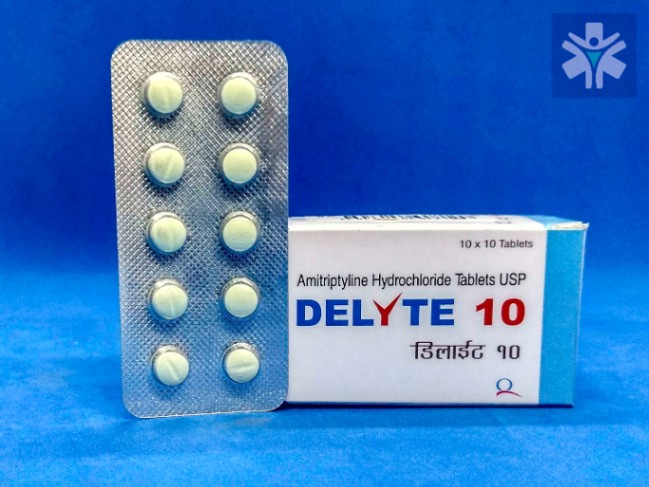
DELYTE 10
Price: Rs.24.00
15% off
In stock
Loose stock: 0
Description
DELYTE 10 TAB 10
Details
Composition
AMITRIPTYLINE HYDRCHLORIDE 10MG
# Amitriptyline Hydrochloride 10 mg
## Short Description
**Amitriptyline Hydrochloride 10 mg** is a **prescription tricyclic antidepressant (TCA)** used to treat **depression** and a variety of other medical conditions, including **neuropathic (nerve) pain, migraine prevention, chronic tension-type headaches, and certain chronic pain disorders**. It works by increasing the levels of serotonin and norepinephrine in the brain, helping improve mood while also reducing pain signals. At lower doses, such as **10 mg**, Amitriptyline is commonly prescribed for pain management and sleep-related problems rather than depression.
> **Important:** Amitriptyline should only be used under the supervision of a qualified healthcare professional and should not be stopped abruptly without medical advice.
---
# Key Benefits Section
- Helps relieve symptoms of depression.
- Effective for managing neuropathic (nerve) pain.
- Helps prevent migraine attacks.
- Reduces the frequency of chronic tension-type headaches.
- May improve sleep quality in selected patients.
- Helps manage certain chronic pain conditions.
- Can improve overall quality of life when taken as prescribed.
- Convenient once-daily dosing in many treatment plans.
---
# Uses / Indications
Amitriptyline Hydrochloride 10 mg is indicated for:
### Mental Health Conditions
- Depression (dose adjusted according to clinical response)
### Pain Management
- Neuropathic pain
- Diabetic neuropathy
- Post-herpetic neuralgia
- Fibromyalgia (in selected patients)
- Chronic musculoskeletal pain
### Headache Disorders
- Migraine prevention
- Chronic tension-type headache prevention
### Other Uses
- Sleep disturbances associated with chronic pain (off-label)
- Irritable bowel syndrome (IBS) in selected patients (off-label)
- Other conditions as determined by a healthcare provider
> **Note:** Some uses of Amitriptyline, such as migraine prevention and neuropathic pain, are based on established clinical practice and may vary according to local treatment guidelines.
---
# How It Works
Amitriptyline belongs to the **Tricyclic Antidepressant (TCA)** class.
It works by:
- Increasing the levels of **serotonin** and **norepinephrine** in the brain.
- Improving communication between nerve cells.
- Enhancing mood and emotional stability.
- Modulating pain pathways to reduce chronic nerve pain.
- Helping prevent certain types of headaches.
Its sedative properties may also help improve sleep in some patients.
---
# Dosage & Administration
Always take **Amitriptyline Hydrochloride 10 mg** exactly as prescribed by your healthcare provider.
### General Guidelines
- Take once daily or as directed, often in the evening or at bedtime due to its sedative effects.
- Swallow the tablet whole with water.
- May be taken with or without food.
- Take the medicine at the same time each day.
- Do not stop taking the medicine suddenly without consulting your healthcare provider.
### Missed Dose
- Take the missed dose as soon as you remember.
- If it is almost time for the next scheduled dose, skip the missed dose.
- Do not take two doses together.
### Important Advice
- It may take **2 to 6 weeks** for the full antidepressant effect to become apparent.
- For nerve pain or migraine prevention, improvement may occur sooner, but optimal benefit may still require several weeks.
- Follow your healthcare provider's instructions regarding dose adjustments.
---
# Side Effects
Like all medicines, Amitriptyline may cause side effects, although not everyone experiences them.
## Common Side Effects
- Drowsiness
- Dry mouth
- Dizziness
- Constipation
- Blurred vision
- Increased appetite
- Weight gain
- Fatigue
## Less Common Side Effects
- Difficulty urinating
- Sweating
- Tremor
- Confusion (particularly in older adults)
- Low blood pressure on standing (orthostatic hypotension)
- Sexual dysfunction
## Serious Side Effects (Seek Immediate Medical Attention)
- Severe allergic reactions
- Irregular heartbeat or palpitations
- Chest pain
- Seizures
- Severe mood changes or suicidal thoughts
- Fainting
- Serotonin syndrome (especially when combined with other serotonergic medicines)
- Yellowing of the skin or eyes (possible liver problems)
---
# Precautions & Warnings
Before taking Amitriptyline, inform your healthcare provider if you:
- Have heart disease or a history of irregular heartbeat.
- Have glaucoma.
- Have epilepsy or a history of seizures.
- Have liver disease.
- Have kidney disease.
- Have urinary retention or an enlarged prostate.
- Have bipolar disorder.
- Have thyroid disease.
- Are pregnant or breastfeeding.
- Have previously experienced suicidal thoughts or self-harm.
### Important Warnings
- Amitriptyline may increase the risk of suicidal thoughts or behavior in children, adolescents, and young adults, particularly during the early stages of treatment or after dose changes.
- Avoid alcohol, as it can increase drowsiness and other side effects.
- Do not drive or operate heavy machinery until you know how the medicine affects you.
- Do not stop treatment suddenly, as withdrawal symptoms may occur.
- Older adults may be more sensitive to side effects such as confusion, dizziness, and falls.
---
# Drug Interactions
Amitriptyline may interact with:
### Antidepressants
- Monoamine oxidase inhibitors (MAOIs)
- SSRIs
- SNRIs
- Other tricyclic antidepressants
### Other Medicines
- Tramadol
- Linezolid
- Lithium
- Antipsychotics
- Sedatives and sleeping tablets
- Opioid pain medicines
- Antihistamines
- Anticholinergic medicines
- Certain antiarrhythmic medicines
- Alcohol
These interactions may increase the risk of excessive drowsiness, heart rhythm disturbances, serotonin syndrome, or other adverse effects.
Always inform your healthcare provider about all prescription medicines, over-the-counter products, vitamins, and herbal supplements you are taking.
---
# Storage Information
- Store below **30°C** in a cool, dry place.
- Protect from moisture and direct sunlight.
- Keep the tablets in their original packaging.
- Keep out of reach of children.
- Do not use after the expiry date.
---
# Prescription Status
**Prescription Only Medicine (Rx)**
Amitriptyline Hydrochloride 10 mg should only be used under the supervision of a qualified healthcare professional.
---
# Genuine Medicine Assurance
We provide **100% genuine, quality-assured medicines** sourced from authorized pharmaceutical manufacturers and licensed distributors. Every product is stored and handled according to recommended pharmaceutical standards to help maintain its quality, safety, and effectiveness.
---
# Frequently Asked Questions (FAQ)
## 1. What is Amitriptyline Hydrochloride 10 mg used for?
It is commonly used to treat **depression**, **neuropathic pain**, **migraine prevention**, **chronic tension-type headaches**, and certain chronic pain conditions.
## 2. Is Amitriptyline only used for depression?
No. Lower doses, such as **10 mg**, are frequently prescribed for nerve pain, migraine prevention, chronic pain disorders, and sometimes sleep disturbances associated with these conditions.
## 3. How does Amitriptyline work?
It increases serotonin and norepinephrine levels in the brain, improving mood and helping reduce pain signals.
## 4. When should I take Amitriptyline?
It is often taken **at bedtime** because it commonly causes drowsiness. Follow your healthcare provider's instructions.
## 5. How long does it take to work?
For depression, improvement may take **2 to 6 weeks**. For neuropathic pain or migraine prevention, some people notice benefits within a few weeks, although full effects may take longer.
## 6. Can Amitriptyline make me sleepy?
Yes. Drowsiness is one of the most common side effects, particularly during the first few weeks of treatment.
## 7. Can I drink alcohol while taking Amitriptyline?
Alcohol should be avoided because it can increase drowsiness, dizziness, and other side effects.
## 8. Can I stop taking Amitriptyline once I feel better?
No. Do not stop taking Amitriptyline abruptly. Your healthcare provider will advise you on how to gradually reduce the dose if treatment needs to be discontinued.
## 9. Can Amitriptyline cause weight gain?
Yes. Some people may experience increased appetite and weight gain during treatment.
## 10. Is Amitriptyline addictive?
No. Amitriptyline is not considered addictive, but sudden discontinuation may lead to withdrawal symptoms. Always follow your healthcare provider's guidance when stopping treatment.
## 11. Can older adults take Amitriptyline?
Yes, but they may be more susceptible to side effects such as confusion, dizziness, low blood pressure, and falls. Lower doses and careful monitoring are often recommended.
## 12. What should I do if I miss a dose?
Take the missed dose when you remember unless it is almost time for your next scheduled dose. Do not take two doses together.
## 13. How should I store Amitriptyline tablets?
Store below 30°C in a cool, dry place, protected from moisture and direct sunlight, and keep out of reach of children.
## 14. When should I seek immediate medical attention?
Seek emergency medical care if you develop severe allergic reactions, chest pain, fainting, seizures, irregular heartbeat, serotonin syndrome symptoms (such as agitation, fever, muscle stiffness, or confusion), or suicidal thoughts.
---
# Medical Disclaimer
The information provided on this page is intended for **educational and informational purposes only** and should not replace professional medical advice, diagnosis, or treatment. Always consult a qualified healthcare provider before starting, stopping, or changing any medication. **Amitriptyline Hydrochloride 10 mg** should only be used as prescribed by a licensed healthcare professional. Seek immediate medical attention if you experience severe side effects, allergic reactions, suicidal thoughts, heart rhythm problems, or other serious adverse events.
```