DEZACOR 30MG
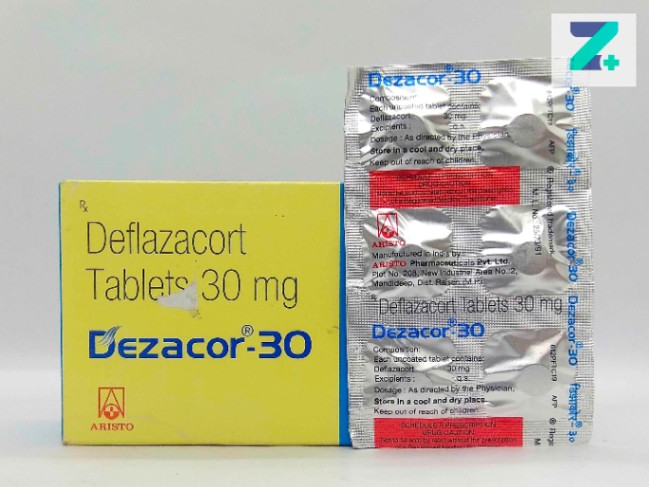
Price: Rs.680.00
10% off
In stock
Loose stock: 0
Description
DEZACOR 30MG TAB 6
Details
Composition
DEFLAZACORT 30 MG
# DEFLAZACORT 30 MG
## Short Description
**Deflazacort 30 mg** is an oral **corticosteroid (glucocorticoid)** medicine used to reduce inflammation and suppress excessive immune-system activity. It may be prescribed for certain inflammatory, autoimmune, allergic, and muscular conditions, depending on the patient's diagnosis.
Deflazacort is a **prescription medicine** and should be taken only under medical supervision. The dose and duration vary considerably depending on the condition being treated.
---
## Key Benefits
* Helps reduce **inflammation**.
* Suppresses excessive immune-system activity.
* May help relieve swelling, pain, redness, and other inflammation-related symptoms.
* Used in certain **autoimmune and inflammatory disorders**.
* May be prescribed for specific muscular conditions, including **Duchenne muscular dystrophy (DMD)** in appropriate patients.
* Can provide systemic corticosteroid effects when oral treatment is required.
---
## Uses / Indications
Deflazacort may be prescribed for a variety of conditions involving inflammation or abnormal immune activity.
### 1. Duchenne Muscular Dystrophy
Deflazacort is used in appropriate patients with **Duchenne muscular dystrophy** to help slow loss of muscle strength and function.
### 2. Autoimmune Disorders
It may be used as part of treatment for selected autoimmune conditions where suppression of the immune response is required.
### 3. Inflammatory Disorders
Depending on the clinical situation, corticosteroids such as deflazacort may be used for certain inflammatory disorders.
### 4. Allergic and Other Immune-Mediated Conditions
A healthcare professional may prescribe deflazacort when significant inflammation or immune-system activity needs to be controlled.
> **Important:** Deflazacort has many potential clinical uses, but the appropriate indication depends on the patient's diagnosis and local prescribing guidelines.
---
## How It Works
Deflazacort is a **glucocorticoid prodrug**. After administration, it is converted in the body to its active metabolite, which binds to **glucocorticoid receptors** inside cells.
This changes the expression of various genes involved in inflammation and immune responses.
As a result, deflazacort can:
* Reduce inflammatory mediator production.
* Suppress excessive immune activity.
* Decrease swelling and tissue inflammation.
* Reduce symptoms caused by inflammatory and autoimmune processes.
Its effects are systemic, meaning the medicine can affect multiple organs and tissues throughout the body.
---
## Dosage & Administration
**Take Deflazacort 30 mg exactly as prescribed by your doctor.**
The appropriate dose depends on:
* The condition being treated
* Disease severity
* Age and body weight
* Treatment duration
* Response to therapy
* Other medicines being used
### General Administration
* Take the medicine orally with water.
* It may be taken with food if it causes stomach discomfort.
* Take it at approximately the same time each day.
* Follow the prescribed dose carefully.
* Do not change the dose without medical advice.
### Treatment Duration
Corticosteroid treatment may be short-term or long-term depending on the condition.
**Do not stop long-term deflazacort treatment suddenly.**
The body may reduce its natural cortisol production during prolonged corticosteroid therapy. Sudden withdrawal can therefore cause adrenal insufficiency and other complications.
### Missed Dose
If you miss a dose, take it when remembered unless it is close to the next scheduled dose.
**Do not double the dose** to make up for a missed tablet.
---
## Side Effects
### Common Side Effects
Possible side effects include:
* Increased appetite
* Weight gain
* Indigestion
* Stomach discomfort
* Mood changes
* Difficulty sleeping
* Headache
* Increased blood glucose
* Fluid retention
* Increased sweating
### Long-Term or High-Dose Effects
Prolonged corticosteroid treatment can increase the risk of:
* High blood pressure
* Diabetes or worsening blood glucose control
* Weight gain
* Cushingoid appearance
* Osteoporosis
* Muscle weakness
* Cataracts
* Glaucoma
* Skin thinning
* Easy bruising
* Delayed wound healing
* Increased susceptibility to infections
* Adrenal suppression
### Serious Side Effects
Seek medical attention for:
* Severe infection symptoms
* Significant swelling
* Severe mood or behavioral changes
* Vision problems
* Severe abdominal pain
* Unusual bleeding
* Severe weakness or fainting
* Signs of an allergic reaction
---
## Precautions & Warnings
### Do Not Stop Suddenly
If you have taken deflazacort for an extended period, your doctor may gradually reduce the dose before stopping it.
### Infection Risk
Corticosteroids suppress immune responses and may:
* Increase susceptibility to infections.
* Make some infections more difficult to recognize.
* Worsen existing infections.
Tell your doctor if you have an active infection or have recently been exposed to a serious infection.
### Vaccinations
Corticosteroids can affect immune responses to vaccines. Some **live vaccines may be unsuitable** during significant immunosuppressive corticosteroid treatment.
Discuss vaccination with your doctor before receiving vaccines.
### Diabetes
Deflazacort may increase blood glucose levels. People with diabetes may require closer monitoring.
### Blood Pressure
Corticosteroids can contribute to fluid retention and increased blood pressure.
### Bone Health
Long-term treatment can increase the risk of osteoporosis and fractures.
### Eye Problems
Long-term corticosteroid use can increase the risk of:
* Cataracts
* Glaucoma
* Other eye complications
Regular eye examinations may be recommended during prolonged treatment.
### Mental Health
Corticosteroids can sometimes cause:
* Mood changes
* Anxiety
* Irritability
* Insomnia
* Depression
* Rarely, severe psychiatric reactions
Report significant behavioral or psychological changes to a healthcare professional.
### Stomach Problems
Use caution in people with a history of:
* Peptic ulcer disease
* Gastrointestinal bleeding
The risk may increase when corticosteroids are combined with NSAIDs.
---
## Drug Interactions
Deflazacort can interact with several medicines.
### Strong CYP3A4 Inhibitors
Medicines such as **ketoconazole** and certain other CYP3A4 inhibitors can increase exposure to active deflazacort metabolites and potentially increase corticosteroid-related adverse effects.
### CYP3A4 Inducers
Medicines such as **rifampicin, carbamazepine, and phenytoin** may reduce corticosteroid exposure and potentially decrease its effectiveness.
### NSAIDs
Medicines such as:
* Ibuprofen
* Naproxen
* Diclofenac
* Aspirin
may increase the risk of gastrointestinal irritation, ulcers, or bleeding when combined with corticosteroids.
### Diabetes Medicines
Deflazacort may increase blood glucose, potentially reducing the effectiveness of some diabetes medicines.
### Diuretics
Certain diuretics may increase the risk of electrolyte disturbances when combined with corticosteroids.
### Anticoagulants
Corticosteroids can affect the response to some anticoagulant medicines, so monitoring may be necessary.
### Vaccines
Immune-suppressing doses of corticosteroids can alter vaccine responses and may affect the safety of certain live vaccines.
Always tell your doctor about **all prescription medicines, OTC medicines, vitamins, and herbal supplements** you use.
---
## Storage Information
* Store according to the **manufacturer's recommended temperature**.
* Keep tablets in their original packaging.
* Protect from excessive heat, moisture, and direct sunlight.
* Keep the container tightly closed.
* Keep out of reach of children.
* Do not use after the expiry date.
* Do not use tablets if the packaging is damaged or the tablets appear abnormal.
---
## Prescription Status
**Deflazacort 30 mg is a prescription corticosteroid medicine.**
It should be taken under medical supervision because corticosteroids can produce significant effects when used at high doses or for prolonged periods.
Prescription requirements may vary by country.
---
## Genuine Medicine Assurance
When purchasing **Deflazacort 30 mg**, ensure that you:
* Purchase from a **licensed pharmacy or authorized medicine supplier**.
* Verify the generic name and strength.
* Check the manufacturer's name.
* Check the batch/lot number and expiry date.
* Ensure the packaging and seal are intact.
* Verify that the tablets correspond to the labeled strength.
* Avoid products with suspicious packaging or unusually low prices.
* Do not purchase prescription corticosteroids from unauthorized sellers.
For authenticity assurance, compare the packaging and product information with the manufacturer's official documentation or the relevant national medicines regulatory authority.
---
# FAQ
### 1. What is Deflazacort 30 mg used for?
Deflazacort 30 mg is a corticosteroid used to reduce **inflammation and excessive immune activity** in various medical conditions. It is also used in appropriate patients with Duchenne muscular dystrophy.
### 2. Is Deflazacort a steroid?
**Yes.** Deflazacort is a glucocorticoid corticosteroid.
### 3. What does Deflazacort do?
It suppresses excessive immune and inflammatory activity, helping reduce inflammation and symptoms associated with certain inflammatory and autoimmune conditions.
### 4. Is Deflazacort an antibiotic?
**No.** Deflazacort is not an antibiotic and does not kill bacteria.
### 5. Can Deflazacort be used for Duchenne muscular dystrophy?
Yes. Deflazacort is used in appropriate patients with **Duchenne muscular dystrophy** to help maintain muscle strength and function.
### 6. Does Deflazacort increase blood sugar?
Yes. Corticosteroids can increase blood glucose levels. People with diabetes may need closer glucose monitoring during treatment.
### 7. Does Deflazacort cause weight gain?
**Weight gain and increased appetite** can occur, particularly with prolonged corticosteroid treatment.
### 8. Can Deflazacort weaken the immune system?
Yes. Deflazacort suppresses immune activity and can increase susceptibility to infections, particularly at higher doses or with prolonged use.
### 9. Can I stop Deflazacort suddenly?
**Do not stop long-term treatment suddenly.** Your doctor may need to gradually reduce the dose to allow the body's natural corticosteroid production to recover.
### 10. What happens if Deflazacort is stopped suddenly?
After prolonged treatment, sudden discontinuation can cause **adrenal insufficiency**, which may result in weakness, low blood pressure, nausea, vomiting, and other potentially serious symptoms.
### 11. Can Deflazacort be taken with food?
It can generally be taken with food, particularly if it causes stomach discomfort. Follow the instructions provided with your specific product.
### 12. Can Deflazacort cause sleep problems?
Yes. **Insomnia and changes in sleep patterns** can occur with corticosteroids.
### 13. Can Deflazacort affect mood?
Yes. Corticosteroids can cause mood changes, irritability, anxiety, insomnia, or, rarely, more serious psychiatric effects.
### 14. Can Deflazacort cause osteoporosis?
Long-term corticosteroid treatment can reduce bone density and increase the risk of **osteoporosis and fractures**.
### 15. Can I take Deflazacort with ibuprofen?
The combination may increase the risk of gastrointestinal irritation, ulcers, and bleeding. Use both together only if recommended by your healthcare professional.
### 16. Can Deflazacort be taken during pregnancy?
The decision should be made by a healthcare professional after weighing the potential benefits and risks. Do not start or stop corticosteroid treatment during pregnancy without medical advice.
### 17. Can Deflazacort be taken while breastfeeding?
Discuss treatment with your healthcare professional. The decision depends on the dose, duration, and clinical circumstances.
### 18. Can Deflazacort cause high blood pressure?
Yes. Corticosteroids can cause fluid retention and may increase blood pressure in some patients.
### 19. What should I do if I miss a Deflazacort dose?
Take the missed dose when remembered unless it is close to the next scheduled dose. **Do not take a double dose** unless specifically instructed.
### 20. Is Deflazacort 30 mg safe for long-term use?
Long-term treatment can be appropriate for certain conditions but requires medical supervision because prolonged corticosteroid use can cause significant side effects. Your doctor may monitor blood pressure, blood glucose, bone health, eyes, and signs of infection.
---
## Medical Disclaimer
This information is provided for **educational and informational purposes only** and is not a substitute for professional medical advice, diagnosis, or treatment.
**Deflazacort 30 mg is a systemic corticosteroid and should be used only under the supervision of a qualified healthcare professional.** The appropriate dose and duration depend on the underlying condition, patient characteristics, response to treatment, and other medicines being taken.
Prolonged or high-dose corticosteroid treatment can cause significant adverse effects, including **increased infection risk, elevated blood glucose, high blood pressure, osteoporosis, adrenal suppression, eye complications, and psychological effects**. Patients receiving long-term treatment should be monitored appropriately.
**Do not discontinue long-term deflazacort suddenly** unless specifically instructed by your healthcare professional, as gradual dose reduction may be required.
Always follow the **specific manufacturer's package insert and your doctor's instructions**, as approved indications, dosage recommendations, warnings, and prescription requirements may vary between products and countries.