DIANA C 10
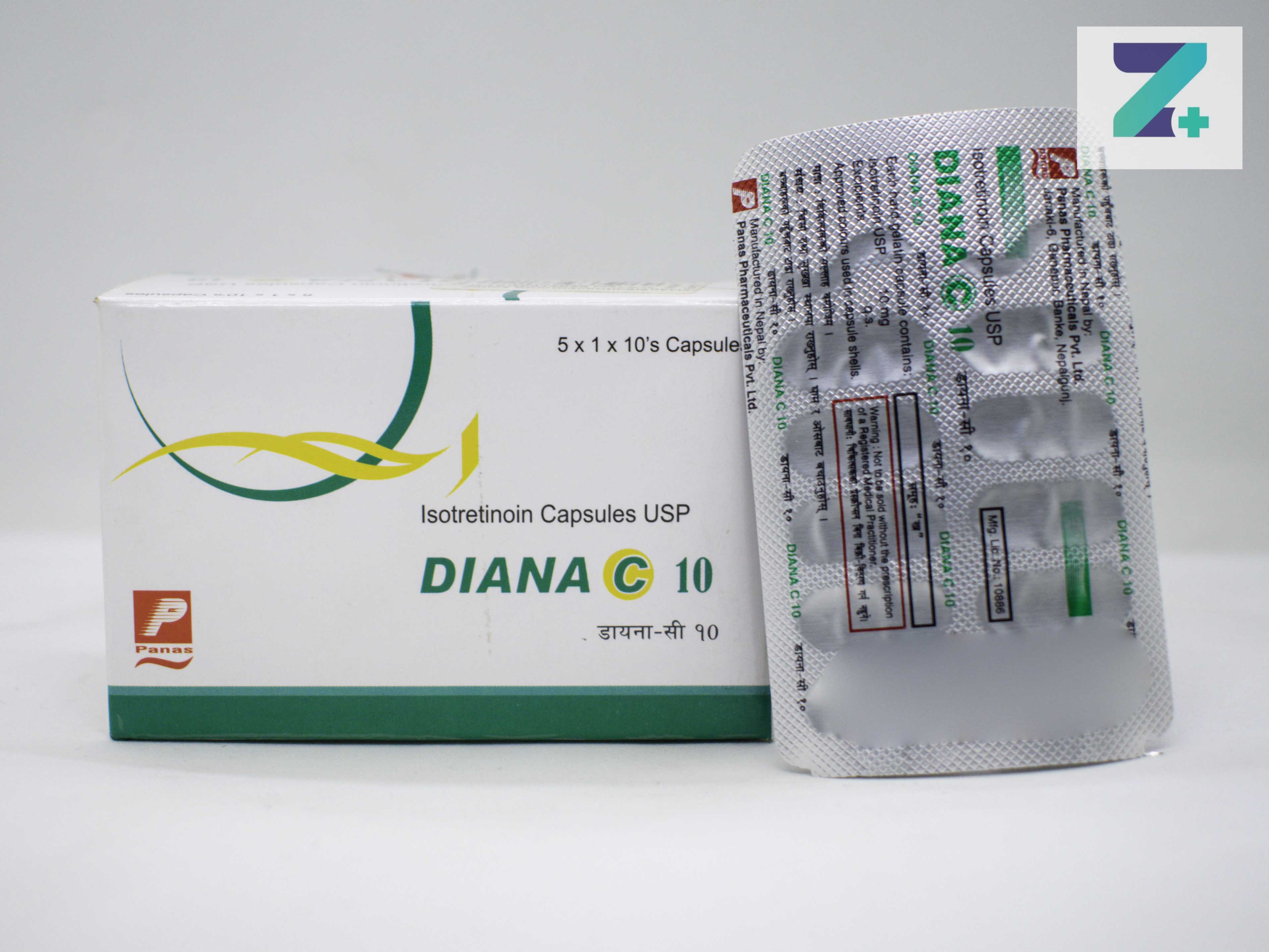
Price: Rs.220.00
10% off
In stock
Loose stock: 0
Description
DIANA C 10 CAP 10
Details
Composition
ISOTRETINOIN 10 MG
# ISOTRETINOIN 10 MG
## SHORT DESCRIPTION
**Isotretinoin 10 mg** is an oral retinoid medicine primarily prescribed for **severe acne**, including severe nodular or cystic acne and acne that has not responded adequately to other treatments. It works mainly by substantially reducing **sebum (oil) production**, helping prevent blocked pores and reducing acne-related inflammation.
Isotretinoin is a **prescription-only medicine requiring medical supervision** because it can cause serious adverse effects, most importantly severe birth defects if taken during pregnancy.
---
## KEY BENEFITS
* Provides highly effective treatment for **severe and persistent acne**.
* Significantly reduces excessive skin-oil production.
* Helps prevent clogged pores and new acne lesions.
* Reduces inflammation associated with severe acne.
* May provide prolonged acne improvement after a completed treatment course.
* Can help reduce the risk of ongoing severe acne and subsequent scarring when appropriately prescribed.
---
## USES / INDICATIONS
Isotretinoin 10 mg may be prescribed for:
* **Severe nodular or cystic acne**
* Severe acne that has not responded sufficiently to other treatments
* Acne causing significant scarring or a high risk of scarring
* Persistent severe inflammatory acne
* Other difficult-to-treat acne conditions when specifically recommended by a dermatologist
It is generally **not intended for routine treatment of mild acne**.
---
## HOW IT WORKS
Isotretinoin is a **retinoid derived from vitamin A**.
It acts on several processes involved in acne development:
1. **Reduces sebaceous gland activity**, resulting in substantially less sebum production.
2. Helps normalize the shedding of skin cells within hair follicles.
3. Reduces formation of clogged pores.
4. Reduces conditions that support the growth of *Cutibacterium acnes*.
5. Decreases inflammation associated with acne.
**Isotretinoin → less sebum + fewer blocked follicles + reduced inflammation → fewer acne lesions.**
---
## DOSAGE & ADMINISTRATION
### Typical Adult/Adolescent Dosing
Isotretinoin dosage is usually individualized according to **body weight, severity of acne, treatment response, and tolerability**.
A commonly used initial dose is around **0.5 mg/kg/day**, with the prescriber adjusting the dose when necessary.
The **10 mg capsule strength** may be used alone or combined with other strengths to achieve the prescribed daily dose.
### How to Take
* Take exactly as prescribed by your dermatologist.
* Swallow the capsule whole with water.
* Do not crush, chew, or open the capsule.
* Take it with food according to the specific product instructions because absorption can vary between formulations.
* Take doses at approximately the same time each day.
* Do not increase or decrease the dose without medical advice.
### Duration
Treatment commonly continues for several months. The duration depends on the prescribed dose, response, side effects, and overall treatment plan.
### Missed Dose
Take a missed dose when remembered unless it is close to the next scheduled dose.
**Do not take a double dose.**
---
# SIDE EFFECTS
## Common Side Effects
* Very dry lips or cracked lips
* Dry skin
* Dry or irritated eyes
* Dry nose
* Nosebleeds
* Increased skin sensitivity
* Skin peeling
* Headache
* Back pain
* Muscle aches
* Joint discomfort
## Laboratory Changes
Isotretinoin may cause:
* Increased triglycerides
* Increased cholesterol
* Increased liver enzymes
Your healthcare professional may perform blood tests during treatment when appropriate.
## Serious Side Effects
Seek medical attention if you develop:
* Severe or persistent headache with visual changes
* Significant mood or behavioral changes
* Severe abdominal pain
* Yellowing of the skin or eyes
* Significant vision changes
* Severe muscle symptoms
* Difficulty breathing or facial swelling
---
# PRECAUTIONS & WARNINGS
## ⚠️ PREGNANCY – CRITICAL WARNING
**Isotretinoin can cause severe and potentially life-threatening birth defects.**
It **must not be taken during pregnancy**.
People who can become pregnant generally need to follow strict pregnancy-prevention requirements, which may include:
* Pregnancy testing before treatment
* Regular pregnancy testing during treatment
* Effective contraception according to local requirements
* Pregnancy-prevention counseling
If pregnancy occurs while taking isotretinoin:
**Stop taking the medicine and contact your healthcare professional immediately.**
### Breastfeeding
Isotretinoin is generally **not recommended during breastfeeding** because of potential risks to the infant.
### Liver Disease
Inform your doctor if you have liver disease or abnormal liver-function tests.
### High Cholesterol or Triglycerides
Isotretinoin can increase blood lipid levels. Tell your doctor if you have a history of high cholesterol or triglycerides.
### Mental Health
Mood changes, depression, anxiety, irritability, and suicidal thoughts have been reported during isotretinoin treatment.
Report significant changes in mood or behavior promptly.
### Vitamin A
Avoid vitamin A supplements unless specifically prescribed. Taking excessive vitamin A together with isotretinoin may increase toxicity.
### Sun Exposure
Isotretinoin may increase skin sensitivity and irritation.
Use appropriate sunscreen, protective clothing, and avoid excessive sun exposure or tanning beds.
### Cosmetic Procedures
Skin may become more fragile during treatment. Discuss waxing, laser procedures, dermabrasion, and other aggressive cosmetic procedures with your dermatologist before undergoing them.
---
# DRUG INTERACTIONS
### Tetracycline Antibiotics
Isotretinoin should generally **not be combined with tetracycline antibiotics**, such as doxycycline or minocycline, unless specifically directed by a specialist.
The combination may increase the risk of **intracranial hypertension**.
### Vitamin A
Avoid vitamin A supplements unless specifically advised by your healthcare professional.
### Other Acne Treatments
Products containing:
* Benzoyl peroxide
* Salicylic acid
* Topical retinoids
* Strong exfoliating acids
may increase skin dryness and irritation when used during isotretinoin therapy.
Use them only according to your dermatologist's recommendations.
### Alcohol
Alcohol may contribute to increased triglyceride levels and liver stress. Discuss alcohol consumption with your healthcare professional.
---
# STORAGE INFORMATION
* Store according to the manufacturer's instructions.
* Keep capsules in the original packaging.
* Protect from excessive heat, moisture, and direct sunlight.
* Keep out of reach of children.
* Do not use after the expiry date.
* Do not share isotretinoin with another person.
---
# PRESCRIPTION STATUS
**Prescription-only medicine.**
Isotretinoin is subject to strict prescribing and dispensing controls in many countries because of its potentially serious adverse effects, especially the risk of severe fetal birth defects.
Medical monitoring and pregnancy-prevention measures may be required depending on local regulations.
---
# GENUINE MEDICINE ASSURANCE
When purchasing **Isotretinoin 10 mg**, use a **licensed pharmacy or authorized medicine supplier**.
Check the product for:
* Correct medicine name and strength
* Manufacturer details
* Batch/lot number
* Manufacturing and expiry dates
* Intact packaging
* Regulatory labeling
* Patient information leaflet
Do not use products with damaged packaging, altered labels, missing batch information, or questionable authenticity.
**Isotretinoin should never be shared with another person.**
---
# FAQ – ISOTRETINOIN 10 MG
### 1. What is Isotretinoin 10 mg used for?
Isotretinoin 10 mg is primarily used to treat **severe or treatment-resistant acne**, particularly nodular and cystic acne.
### 2. Is Isotretinoin a steroid?
No. Isotretinoin is an **oral retinoid related to vitamin A**, not a steroid.
### 3. How does Isotretinoin work?
It reduces sebum production, helps prevent clogged hair follicles, normalizes follicular cell growth, and reduces inflammation associated with acne.
### 4. Is Isotretinoin effective for severe acne?
Yes. It is one of the most effective treatments for severe acne and may provide prolonged improvement after a completed course.
### 5. Is 10 mg Isotretinoin a low dose?
The 10 mg capsule is a relatively low **capsule strength**, but the appropriate daily dose depends on body weight, acne severity, response, and the treatment plan prescribed by the dermatologist.
### 6. How long does Isotretinoin treatment last?
A course often lasts several months, although the exact duration varies between patients.
### 7. Does Isotretinoin permanently cure acne?
It can produce long-lasting improvement or remission, but acne can return in some patients after treatment.
### 8. Does Isotretinoin make acne worse at first?
Some people experience temporary worsening during the early stages of treatment. Contact your dermatologist if the worsening is significant.
### 9. Why does Isotretinoin cause dry lips?
The medicine substantially reduces sebaceous gland activity, which can reduce natural skin and lip oil production and result in significant dryness.
### 10. Can I use moisturizer with Isotretinoin?
Yes. A gentle, non-irritating moisturizer and lip balm are commonly used to manage dryness.
### 11. Can I take Vitamin A with Isotretinoin?
Generally, **vitamin A supplements should be avoided** unless specifically recommended by your healthcare professional.
### 12. Can I take doxycycline with Isotretinoin?
Generally, no. Combining isotretinoin with tetracycline antibiotics such as doxycycline can increase the risk of intracranial hypertension.
### 13. Can I drink alcohol while taking Isotretinoin?
Alcohol may increase liver stress and triglyceride levels. Discuss alcohol use with your healthcare professional.
### 14. Can I become pregnant while taking Isotretinoin?
**Pregnancy must be avoided.** Isotretinoin can cause severe birth defects.
### 15. What should I do if I become pregnant while taking Isotretinoin?
**Stop taking isotretinoin and contact your healthcare professional immediately.**
### 16. Can I use Isotretinoin while breastfeeding?
Isotretinoin is generally not recommended while breastfeeding. Consult your healthcare professional.
### 17. Can Isotretinoin affect mood?
Mood changes, depression, anxiety, and suicidal thoughts have been reported. Report significant mood or behavioral changes to your healthcare professional promptly.
### 18. Does Isotretinoin affect cholesterol?
Yes. It can increase triglycerides and cholesterol in some patients, which is why blood-lipid monitoring may be recommended.
### 19. Why are blood tests required during Isotretinoin treatment?
Blood tests may be used to monitor **liver function and blood lipid levels** and assess safety during treatment.
### 20. Is Isotretinoin 10 mg available without a prescription?
No. Isotretinoin is generally a **prescription-only medicine** and requires appropriate medical supervision.
---
# MEDICAL DISCLAIMER
This information about **Isotretinoin 10 mg** is intended for general educational purposes only and does not replace professional medical advice, diagnosis, or treatment.
**Isotretinoin is a high-risk prescription medicine and must not be used during pregnancy.** Appropriate pregnancy-prevention measures and monitoring requirements must be followed according to local regulations.
Patients may require monitoring of liver function and blood lipid levels. Report severe headache with visual changes, significant mood changes, severe abdominal pain, yellowing of the skin or eyes, or other serious symptoms promptly.
Do not combine isotretinoin with **tetracycline antibiotics or vitamin A supplements** unless specifically instructed by a qualified healthcare professional.
**Use Isotretinoin 10 mg only under the supervision of a qualified healthcare professional, preferably a dermatologist.**