DICLOBACK 100MG
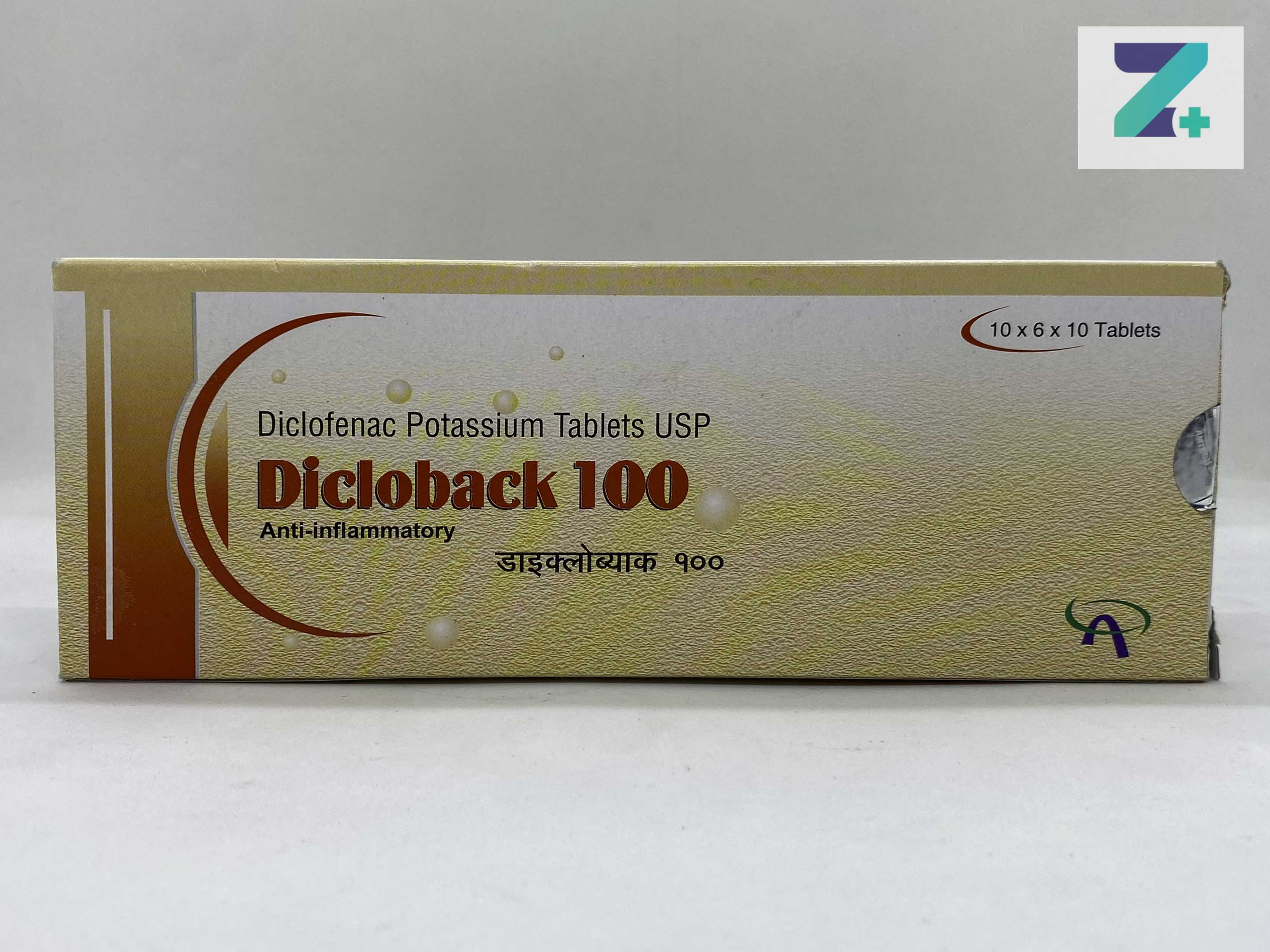
Price: Rs.55.00
10% off
In stock
Loose stock: 6
Description
DICLOBACK 100MG TAB 10
Details
Composition
DICLOFENAC POTASSIUM 100 MG
# DICLOFENAC POTASSIUM 100 MG
## SHORT DESCRIPTION
**Diclofenac Potassium 100 mg** is a **non-steroidal anti-inflammatory drug (NSAID)** used to relieve pain and reduce inflammation. It may be prescribed for conditions such as musculoskeletal pain, arthritis, acute painful conditions, and other inflammatory disorders.
Diclofenac works by reducing the production of **prostaglandins**, substances involved in pain, inflammation, and fever.
> **Important:** Diclofenac potassium products are commonly available in immediate-release strengths such as 25 mg or 50 mg, while **100 mg diclofenac preparations are often modified/extended-release formulations and may use a different diclofenac salt depending on the product**. Verify the exact salt, formulation, and strength on the product packaging before publishing or dispensing.
---
## KEY BENEFITS
* Helps relieve **mild to moderate pain**.
* Reduces inflammation associated with painful conditions.
* Can help relieve **joint and muscle pain**.
* May reduce pain and stiffness associated with arthritis.
* Can provide relief from certain acute musculoskeletal conditions.
* Helps reduce inflammatory pain by inhibiting prostaglandin production.
---
## USES / INDICATIONS
Diclofenac may be prescribed for:
1. **Osteoarthritis**
2. **Rheumatoid arthritis**
3. Musculoskeletal and joint pain
4. Back pain
5. Sprains and strains
6. Acute inflammatory pain
7. Dental pain
8. Painful menstrual periods
9. Other painful inflammatory conditions when medically appropriate
The exact approved indications depend on the specific formulation and local regulatory guidelines.
---
## HOW IT WORKS
Diclofenac is an **NSAID** that inhibits cyclooxygenase (**COX-1 and COX-2**) enzymes.
These enzymes are involved in producing **prostaglandins**, which contribute to:
* Pain
* Inflammation
* Swelling
* Fever
By reducing prostaglandin production, diclofenac helps decrease **pain and inflammation**.
---
## DOSAGE & ADMINISTRATION
### Typical Adult Use
The appropriate dosage depends on the condition being treated, age, other medicines, and individual health factors.
The **maximum recommended daily amount of systemic diclofenac is generally 150 mg**, although the appropriate dose should be determined by a healthcare professional.
### Important for 100 mg Products
A **100 mg tablet/capsule may be a modified-release formulation** and should be taken according to the specific product instructions.
* Do not assume that a 100 mg tablet can be split into multiple doses.
* Do not crush or chew modified-release tablets unless the product instructions specifically allow it.
* Do not exceed the prescribed dose.
### How to Take
* Take exactly as prescribed.
* Take with or after food if advised to reduce stomach irritation.
* Swallow with water.
* Use the **lowest effective dose for the shortest necessary duration**.
### Missed Dose
Take the missed dose when remembered unless it is nearly time for the next dose.
**Do not take two doses together.**
---
## SIDE EFFECTS
### Common Side Effects
Possible side effects include:
* Nausea
* Indigestion
* Stomach pain
* Heartburn
* Diarrhea
* Constipation
* Headache
* Dizziness
* Bloating
### Serious Side Effects
NSAIDs can rarely cause serious complications, including:
* **Stomach or intestinal ulcers**
* Gastrointestinal bleeding
* Kidney injury
* Liver injury
* Severe allergic reactions
* Fluid retention
* Increased blood pressure
* Heart attack or stroke
### Seek Immediate Medical Attention For
* Vomiting blood
* Black or tarry stools
* Severe abdominal pain
* Chest pain
* Sudden weakness or difficulty speaking
* Severe difficulty breathing
* Facial or throat swelling
* Very little or no urine
* Yellowing of the skin or eyes
---
## PRECAUTIONS & WARNINGS
### Gastrointestinal Bleeding
Diclofenac can cause **stomach or intestinal ulcers and bleeding**, sometimes without warning.
The risk is higher in people who:
* Have a history of ulcers or gastrointestinal bleeding
* Are older adults
* Use high NSAID doses
* Take corticosteroids
* Take anticoagulants or antiplatelet medicines
* Consume significant amounts of alcohol
### Cardiovascular Risk
Diclofenac may increase the risk of **heart attack and stroke**, particularly with higher doses or prolonged treatment.
Use caution in people with:
* Heart disease
* Previous heart attack
* Stroke
* High blood pressure
* High cholesterol
* Diabetes
* Smoking history
### Kidney Problems
NSAIDs can reduce blood flow to the kidneys.
Tell your healthcare professional if you have:
* Kidney disease
* Heart failure
* Dehydration
* Significant fluid loss
### Liver Disease
Diclofenac can rarely cause liver injury. Long-term treatment may require monitoring of liver function.
### Asthma and NSAID Sensitivity
Some people with asthma can experience bronchospasm or allergic reactions after taking NSAIDs.
Tell your healthcare professional if aspirin or other NSAIDs have previously caused breathing problems or allergic reactions.
### Pregnancy
Diclofenac should generally be **avoided from around 20 weeks of pregnancy unless specifically recommended by a healthcare professional**, and NSAIDs should generally not be used during the **third trimester** because of fetal and delivery-related risks.
If pregnant or planning pregnancy, consult your healthcare professional before use.
### Breastfeeding
Discuss diclofenac use with your healthcare professional if breastfeeding.
### Elderly Patients
Older adults may have a higher risk of gastrointestinal bleeding, kidney problems, cardiovascular complications, and other NSAID-related adverse effects.
---
## DRUG INTERACTIONS
### Other NSAIDs
Avoid combining diclofenac with other NSAIDs such as:
* Ibuprofen
* Naproxen
* Mefenamic acid
* Ketorolac
unless specifically instructed by a healthcare professional.
Combining NSAIDs increases the risk of **gastrointestinal bleeding and kidney problems**.
### Aspirin
Combining diclofenac with aspirin may increase gastrointestinal bleeding risk.
### Anticoagulants
Medicines such as **warfarin, apixaban, rivaroxaban, and dabigatran** can increase bleeding risk when used with diclofenac.
### Corticosteroids
Medicines such as prednisolone may increase the risk of stomach ulcers and gastrointestinal bleeding.
### ACE Inhibitors / ARBs
Diclofenac can reduce the blood-pressure-lowering effects of ACE inhibitors and ARBs and may increase kidney risk.
### Diuretics
NSAIDs can reduce the effectiveness of some diuretics and increase the risk of kidney problems.
### Lithium
Diclofenac can increase lithium concentrations and potentially cause lithium toxicity.
### Methotrexate
NSAIDs may increase methotrexate exposure and toxicity in certain circumstances.
### Cyclosporine or Tacrolimus
These medicines may increase the risk of kidney toxicity when combined with NSAIDs.
### Digoxin
Diclofenac may increase digoxin levels in some patients.
Always tell your healthcare professional about all prescription medicines, OTC medicines, vitamins, and herbal supplements you take.
---
## STORAGE INFORMATION
* Store according to the manufacturer's instructions.
* Keep at room temperature unless the product label specifies otherwise.
* Protect from excessive heat, moisture, and direct sunlight.
* Keep tablets in their original packaging.
* Keep out of reach and sight of children.
* Do not use after the expiry date.
* Do not use tablets if the packaging is damaged.
---
## PRESCRIPTION STATUS
**Prescription status varies by country and formulation.**
Diclofenac 100 mg systemic preparations are generally subject to **prescription controls in many countries**, particularly because higher-strength NSAID treatment carries increased risks.
Use only according to the directions of a qualified healthcare professional.
---
## GENUINE MEDICINE ASSURANCE
When purchasing **Diclofenac Potassium 100 mg**, obtain it from a **licensed pharmacy or authorized medicine supplier**.
Before use, verify:
* Exact medicine name and salt
* Strength and dosage form
* Active ingredient
* Manufacturer
* Batch/lot number
* Manufacturing and expiry dates
* Packaging and seal integrity
* Regulatory information
> **Important:** Because 100 mg diclofenac products may differ in salt and release formulation, verify that the package specifically states **diclofenac potassium 100 mg** before listing or dispensing the product.
Avoid products with damaged packaging, missing labels, altered expiry dates, or questionable authenticity.
---
# FAQ – DICLOFENAC POTASSIUM 100 MG
### 1. What is Diclofenac Potassium 100 mg used for?
Diclofenac is used to relieve **pain and inflammation** associated with conditions such as arthritis, musculoskeletal pain, acute inflammatory conditions, and painful menstrual periods.
### 2. Is Diclofenac Potassium a painkiller?
Yes. Diclofenac is an **NSAID pain reliever** that also reduces inflammation.
### 3. How does Diclofenac work?
It blocks COX enzymes and reduces the production of **prostaglandins**, which contribute to pain, inflammation, and swelling.
### 4. Is Diclofenac Potassium 100 mg a high dose?
A 100 mg systemic diclofenac preparation is a relatively high-strength formulation. The appropriate dose depends on the formulation and condition being treated and should be prescribed by a healthcare professional.
### 5. Can Diclofenac be used for back pain?
Diclofenac may be prescribed for **acute back pain and musculoskeletal inflammation** when an NSAID is appropriate.
### 6. Can Diclofenac be used for arthritis?
Yes. Diclofenac may help relieve pain, inflammation, and stiffness associated with **osteoarthritis and rheumatoid arthritis**.
### 7. Can Diclofenac be taken on an empty stomach?
Taking diclofenac with or after food may reduce stomach irritation. Follow your specific product instructions.
### 8. Can I take Ibuprofen with Diclofenac?
Generally, **do not combine diclofenac with ibuprofen** or other NSAIDs unless specifically instructed by a healthcare professional.
### 9. Can Diclofenac cause stomach ulcers?
Yes. Diclofenac can cause **stomach or intestinal ulcers and bleeding**, particularly with higher doses or prolonged treatment.
### 10. Can Diclofenac affect the kidneys?
Yes. NSAIDs can reduce kidney blood flow and may cause kidney problems, especially in people with kidney disease, dehydration, heart failure, or certain other risk factors.
### 11. Can Diclofenac increase blood pressure?
Yes. Diclofenac and other NSAIDs can cause fluid retention and may increase blood pressure in some people.
### 12. Can Diclofenac affect the heart?
Long-term or high-dose NSAID treatment can increase the risk of **heart attack and stroke**, particularly in people with cardiovascular risk factors.
### 13. Can I take Diclofenac during pregnancy?
Diclofenac should generally be avoided during later pregnancy and should only be used during pregnancy when specifically recommended by a healthcare professional.
### 14. Can I drink alcohol while taking Diclofenac?
Alcohol can increase stomach irritation and may increase the risk of gastrointestinal bleeding. Avoid excessive alcohol while taking diclofenac.
### 15. What should I do if I miss a Diclofenac dose?
Take the missed dose when remembered unless it is almost time for your next dose. **Do not double the dose.**
### 16. Can Diclofenac be used long-term?
Long-term treatment should only be undertaken under medical supervision because prolonged NSAID use increases the risk of gastrointestinal, kidney, cardiovascular, and liver complications.
### 17. What are the signs of Diclofenac-related stomach bleeding?
Warning signs include **vomiting blood, black/tarry stools, bloody stools, severe abdominal pain, weakness, or fainting**. Seek urgent medical attention if these occur.
### 18. Is Diclofenac Potassium 100 mg the same as Diclofenac Sodium 100 mg?
No. **Diclofenac potassium and diclofenac sodium are different salts**, and products may also have different release characteristics. They should not automatically be substituted without professional advice.
### 19. Can Diclofenac be used for toothache?
Diclofenac may provide temporary relief of dental pain, but a dentist should address the underlying cause of tooth pain, particularly if infection or an abscess is suspected.
### 20. Is Diclofenac Potassium 100 mg available without a prescription?
Prescription requirements vary by country and formulation. Higher-strength systemic diclofenac products are generally subject to greater dispensing restrictions and should be used under medical supervision.
---
## MEDICAL DISCLAIMER
This information about **Diclofenac Potassium 100 mg** is provided for general educational purposes only and does not replace professional medical advice, diagnosis, or treatment.
Diclofenac is an NSAID that can cause **gastrointestinal bleeding, ulcers, kidney injury, cardiovascular complications, liver injury, and serious allergic reactions**. The risk may increase with higher doses and prolonged treatment.
**The exact product formulation should be verified before use.** A 100 mg diclofenac product may be a modified-release preparation, and diclofenac potassium and diclofenac sodium products are not necessarily interchangeable.
Do not combine diclofenac with other NSAIDs unless specifically instructed by a healthcare professional. Seek urgent medical attention for **chest pain, difficulty breathing, facial swelling, vomiting blood, black stools, severe abdominal pain, sudden weakness, or significant reduction in urination**.
Always follow the **specific product label and your healthcare professional's instructions** regarding dosage, duration, contraindications, interactions, and storage.