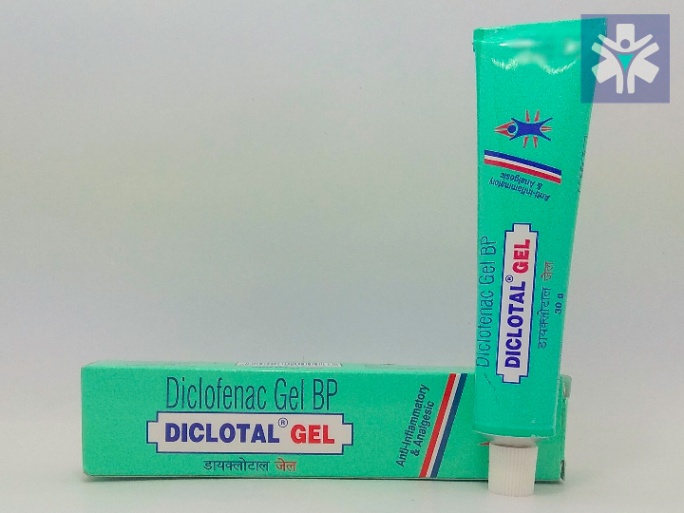
DICLOTAL
Price: Rs.150.40
10% off
In stock
Loose stock: 0
Description
DICLOTAL GEL 30GM
Details
Composition
DICLOFENAC DIETHYLAMINE 1.16 % W/W
# Diclofenac Diethylamine 1.16% w/w
## SHORT DESCRIPTION
Diclofenac Diethylamine 1.16% w/w is a **topical non-steroidal anti-inflammatory drug (NSAID)** used to relieve localized pain and inflammation affecting muscles, joints, ligaments and tendons.
It is commonly available as a topical gel and may be used for conditions such as **sprains, strains, sports injuries, muscle pain and localized osteoarthritis pain**. When applied to the skin, diclofenac acts mainly at the affected area and generally produces less systemic exposure than oral diclofenac.
## KEY BENEFITS
* Provides targeted relief from **localized pain**
* Helps reduce inflammation and swelling
* Helps relieve muscle and joint discomfort
* May reduce pain associated with sprains and strains
* Useful for certain sports-related soft-tissue injuries
* May help relieve localized osteoarthritis pain
* Topical application can reduce exposure to the digestive system compared with oral NSAIDs
## USES / INDICATIONS
Diclofenac Diethylamine 1.16% w/w may be used for:
* **Muscle pain**
* Joint pain
* Sprains and strains
* Sports injuries
* Tendon and ligament pain
* Soft-tissue inflammation
* Localized osteoarthritis pain
* Musculoskeletal pain and inflammation
The exact approved uses may vary according to the product formulation and local regulations.
## HOW IT WORKS
Diclofenac is an **NSAID** that inhibits cyclooxygenase (COX) enzymes involved in the production of **prostaglandins**.
Prostaglandins contribute to pain, inflammation and swelling. By reducing prostaglandin production, topical diclofenac helps decrease:
* Pain
* Inflammation
* Swelling
* Tenderness
Diclofenac Diethylamine helps facilitate delivery of diclofenac through the skin to the underlying tissues.
## DOSAGE & ADMINISTRATION
* Apply a thin layer of Diclofenac Diethylamine gel to the affected area as directed by your doctor or the product label.
* Gently massage the gel into the skin.
* The frequency of application depends on the specific formulation and product instructions; many preparations are applied **3–4 times daily**.
* Wash your hands after application unless the hands are the treatment area.
* Do not apply more than the recommended amount.
* Do not apply to broken, infected, irritated or damaged skin.
* Avoid contact with the eyes, mouth and other mucous membranes.
* Do not cover the treated area with an airtight dressing unless advised by a healthcare professional.
### Missed Application
Apply the gel when remembered unless it is nearly time for the next application. Do not apply an excessive amount to compensate.
## SIDE EFFECTS
Common side effects may include:
* Skin irritation
* Redness
* Itching
* Burning or stinging
* Dryness
* Rash
* Increased sensitivity at the application site
Less commonly, systemic NSAID-related effects may occur, particularly when used over large areas or for prolonged periods.
### Serious Side Effects
Stop using the product and seek medical attention if you develop:
* Severe skin rash
* Facial or throat swelling
* Difficulty breathing
* Severe wheezing
* Signs of a serious allergic reaction
* Severe blistering or skin peeling
## PRECAUTIONS & WARNINGS
* **For external use only.**
* Avoid applying the gel to cuts, wounds, eczema or infected skin.
* Avoid contact with the eyes and mucous membranes.
* Do not use if you have previously experienced an allergic reaction to diclofenac, aspirin or other NSAIDs.
* Avoid excessive exposure to sunlight on treated areas because topical diclofenac may cause photosensitivity in some individuals.
* Do not use large quantities over large areas for prolonged periods without medical advice.
* Do not apply heat directly over the treated area unless advised.
* Tell your doctor if you have a history of asthma triggered by aspirin or NSAIDs.
* Consult your healthcare professional before use during pregnancy, particularly during the **third trimester**.
* If symptoms persist or worsen, seek medical advice.
* Avoid using multiple diclofenac-containing products simultaneously unless specifically advised.
## DRUG INTERACTIONS
Although topical diclofenac generally produces lower systemic exposure than oral diclofenac, interactions can still be relevant, particularly with prolonged or extensive use.
Tell your healthcare professional if you use:
* Oral diclofenac or other NSAIDs
* Aspirin
* Anticoagulants such as warfarin
* Antiplatelet medicines such as clopidogrel
* Corticosteroids
* Certain blood-pressure medicines
* Diuretics
* Lithium
* Methotrexate
* Cyclosporine or tacrolimus
Using topical diclofenac together with other NSAIDs may increase the risk of NSAID-related adverse effects.
## STORAGE INFORMATION
* Store according to the manufacturer's instructions.
* Keep at the recommended room temperature.
* Protect from excessive heat and direct sunlight.
* Keep away from moisture.
* Keep the tube tightly closed when not in use.
* Keep out of reach of children.
* Do not use after the expiry date.
* Do not use if the packaging or tube is damaged.
## PRESCRIPTION STATUS
**Prescription status varies by country and product formulation.**
Diclofenac Diethylamine topical preparations may be available **with or without a prescription** depending on the strength, formulation and local regulations. Follow the applicable pharmacy and healthcare requirements in your country.
## GENUINE MEDICINE ASSURANCE
For safe and genuine Diclofenac Diethylamine 1.16% w/w:
* Purchase from a licensed and reputable pharmacy.
* Check the product name and strength.
* Verify the manufacturer's information.
* Check the batch number and expiry date.
* Ensure the tube and seal are intact.
* Do not use products with damaged or suspicious packaging.
* Purchase medicines from authorized sources.
* Follow the storage instructions printed on the packaging.
* Consult a pharmacist if you have concerns about product authenticity.
## FAQ
### What is Diclofenac Diethylamine 1.16% used for?
Diclofenac Diethylamine 1.16% gel is used to relieve **localized pain and inflammation** associated with conditions such as sprains, strains, muscle pain, sports injuries and certain joint conditions.
### Is Diclofenac Diethylamine a painkiller?
Yes. It is a topical **NSAID pain-relieving and anti-inflammatory medicine**.
### Is Diclofenac Diethylamine a steroid?
No. Diclofenac is a **non-steroidal anti-inflammatory drug (NSAID)**.
### What is the difference between topical and oral diclofenac?
Topical diclofenac is applied directly to the affected area and generally results in lower systemic exposure than oral diclofenac. Oral diclofenac affects the whole body and may have greater systemic adverse effects.
### How does Diclofenac Diethylamine gel work?
It reduces the production of prostaglandins by inhibiting COX enzymes. This helps decrease pain, inflammation and swelling in the treated area.
### Can Diclofenac Diethylamine be used for sprains?
Yes. Topical diclofenac may help relieve **pain and inflammation associated with sprains and strains**.
### Can Diclofenac gel be used for muscle pain?
Yes. It can be used for certain localized muscle and soft-tissue pain when appropriate.
### Can Diclofenac Diethylamine help arthritis pain?
Topical diclofenac may help relieve pain associated with certain forms of **osteoarthritis**, particularly when the affected joint is suitable for topical treatment.
### How often should Diclofenac Diethylamine 1.16% be applied?
Application frequency depends on the specific product. Many 1.16% diclofenac gels are applied **3–4 times daily**, but always follow the product label or your healthcare professional's instructions.
### Can I apply Diclofenac gel to broken skin?
No. Avoid applying it to **cuts, open wounds, infected skin or severely irritated skin**.
### Can I use Diclofenac gel with a bandage?
Avoid tight or airtight coverings unless specifically advised by your healthcare professional. Occlusion may increase absorption and skin irritation.
### Can I use heat after applying Diclofenac gel?
Avoid applying heating pads or other direct heat over the treated area unless your healthcare professional specifically advises it.
### Can Diclofenac gel cause skin irritation?
Yes. Redness, itching, burning, dryness or irritation can occur at the application site.
### Can Diclofenac Diethylamine cause stomach problems?
Topical diclofenac generally has lower systemic exposure than oral diclofenac, but some systemic absorption occurs. Stomach-related NSAID effects are therefore still possible, especially with extensive or prolonged use.
### Can I take oral diclofenac while using Diclofenac gel?
Do not combine topical and oral diclofenac unless your doctor specifically recommends it. Using multiple NSAID products may increase the risk of adverse effects.
### Can Diclofenac gel be used with ibuprofen?
Both are NSAIDs. Using them together may increase NSAID-related risks, so consult your healthcare professional before combining them.
### Can Diclofenac Diethylamine be used during pregnancy?
Consult your healthcare professional before using it during pregnancy. **NSAIDs should generally be avoided during the third trimester** unless specifically directed by a doctor.
### Can Diclofenac gel be used while breastfeeding?
Discuss its use with your healthcare professional. Avoid applying it to the breast or nipple where the infant could come into contact with the medicine.
### How long does Diclofenac gel take to work?
Pain relief can begin after application, but the time to noticeable improvement varies depending on the condition and severity of the pain.
### What should I do if I apply too much Diclofenac gel?
Wipe or wash off excess gel. If a large amount has been applied repeatedly or you experience unusual symptoms, contact a healthcare professional.
### What should I do if I forget to apply Diclofenac gel?
Apply it when remembered unless it is nearly time for the next application. Do not apply an excessive amount to make up for a missed application.
### How should Diclofenac Diethylamine 1.16% gel be stored?
Store it according to the manufacturer's instructions, generally at room temperature away from excessive heat, sunlight and moisture. Keep the tube tightly closed and out of reach of children.
## MEDICAL DISCLAIMER
This information is provided for educational and informational purposes only and does not replace professional medical advice, diagnosis or treatment. **Diclofenac Diethylamine 1.16% w/w is a topical NSAID and should be used according to the product label or advice from a qualified healthcare professional.** Avoid applying it to broken skin, eyes or mucous membranes, and seek medical advice if severe skin reactions or allergic symptoms occur. Patients with NSAID allergies, asthma triggered by NSAIDs, pregnancy or significant medical conditions should consult a healthcare professional before use. Always follow the specific product packaging and prescribed instructions.