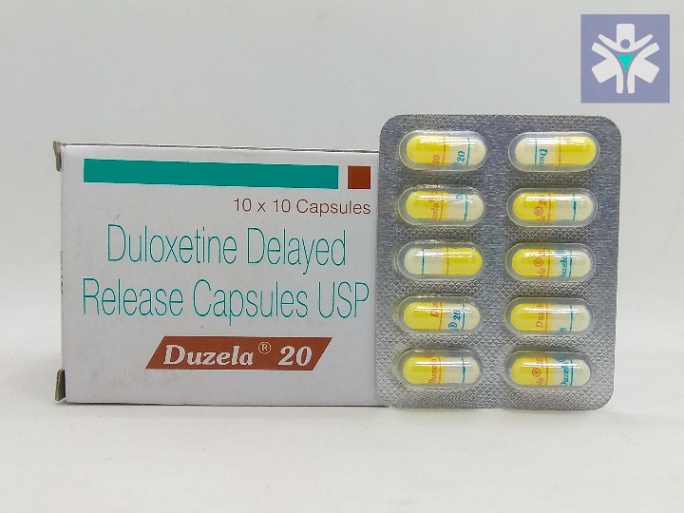
DUZELA 20MG
Price: Rs.153.60
13% off
In stock
Loose stock: 0
Description
DUZELA 20MG CAP 10
Details
Composition
DULOXETINE 20 MG
# DULOXETINE 20 MG
## SHORT DESCRIPTION
**Duloxetine 20 mg** is a prescription medicine belonging to the **serotonin-norepinephrine reuptake inhibitor (SNRI)** class. It is used to treat certain depressive and anxiety disorders and several types of chronic or nerve-related pain.
Duloxetine works by increasing the availability of **serotonin and norepinephrine** in the central nervous system, which can help regulate mood and modify pain signaling.
---
## KEY BENEFITS
* Helps manage symptoms of **depression** in appropriate patients.
* Helps reduce symptoms of certain **anxiety disorders**.
* Can help manage **diabetic peripheral neuropathic pain**.
* May be prescribed for **fibromyalgia-associated pain**.
* Can help manage certain forms of **chronic musculoskeletal pain**.
* May improve associated sleep, concentration, and daily functioning when symptoms are related to the treated condition.
> **Important:** Duloxetine is not an immediate painkiller. Its benefits may develop gradually over time.
---
## USES / INDICATIONS
Duloxetine may be prescribed for:
* **Major depressive disorder (MDD)**
* **Generalized anxiety disorder (GAD)**
* **Diabetic peripheral neuropathic pain**
* **Fibromyalgia**
* **Chronic musculoskeletal pain**, including certain chronic low-back or osteoarthritis-related pain conditions
Approved uses can vary depending on the country and specific product.
---
## HOW IT WORKS
Duloxetine is an **SNRI antidepressant**.
It inhibits the reuptake of:
* **Serotonin (5-HT)**
* **Norepinephrine (noradrenaline)**
This increases their activity in certain areas of the nervous system.
**Duloxetine → increases serotonin + norepinephrine signaling → helps regulate mood and alters pain-processing pathways → improves depressive/anxiety symptoms and reduces certain types of chronic pain.**
---
# DOSAGE & ADMINISTRATION
### Usual Adult Dosing
The appropriate dose depends on the condition being treated, age, response, tolerability, and other medical factors.
**20 mg is a capsule strength and is not necessarily the standard daily dose for every condition.**
For some patients, treatment may be started at a lower dose to improve tolerability before gradually increasing to the therapeutic dose.
Typical adult treatment doses may range from **40–60 mg per day** depending on the indication, although some patients may require different dosing.
### How to Take
* Take exactly as prescribed.
* Usually taken once or twice daily depending on the prescribed regimen.
* Take at approximately the same time each day.
* It can generally be taken with or without food.
* Swallow delayed-release capsules whole.
* **Do not crush, chew, or open delayed-release capsules** unless specifically instructed by a healthcare professional.
### Missed Dose
Take the missed dose when remembered unless it is close to the next scheduled dose.
**Do not take two doses together.**
### Do Not Stop Suddenly
Duloxetine should generally **not be stopped abruptly**. Sudden discontinuation can cause withdrawal/discontinuation symptoms.
Your doctor may gradually reduce the dose when treatment is being stopped.
---
# SIDE EFFECTS
## Common Side Effects
Possible side effects include:
* Nausea
* Dry mouth
* Headache
* Dizziness
* Sleepiness
* Insomnia
* Constipation
* Reduced appetite
* Increased sweating
* Fatigue
* Sexual dysfunction
Nausea is particularly common when treatment is first started and may improve with continued treatment.
## Other Possible Effects
* Increased blood pressure
* Palpitations
* Abdominal discomfort
* Changes in weight
* Difficulty urinating
* Blurred vision
## Serious Side Effects
Seek medical attention if you experience:
* Severe allergic reaction
* Significant mood or behavioral changes
* Suicidal thoughts or self-harm thoughts
* Severe agitation or confusion
* Yellowing of the skin or eyes
* Dark urine or severe abdominal pain
* Severe skin rash or blistering
* Unusual bleeding or bruising
* Symptoms of serotonin syndrome
---
# PRECAUTIONS & WARNINGS
## Suicidal Thoughts and Behavioral Changes
Antidepressants can increase the risk of suicidal thoughts or behavior in some **children, adolescents, and young adults**, particularly during the early stages of treatment or after dose changes.
Report new or worsening:
* Depression
* Anxiety
* Agitation
* Irritability
* Impulsive behavior
* Suicidal thoughts
immediately to a healthcare professional.
## Serotonin Syndrome
Duloxetine can rarely cause **serotonin syndrome**, particularly when combined with other medicines that increase serotonin.
Symptoms may include:
* Agitation
* Confusion
* Sweating
* Fever
* Rapid heartbeat
* Muscle rigidity or twitching
* Tremor
* Diarrhea
Seek urgent medical attention if these symptoms occur.
## Liver Problems
Rarely, duloxetine can cause serious liver injury.
Tell your doctor if you have liver disease or regularly consume substantial amounts of alcohol.
Seek medical attention for:
* Yellow skin or eyes
* Dark urine
* Persistent nausea
* Severe abdominal pain
* Unusual fatigue
## Blood Pressure
Duloxetine can increase blood pressure in some patients.
Blood pressure monitoring may be recommended, particularly when treatment begins or the dose is increased.
## Withdrawal/Discontinuation
Stopping duloxetine suddenly can cause:
* Dizziness
* Nausea
* Headache
* Irritability
* Anxiety
* Sleep disturbances
* Electric-shock-like sensations
* Sweating
Gradual dose reduction is generally recommended.
## Bleeding Risk
Duloxetine may increase bleeding risk, particularly when combined with NSAIDs, aspirin, anticoagulants, or antiplatelet medicines.
## Angle-Closure Glaucoma
Duloxetine can increase the risk of angle-closure glaucoma in susceptible individuals.
Seek urgent medical attention for sudden eye pain, eye redness, blurred vision, or halos around lights.
## Kidney Disease
Tell your doctor if you have significant kidney impairment. Dose selection may need to be adjusted, and duloxetine may not be appropriate in severe renal impairment depending on the product.
## Pregnancy
Tell your healthcare professional if you are pregnant or planning pregnancy. Duloxetine should be used during pregnancy only when the potential benefits justify the potential risks.
## Breastfeeding
Duloxetine passes into breast milk. Discuss breastfeeding with your healthcare professional before taking it.
---
# DRUG INTERACTIONS
### MAO Inhibitors
**Do not use duloxetine with MAO inhibitors.**
Examples include:
* Phenelzine
* Tranylcypromine
* Isocarboxazid
* Certain other MAO-inhibiting medicines
A sufficient interval is required when switching between duloxetine and an MAO inhibitor.
### Other Serotonergic Medicines
Combining duloxetine with other medicines that increase serotonin can increase the risk of **serotonin syndrome**.
Examples include:
* SSRIs
* Other SNRIs
* Tricyclic antidepressants
* Tramadol
* Certain migraine medicines such as triptans
* Lithium
* St. John's wort
### NSAIDs, Aspirin and Anticoagulants
Medicines such as:
* Ibuprofen
* Naproxen
* Aspirin
* Warfarin
* Other anticoagulants
may increase the risk of bleeding when combined with duloxetine.
### Alcohol
Regular or heavy alcohol consumption may increase the risk of liver injury and should be discussed with your healthcare professional.
### CYP1A2/CYP2D6 Interactions
Some medicines can increase or decrease duloxetine concentrations by affecting its metabolism.
Tell your doctor or pharmacist about **all prescription medicines, OTC medicines, vitamins, and herbal supplements** you use.
---
# STORAGE INFORMATION
* Store duloxetine according to the manufacturer's instructions.
* Keep capsules in the original packaging.
* Protect from excessive heat and moisture.
* Keep away from direct sunlight.
* Keep out of reach of children.
* Do not use after the expiry date.
---
# PRESCRIPTION STATUS
**Prescription-only medicine.**
Duloxetine 20 mg should be used under the supervision of a qualified healthcare professional because it affects the central nervous system and can cause significant drug interactions and withdrawal symptoms.
---
# GENUINE MEDICINE ASSURANCE
When purchasing **Duloxetine 20 mg**, obtain it from a **licensed pharmacy or authorized medicine supplier**.
Check the packaging for:
* Correct medicine name and strength
* Manufacturer details
* Batch/lot number
* Manufacturing and expiry dates
* Intact packaging and seal
* Appropriate regulatory information
* Patient information leaflet
Do not use products with damaged packaging, altered labeling, missing batch information, or questionable authenticity.
---
# FAQ – DULOXETINE 20 MG
### 1. What is Duloxetine 20 mg used for?
Duloxetine may be used for **depression, generalized anxiety disorder, diabetic nerve pain, fibromyalgia, and certain chronic musculoskeletal pain conditions**, depending on local approval and the prescribed treatment plan.
### 2. Is Duloxetine an antidepressant?
Yes. Duloxetine is an **SNRI antidepressant**.
### 3. How does Duloxetine work?
It increases the activity of serotonin and norepinephrine in the nervous system, helping regulate mood and modify pain signaling.
### 4. Is Duloxetine used for nerve pain?
Yes. Duloxetine is used for certain types of **neuropathic pain**, including diabetic peripheral neuropathic pain.
### 5. Is Duloxetine a painkiller?
It is not a conventional painkiller like paracetamol or ibuprofen. It helps reduce certain chronic and nerve-related pain by modifying pain-processing pathways.
### 6. Is 20 mg of Duloxetine a normal dose?
20 mg is a capsule strength. The appropriate daily dose depends on the condition being treated and the patient's response. Some patients begin at a lower dose before increasing to a therapeutic dose.
### 7. How long does Duloxetine take to work?
Some symptoms may improve within the first few weeks, but antidepressant and pain-relieving benefits can take **several weeks** to become more apparent.
### 8. Does Duloxetine cause sleepiness?
It can cause either **sleepiness or insomnia**, depending on the individual.
### 9. Can Duloxetine cause nausea?
Yes. Nausea is one of the more common early side effects and may improve as the body adjusts to treatment.
### 10. Can Duloxetine cause weight gain?
Weight changes can occur, although the effect varies between individuals. Appetite changes may also occur.
### 11. Can I stop Duloxetine suddenly?
No. Stopping suddenly can cause discontinuation symptoms. Your healthcare professional will usually recommend a **gradual dose reduction**.
### 12. Can Duloxetine be taken with alcohol?
Alcohol may increase the risk of liver problems and may worsen certain side effects. Discuss alcohol consumption with your healthcare professional.
### 13. Can Duloxetine be taken with ibuprofen?
The combination may increase the risk of **bleeding**, particularly with regular or high-dose NSAID use. Consult your doctor or pharmacist before combining them regularly.
### 14. Can Duloxetine be taken with tramadol?
Both medicines affect serotonin, so combining them can increase the risk of **serotonin syndrome**. Use together only when specifically prescribed and monitored.
### 15. Can Duloxetine be taken with other antidepressants?
Some combinations can cause serious interactions, particularly serotonin syndrome. Do not combine antidepressants without medical supervision.
### 16. Does Duloxetine increase blood pressure?
It can increase blood pressure in some people. Blood pressure monitoring may be recommended.
### 17. Can Duloxetine affect the liver?
Rarely, duloxetine can cause serious liver injury. People with liver disease or substantial alcohol use may require particular caution.
### 18. Can Duloxetine be used during pregnancy?
It may be used when medically necessary, but pregnancy should be discussed with a healthcare professional so that potential benefits and risks can be assessed.
### 19. Is Duloxetine addictive?
Duloxetine is **not generally considered addictive**, but stopping it suddenly can cause discontinuation symptoms because the body can adapt to the medicine.
### 20. Is Duloxetine 20 mg available without a prescription?
No. Duloxetine is generally a **prescription-only medicine**.
---
# MEDICAL DISCLAIMER
This information about **Duloxetine 20 mg** is provided for general educational purposes only and does not replace professional medical advice, diagnosis, or individualized treatment.
Duloxetine can cause significant side effects and drug interactions. It should **not be combined with MAO inhibitors** and should be used cautiously with other serotonergic medicines because of the risk of serotonin syndrome.
Do not stop duloxetine suddenly without medical advice. Seek urgent medical attention for suicidal thoughts, severe allergic reactions, symptoms of serotonin syndrome, severe skin reactions, significant bleeding, or signs of liver injury.
Patients with liver disease, severe kidney impairment, cardiovascular conditions, glaucoma, or significant bleeding risk should discuss their medical history with their healthcare professional before treatment.
**Use Duloxetine 20 mg only as prescribed by a qualified healthcare professional.**