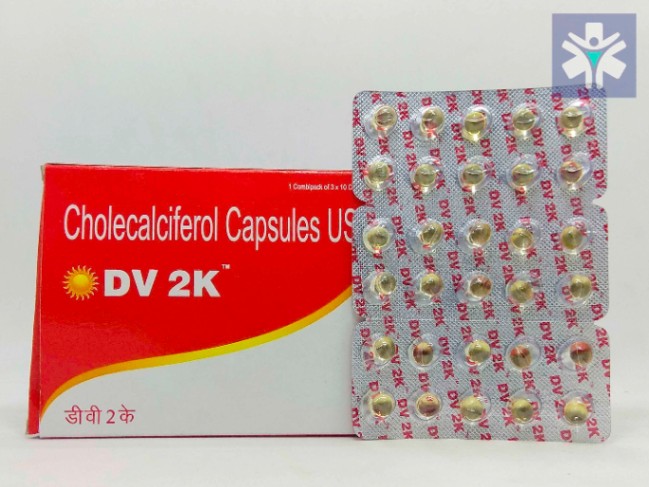
DV 2K
Price: Rs.247.50
10% off
In stock
Loose stock: 0
Description
DV 2K CAP 10
Details
Composition
CHOLECALCIFEROL 2000 IU
# Cholecalciferol 2000 IU
## Short Description
**Cholecalciferol 2000 IU** is a form of **vitamin D3** used to help prevent or treat vitamin D deficiency and support healthy bones, muscles, and normal calcium absorption. Vitamin D3 helps the body absorb calcium and phosphate, which are important for maintaining normal bone mineralization.
Cholecalciferol 2000 IU may be recommended for people with inadequate vitamin D intake, limited sun exposure, increased nutritional requirements, or an identified vitamin D deficiency.
> **Important:** Vitamin D is fat-soluble and can accumulate in the body. Do not take higher doses or combine multiple vitamin D supplements without medical advice.
---
## Key Benefits
* Helps prevent and correct **vitamin D deficiency**
* Supports **calcium absorption**
* Helps maintain strong and healthy bones
* Supports normal **muscle function**
* Contributes to normal immune-system function
* Helps maintain normal calcium and phosphate levels
* Supports healthy bone mineralization
* May help reduce complications associated with prolonged vitamin D deficiency
---
## Uses / Indications
### **Vitamin D Deficiency**
Cholecalciferol is commonly used to prevent or treat inadequate vitamin D levels.
Vitamin D deficiency may occur because of:
* Limited sunlight exposure
* Inadequate dietary vitamin D
* Older age
* Malabsorption conditions
* Certain gastrointestinal disorders
* Certain medicines
* Increased nutritional requirements
### **Bone Health**
Vitamin D is important for calcium absorption and normal bone mineralization. Adequate vitamin D may help maintain healthy bones.
### **Osteomalacia**
Vitamin D supplementation may be used as part of treatment for **osteomalacia** caused by vitamin D deficiency.
### **Osteoporosis Support**
Vitamin D may be recommended alongside adequate calcium intake and other treatments in people at risk of osteoporosis or fractures.
### **Muscle Health**
Adequate vitamin D contributes to normal muscle function, particularly in people with vitamin D deficiency.
---
## How It Works
Cholecalciferol is **vitamin D3**, a fat-soluble vitamin.
After absorption, vitamin D3 is converted in the liver to **25-hydroxyvitamin D (calcidiol)** and subsequently activated mainly in the kidneys to **1,25-dihydroxyvitamin D (calcitriol)**.
Active vitamin D helps regulate calcium and phosphate metabolism.
**Cholecalciferol → converted to active vitamin D → increases intestinal calcium/phosphate absorption → supports bone mineralization and normal muscle function**
Vitamin D therefore plays an important role in maintaining healthy bones and normal mineral balance.
---
## Dosage & Administration
> **Important:** The appropriate vitamin D dose depends on vitamin D blood levels, age, diet, medical conditions, and the reason for supplementation.
### Adults
**Cholecalciferol 2000 IU once daily** may be used as a supplementation dose in some adults when recommended by a healthcare professional.
The appropriate dose may be different for people with confirmed vitamin D deficiency.
### Children
Children require age-specific vitamin D recommendations. Do not automatically give a 2000 IU adult-strength preparation to a child unless specifically advised by a healthcare professional.
### How to Take
* Take exactly as directed.
* Cholecalciferol can generally be taken with or without food.
* Taking vitamin D with a meal containing some dietary fat may improve absorption.
* Swallow tablets or capsules with water.
* Do not take additional vitamin D-containing products without checking the total daily amount.
### Duration of Treatment
The duration depends on the purpose of supplementation and vitamin D status. People being treated for deficiency may require follow-up blood testing.
### Missed Dose
Take the missed dose when remembered unless it is nearly time for the next dose.
**Do not take a double dose to make up for a missed dose.**
---
## Side Effects
When used at appropriate doses, cholecalciferol is generally well tolerated.
### Common or Possible Side Effects
Side effects are uncommon at recommended doses but may include:
* Nausea
* Abdominal discomfort
* Constipation
* Headache
### Excess Vitamin D / Hypercalcemia
Taking excessive amounts of vitamin D over time can cause **hypercalcemia (high blood calcium)**.
Symptoms may include:
* Nausea
* Vomiting
* Constipation
* Excessive thirst
* Frequent urination
* Abdominal pain
* Weakness
* Fatigue
* Confusion
* Loss of appetite
Severe hypercalcemia can cause **kidney damage, abnormal heart rhythms, and other serious complications**.
Seek medical attention if symptoms of vitamin D toxicity develop.
---
## Precautions & Warnings
### Do Not Exceed the Recommended Dose
Vitamin D is fat-soluble and can accumulate in the body. Taking excessive amounts for prolonged periods can lead to toxicity.
### Kidney Disease
Use cholecalciferol cautiously if you have significant kidney disease. Your healthcare professional may monitor calcium, phosphate, vitamin D, and kidney function.
### Kidney Stones
Tell your healthcare professional if you have a history of **kidney stones**, particularly calcium-containing stones.
### High Calcium Levels
Do not take vitamin D supplements without medical advice if you have:
* Hypercalcemia
* Hypercalciuria
* Certain parathyroid disorders
### Sarcoidosis and Other Granulomatous Disorders
Some granulomatous conditions can increase sensitivity to vitamin D and may increase calcium levels. Medical supervision may be required.
### Heart Disease
Patients receiving certain cardiac medicines, particularly **digoxin**, may require monitoring because high calcium levels can increase the risk of cardiac rhythm problems.
### Pregnancy
Vitamin D is important during pregnancy, but excessive supplementation can be harmful. Use the dose recommended by your healthcare professional.
### Breastfeeding
Vitamin D can be used during breastfeeding when appropriately dosed. High-dose supplementation should be discussed with a healthcare professional.
---
## Drug Interactions
### Calcium Supplements
Taking high doses of calcium together with vitamin D can increase the risk of **hypercalcemia**.
### Thiazide Diuretics
Medicines such as hydrochlorothiazide can reduce urinary calcium excretion. Combining them with vitamin D may increase calcium levels in some patients.
### Digoxin
Vitamin D-induced increases in calcium can increase the risk of **cardiac arrhythmias** in patients taking digoxin.
### Anticonvulsants
Some medicines used to treat seizures, such as:
* Carbamazepine
* Phenytoin
* Phenobarbital
can increase vitamin D metabolism and may reduce vitamin D levels.
### Rifampicin
Rifampicin can increase vitamin D metabolism and potentially reduce its effectiveness.
### Corticosteroids
Long-term corticosteroid therapy may interfere with vitamin D and calcium metabolism and can negatively affect bone health.
### Cholestyramine and Other Fat-Absorption Medicines
Medicines that reduce fat absorption may decrease absorption of fat-soluble vitamins such as vitamin D.
### Orlistat
Orlistat can reduce absorption of vitamin D when taken together.
Always inform your doctor or pharmacist about **all prescription medicines, over-the-counter medicines, vitamins, and supplements** you use.
---
## Storage Information
* Store according to the manufacturer's recommended temperature.
* Keep in the original packaging.
* Protect from excessive heat, moisture, and direct sunlight.
* Keep the container tightly closed.
* Keep out of reach and sight of children.
* Do not use after the expiry date.
* Do not use tablets or capsules from damaged or tampered packaging.
---
## Prescription Status
**Cholecalciferol 2000 IU may be available without a prescription in many countries**, although regulatory status can vary according to the formulation, country, and intended use.
Higher-dose vitamin D preparations or treatment for confirmed deficiency may require professional medical supervision.
---
## Genuine Medicine Assurance
When purchasing **Cholecalciferol 2000 IU**:
* Purchase from a **licensed pharmacy or authorized medicine supplier**.
* Check the product name and strength.
* Verify the manufacturer's information.
* Check the batch/lot number and expiry date.
* Ensure the packaging and seal are intact.
* Avoid products from unauthorized or suspicious sources.
* Do not use products with damaged or tampered packaging.
* If authenticity is uncertain, consult a pharmacist or contact the manufacturer using the information printed on the package.
---
# FAQ – Cholecalciferol 2000 IU
### 1. What is Cholecalciferol 2000 IU?
Cholecalciferol 2000 IU is **vitamin D3**, a fat-soluble vitamin used to prevent or treat vitamin D deficiency and support healthy bones, muscles, and calcium metabolism.
### 2. What is Cholecalciferol 2000 IU used for?
It is commonly used for **vitamin D supplementation and prevention or treatment of vitamin D deficiency**. It may also support bone and muscle health.
### 3. Is Cholecalciferol the same as Vitamin D3?
Yes. **Cholecalciferol is vitamin D3**, one of the main forms of vitamin D used in supplements and medicines.
### 4. Is 2000 IU of vitamin D safe?
For many adults, 2000 IU daily is within commonly used supplementation ranges. However, individual needs vary, and long-term use should take into account dietary intake, medical conditions, and other vitamin D products being taken.
### 5. Can I take Cholecalciferol 2000 IU every day?
It may be appropriate for daily use in some adults, particularly when recommended for supplementation or deficiency. Follow the dose recommended by your healthcare professional.
### 6. Should I take Cholecalciferol with food?
It can generally be taken with or without food. Taking vitamin D with a meal containing some **dietary fat** may improve absorption.
### 7. Does Cholecalciferol increase calcium?
Vitamin D increases the body's ability to absorb calcium from the intestine. Excessive vitamin D intake, however, can cause calcium levels to become abnormally high.
### 8. Can Cholecalciferol help strengthen bones?
Yes. Vitamin D supports calcium absorption and normal bone mineralization, making it an important nutrient for maintaining healthy bones.
### 9. Can vitamin D deficiency cause bone problems?
Yes. Severe or prolonged vitamin D deficiency can contribute to **osteomalacia in adults and impaired bone development in children**.
### 10. Can Cholecalciferol help with muscle health?
Adequate vitamin D contributes to normal muscle function. Supplementation may be beneficial when muscle-related problems are associated with vitamin D deficiency.
### 11. How long does it take for vitamin D levels to increase?
The time required varies depending on the starting vitamin D level, dose, absorption, and individual factors. Healthcare professionals may use a blood test to monitor vitamin D status when clinically appropriate.
### 12. Can I take Cholecalciferol with calcium?
They can often be taken together, but excessive calcium and vitamin D intake can increase the risk of **high blood calcium**. Consider your total calcium intake from food and supplements.
### 13. Can I take Cholecalciferol with other vitamin D supplements?
Avoid taking multiple vitamin D products without checking the total dose. Combining supplements can unintentionally result in excessive vitamin D intake.
### 14. Can Cholecalciferol cause kidney stones?
Excessive vitamin D, particularly when combined with high calcium intake, may increase calcium levels and potentially contribute to kidney stone risk in susceptible individuals.
### 15. What are the symptoms of too much vitamin D?
Symptoms of vitamin D toxicity are primarily related to high calcium levels and may include **nausea, vomiting, constipation, excessive thirst, frequent urination, weakness, fatigue, and confusion**.
### 16. Can I take Cholecalciferol during pregnancy?
Vitamin D is important during pregnancy, but excessive doses should be avoided. Use the amount recommended by your doctor or pregnancy-care professional.
### 17. Can I take Cholecalciferol while breastfeeding?
Vitamin D supplementation can be appropriate during breastfeeding. Discuss the appropriate dose with your healthcare professional, especially if considering high-dose supplementation.
### 18. Can children take Cholecalciferol 2000 IU?
Children can require vitamin D, but dosing is **age- and situation-specific**. A 2000 IU product should not be given to a child unless specifically recommended by a healthcare professional.
### 19. Can Cholecalciferol interact with medicines?
Yes. Important interactions can occur with medicines such as **thiazide diuretics, digoxin, certain anticonvulsants, corticosteroids, cholestyramine, and orlistat**.
### 20. Does Cholecalciferol have side effects?
At recommended doses, side effects are uncommon. Excessive long-term intake can cause vitamin D toxicity and **hypercalcemia**.
### 21. Can I take Cholecalciferol with magnesium?
Vitamin D and magnesium are involved in related metabolic processes, and they can often be taken together. However, supplementation should be based on individual nutritional needs.
### 22. Can I take Cholecalciferol with a multivitamin?
Check the multivitamin's ingredients first. Many multivitamins already contain vitamin D, so combining products can increase the total daily dose.
### 23. What happens if I miss a dose?
Take the missed dose when remembered unless it is almost time for the next dose. **Do not double the dose.**
### 24. Is Cholecalciferol 2000 IU available without a prescription?
In many countries, vitamin D3 products at this strength are available without a prescription. Regulations vary by country and formulation.
### 25. Does Cholecalciferol 2000 IU treat all causes of vitamin D deficiency?
No. Supplementation can correct inadequate vitamin D intake or certain forms of deficiency, but persistent deficiency may require evaluation for problems such as malabsorption, kidney disease, liver disease, or medication-related effects.
---
## Medical Disclaimer
This information about **Cholecalciferol 2000 IU (Vitamin D3)** is provided for **educational and informational purposes only** and is not a substitute for professional medical advice, diagnosis, or treatment.
Vitamin D is generally safe when used appropriately, but excessive long-term intake can cause **hypercalcemia and vitamin D toxicity**, potentially resulting in kidney damage and other serious complications. Do not combine multiple vitamin D or calcium-containing supplements without considering the total daily intake.
People with kidney disease, kidney stones, hypercalcemia, parathyroid disorders, granulomatous diseases, or those taking medicines such as digoxin or thiazide diuretics should seek professional advice before supplementation.
Always follow the dosage instructions on your specific product and the advice of your healthcare professional.