E-COX 60MG
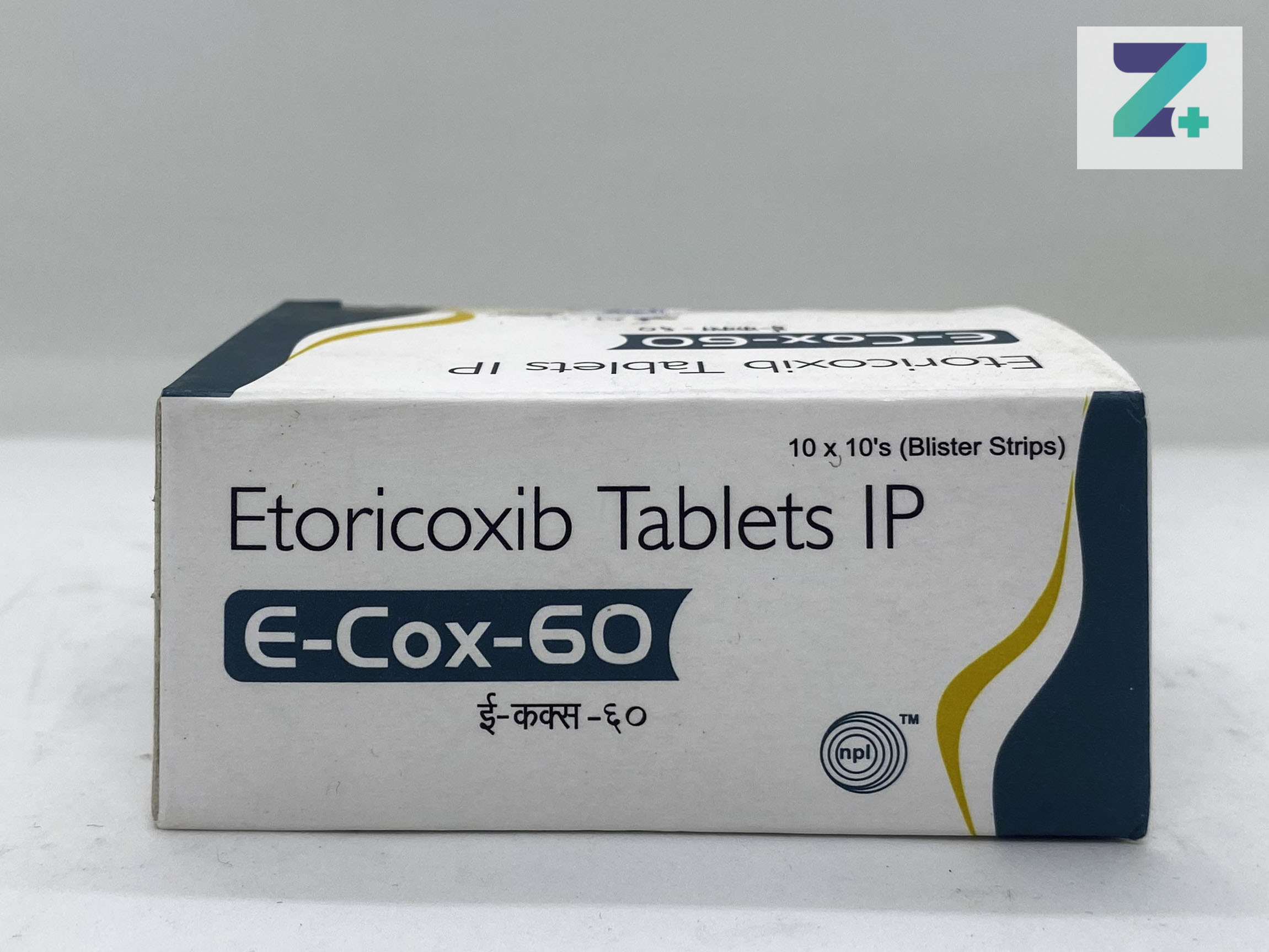
Price: Rs.130.00
10% off
In stock
Loose stock: 0
Description
E-COX 60MG TAB 10
Details
Composition
ETORICOXIB 60 MG
# ETORICOXIB 60 MG
## SHORT DESCRIPTION
**Etoricoxib 60 mg** is a prescription **selective COX-2 inhibitor (NSAID)** used to relieve pain and reduce inflammation in conditions such as **osteoarthritis, rheumatoid arthritis, ankylosing spondylitis, and certain acute musculoskeletal pain conditions**.
It works by selectively inhibiting cyclooxygenase-2 (COX-2), an enzyme involved in the production of prostaglandins that contribute to pain and inflammation.
> **Important:** Etoricoxib can increase cardiovascular and blood-pressure risks in some patients. It should be used at the **lowest effective dose for the shortest appropriate duration**.
---
## KEY BENEFITS
* Helps relieve **pain and inflammation**.
* Provides anti-inflammatory and analgesic effects.
* Selectively inhibits the **COX-2 enzyme**.
* May help improve mobility and function in inflammatory joint conditions.
* Commonly used for chronic musculoskeletal conditions when appropriate.
* May cause fewer stomach-related effects than some traditional non-selective NSAIDs in certain patients, although **serious gastrointestinal complications can still occur**.
---
## USES / INDICATIONS
### Osteoarthritis
Etoricoxib may be prescribed to relieve:
* Joint pain
* Stiffness
* Inflammation associated with osteoarthritis
### Rheumatoid Arthritis
It may help reduce pain and inflammation associated with **rheumatoid arthritis**.
### Ankylosing Spondylitis
It can be used to relieve pain and inflammation associated with **ankylosing spondylitis**.
### Acute Musculoskeletal Pain
Depending on local approval, etoricoxib may be used for selected acute pain conditions.
### Acute Gouty Arthritis
Higher-dose etoricoxib regimens may be prescribed for **acute gout attacks**, but the dose and treatment duration differ from those used for chronic arthritis.
> The **60 mg strength is not appropriate for every indication**. Your healthcare professional should determine the correct dose based on the condition being treated.
---
## HOW IT WORKS
Etoricoxib is a **selective cyclooxygenase-2 (COX-2) inhibitor**.
COX-2 contributes to the production of prostaglandins involved in:
* Pain
* Inflammation
* Swelling
* Fever
By selectively inhibiting COX-2, etoricoxib reduces prostaglandin production.
### In simple terms:
**Etoricoxib → inhibits COX-2 → reduces prostaglandins → decreases pain and inflammation.**
Unlike traditional NSAIDs, etoricoxib has greater selectivity for COX-2 than COX-1.
---
## DOSAGE & ADMINISTRATION
* Take Etoricoxib 60 mg **exactly as prescribed**.
* It is usually taken **once daily**.
* It can generally be taken **with or without food**.
* Swallow the tablet with water.
* Do not exceed the prescribed dose.
### Typical Adult Dosing
The appropriate dose varies by indication. For some chronic inflammatory conditions, **60 mg once daily** may be used.
The maximum dose and treatment duration depend on the specific condition.
### Important
For conditions requiring higher doses, such as acute gout, the recommended dose may be different and is generally used for a **short period only**.
Use the **lowest effective dose for the shortest duration necessary**.
### Missed Dose
Take the missed dose when remembered unless it is nearly time for the next dose.
**Do not take two doses together.**
---
## SIDE EFFECTS
### Common Side Effects
Possible side effects include:
* Stomach discomfort
* Indigestion
* Nausea
* Headache
* Dizziness
* Fatigue
* Diarrhea
* Constipation
* Swelling of the legs or feet
* Increased blood pressure
### Cardiovascular Effects
Etoricoxib can cause:
* Increased blood pressure
* Fluid retention
* Swelling
* Worsening heart failure in susceptible patients
### Serious Side Effects
Seek urgent medical attention for:
* Chest pain
* Difficulty breathing
* Sudden weakness or numbness
* Severe allergic reaction
* Black or bloody stools
* Vomiting blood
* Severe abdominal pain
* Significant swelling
* Severe skin rash or blistering
* Yellowing of the skin or eyes
---
## PRECAUTIONS & WARNINGS
### Cardiovascular Risk
COX-2 inhibitors, including etoricoxib, can increase the risk of serious cardiovascular events such as **heart attack and stroke**, particularly with higher doses or prolonged use.
Tell your doctor if you have:
* Heart disease
* Previous heart attack
* Stroke or transient ischemic attack
* Peripheral arterial disease
* Uncontrolled hypertension
* Heart failure
### High Blood Pressure
Etoricoxib can increase blood pressure or worsen existing hypertension.
Blood pressure should be monitored, particularly after starting or increasing the dose.
### Kidney Problems
NSAIDs can affect kidney function, particularly in patients with:
* Kidney disease
* Dehydration
* Heart failure
* Older age
### Liver Disease
Tell your healthcare professional if you have liver disease. Dose selection may need to be adjusted depending on severity.
### Stomach and Intestinal Problems
Although COX-2 selectivity may reduce some gastrointestinal effects compared with traditional NSAIDs, **ulcers, bleeding, and perforation can still occur**.
Risk may be higher in older adults or people taking corticosteroids, anticoagulants, or antiplatelet medicines.
### Allergic Reactions
Do not use etoricoxib if you have previously experienced an allergic reaction to etoricoxib, other NSAIDs, or aspirin.
### Pregnancy
Etoricoxib should generally **not be used during pregnancy unless specifically directed by a healthcare professional**. NSAIDs, particularly later in pregnancy, can cause serious fetal and maternal complications.
### Breastfeeding
Discuss etoricoxib use with your healthcare professional before breastfeeding.
---
## DRUG INTERACTIONS
### Other NSAIDs
Do not routinely combine etoricoxib with other NSAIDs such as:
* Ibuprofen
* Naproxen
* Diclofenac
* Ketorolac
Combining NSAIDs increases the risk of adverse effects without necessarily providing additional benefit.
### Aspirin
Low-dose aspirin may sometimes be prescribed for cardiovascular protection, but combining it with etoricoxib can increase gastrointestinal complications.
Do not start or stop aspirin without medical advice.
### Warfarin and Other Anticoagulants
Etoricoxib may increase bleeding risk when combined with anticoagulants such as **warfarin**.
### ACE Inhibitors and ARBs
Etoricoxib can reduce the blood-pressure-lowering effect of:
* Lisinopril
* Enalapril
* Ramipril
* Losartan
* Other ACE inhibitors or ARBs
The combination may also increase the risk of kidney impairment.
### Diuretics
NSAIDs can reduce the effectiveness of diuretics and may increase the risk of kidney problems and fluid retention.
### Lithium
Etoricoxib can increase lithium concentrations in some patients, potentially increasing the risk of lithium toxicity.
### Methotrexate
NSAIDs may increase methotrexate exposure or toxicity in some circumstances.
### Cyclosporine or Tacrolimus
These medicines can increase the risk of kidney toxicity when combined with NSAIDs.
### Oral Contraceptives
Etoricoxib may interact with some hormonal contraceptives and can increase blood-pressure or thrombotic considerations in susceptible patients.
Always tell your healthcare professional about all medicines, supplements, and herbal products you use.
---
## STORAGE INFORMATION
* Store according to the **manufacturer's instructions**.
* Keep tablets in their original packaging.
* Store in a cool, dry place.
* Protect from excessive heat, moisture, and direct sunlight.
* Keep out of reach of children.
* Keep the container tightly closed.
* Do not use after the expiry date.
* Do not use tablets if the packaging is damaged.
---
## PRESCRIPTION STATUS
**Etoricoxib 60 mg is generally a prescription medicine.**
Because it can affect **blood pressure, cardiovascular risk, kidney function, and gastrointestinal health**, it should be used under the supervision of a qualified healthcare professional.
---
## GENUINE MEDICINE ASSURANCE
When purchasing Etoricoxib 60 mg, ensure that:
* The medicine comes in **original, sealed manufacturer packaging**.
* The label clearly states **Etoricoxib 60 mg**.
* The manufacturer's name and details are present.
* The **batch/lot number and expiry date** are clearly visible.
* Packaging shows no signs of tampering.
* The medicine is purchased from a **licensed pharmacy or authorized medicine supplier**.
* The product has appropriate regulatory authorization for your market.
Do not use expired, damaged, improperly stored, or suspicious medicine.
---
# FAQ – ETORICOXIB 60 MG
### 1. What is Etoricoxib 60 mg used for?
Etoricoxib 60 mg is used to relieve **pain and inflammation** associated with conditions such as osteoarthritis, rheumatoid arthritis, and ankylosing spondylitis, depending on local approval and medical advice.
### 2. Is Etoricoxib a painkiller?
Yes. Etoricoxib is an **NSAID with analgesic and anti-inflammatory properties**.
### 3. Is Etoricoxib a steroid?
**No.** Etoricoxib is a non-steroidal anti-inflammatory drug (NSAID).
### 4. How does Etoricoxib work?
It selectively blocks the **COX-2 enzyme**, reducing the production of prostaglandins that contribute to pain and inflammation.
### 5. How often is Etoricoxib 60 mg taken?
It is generally taken **once daily**, but the correct dose and duration depend on the condition being treated.
### 6. Can I take Etoricoxib with food?
Yes. It can generally be taken with or without food. Taking it with food may help some people who experience stomach discomfort.
### 7. Can Etoricoxib be used for arthritis?
Yes. It may be prescribed for **osteoarthritis, rheumatoid arthritis, and ankylosing spondylitis**.
### 8. Can Etoricoxib be used for gout?
Etoricoxib can be used for **acute gout attacks** in appropriate patients, but the dose may differ from the 60 mg regimen used for chronic arthritis.
### 9. Can Etoricoxib increase blood pressure?
Yes. Etoricoxib may **increase blood pressure or cause fluid retention**. Blood pressure monitoring may be necessary.
### 10. Can Etoricoxib cause kidney problems?
Yes. Like other NSAIDs, it can affect kidney function, particularly in people with kidney disease, dehydration, heart failure, or certain other risk factors.
### 11. Can I take Ibuprofen with Etoricoxib?
Generally, **do not combine etoricoxib with ibuprofen or another NSAID** unless specifically instructed by your healthcare professional.
### 12. Can Etoricoxib be taken with Paracetamol?
Paracetamol may sometimes be used with etoricoxib, but the combination should be appropriate for your individual medical circumstances. Follow your healthcare professional's advice.
### 13. Can I take Etoricoxib with aspirin?
Low-dose aspirin may be prescribed in some patients, but combining it with etoricoxib can increase gastrointestinal risks. Do not change aspirin therapy without medical advice.
### 14. Can Etoricoxib cause heart problems?
COX-2 inhibitors can increase the risk of serious cardiovascular events, particularly with higher doses and prolonged use. Patients with cardiovascular disease require careful assessment.
### 15. Can Etoricoxib be used during pregnancy?
Etoricoxib is generally avoided during pregnancy unless specifically prescribed by a healthcare professional. NSAIDs can cause important pregnancy-related risks, particularly later in pregnancy.
### 16. Can Etoricoxib be used while breastfeeding?
Discuss its use with your healthcare professional before taking etoricoxib while breastfeeding.
### 17. What should I do if I miss a dose?
Take it when remembered unless it is nearly time for the next dose. **Do not take two doses together.**
### 18. Can Etoricoxib cause stomach ulcers?
Yes. Although COX-2 selectivity may reduce some gastrointestinal risk compared with traditional NSAIDs, **ulcers and gastrointestinal bleeding can still occur**.
### 19. How long can I take Etoricoxib 60 mg?
Use it for the **shortest duration and lowest effective dose** appropriate for your condition. Long-term treatment should be regularly reviewed by your healthcare professional.
### 20. Is Etoricoxib 60 mg available without a prescription?
It is generally **prescription-only**, although regulations vary between countries.
---
## MEDICAL DISCLAIMER
This information about **Etoricoxib 60 mg** is provided for educational and informational purposes only and is not a substitute for professional medical advice, diagnosis, or treatment.
Etoricoxib can increase the risk of **cardiovascular events, high blood pressure, fluid retention, kidney problems, and gastrointestinal complications**. The risk may increase with higher doses and prolonged treatment.
**Do not self-medicate with etoricoxib or combine it with other NSAIDs without medical advice.** Tell your healthcare professional if you have heart disease, high blood pressure, kidney or liver disease, a history of stomach ulcers or bleeding, or if you take anticoagulants or aspirin.
Seek urgent medical attention for **chest pain, difficulty breathing, sudden weakness or numbness, vomiting blood, black stools, severe allergic reactions, or severe skin reactions**.