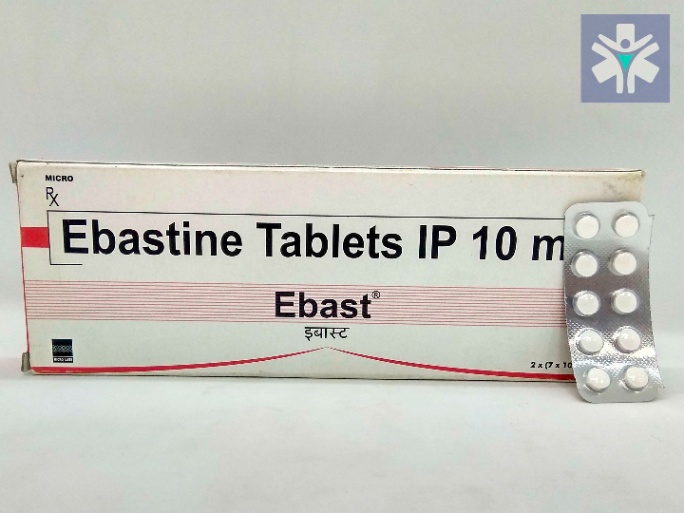
EBAST 10MG
Price: Rs.300.00
10% off
In stock
Loose stock: 8
Description
EBAST 10MG TAB 15
Details
Composition
EBASTINE 10 MG
# EBASTINE 10 MG
## SHORT DESCRIPTION
**Ebastine 10 mg** is a second-generation **antihistamine** used to relieve symptoms associated with allergic conditions. It helps reduce sneezing, runny nose, itchy or watery eyes, and other symptoms caused by histamine release.
Ebastine is generally less sedating than older antihistamines, although **drowsiness can still occur in some people**.
---
## KEY BENEFITS
* Provides relief from common **allergy symptoms**.
* Helps reduce sneezing and runny nose.
* Relieves nasal and throat itching associated with allergies.
* Helps reduce itchy or watery eyes.
* May be used for **urticaria (hives)** and associated itching.
* Generally causes less sedation than many first-generation antihistamines.
---
## USES / INDICATIONS
Ebastine 10 mg may be used for:
* **Allergic rhinitis**
* Seasonal allergic rhinitis (hay fever)
* Perennial allergic rhinitis
* Sneezing and runny nose caused by allergies
* Nasal and ocular allergy symptoms
* **Urticaria (hives)**
* Itching associated with allergic skin reactions
Approved indications may vary by country and product.
---
## HOW IT WORKS
Ebastine is a **selective H1-histamine receptor antagonist**.
During an allergic reaction, the body releases histamine, which contributes to symptoms such as:
* Sneezing
* Itching
* Runny nose
* Watery eyes
* Skin itching and hives
Ebastine blocks histamine from activating H1 receptors.
**Ebastine → blocks H1 histamine receptors → reduces histamine effects → relieves allergy symptoms.**
Ebastine is a relatively long-acting antihistamine, allowing convenient once-daily treatment in many patients.
---
# DOSAGE & ADMINISTRATION
### Adults and Adolescents
For many adults and adolescents, the usual dose is:
**Ebastine 10 mg once daily.**
Depending on the condition and product labeling, a healthcare professional may prescribe a different dose.
### How to Take
* Take exactly as directed by your doctor or pharmacist.
* Usually taken **once daily**.
* It can generally be taken with or without food.
* Swallow the tablet with water.
* Take it at approximately the same time each day.
### Missed Dose
Take the missed dose when remembered unless it is nearly time for your next dose.
**Do not take two doses together.**
### Children
Use in children should follow the age-specific recommendations of the particular product and the advice of a healthcare professional.
---
# SIDE EFFECTS
## Common Side Effects
Possible side effects include:
* Headache
* Dry mouth
* Drowsiness
* Fatigue
* Dizziness
* Abdominal discomfort
* Nausea
Most side effects are mild and temporary.
## Less Common Side Effects
* Palpitations
* Increased heart rate
* Indigestion
* Skin reactions
## Serious Side Effects
Seek immediate medical attention if you experience:
* Difficulty breathing
* Swelling of the face, lips, tongue, or throat
* Severe skin rash
* Fainting
* Significant or persistent heart palpitations
---
# PRECAUTIONS & WARNINGS
## Heart Rhythm Problems
Ebastine and its active metabolite may affect cardiac electrical activity in susceptible individuals.
Tell your doctor if you have:
* A history of abnormal heart rhythms
* Long QT syndrome
* Significant heart disease
* Low potassium or magnesium
* A history of unexplained fainting
## Liver Disease
Tell your healthcare professional if you have liver disease. The dose may need adjustment in significant hepatic impairment.
## Kidney Disease
Inform your doctor if you have significant kidney impairment before taking ebastine.
## Drowsiness
Although ebastine is generally less sedating than older antihistamines, **drowsiness or dizziness can still occur**.
Do not drive or operate machinery until you know how the medicine affects you.
## Pregnancy
Tell your healthcare professional if you are pregnant or planning pregnancy. Ebastine should generally be used during pregnancy only when clearly considered necessary.
## Breastfeeding
Consult your healthcare professional before using ebastine while breastfeeding.
---
# DRUG INTERACTIONS
### Ketoconazole and Macrolide Antibiotics
Some medicines, including certain antifungal and macrolide antibiotics, may increase ebastine exposure or affect cardiac electrical activity.
Examples can include:
* Ketoconazole
* Itraconazole
* Erythromycin
* Clarithromycin
Tell your doctor or pharmacist about all medicines you take.
### Other Antihistamines
Avoid taking multiple antihistamines together unless specifically recommended by a healthcare professional.
### Sedative Medicines
Medicines that cause drowsiness may potentially increase sedation when combined with ebastine.
### Alcohol
Alcohol may increase drowsiness or dizziness in some people. Avoid or limit alcohol until you know how ebastine affects you.
---
# STORAGE INFORMATION
* Store Ebastine 10 mg according to the manufacturer's instructions.
* Keep tablets in the original packaging.
* Protect from excessive heat and moisture.
* Keep away from direct sunlight.
* Keep out of reach of children.
* Do not use after the expiry date.
---
# PRESCRIPTION STATUS
**Prescription status may vary by country.**
Ebastine 10 mg may be available **with or without a prescription depending on local regulations and the specific product**.
Use it according to the directions provided by a qualified healthcare professional or pharmacist.
---
# GENUINE MEDICINE ASSURANCE
When purchasing **Ebastine 10 mg**, obtain it from a **licensed pharmacy or authorized medicine supplier**.
Check the packaging for:
* Correct medicine name and strength
* Manufacturer details
* Batch/lot number
* Manufacturing and expiry dates
* Intact packaging and seal
* Regulatory labeling
* Patient information leaflet
Avoid products with damaged packaging, altered labels, missing batch details, or questionable authenticity.
---
# FAQ – EBASTINE 10 MG
### 1. What is Ebastine 10 mg used for?
Ebastine 10 mg is used to relieve allergy symptoms such as **sneezing, runny nose, itching, watery eyes, and hives**.
### 2. Is Ebastine an antihistamine?
Yes. Ebastine is a **second-generation H1 antihistamine**.
### 3. How does Ebastine work?
It blocks H1 histamine receptors, preventing histamine from producing many of the symptoms associated with allergic reactions.
### 4. Is Ebastine used for allergic rhinitis?
Yes. Ebastine can be used for **seasonal and perennial allergic rhinitis**.
### 5. Can Ebastine treat hives?
Yes. Ebastine can help relieve **itching and other symptoms associated with urticaria (hives)**.
### 6. Does Ebastine cause sleepiness?
It is generally less sedating than older antihistamines, but **drowsiness can still occur** in some people.
### 7. Can I take Ebastine 10 mg every day?
Ebastine is commonly prescribed once daily for ongoing allergy symptoms. Follow the recommended dose and treatment duration.
### 8. Can I take Ebastine with food?
Yes. Ebastine can generally be taken **with or without food**.
### 9. Can I take Ebastine with other antihistamines?
Do not routinely combine antihistamines unless recommended by your healthcare professional, as this may increase side effects.
### 10. Can I drink alcohol while taking Ebastine?
Alcohol may increase drowsiness or dizziness. It is advisable to limit or avoid alcohol until you know how ebastine affects you.
### 11. Can Ebastine be used for a common cold?
Ebastine is primarily intended for **allergic symptoms**, not infections. It may not provide significant benefit for a typical viral cold unless allergy symptoms are also present.
### 12. Can Ebastine be used for sinus problems?
It may help when symptoms are caused by allergies, but it does not treat bacterial or viral sinus infections.
### 13. Can children take Ebastine 10 mg?
The appropriate dose depends on age, weight, and the specific product. Follow pediatric dosing recommendations from a healthcare professional.
### 14. Can I take Ebastine during pregnancy?
Consult your healthcare professional before using ebastine during pregnancy. It should be used only when considered necessary.
### 15. Can I take Ebastine while breastfeeding?
Discuss its use with your doctor or pharmacist before breastfeeding while taking ebastine.
### 16. Does Ebastine affect the heart?
Ebastine may affect cardiac electrical activity in susceptible individuals. People with certain heart rhythm conditions should consult a healthcare professional before use.
### 17. Can Ebastine be taken with antibiotics?
Some antibiotics, particularly certain **macrolides**, may interact with ebastine. Tell your doctor or pharmacist which antibiotic you are taking.
### 18. What should I do if I miss an Ebastine dose?
Take it when remembered unless it is nearly time for your next dose. **Do not double the next dose.**
### 19. Is Ebastine 10 mg a steroid?
No. Ebastine is an **antihistamine**, not a steroid.
### 20. Is Ebastine 10 mg available without a prescription?
Prescription requirements vary by country. In some locations it may be available without a prescription, while in others it is prescription-only.
---
# MEDICAL DISCLAIMER
This information about **Ebastine 10 mg** is provided for general educational purposes only and does not replace professional medical advice, diagnosis, or treatment.
Ebastine is intended primarily for the relief of **allergic symptoms** and should be used according to the recommended dose. Although it is generally less sedating than older antihistamines, drowsiness or dizziness may still occur.
Patients with significant **heart rhythm problems, liver disease, kidney disease, pregnancy, or breastfeeding** should consult a healthcare professional before use.
Seek urgent medical attention for difficulty breathing, swelling of the face or throat, severe skin reactions, fainting, or significant heart palpitations.
**Use Ebastine 10 mg according to the product instructions or advice from a qualified healthcare professional.**