ELDOPER
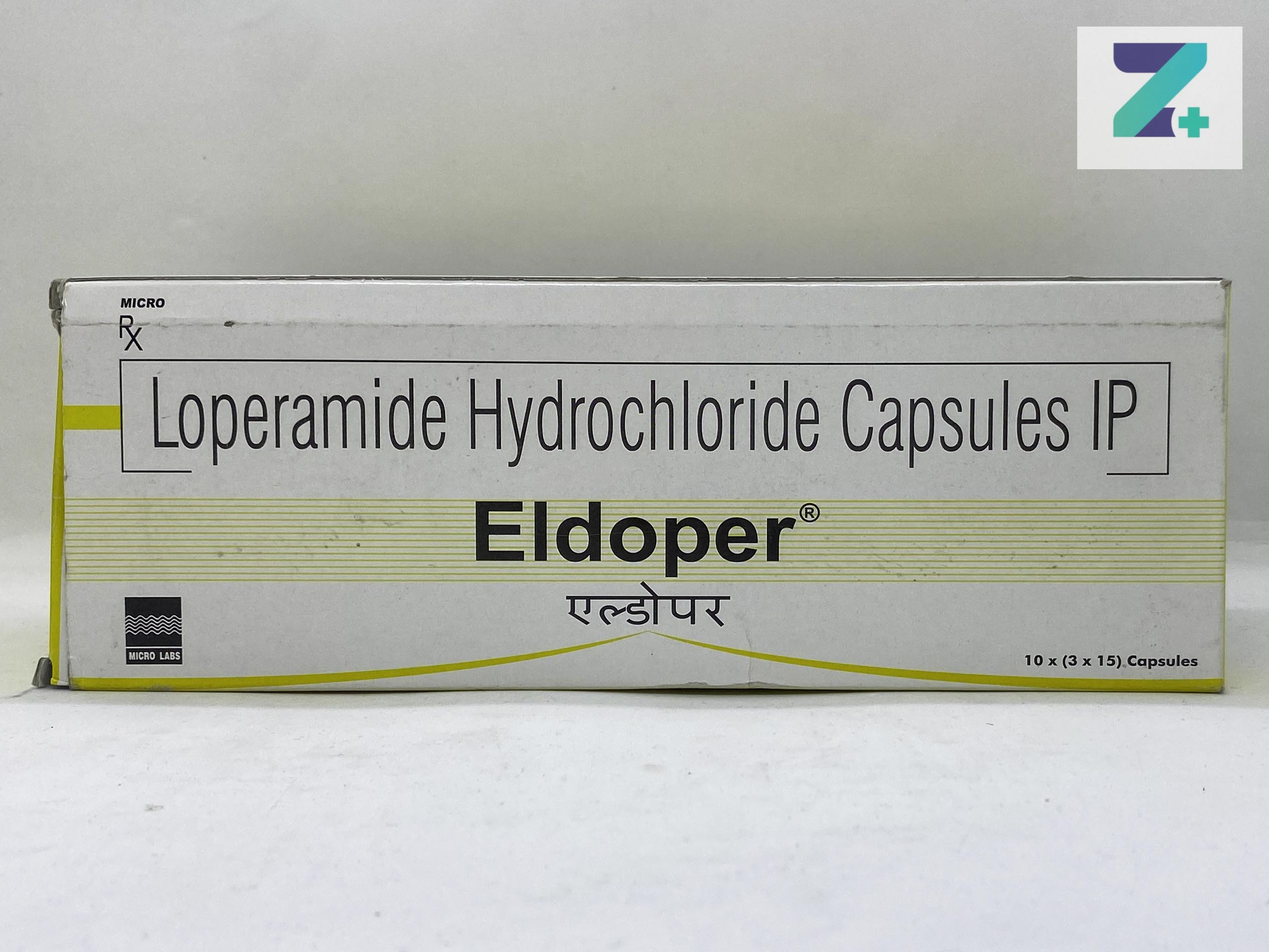
Price: Rs.97.74
10% off
In stock
Loose stock: 10
Description
ELDOPER CAP 15
Details
Composition
LOPERAMIDE
# LOPERAMIDE
## Short Description
**Loperamide** is an **antidiarrheal medicine** used to reduce the frequency of bowel movements and improve stool consistency in certain types of diarrhea. It works primarily by slowing the movement of intestinal contents, allowing more water and electrolytes to be absorbed.
It is commonly used for **acute diarrhea** and, under medical supervision, may also be used for certain forms of chronic diarrhea.
> **Important:** Loperamide is intended to control diarrhea symptoms; it does not treat every underlying cause of diarrhea.
## Key Benefits
* Helps reduce the **frequency of loose or watery stools**.
* Helps improve stool consistency.
* Slows excessive intestinal movement.
* Helps reduce urgency associated with diarrhea.
* Can provide symptomatic relief in appropriate cases of acute diarrhea.
* May be used under medical supervision for selected chronic diarrhea conditions.
## Uses / Indications
Loperamide may be used for:
* **Acute diarrhea** in adults.
* Acute diarrhea in appropriate children according to age-specific product instructions.
* Certain cases of chronic diarrhea under medical supervision.
* Symptomatic management of diarrhea associated with some gastrointestinal conditions.
### When Loperamide Should NOT Be Used for Self-Treatment
Do not use loperamide for self-treatment if diarrhea is accompanied by:
* **Blood in the stool**.
* High fever.
* Severe abdominal pain or swelling.
* Severe diarrhea following antibiotic treatment.
* Suspected bacterial or parasitic infection requiring medical treatment.
Seek medical advice instead.
## How It Works
Loperamide acts primarily on **opioid receptors in the intestinal wall**.
It reduces intestinal smooth-muscle activity and slows the movement of intestinal contents through the bowel.
This allows more time for:
* Water absorption.
* Electrolyte absorption.
* Formation of firmer stools.
### Overall Action
**Loperamide → acts on intestinal opioid receptors → slows intestinal movement → increases water absorption → reduces diarrhea and stool frequency.**
At recommended doses, its effects are primarily localized to the gastrointestinal tract.
## Dosage & Administration
The dose depends on the **age, indication, formulation, and local product instructions**.
### Adults — Acute Diarrhea
A commonly used adult regimen is:
* **4 mg initially**, followed by
* **2 mg after each subsequent loose stool**.
Do not exceed the maximum daily dose stated on the product label.
For many OTC products, the maximum is **8 mg/day**, while higher maximum doses may apply when specifically prescribed and medically supervised.
### Children
Children should receive loperamide **only according to age-specific product labeling or medical advice**.
Do not give adult-strength doses to children without professional guidance.
### Chronic Diarrhea
Chronic diarrhea should be evaluated by a healthcare professional. Loperamide dosing for chronic diarrhea is individualized according to the underlying condition and response.
### Important Administration Advice
* Take with or without food unless instructed otherwise.
* Swallow tablets/capsules with water.
* Oral dissolving formulations should be handled according to their product instructions.
* Maintain adequate fluid and electrolyte intake during diarrhea.
* Do not exceed the recommended dose.
### Missed Dose
Loperamide is usually taken as needed for diarrhea rather than on a fixed schedule. Do not take an extra dose simply because a previous dose was missed.
## Side Effects
Common side effects may include:
* Constipation.
* Nausea.
* Abdominal discomfort.
* Abdominal cramps.
* Dizziness.
* Headache.
* Dry mouth.
* Bloating.
### Serious Side Effects
Stop using loperamide and seek medical attention if you develop:
* Severe abdominal swelling or pain.
* Severe constipation.
* Persistent vomiting.
* Fainting.
* Severe dizziness.
* Allergic reaction.
* Difficulty breathing.
* Unusual or rapid heartbeat.
### Heart Rhythm Problems from Overdose
Taking **more than the recommended dose**, particularly very large amounts, can cause serious and potentially fatal abnormal heart rhythms.
Never use high doses to obtain effects other than diarrhea control.
## Precautions & Warnings
### Do Not Exceed the Recommended Dose
Excessive loperamide can cause **serious cardiac toxicity**, including dangerous abnormal heart rhythms, cardiac arrest, and death.
### Blood in Stool or Fever
Do not self-treat diarrhea with loperamide if you have:
* Bloody or black stools.
* High fever.
* Severe abdominal pain.
These symptoms may indicate an infection or another condition requiring medical evaluation.
### Antibiotic-Associated Diarrhea
Diarrhea occurring during or after antibiotic treatment can sometimes be caused by **Clostridioides difficile** infection. Loperamide may be inappropriate in this situation.
Seek medical advice if significant diarrhea develops after antibiotic use.
### Abdominal Distension
Stop using loperamide and seek medical attention if you develop significant abdominal swelling or distension.
### Liver Disease
Liver impairment may affect loperamide metabolism. Consult a healthcare professional before use if you have significant liver disease.
### Dehydration
Loperamide does not replace lost fluids or electrolytes.
Drink appropriate fluids and consider an oral rehydration solution when necessary.
### Children
Loperamide may not be appropriate for young children. Follow the age restrictions on the specific product and seek medical advice when treating pediatric diarrhea.
### Older Adults
Older people may be more vulnerable to dehydration and electrolyte disturbances caused by diarrhea.
### Pregnancy
Consult a healthcare professional before using loperamide during pregnancy, particularly for repeated or prolonged treatment.
### Breastfeeding
Small amounts may pass into breast milk. Discuss use with a healthcare professional if breastfeeding.
## Drug Interactions
### Medicines That Affect Heart Rhythm
Some medicines that prolong the **QT interval** may increase the risk of abnormal heart rhythms, particularly if loperamide is taken in excessive amounts.
### CYP3A4 and CYP2C8 Inhibitors
Certain medicines can increase loperamide exposure, including some strong inhibitors of CYP3A4 or CYP2C8.
Examples may include:
* Certain azole antifungals.
* Certain macrolide antibiotics.
* Some HIV medicines.
### P-glycoprotein Inhibitors
Some medicines that inhibit **P-glycoprotein** may increase loperamide concentrations.
### Other Medicines
Tell your healthcare professional about all:
* Prescription medicines.
* OTC medicines.
* Vitamins.
* Herbal supplements.
Do not assume that an OTC medicine is automatically safe to combine with loperamide.
## Storage Information
* Store according to the manufacturer's instructions.
* Keep at room temperature unless otherwise specified.
* Protect from excessive heat and moisture.
* Keep away from direct sunlight.
* Keep in the original packaging.
* Keep out of reach of children.
* Do not use after the expiry date.
* Do not use damaged or tampered packaging.
## Prescription Status
**Loperamide is available without a prescription in many countries**, particularly at standard OTC doses.
However, prescription requirements, age restrictions, maximum pack sizes, and approved uses vary by country.
Higher doses or prolonged treatment should only be used under medical supervision.
## Genuine Medicine Assurance
When purchasing Loperamide, obtain it from a **licensed pharmacy or authorized medicine supplier**.
Check:
* Active ingredient: **Loperamide**.
* Strength and dosage form.
* Manufacturer details.
* Batch/lot number.
* Manufacturing and expiry dates.
* Intact packaging and seal.
* Clear dosing instructions.
* Appropriate storage conditions.
Avoid products with damaged packaging, missing batch information, unclear labeling, or questionable authenticity.
## Frequently Asked Questions (FAQ)
### 1. What is Loperamide used for?
Loperamide is used to **reduce diarrhea**, decrease stool frequency, and improve stool consistency.
### 2. Is loperamide an antibiotic?
No. Loperamide is an **antidiarrheal medicine**, not an antibiotic. It controls intestinal movement but does not eliminate bacterial infections.
### 3. How does loperamide stop diarrhea?
It slows intestinal movement, allowing more time for the bowel to absorb water and electrolytes. This results in fewer and firmer stools.
### 4. How quickly does loperamide work?
Loperamide generally begins reducing diarrhea within a relatively short period after administration, although the response varies between individuals.
### 5. Can loperamide be used for acute diarrhea?
Yes. It is commonly used for short-term symptomatic relief of **acute diarrhea** when there are no warning signs requiring medical evaluation.
### 6. Can I take loperamide for diarrhea with blood in the stool?
**No, not for self-treatment.** Bloody diarrhea can indicate an infection or other serious condition. Seek medical advice.
### 7. Can I take loperamide if I have a fever?
If diarrhea is accompanied by a **high fever**, consult a healthcare professional rather than relying on loperamide alone.
### 8. Can loperamide treat food poisoning?
It may reduce diarrhea symptoms in some cases, but it does **not treat the underlying cause of food poisoning**. If symptoms are severe, bloody, accompanied by high fever, or persistent, seek medical attention.
### 9. Can I take loperamide after antibiotics?
Diarrhea following antibiotics can sometimes be associated with **C. difficile infection**. Consult a healthcare professional before using loperamide in this situation, particularly if diarrhea is severe or persistent.
### 10. Can loperamide cause constipation?
Yes. **Constipation is one of the most common side effects**. Stop using it and seek advice if severe constipation or abdominal swelling develops.
### 11. Can loperamide cause stomach pain?
It can cause abdominal cramps or discomfort. Severe or worsening abdominal pain should be medically evaluated.
### 12. Can loperamide cause dehydration?
Loperamide itself does not usually cause dehydration, but **diarrhea can cause significant fluid and electrolyte loss**. Oral rehydration is important.
### 13. Can I take loperamide with oral rehydration salts?
Yes. Oral rehydration solutions can be used alongside loperamide when appropriate. Replacing lost fluids and electrolytes is an important part of diarrhea management.
### 14. Is loperamide safe for children?
Safety depends on the child's age and the specific product. **Do not give loperamide to young children unless specifically recommended by a healthcare professional.**
### 15. Can I take loperamide during pregnancy?
Consult your healthcare professional before using it during pregnancy, especially for repeated or prolonged treatment.
### 16. Can I take loperamide while breastfeeding?
Consult a healthcare professional. Limited amounts may enter breast milk, and the appropriateness depends on the clinical situation and duration of treatment.
### 17. Can I take loperamide every day?
Long-term use should generally be undertaken **only under medical supervision**, particularly when diarrhea is chronic or recurrent.
### 18. Can I take more loperamide if diarrhea continues?
**Do not exceed the recommended maximum dose.** Taking excessive amounts can cause dangerous heart rhythm abnormalities.
### 19. Can loperamide cause heart problems?
Yes, particularly when taken in **excessive doses**. High doses can cause serious abnormal heart rhythms and cardiac arrest.
### 20. Can I take loperamide with other medicines?
Some medicines can interact with loperamide or increase its concentration. Tell your healthcare professional about all medicines and supplements you take.
### 21. Is loperamide addictive?
At recommended doses, loperamide does not typically produce the same central opioid effects as conventional opioids. However, **misuse or very high doses can be dangerous and potentially toxic**.
### 22. What should I do if I take too much loperamide?
Seek **urgent medical attention immediately**, even if you feel well. Overdose can cause serious heart rhythm disturbances that may initially have few symptoms.
### 23. How long can I take loperamide for diarrhea?
For self-treatment, use it only for the period specified on the product label. If diarrhea persists or worsens despite treatment, seek medical advice rather than continuing indefinitely.
### 24. Is loperamide available without a prescription?
In many countries, standard-dose loperamide is available **over the counter**, although local regulations and age restrictions vary.
### 25. When should I see a doctor for diarrhea?
Seek medical attention if diarrhea is severe or persistent, or if you develop **blood in the stool, high fever, severe abdominal pain, significant dehydration, repeated vomiting, confusion, or worsening symptoms**.
## Medical Disclaimer
This information about **Loperamide** is provided for general educational and informational purposes only. It is not a substitute for professional medical advice, diagnosis, or treatment.
Loperamide is intended for appropriate **symptomatic control of diarrhea** and does not treat every underlying cause. Do not use it for self-treatment when diarrhea is accompanied by **blood in the stool, high fever, severe abdominal pain, significant abdominal swelling, or suspected antibiotic-associated infection** unless a healthcare professional advises you to do so.
**Never exceed the recommended dose.** Excessive loperamide intake can cause life-threatening abnormal heart rhythms and cardiac arrest. If an overdose is suspected, seek urgent medical attention immediately.