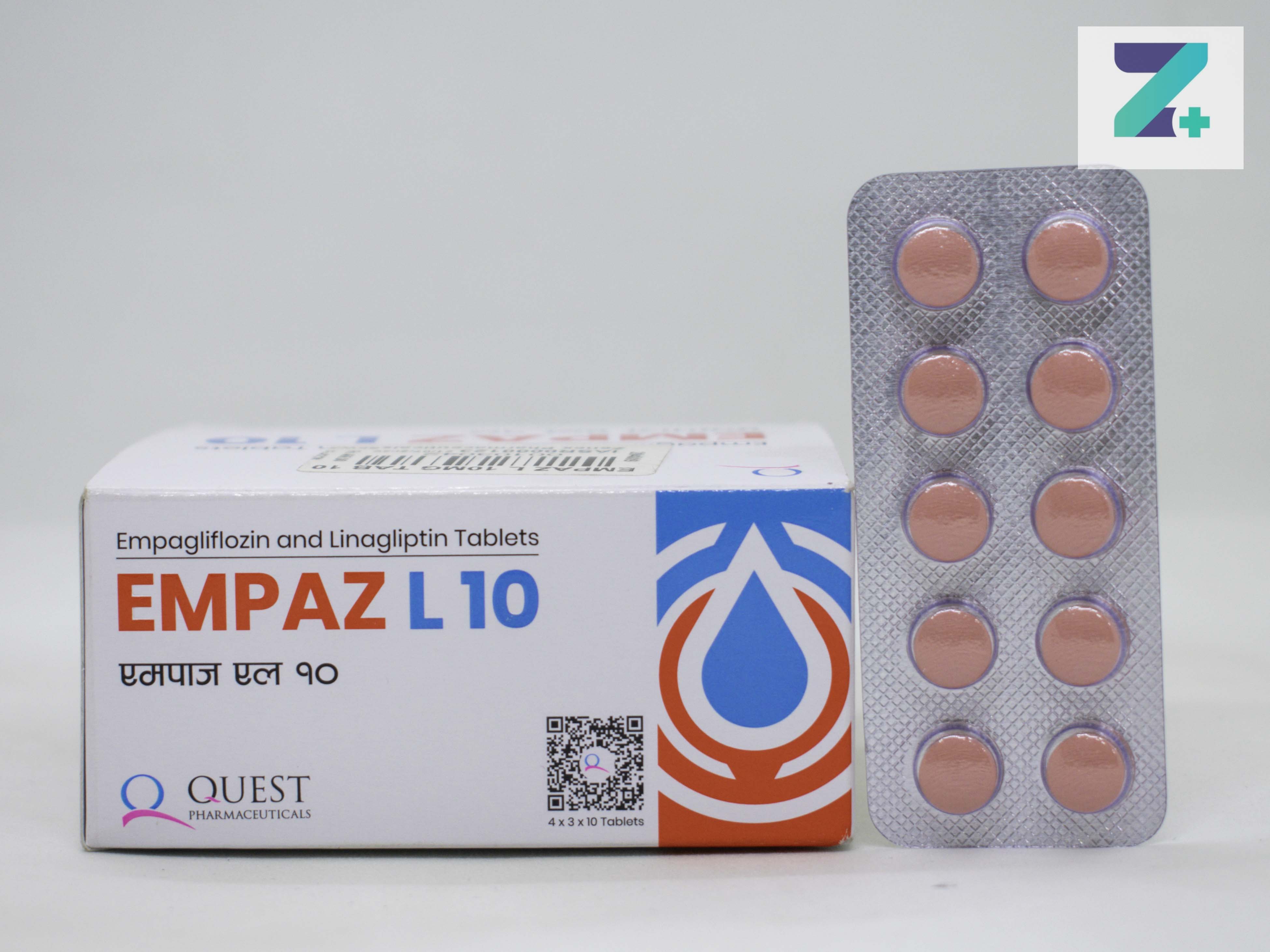
EMPAZ L 10MG
Price: Rs.400.00
15% off
In stock
Loose stock: 0
Description
EMPAZ L 10MG TAB 10
Details
Composition
EMPAGLIFLOZIN 10 MG,LINAGLIPTIN 5 MG
# Empagliflozin 10 mg + Linagliptin 5 mg
## SHORT DESCRIPTION
Empagliflozin 10 mg + Linagliptin 5 mg is an **oral combination medicine used to help control blood sugar levels in adults with type 2 diabetes mellitus**. It combines two medicines with different mechanisms of action: empagliflozin, an SGLT2 inhibitor, and linagliptin, a DPP-4 inhibitor.
The combination helps lower blood glucose through increased urinary glucose excretion and enhanced glucose-dependent insulin release.
## KEY BENEFITS
* Helps lower and control blood glucose levels in adults with type 2 diabetes
* Combines two complementary antidiabetic medicines in one treatment
* Empagliflozin promotes the removal of excess glucose through urine
* Linagliptin helps improve insulin release when blood glucose is elevated
* May help reduce the need for additional glucose-lowering therapy in appropriate patients
* Empagliflozin may provide cardiovascular and kidney benefits in certain patients with appropriate indications
## USES / INDICATIONS
Empagliflozin + Linagliptin is primarily used for:
* **Type 2 diabetes mellitus**
* Improving glycemic control when diet and exercise alone are insufficient
* Patients who require combination therapy to achieve their blood glucose targets
* Patients already taking empagliflozin and linagliptin who may benefit from a combination tablet
It is **not intended for the treatment of type 1 diabetes** or diabetic ketoacidosis.
## HOW IT WORKS
### Empagliflozin
Empagliflozin is a **sodium-glucose cotransporter-2 (SGLT2) inhibitor**. It reduces glucose reabsorption by the kidneys, causing excess glucose to be eliminated through urine. This lowers blood glucose levels.
### Linagliptin
Linagliptin is a **dipeptidyl peptidase-4 (DPP-4) inhibitor**. It increases the activity of incretin hormones, which helps stimulate insulin release when blood glucose is elevated and reduces glucagon secretion.
### Combination Effect
Together, the two medicines lower blood glucose through complementary mechanisms and can improve overall glycemic control.
## DOSAGE & ADMINISTRATION
* The usual recommended dose for the fixed-dose combination is **one tablet once daily**, containing empagliflozin 10 mg and linagliptin 5 mg.
* It may generally be taken with or without food.
* Take the tablet at approximately the same time each day.
* Swallow the tablet whole with water.
* Do not crush or chew the tablet unless specifically instructed.
* Continue recommended diet and exercise alongside treatment.
* Your doctor may adjust diabetes treatment according to blood glucose levels, kidney function, other medicines and treatment response.
### Important
Kidney function should be assessed before and during treatment because empagliflozin's effectiveness and safety depend partly on renal function.
### Missed Dose
Take the missed dose when you remember unless it is nearly time for your next dose. Do not take two doses at the same time to compensate for a missed dose.
## SIDE EFFECTS
Possible side effects include:
* Increased urination
* Increased thirst
* Urinary tract infections
* Genital fungal infections
* Nasopharyngitis or cold-like symptoms
* Headache
* Gastrointestinal discomfort
* Dehydration
* Dizziness
* Low blood pressure
### Serious Side Effects
Rare but serious adverse effects can include:
* **Diabetic ketoacidosis (DKA)**
* Severe dehydration or low blood pressure
* Serious urinary or genital infections
* Severe allergic reactions
* Pancreatitis
* Bullous pemphigoid in susceptible individuals
* Fournier's gangrene, a rare but serious infection of tissues around the genital or perineal area
Seek immediate medical attention for severe abdominal pain, vomiting, difficulty breathing, confusion, unusual weakness, severe genital pain/swelling, or signs of a serious allergic reaction.
## PRECAUTIONS & WARNINGS
* This medicine is intended for **type 2 diabetes**, not type 1 diabetes.
* Monitor blood glucose regularly as advised by your healthcare professional.
* Maintain adequate fluid intake unless your doctor has advised fluid restriction.
* Inform your doctor if you have kidney disease or reduced kidney function.
* Tell your doctor if you have a history of recurrent urinary or genital infections.
* Inform your doctor before surgery or prolonged fasting because empagliflozin may need to be temporarily discontinued.
* Excessive alcohol intake, prolonged fasting, dehydration and acute illness may increase the risk of ketoacidosis.
* Tell your doctor if you are pregnant, planning pregnancy or breastfeeding.
* Inform your doctor if you have a history of pancreatitis.
* Monitor for symptoms of hypoglycemia, particularly if taking insulin or a sulfonylurea.
* Stop the medicine and seek urgent medical advice if symptoms suggest diabetic ketoacidosis, even if blood glucose is not extremely high.
* Do not use the medicine for diabetic ketoacidosis.
## DRUG INTERACTIONS
Empagliflozin + Linagliptin may interact with:
* **Insulin and sulfonylureas** — may increase the risk of hypoglycemia.
* **Diuretics** — may increase the risk of dehydration, low blood pressure and volume depletion.
* **Other glucose-lowering medicines** — may require adjustment depending on blood glucose levels.
* **Lithium** — empagliflozin may affect lithium concentrations and monitoring may be required.
* **Rifampicin and certain enzyme inducers** — may reduce linagliptin exposure and potentially decrease its effectiveness.
* **Insulin secretagogues** — may require dose adjustment to reduce hypoglycemia risk.
Tell your doctor or pharmacist about all prescription medicines, over-the-counter medicines, vitamins and herbal supplements you take.
## STORAGE INFORMATION
* Store at room temperature according to the manufacturer's instructions.
* Keep the tablets in their original packaging.
* Protect from excessive moisture and heat.
* Keep away from direct sunlight.
* Keep out of reach of children.
* Do not use after the expiry date.
* Do not use tablets if the packaging is damaged or the tablets appear abnormal.
## PRESCRIPTION STATUS
**Prescription medicine.** Empagliflozin 10 mg + Linagliptin 5 mg should be used under the supervision of a qualified healthcare professional. Prescription requirements may vary according to local regulations.
## GENUINE MEDICINE ASSURANCE
For safe and genuine medicine use:
* Purchase the medicine only from a licensed and reputable pharmacy.
* Check the product name and strength before use.
* Verify the batch number and expiry date.
* Ensure the packaging is sealed and undamaged.
* Avoid products with suspicious, altered or incomplete packaging.
* Purchase medicines only from authorized sources.
* Consult a pharmacist if you have concerns about the authenticity of the product.
## FAQ
### What is Empagliflozin 10 mg + Linagliptin 5 mg used for?
It is used to improve blood glucose control in **adults with type 2 diabetes mellitus**, together with appropriate diet and exercise.
### What are Empagliflozin and Linagliptin?
Empagliflozin is an SGLT2 inhibitor that helps remove excess glucose through urine. Linagliptin is a DPP-4 inhibitor that enhances glucose-dependent insulin activity.
### Can Empagliflozin + Linagliptin cure diabetes?
No. Type 2 diabetes is a chronic condition. This medicine helps control blood glucose but does not cure diabetes. It should be combined with appropriate diet, physical activity and regular medical monitoring.
### Does Empagliflozin cause weight loss?
Empagliflozin can cause modest weight reduction in some patients because glucose and calories are eliminated through urine. Individual responses vary.
### Does Linagliptin cause low blood sugar?
Linagliptin alone generally has a low risk of hypoglycemia because its effects are glucose-dependent. However, the risk can increase when it is used with insulin or sulfonylureas.
### Can Empagliflozin + Linagliptin be used for type 1 diabetes?
No. This combination is intended for type 2 diabetes. Empagliflozin-containing medicines are not routinely used for type 1 diabetes because of the risk of diabetic ketoacidosis.
### Does Empagliflozin increase urination?
Yes. Empagliflozin increases the amount of glucose eliminated through urine, which can lead to increased urination and thirst.
### Can Empagliflozin cause urinary tract infections?
Yes. Increased glucose in the urine can increase the risk of urinary tract infections and genital fungal infections in some patients.
### Can Empagliflozin cause dehydration?
Yes. Increased urination can contribute to fluid loss and dehydration. Maintaining adequate hydration is important unless your doctor has instructed you to restrict fluids.
### Can Empagliflozin + Linagliptin be taken with food?
Yes. The combination can generally be taken with or without food. Take it consistently at the same time each day.
### Can I take Empagliflozin + Linagliptin with insulin?
It may be prescribed together with insulin in some patients. However, combining glucose-lowering medicines can increase the risk of hypoglycemia, so your doctor may need to adjust the insulin dose.
### What is diabetic ketoacidosis?
Diabetic ketoacidosis (DKA) is a serious condition in which the body produces excessive ketones. SGLT2 inhibitors such as empagliflozin can rarely cause DKA, sometimes even when blood glucose is not extremely high. Symptoms may include nausea, vomiting, abdominal pain, excessive tiredness and difficulty breathing.
### Should Empagliflozin be stopped before surgery?
Empagliflozin is commonly discontinued temporarily before scheduled surgery or prolonged fasting to reduce the risk of ketoacidosis. Follow the specific instructions provided by your doctor.
### Can Empagliflozin + Linagliptin affect the kidneys?
Empagliflozin affects kidney glucose handling and kidney function should be assessed before and during treatment. It may provide kidney-protective benefits in certain patients, but it is not appropriate for every person with kidney disease.
### Can I stop Empagliflozin + Linagliptin when my blood sugar improves?
Do not stop the medicine without consulting your doctor. Improved blood glucose may indicate that the treatment is working rather than that the underlying diabetes has disappeared.
### What should I do if I miss a dose?
Take the missed dose when remembered unless it is almost time for your next dose. Do not take a double dose.
### Who should not take Empagliflozin + Linagliptin?
It should not be used by people with certain contraindications, including those with a serious allergy to either medicine. It is also not indicated for type 1 diabetes or treatment of diabetic ketoacidosis. Your doctor should determine whether it is appropriate based on your medical history and kidney function.
## MEDICAL DISCLAIMER
This information is provided for educational and informational purposes only and is not a substitute for professional medical advice, diagnosis or treatment. Empagliflozin 10 mg + Linagliptin 5 mg should be used only as prescribed by a qualified healthcare professional. The appropriate treatment depends on blood glucose levels, kidney function, medical history and other medicines being taken. Always read the product label and consult your doctor or pharmacist before starting, stopping or changing diabetes treatment.