ENCLAVE 625(CUREX)
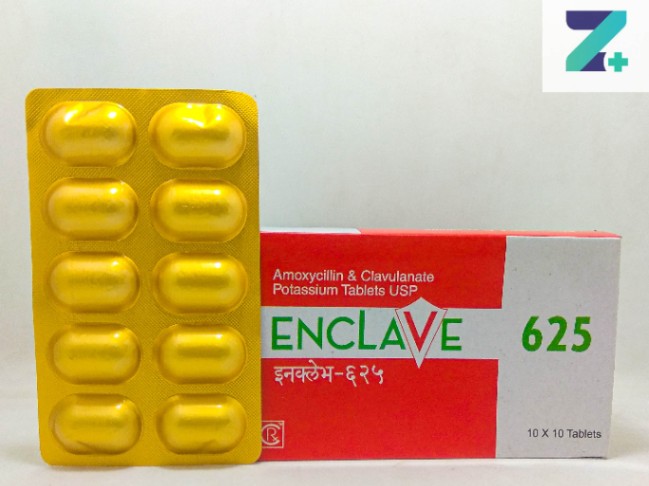
Price: Rs.375.00
10% off
In stock
Loose stock: 0
Description
ENCLAVE 625(CUREX) TAB 10
Details
Composition
AMOXICILLIN 500MG,CLAVULANIC ACID 125MG
# Amoxicillin 500 mg + Clavulanic Acid 125 mg
## Short Description
**Amoxicillin 500 mg + Clavulanic Acid 125 mg** is a prescription **penicillin-class antibiotic combination** used to treat a variety of bacterial infections. It combines amoxicillin, which directly kills susceptible bacteria, with clavulanic acid, which helps protect amoxicillin from certain **beta-lactamase enzymes** produced by resistant bacteria.
This combination is commonly used for infections of the **respiratory tract, ears, sinuses, skin and soft tissues, urinary tract, and certain dental infections**, when the causative bacteria are susceptible.
> **Important:** This medicine does not work against viral infections such as the common cold or flu. Use only when prescribed by a healthcare professional.
---
## Key Benefits
* Treats a broad range of **susceptible bacterial infections**.
* Combines amoxicillin with clavulanic acid to overcome certain bacterial resistance mechanisms.
* Useful against some bacteria that may be resistant to amoxicillin alone.
* May be prescribed for respiratory, ear, sinus, urinary, skin and dental bacterial infections.
* Helps eradicate susceptible bacteria and resolve the underlying infection when used appropriately.
* Available as an oral formulation for convenient treatment.
---
## Uses / Indications
Amoxicillin 500 mg + Clavulanic Acid 125 mg may be prescribed for susceptible bacterial infections, including:
### 1. Respiratory Tract Infections
* Bacterial sinusitis
* Lower respiratory tract infections
* Certain cases of pneumonia
* Acute exacerbations of chronic bronchitis when bacterial infection is suspected
### 2. Ear and Throat Infections
* Otitis media
* Certain bacterial throat or upper respiratory infections
### 3. Skin and Soft-Tissue Infections
* Cellulitis
* Skin infections
* Certain wound infections
* Animal or human bite infections
### 4. Urinary Tract Infections
May be used for selected susceptible bacterial urinary tract infections.
### 5. Dental Infections
May be prescribed for certain bacterial dental infections, particularly when broader antibacterial coverage is considered necessary.
### 6. Bone and Joint Infections
In selected cases, it may be used for susceptible bone or joint infections under medical supervision.
> The choice of antibiotic should be based on the suspected or confirmed organism, infection site, local resistance patterns and individual patient factors.
---
## How It Works
### Amoxicillin 500 mg
Amoxicillin is a **beta-lactam antibiotic** belonging to the penicillin group.
It interferes with bacterial **cell-wall synthesis** by binding to penicillin-binding proteins. This weakens the bacterial cell wall and can lead to bacterial cell death.
### Clavulanic Acid 125 mg
Some bacteria produce enzymes called **beta-lactamases**, which can break down amoxicillin and make it ineffective.
Clavulanic acid inhibits certain beta-lactamase enzymes, helping protect amoxicillin from enzymatic destruction.
### Simple Mechanism
**Amoxicillin → inhibits bacterial cell-wall formation**
**Clavulanic acid → inhibits certain beta-lactamases**
**Combination → helps amoxicillin work against susceptible beta-lactamase-producing bacteria.**
---
## Dosage & Administration
> **The appropriate dose and treatment duration depend on the infection, age, weight, kidney function and clinical response.**
### Adults and Children ≥40 kg
A commonly used adult regimen for the **500 mg/125 mg formulation** is:
**One tablet every 8 hours**, when specifically prescribed.
However, dosing schedules can vary according to the infection and local prescribing guidance.
### Children
Children weighing less than 40 kg generally require **weight-based dosing**, and this adult-strength tablet may not be appropriate.
### How to Take
* Take exactly as prescribed.
* Take the medicine **at the start of a meal** to improve tolerability and reduce stomach upset.
* Swallow the tablet with water.
* Take doses at evenly spaced intervals.
* Complete the prescribed course unless your healthcare professional instructs you otherwise.
* Do not share antibiotics with other people.
### Missed Dose
Take the missed dose when remembered unless it is nearly time for the next dose.
**Do not take two doses together.**
### Kidney Impairment
Patients with significant kidney impairment may require a **different dose or dosing interval**. This particular 500 mg/125 mg strength may not be appropriate for some patients with reduced kidney function.
---
## Side Effects
### Common Side Effects
Possible side effects include:
* Diarrhea
* Nausea
* Vomiting
* Abdominal discomfort
* Indigestion
* Headache
* Skin rash
Taking the medicine at the beginning of a meal may help reduce gastrointestinal discomfort.
### Serious Side Effects
Seek medical attention if you develop:
* Severe or persistent diarrhea
* Bloody diarrhea
* Severe skin rash
* Facial or throat swelling
* Difficulty breathing
* Yellowing of the skin or eyes
* Dark urine
* Severe abdominal pain
### Allergic Reactions
Serious allergic reactions can occur, particularly in people with a history of serious reactions to penicillin or related antibiotics.
### Liver-Related Effects
Amoxicillin/clavulanate can rarely cause **liver injury or cholestatic hepatitis**, which may sometimes appear during or after treatment.
---
## Precautions & Warnings
### Penicillin Allergy
Do not use this medicine if you have previously experienced a serious allergic reaction to:
* Amoxicillin
* Penicillin
* Other beta-lactam antibiotics
Tell your doctor about any previous antibiotic allergy.
### Liver Disease
Tell your doctor if you have previously experienced liver problems associated with amoxicillin/clavulanate or have significant liver disease.
Liver function may require monitoring during prolonged or repeated courses.
### Kidney Disease
Dose adjustment may be required in patients with impaired kidney function.
### Antibiotic-Associated Diarrhea
Severe or persistent diarrhea during or after antibiotic treatment can indicate **Clostridioides difficile-associated diarrhea**.
Do not self-treat severe antibiotic-associated diarrhea with anti-diarrheal medicines without medical advice.
### Infectious Mononucleosis
Amoxicillin can cause a prominent skin rash in people with **infectious mononucleosis (glandular fever)**. Inform your doctor if this condition is suspected.
### Superinfection
Prolonged or repeated antibiotic treatment can lead to overgrowth of nonsusceptible organisms, including fungi.
### Pregnancy
Tell your healthcare professional if you are pregnant or planning pregnancy. Amoxicillin/clavulanate may be used when clinically appropriate.
### Breastfeeding
Amoxicillin and clavulanate can pass into breast milk. They are generally considered compatible with breastfeeding in many situations, but discuss treatment with your healthcare professional.
---
## Drug Interactions
### Warfarin and Other Anticoagulants
Antibiotics can sometimes affect anticoagulation control. Patients taking **warfarin** may require additional monitoring of clotting parameters.
### Methotrexate
Penicillins may reduce the clearance of methotrexate and potentially increase toxicity. Tell your doctor if you take methotrexate.
### Allopurinol
Concurrent use may increase the likelihood of skin rash in some patients.
### Probenecid
Probenecid can reduce renal elimination of amoxicillin and may increase and prolong amoxicillin concentrations.
### Mycophenolate Mofetil
Amoxicillin/clavulanate may potentially reduce exposure to the active metabolite of mycophenolate. Clinical monitoring may be required.
### Oral Contraceptives
Diarrhea or vomiting associated with antibiotic treatment can reduce the reliability of oral contraceptive pills. Follow your contraceptive product's instructions regarding missed pills.
> Tell your doctor or pharmacist about **all prescription medicines, OTC medicines, vitamins and herbal supplements** you take.
---
## Storage Information
* Store according to the manufacturer's instructions.
* Keep tablets at the recommended room temperature.
* Protect from excessive heat, moisture and direct sunlight.
* Keep the tablets in their original packaging.
* Keep the package tightly closed where applicable.
* Keep out of reach of children.
* Do not use after the expiry date.
---
## Prescription Status
**Amoxicillin 500 mg + Clavulanic Acid 125 mg is generally a prescription-only antibiotic.**
It should be used only after appropriate medical assessment because unnecessary antibiotic use contributes to **antimicrobial resistance** and may cause avoidable adverse effects.
---
## Genuine Medicine Assurance
When purchasing **Amoxicillin 500 mg + Clavulanic Acid 125 mg**:
* Purchase from a **licensed and reputable pharmacy**.
* Verify the medicine name and both active ingredient strengths.
* Check the manufacturer's name.
* Verify the batch/lot number and expiry date.
* Ensure the blister strip and packaging are intact.
* Check product registration information where applicable.
* Do not use tablets from damaged or suspicious packaging.
* Avoid purchasing antibiotics from unauthorized sellers.
* If you suspect a counterfeit product, contact the manufacturer, licensed pharmacy or relevant medicines regulatory authority.
---
# Frequently Asked Questions (FAQ)
### 1. What is Amoxicillin 500 mg + Clavulanic Acid 125 mg used for?
It is used to treat various **susceptible bacterial infections**, including certain respiratory, ear, sinus, skin, urinary and dental infections.
### 2. Is Amoxicillin/Clavulanic Acid an antibiotic?
Yes. It is a **penicillin-type antibiotic combination** containing amoxicillin and clavulanic acid.
### 3. Why is clavulanic acid added to amoxicillin?
Clavulanic acid blocks certain **beta-lactamase enzymes** produced by bacteria, helping protect amoxicillin and restore its activity against some resistant bacteria.
### 4. Does Amoxicillin + Clavulanic Acid treat viral infections?
No. It does not treat viral infections such as the **common cold, influenza or most viral sore throats**.
### 5. How should Amoxicillin 500 mg + Clavulanic Acid 125 mg be taken?
Take it exactly as prescribed, preferably **at the beginning of a meal**, and swallow the tablet with water.
### 6. How often should the 500/125 mg tablet be taken?
A commonly used adult regimen is **one tablet every 8 hours**, but the exact schedule depends on the infection and your healthcare professional's instructions.
### 7. Can I take Amoxicillin/Clavulanate on an empty stomach?
It is generally recommended to take it **at the start of a meal** because this can improve clavulanate absorption and reduce gastrointestinal discomfort.
### 8. What happens if I miss a dose?
Take the missed dose when remembered unless it is close to the next scheduled dose. **Do not double the dose.**
### 9. Should I finish my Amoxicillin/Clavulanate course?
Follow the duration prescribed by your healthcare professional. Do not stop treatment or extend it on your own.
### 10. Can Amoxicillin/Clavulanate cause diarrhea?
Yes. Diarrhea is one of the more common side effects. Severe, persistent or bloody diarrhea requires medical evaluation.
### 11. Can Amoxicillin/Clavulanate cause an allergic reaction?
Yes. People allergic to penicillins or related beta-lactam antibiotics may experience allergic reactions. **Difficulty breathing, facial swelling or severe rash requires urgent medical attention.**
### 12. Can I take Amoxicillin/Clavulanate if I am allergic to penicillin?
If you have a known serious penicillin allergy, you should **not take it unless specifically evaluated and approved by a qualified healthcare professional**.
### 13. Can this medicine cause liver problems?
Rarely, amoxicillin/clavulanate can cause liver injury or cholestatic hepatitis. Seek medical advice for yellowing of the skin or eyes, dark urine or unusual persistent fatigue.
### 14. Can people with kidney disease take Amoxicillin/Clavulanate?
They may be able to use it, but the dose and dosing interval may need adjustment. The 500/125 mg strength may not be suitable for all patients with significant kidney impairment.
### 15. Can Amoxicillin/Clavulanate be used during pregnancy?
It can be used during pregnancy when clinically appropriate. Tell your healthcare professional if you are pregnant or planning pregnancy.
### 16. Can I take Amoxicillin/Clavulanate while breastfeeding?
Amoxicillin and clavulanate enter breast milk in small amounts and are generally considered compatible with breastfeeding in many circumstances. Consult your healthcare professional.
### 17. Can I drink alcohol while taking Amoxicillin/Clavulanate?
There is no specific major alcohol interaction for most people, but alcohol can worsen gastrointestinal symptoms or dizziness and may make recovery more difficult. Avoid excessive alcohol.
### 18. Can Amoxicillin/Clavulanate interact with other medicines?
Yes. Important interactions can occur with medicines such as **warfarin, methotrexate, probenecid and allopurinol**. Provide your healthcare professional with a complete medication list.
### 19. Can Amoxicillin/Clavulanate be used for tooth infection?
Yes, it may be prescribed for certain **bacterial dental infections**, particularly when broader coverage is appropriate. Dental evaluation is still important because antibiotics alone may not resolve the underlying dental problem.
### 20. Is Amoxicillin 500 mg + Clavulanic Acid 125 mg available without a prescription?
It is generally a **prescription-only antibiotic**. It should not be purchased or used without appropriate medical advice.
---
## Medical Disclaimer
This information about **Amoxicillin 500 mg + Clavulanic Acid 125 mg** is provided for educational and general informational purposes only. It is **not a substitute for professional medical advice, diagnosis or treatment**.
This medicine is an antibiotic intended for susceptible **bacterial infections** and should not be used to treat viral infections. Unnecessary antibiotic use can contribute to antimicrobial resistance and expose patients to avoidable adverse effects.
Patients with a history of **penicillin or beta-lactam allergy, liver disease, kidney disease, or previous antibiotic-associated colitis** should inform their healthcare professional before treatment.
Seek urgent medical attention for **difficulty breathing, facial or throat swelling, severe skin reactions, severe or bloody diarrhea, jaundice, or other serious symptoms**.
**Always use Amoxicillin 500 mg + Clavulanic Acid 125 mg exactly as prescribed, and complete the prescribed treatment according to your healthcare professional's instructions.**