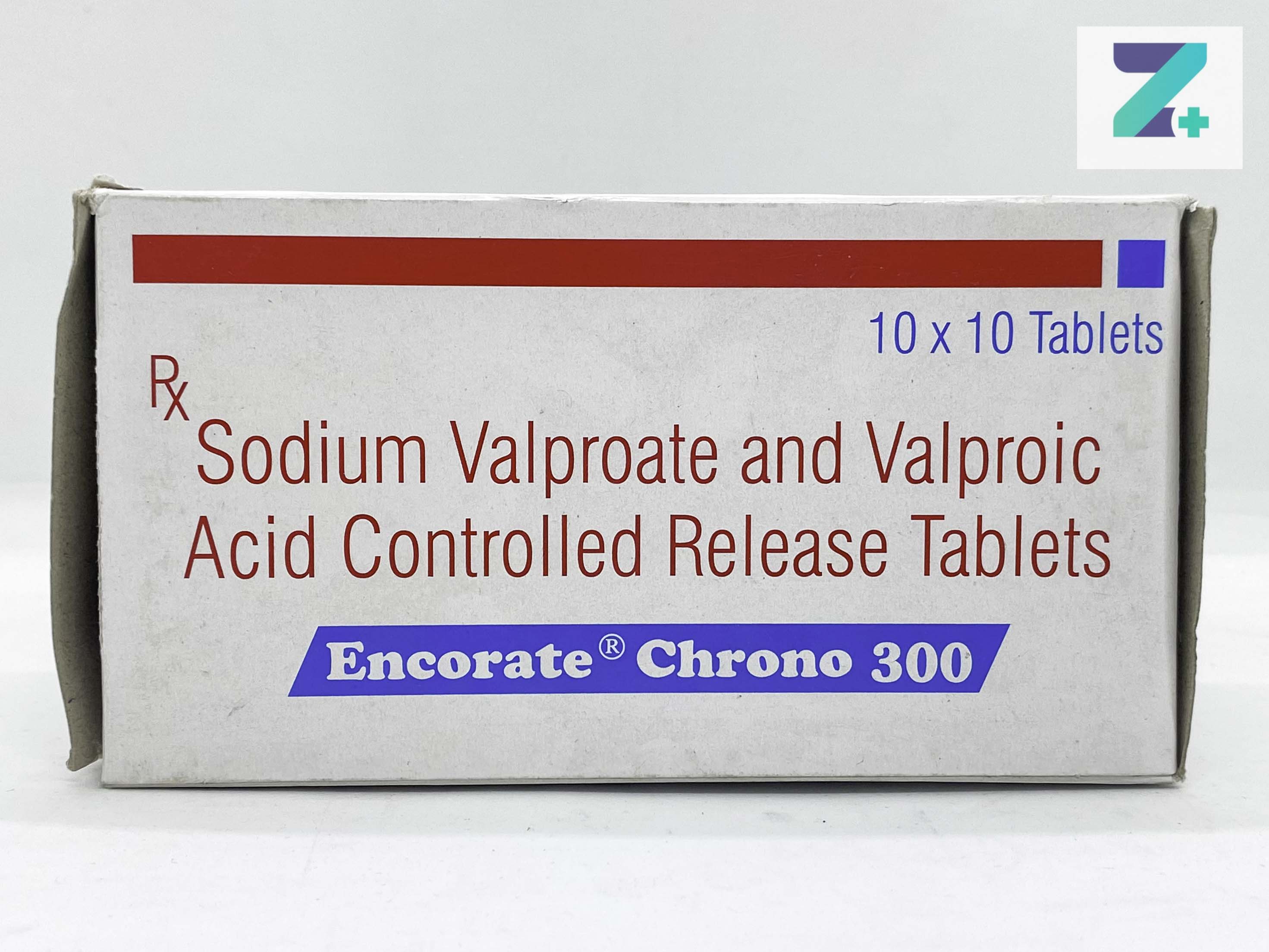
ENCORATE CHRONO 300MG
Price: Rs.110.30
10% off
In stock
Loose stock: 0
Description
ENCORATE CHRONO 300MG TAB 10
Details
Composition
SODIUM VALPROATE 300 MG
# SODIUM VALPROATE 300 MG
## SHORT DESCRIPTION
**Sodium Valproate 300 mg** is an **antiepileptic (anticonvulsant) medicine** used to control and prevent several types of seizures. Depending on the formulation and local approvals, valproate may also be used as a **mood stabilizer for bipolar disorder** and for **migraine prevention** in selected patients.
It works by reducing excessive electrical activity in the brain and stabilizing abnormal nerve signaling.
> **Important:** Sodium valproate has significant safety warnings, particularly regarding **pregnancy, liver toxicity, pancreatitis, and blood abnormalities**. It should be used under appropriate medical supervision.
## KEY BENEFITS
* Helps control and prevent **epileptic seizures**.
* Has broad-spectrum anticonvulsant activity.
* May be effective for several generalized and focal seizure types.
* Helps stabilize abnormal electrical activity in the brain.
* May be prescribed for **bipolar disorder** as a mood stabilizer.
* May be used for **migraine prevention** in selected patients where appropriate.
* Can be used alone or with other antiepileptic medicines when prescribed.
## USES / INDICATIONS
Sodium Valproate 300 mg may be prescribed for:
* **Epilepsy and seizure disorders**.
* Generalized tonic-clonic seizures.
* Absence seizures.
* Myoclonic seizures.
* Certain focal seizures.
* Other seizure types where valproate is considered appropriate.
* **Bipolar disorder**, depending on local approvals and clinical circumstances.
* **Prevention of migraine**, where approved and clinically appropriate.
The approved indications may differ according to country, patient age, and specific formulation.
## HOW IT WORKS
Sodium valproate affects several mechanisms involved in abnormal electrical activity in the brain.
It increases the availability of **gamma-aminobutyric acid (GABA)**, an inhibitory neurotransmitter, and also affects voltage-sensitive ion channels involved in nerve-cell signaling.
This reduces excessive neuronal activity and makes abnormal electrical discharges less likely.
### Overall Action
**Sodium valproate → enhances inhibitory brain activity + modifies neuronal ion-channel activity → reduces excessive electrical activity → helps prevent seizures.**
Its effects on neurotransmitter signaling also contribute to its mood-stabilizing properties.
## DOSAGE & ADMINISTRATION
The appropriate sodium valproate dose depends on:
* Age.
* Body weight.
* Type and severity of seizures.
* Treatment response.
* Other medicines being taken.
* Liver function.
* Kidney function.
* Specific formulation.
### General Administration
* Take exactly as prescribed.
* Take at approximately the same time each day.
* Follow the instructions supplied with the specific formulation.
* Some modified-release or enteric-coated formulations should **not be crushed or chewed**.
* Take with food if advised or if it helps reduce stomach upset.
* Do not discontinue treatment suddenly without medical advice.
### Sodium Valproate 300 mg
A 300 mg tablet may be used as part of an individualized treatment regimen. It is **not necessarily the appropriate starting or maintenance dose for every patient**.
Doctors may gradually adjust the total daily dose according to seizure control, tolerability, body weight, and sometimes blood valproate levels.
### Missed Dose
Take the missed dose when remembered unless it is nearly time for the next dose.
**Do not take two doses together** to make up for a missed dose.
## SIDE EFFECTS
Common side effects may include:
* Nausea.
* Vomiting.
* Stomach discomfort.
* Diarrhea.
* Drowsiness.
* Dizziness.
* Headache.
* Tremor.
* Increased appetite.
* Weight gain.
* Temporary hair thinning or changes in hair texture.
### Serious Side Effects
Seek urgent medical attention for:
* Severe or persistent abdominal pain.
* Repeated vomiting.
* Yellowing of the skin or eyes.
* Dark urine.
* Severe weakness.
* Unusual bruising or bleeding.
* Confusion or marked drowsiness.
* Loss of consciousness.
* Severe skin rash, blistering, or peeling.
* Difficulty breathing or facial swelling.
Rare but serious complications include **liver injury, pancreatitis, thrombocytopenia, hyperammonemia, and severe skin reactions**.
## PRECAUTIONS & WARNINGS
### Pregnancy — VERY IMPORTANT
**Sodium valproate can cause serious birth defects and developmental problems when taken during pregnancy.**
Valproate should generally be avoided during pregnancy for epilepsy or bipolar disorder unless a specialist determines that no suitable alternative is effective or tolerated and that treatment is necessary.
If you are pregnant, planning pregnancy, or could become pregnant, discuss valproate treatment with your healthcare professional **before starting, stopping, or changing the dose**.
**Do not stop sodium valproate suddenly**, particularly if it is being used to control epilepsy.
### Liver Toxicity
Sodium valproate can rarely cause serious or life-threatening **liver injury**, particularly during the first months of treatment and in certain higher-risk patients.
Seek medical attention for:
* Persistent vomiting.
* Loss of appetite.
* Severe weakness.
* Abdominal pain.
* Dark urine.
* Yellowing of the skin or eyes.
### Pancreatitis
Valproate can rarely cause **pancreatitis**.
Severe and persistent abdominal pain, especially when accompanied by vomiting, requires urgent medical assessment.
### Blood Disorders
Valproate can reduce platelet levels and affect blood clotting.
Report:
* Easy bruising.
* Nosebleeds.
* Unusual bleeding.
* Prolonged bleeding from minor injuries.
### Hyperammonemia
Valproate can increase blood ammonia levels and may cause **hyperammonemic encephalopathy**.
Seek medical attention for unexplained:
* Confusion.
* Extreme sleepiness.
* Vomiting.
* Changes in consciousness.
### Weight Gain
Increased appetite and weight gain may occur during treatment. Long-term therapy may require monitoring of weight and metabolic health.
### Children
Very young children and children receiving multiple antiepileptic medicines may have a higher risk of certain serious adverse effects.
### Kidney or Liver Disease
Inform your doctor if you have kidney or liver problems because additional monitoring or dose adjustment may be required.
### Alcohol
Alcohol may increase drowsiness, dizziness, and impaired coordination. Avoid or limit alcohol according to medical advice.
## DRUG INTERACTIONS
Sodium valproate can interact with several medicines.
### Lamotrigine
Valproate can substantially increase lamotrigine concentrations and the risk of serious skin reactions. **Lamotrigine doses require careful adjustment** when used with valproate.
### Carbamazepine
These medicines can affect each other's blood concentrations and adverse effects. Monitoring may be required.
### Phenytoin
Valproate can alter phenytoin concentrations and protein binding, potentially changing the amount of active medicine.
### Phenobarbital
Valproate may increase phenobarbital concentrations and sedation.
### Topiramate
The combination can increase the risk of **hyperammonemia and encephalopathy**.
### Aspirin / Salicylates
Salicylates can affect valproate levels and protein binding. Particular caution is required in children.
### Carbapenem Antibiotics
Antibiotics such as **meropenem, imipenem, and ertapenem** can markedly reduce valproate concentrations and may result in loss of seizure control.
### Anticoagulants and Antiplatelet Medicines
These medicines may increase bleeding risk when combined with valproate, particularly if platelet counts are reduced.
Always tell your healthcare professional about all prescription medicines, OTC medicines, vitamins, and herbal supplements you take.
## STORAGE INFORMATION
* Store according to the manufacturer's instructions.
* Keep at room temperature unless the product label specifies otherwise.
* Protect from excessive heat and moisture.
* Keep away from direct sunlight.
* Keep tablets in the original packaging.
* Keep out of reach of children.
* Do not use after the expiry date.
* Do not use tablets from damaged or tampered packaging.
## PRESCRIPTION STATUS
**Sodium Valproate 300 mg is a prescription medicine.**
Because of its potentially serious adverse effects and important reproductive safety concerns, it should be used under the supervision of a qualified healthcare professional.
Prescription requirements may vary by country.
## GENUINE MEDICINE ASSURANCE
When purchasing **Sodium Valproate 300 mg**, obtain it from a **licensed pharmacy or authorized medicine supplier**.
Check:
* Active ingredient: **Sodium Valproate**.
* Strength: **300 mg**.
* Manufacturer details.
* Batch/lot number.
* Manufacturing date.
* Expiry date.
* Intact packaging and seal.
* Clear labeling and dosage instructions.
Avoid products with damaged packaging, missing batch information, unclear labeling, or questionable authenticity.
## FREQUENTLY ASKED QUESTIONS (FAQ)
### 1. What is Sodium Valproate 300 mg used for?
Sodium Valproate 300 mg is primarily used to **control and prevent seizures associated with epilepsy**. Depending on the country and formulation, it may also be used for bipolar disorder or migraine prevention.
### 2. Is sodium valproate an anticonvulsant?
Yes. Sodium valproate is an **antiepileptic (anticonvulsant)** medicine.
### 3. How does sodium valproate work?
It reduces excessive electrical activity in the brain by increasing inhibitory GABA activity and affecting neuronal ion channels.
### 4. What types of seizures can sodium valproate treat?
It has broad-spectrum activity and may be prescribed for **generalized tonic-clonic, absence, myoclonic, and certain other seizure types**.
### 5. Can I stop sodium valproate suddenly?
**No.** Suddenly stopping an antiepileptic medicine can cause seizures to return or become more severe. Dose reduction should be supervised by a healthcare professional.
### 6. Does sodium valproate cause drowsiness?
Yes. Drowsiness and dizziness can occur, especially when treatment is started or the dose is increased.
### 7. Does sodium valproate cause weight gain?
Yes. **Increased appetite and weight gain** are recognized side effects in some people taking sodium valproate.
### 8. Can sodium valproate cause hair loss?
Hair thinning or changes in hair texture can occur in some patients. Speak with your healthcare professional if hair changes are persistent or troublesome.
### 9. Can sodium valproate damage the liver?
Rarely, sodium valproate can cause **serious liver injury**. The risk may be greater in certain young children and people taking multiple antiepileptic medicines.
### 10. What are the warning signs of liver injury?
Persistent vomiting, loss of appetite, severe weakness, abdominal pain, dark urine, and **yellowing of the skin or eyes** require prompt medical evaluation.
### 11. Can sodium valproate cause pancreatitis?
Yes, although it is uncommon. Severe persistent abdominal pain, particularly with vomiting, requires urgent medical attention.
### 12. Can sodium valproate be taken during pregnancy?
Valproate has a **high risk of serious fetal harm**, including birth defects and developmental problems. It should generally be avoided during pregnancy unless specialist medical assessment determines that no suitable alternative is appropriate.
### 13. What should I do if I become pregnant while taking sodium valproate?
Contact your healthcare professional **as soon as possible**. Do not stop the medicine suddenly without medical advice, particularly if it is being used to control epilepsy.
### 14. Can women who could become pregnant use sodium valproate?
Valproate has important reproductive safety restrictions. Healthcare professionals generally consider alternative medicines where possible and provide appropriate pregnancy-prevention counseling when valproate is considered necessary.
### 15. Can sodium valproate be taken with lamotrigine?
It may sometimes be used together, but valproate increases lamotrigine concentrations and the risk of serious skin reactions. **Specialist dosing and monitoring are required.**
### 16. Can sodium valproate be taken with carbamazepine?
The combination may be used in selected patients but requires medical supervision because the medicines can affect each other's concentrations and adverse effects.
### 17. Can I drink alcohol while taking sodium valproate?
Alcohol may increase drowsiness and dizziness. It is generally advisable to **avoid or limit alcohol** while taking sodium valproate.
### 18. Does sodium valproate require blood tests?
Depending on your circumstances, your doctor may monitor **liver function, blood counts/platelets, and sometimes blood valproate concentrations**.
### 19. What should I do if I miss a sodium valproate dose?
Take it when remembered unless it is nearly time for your next dose. **Do not double the next dose.**
### 20. Can sodium valproate be used for bipolar disorder?
Valproate may be used as a **mood stabilizer for bipolar disorder** in certain patients and jurisdictions. Treatment should be medically supervised.
### 21. Can sodium valproate prevent migraine?
Valproate may be used for **migraine prevention** in selected patients, although its reproductive risks mean alternative treatments may be preferred in people who could become pregnant.
### 22. Is Sodium Valproate 300 mg prescription-only?
Yes. Sodium valproate is generally a **prescription medicine** and should be used under appropriate medical supervision.
### 23. Is Sodium Valproate 300 mg the same as 300 mg of valproic acid?
No. Sodium valproate and valproic acid are related forms of valproate, but their **salt/formulation and valproate-equivalent amounts differ**. Do not switch between formulations based solely on the number printed on the package.
### 24. Can children take Sodium Valproate 300 mg?
Valproate can be prescribed to children for certain seizure disorders, but the dose is generally individualized according to **body weight, age, seizure type, and formulation**.
### 25. How should Sodium Valproate 300 mg be stored?
Store it according to the manufacturer's instructions, generally at room temperature and protected from **heat, moisture, and direct sunlight**. Keep it securely out of children's reach.
## MEDICAL DISCLAIMER
This information about **Sodium Valproate 300 mg** is provided for general educational and informational purposes only. It does not replace professional medical advice, diagnosis, or treatment.
Sodium valproate is a **prescription antiepileptic medicine with potentially serious adverse effects**, including liver injury, pancreatitis, blood abnormalities, hyperammonemia, and severe fetal harm during pregnancy.
**Pregnancy and reproductive safety are especially important with valproate.** Anyone who is pregnant, planning pregnancy, or could become pregnant should discuss treatment with a qualified healthcare professional before taking or stopping sodium valproate.
Do not discontinue sodium valproate abruptly without medical supervision. The exact dosage, monitoring requirements, and approved uses depend on the patient's condition, age, other medicines, and the specific product formulation.